Choosing Waveguide to Coaxial Adapters for 5G Base Station Systems






2026-03-22 22:05:11
When choosing the right waveguide adapters for 5G base station systems, you need to think carefully about the technical specs, the surroundings, and the performance needs. In high-frequency settings, these important parts make it possible for signals to move smoothly between waveguide transmission lines and coaxial connections. Adapters for modern 5G networks need to be able to work with bands from X-band to mmWave while keeping insertion loss to a minimum and signal integrity at its highest level. Whether to use a standard or custom solution rests on the needs of the system, such as its ability to handle power, its environment, and its ability to connect to existing infrastructure.
Understanding Waveguide to Coaxial Adapters in 5G Systems
Fundamental Functions and Operational Principles
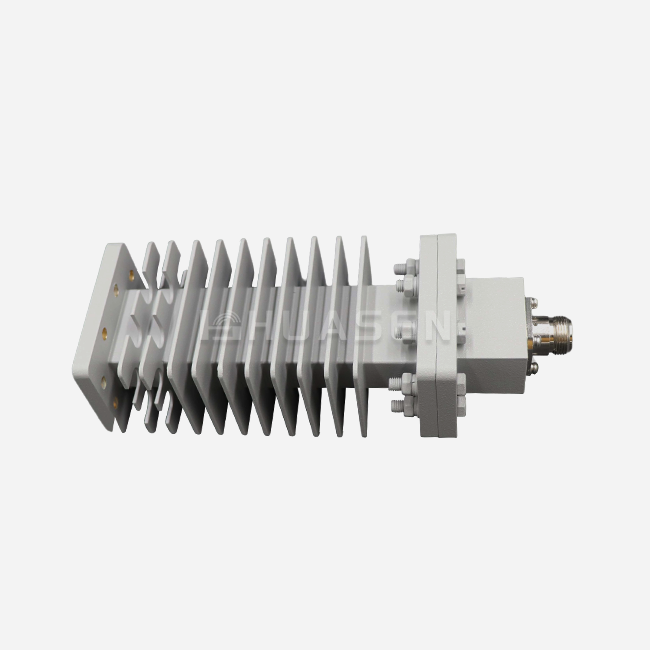
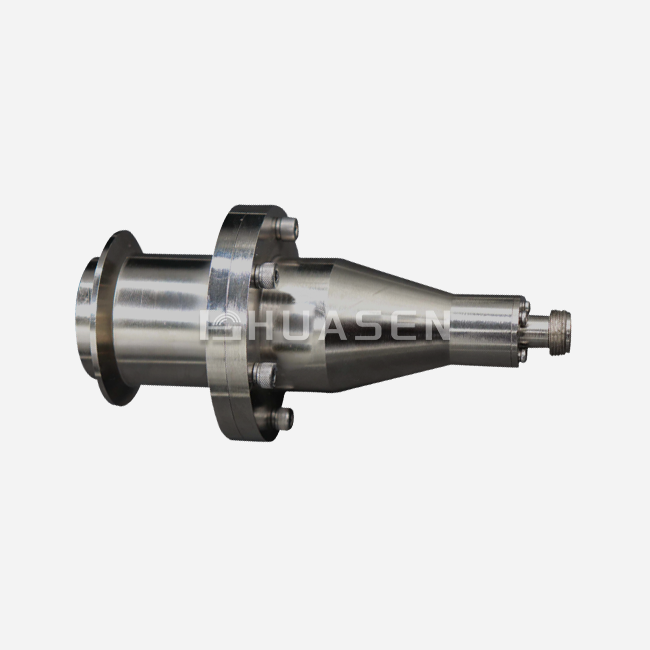
Waveguide to coaxial adapters are important bridge parts in 5G base station design because they make it easy for signals to travel from one transmission medium to another. The tricky job of changing electromagnetic waves from a rectangular or circular waveguide format to a coaxial transmission line format without losing a lot of data quality is done by these devices. The inside is made up of complex impedance matching networks that make sure there are smooth transitions from the waveguide's characteristic impedance to the standard 50-ohm coaxial impedance. The way it works is based on electromagnetic field coupling mechanisms, and depending on the adapter design, either electric field (E-field) or magnetic field (H-field) coupling techniques are used. Probe-launch configurations use E-field coupling through an antenna probe that is placed exactly, while loop-launch configurations use H-field coupling through inductive coupling loops. To keep broadband performance across the target frequency range and minimise reflection losses, both methods need to be carefully optimised.
Frequency Management for 5G Communications
Today's 5G communication devices work in a number of frequency ranges, from below 6 GHz to mmWave bands that go beyond 28 GHz. Waveguide transitions need to be able to handle these different frequency needs while still keeping the same level of performance. C-band operations (3.7–4.2 GHz) need different adapter specs than X-band (8–12 GHz) or Ku-band (12–18 GHz) operations that are popular in 5G backhaul systems. The frequency response characteristics of these adapters have a direct effect on signal quality and system performance. Double-ridged waveguide systems have very high bandwidths and can usually handle frequency ranges from 7.5 GHz to 18 GHz with just one adapter. This broadband feature makes inventory less complicated and system design easier for 5G setups with multiple bands.
Materials and Manufacturing Considerations
High-quality materials are very important for how well and how long an adapter lasts. Aluminium metal 6061-T6 is great for outdoor base stations because it is strong for its weight and doesn't change much when it gets hot or cold. Brass and copper alloys are better at conducting electricity, but they may need extra protection against corrosion in harsh settings. Surface treatments like silver or gold plating greatly lower resistive losses and stop oxidation, which is especially important for outdoor installations that need to be reliable over time. The level of accuracy used in manufacturing directly impacts electrical performance factors. Tight dimensional standards make sure that the impedance matching is always the same, and the quality of the surface finish affects how much insertion loss there is. MIL-DTL-3922 compliance ensures that goods from different manufacturers are the same size and have the same flanges, which makes it easy to integrate them into existing systems.
Key Factors to Consider When Choosing Waveguide to Coaxial Adapters
Frequency Compatibility and Performance Metrics
For 5G system builders, choosing adapters with the right frequency coverage is a very important choice. Across all operating frequencies, the adapter must work well enough without adding too much signal distortion. Insertion loss requirements for high-quality adapters are usually between 0.1 dB and 0.3 dB. This has a direct effect on the total system noise figure and signal-to-noise ratio performance. VSWR (Voltage Standing Wave Ratio) requirements change based on how sensitive the application needs to be. VSWR values below 1.15:1 may be needed for high-performance systems, while values up to 1.35:1 are fine for less important uses. The relationship between VSWR and reflection coefficient tells us how much signal power is sent back toward the source, waveguide to coaxial adapter, which can cause interference and make the system less efficient. In high-power base station use, the ability to handle power becomes more important. Most waveguide parts can handle power up to a few kilowatts, but the coaxial connector is usually what stops them. At high frequencies, SMA connections might only be able to handle less than 100 watts of continuous wave power. N-type and 7/16 DIN connectors, on the other hand, can handle much higher power levels.
Physical Integration and Connector Compatibility
Physical dimensions and mounting configurations must align with existing system architecture and space constraints. Standard flange dimensions following WRD series specifications ensure compatibility with waveguide components from multiple manufacturers. Custom mounting brackets may be required for specific installation scenarios, particularly in space-constrained base station cabinets.
Connector selection impacts both electrical performance and mechanical reliability. Here are the primary connector options for different applications:
- SMA connectors: Suitable for laboratory testing and low-power applications up to 18 GHz, offering excellent repeatability and precision for measurement applications
- N-type connectors: Ideal for medium-power applications with good environmental sealing characteristics, commonly used in outdoor base station installations
- 7/16 DIN connectors: Designed for high-power applications with superior power handling and environmental protection capabilities
These connector choices represent trade-offs between performance, cost, and installation complexity. Understanding specific application requirements enables optimal selection for each use case.
Environmental and Reliability Considerations
Outdoor 5G installations face challenging environmental conditions, including temperature extremes, moisture, vibration, and corrosive atmospheres. Adapter specifications must address these conditions through appropriate material selection, sealing techniques, and mechanical design. Temperature cycling from -40°C to +85°C can cause thermal expansion mismatches between dissimilar materials, potentially degrading electrical performance over time. Ingress protection (IP) ratings indicate the adapter's ability to resist moisture and dust infiltration. IP67 ratings provide adequate protection for most outdoor applications, while marine or coastal installations may require higher protection levels. Corrosion resistance becomes particularly important in salt spray environments where standard aluminum finishes may prove inadequate.

Market Options and Supplier Landscape for Waveguide to Coaxial Adapters
Leading Manufacturers and Product Differentiation
The global market for waveguide to coaxial adapters includes several established manufacturers with distinct specialization areas and competitive advantages. Pasternack focuses on rapid prototyping and quick-turn custom solutions, making them attractive for development projects and small-volume applications. Their extensive catalog includes standard configurations covering the most common frequency bands and connector combinations.HUBER+SUHNER emphasizes precision manufacturing and long-term reliability, particularly targeting telecommunications infrastructure applications. Their products undergo rigorous environmental testing and quality control procedures, resulting in premium pricing but exceptional field reliability. The company's vertical integration capabilities enable tight control over material quality and manufacturing processes. Maury Microwave specializes in high-frequency applications and precision measurement equipment. Their adapter products target laboratory and test equipment applications where measurement accuracy and repeatability are paramount. Custom engineering capabilities allow optimization for specific measurement scenarios and unusual frequency requirements.
Standard versus Custom Adapter Solutions
Standard catalog products offer immediate availability and proven performance characteristics, making them suitable for most common applications. These products benefit from economies of scale in manufacturing, resulting in competitive pricing and shorter lead times. However, standard products may not optimize performance for specific application requirements or unusual physical constraints. Custom adapter development provides optimized performance for specialized applications but requires longer development cycles and higher initial investment. The decision between standard and custom solutions depends on volume requirements, performance specifications, and project timelines. Custom solutions become economically attractive for high-volume applications where performance optimization justifies the additional development investment.
Procurement Strategies and Supply Chain Considerations
Effective procurement strategies balance cost, quality, and delivery requirements while maintaining supply chain resilience. Single-source strategies may offer better pricing through volume commitments but create supply chain vulnerabilities. Dual-source approaches provide supply security but may complicate quality control and increase administrative overhead. Sample evaluation programs enable performance verification before committing to production volumes. Most manufacturers provide sample units for evaluation, though custom designs may require prototype development fees. Comprehensivewaveguide-to-coaxial adapter testing during the sample phase prevents costly field failures and ensures compatibility with existing system components.
Practical Comparison: Waveguide Adapter vs. Similar Components in 5G Systems
Functional Differences and Application Scenarios
There are clear differences between waveguide adapters, waveguide transitions, and antenna connections, even though they all work together in full RF systems. Waveguide transitions change the physical size or direction of a transmission line while keeping the same type. For example, going from WR-90 to WR-75 waveguide sizes. These parts make it easier for signals to travel through waveguide networks without switching to coaxial format. Connectors for antennas are designed to work with the point where transmission lines meet radiating elements. These parts have to work with the weather while still being electrically sound, which means they often need weatherproofing features that aren't needed for indoor adapter uses. The mechanical design puts ease of installation and servicing access ahead of the accuracy that would be expected in a lab.
Performance Benchmarking Across Frequency Bands
The performance of an X-band adapter usually gets insertion loss values below 0.2 dB and VSWR standards around 1.25:1. These standards are good enough for most telecommunications uses while keeping the cost of production low. The technology in this frequency band is pretty advanced, so there are a lot of suppliers to choose from, and prices are reasonable. Because of their smaller size tolerances and higher sensitivity to manufacturing differences, mmWave frequency adapters are more difficult to design and build. Insertion loss requirements can be as high as 0.4 dB, while VSWR requirements are usually less strict and can be as high as 1.4:1. Because there aren't many suppliers with mmWave knowledge, prices and delivery times can be affected. This is why early engagement with suppliers is so important for project success.
Integration Complexity and System Optimization
How hard it is to integrate a system depends a lot on the frequency range and performance needs. When used for lower frequencies, installation processes and mechanical tolerances are often more lax. To keep working at their best, higher frequency systems need to pay close attention to the torque requirements for connectors, the handling of cables, and how heat is handled. As a system gets more complicated, checking for compatibility becomes more and more important. Checking the interface for mechanical fit, electrical performance, and environmental stress should all be part of the proof process. Reviewing the documentation makes sure that it meets all the necessary standards and requirements, which keeps integration problems from happening during system release.
Troubleshooting and Optimizing Waveguide Adapter Performance
Common Performance Issues and Diagnostic Approaches
Signal degradation in waveguide adapter systems usually shows up as higher VSWR numbers, more insertion loss, or the production of false signals. Systematic methods for troubleshooting help find the root cause and the right way to fix it. A lot of the time, environmental factors lead to performance degradation. This is especially true for outdoor setups, where changes in temperature and moisture can affect the electrical characteristics. In field installations, connector degradation is a regular way for things to go wrong. Mating surfaces can wear down over time from repeated connection processes, and corrosion may make contact resistance higher over time. Regular inspections help find wear and tear before it affects the system's performance, and following the right care instructions for connectors makes them last longer.
Preventive Maintenance and Inspection Protocols
Visual checks should be done on a regular basis to find clear physical damage, corrosion, or contamination before they affect how well the electricity works. Thread condition, center wire alignment, and dielectric integrity should be the main things that you check when you inspect a connector. If you see any signs of arcing, overheating, or mechanical damage, you should change the part right away to keep the system from failing. Using a network analyzer to check the electrical performance of an adapter gives a quantitative picture of its state. Taking baseline measurements during the original installation lets you compare them to later measurements to find performance trends. Scheduled performance verification intervals rely on the environment and how important the system is. For critical applications, they usually range from once a year to three times a year.
Upgrade and Replacement Decision Criteria
When performance drops below a certain level, it's time to replace it, but proactive replacement plans can stop problems before they happen. Things to think about during a component's life cycle include the chance of it becoming obsolete, the availability of extra parts, and the chance for technology to get better. Newer adapter designs might work better, be smaller, or protect the environment better than older ones. When figuring out the cost-benefit of replacing something, likewaveguide adapters,you should look at both the direct and indirect costs, like system downtime, maintenance labour, and performance effects. Applications with a high level of importance may need proactive replacement schedules to lower the risk of failure, while applications with a lower level of importance can use condition-based replacement methods.
Conclusion
For 5G base station systems to choose the best waveguide to coaxial adapters, technical performance, environmental needs, and cost must all be taken into account. Some important things to look at when choosing a device are its frequency compatibility, insertion loss specs, power handling abilities, and environmental protection needs. Knowing the differences between standard and custom options helps you make smart buying choices based on the needs of your application. Regular maintenance and performance tracking make sure that the adapter keeps working reliably for as long as it's supposed to, which improves the overall performance and reliability of the 5G network.
FAQ
1. What frequency ranges do waveguide adapters support for 5G applications?
Modern waveguide adapters support frequency ranges from L-band (1-2 GHz) through W-band (75-110 GHz), covering all current 5G frequency allocations. Double-ridged designs offer exceptional bandwidth, typically spanning 7.5-18 GHz in single configurations. Custom designs can optimize performance for specific 5G bands, including C-band (3.7-4.2 GHz) and mmWave frequencies above 24 GHz.
2. How do I verify compatibility between waveguide adapters and existing coaxial equipment?
Compatibility verification requires checking both mechanical and electrical interfaces. Mechanical compatibility involves confirming connector types, thread specifications, and physical dimensions. Electrical compatibility requires verifying impedance matching (typically 50 ohms), frequency coverage, and power handling capabilities. Interface specifications should match or exceed system requirements for VSWR, insertion loss, and power handling.
3. Can waveguide adapters be customized for specialized 5G system requirements?
Customization options include frequency optimization, connector selection, environmental protection levels, and mechanical configurations. Custom designs can optimize electrical performance for specific frequency bands, incorporate specialized materials for harsh environments, or modify physical dimensions for space-constrained installations. Development timelines typically range from 6-12 weeks, depending on complexity.
4. What power limitations should I consider for different connector types?
Power handling varies significantly among connector types. SMA connectors typically limit continuous wave power below 100 watts at high frequencies, while N-type connectors can handle several hundred watts. The 7/16 DIN connectors support kilowatt-level power in many applications. Waveguide sections generally provide higher power handling than the coaxial connector interface.
Partner with Huasen Microwave for Superior Waveguide Adapter Solutions
Huasen Microwave stands as your trusted waveguide adapters manufacturer, delivering three decades of engineering excellence in high-frequency component design and manufacturing. Our comprehensive product portfolio addresses diverse 5G base station requirements, from standard catalog solutions to fully customized designs optimized for your specific application needs. With rigorous quality control processes, extensive environmental testing capabilities, and responsive technical support, we ensure reliable performance in demanding telecommunications environments. Contact our engineering team at sales@huasenmicrowave.com to discuss your waveguide adapter requirements and discover how our proven expertise can optimize your 5G system performance while reducing total cost of ownership.
References
1. IEEE Standards Association. "IEEE Standard for Waveguide and Coaxial Transmission Lines - Physical Dimensions and Impedance." IEEE Std 287-2007.
2. Marcuvitz, Nathan. "Waveguide Handbook: Microwave and Millimeter Wave Circuits." McGraw-Hill Professional, 2nd Edition, 1999.
3. Rizzi, Peter A. "Microwave Engineering: Passive Circuits." Prentice Hall International Series in Electronics and Electronic Engineering, 1988.
4. Pozar, David M. "Microwave Engineering: Theory and Applications." John Wiley & Sons, 4th Edition, 2012.
5. Chen, L.F. and Zhang, W. "5G Wireless Communication Systems: Challenges and Solutions for RF Front-End Design." IEEE Communications Magazine, Vol. 58, No. 3, 2020.
6. Thompson, R.K. "Environmental Testing Standards for Telecommunications Equipment: A Comprehensive Guide." Telecommunications Industry Association Technical Report, 2019.
Send Inquiry