Broadband Horn Antenna Trends in RF Test and Measurement






2026-04-21 21:25:10
There is a big change happening in RF test and measurement that is moving toward multi-octave testing options. Broadband horn antennas are at the front of this change. These flexible tools let engineers do full electromagnetic compatibility tests, antenna pattern characterization, Broadband Horn Antenna, and radar cross-section analysis over very wide frequency ranges—often from 1 GHz to 40 GHz or even higher—without having to switch between narrowband devices, which can cause operational delays and calibration uncertainties. As 5G networks get better and research into 6G speeds up, system integrators, defense contractors, and research labs need antennas that offer stable gain, predictable polarization behavior, and high signal integrity across multiple communication bands more than ever.
Understanding Broadband Horn Antennas in RF Test and Measurement
What Defines a Broadband Horn Antenna
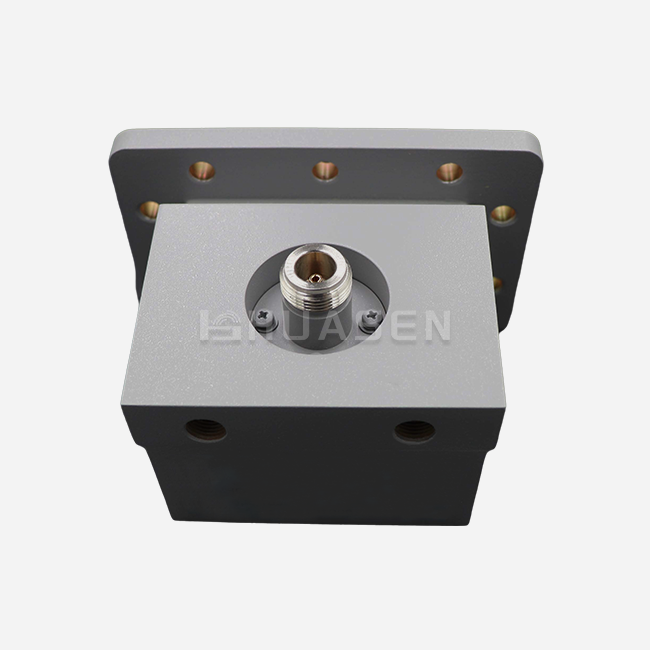
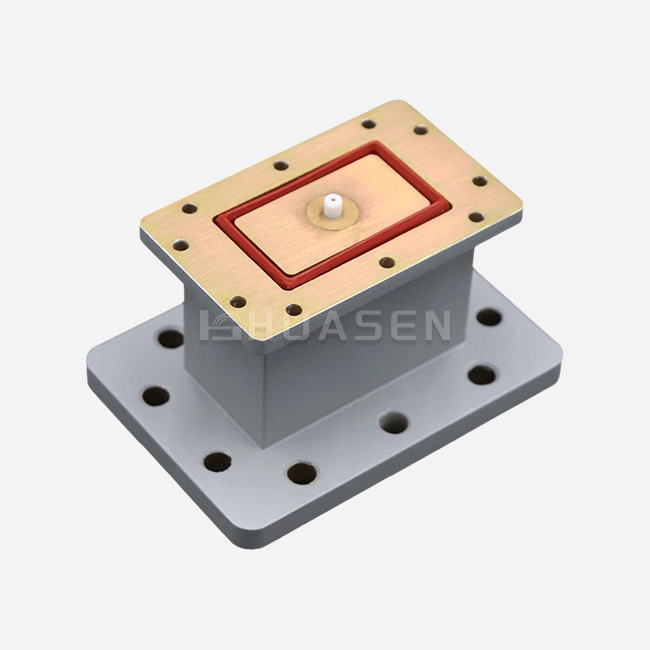
Horn antennas are based on waveguide technology and work by slowly opening up the waveguide aperture to meet the impedance of empty space. Broadband versions have structure changes, mostly internal metallic ridges, that drop the cutoff frequency by a lot and keep the impedance the same over many octaves. Traditional horns have restricted bandwidth because of waveguide mode limits. This means that test engineers have to keep a lot of antennas on hand and wait a long time for setup changes during frequency sweeps.
Core Operating Principles and Design Features
The broadband double-ridged horn antenna is a great example of how current design should be done. Ridges on the E-plane walls make a transmission line that is curved and smoothly changes the 50-ohm coaxial feed to the 377-ohm resistance of empty space. This design makes voltage standing wave ratios that are usually less than 2.0:1 across the whole operating band, with acceptable changes up to 2.5:1 at the band ends. The gain profile naturally rises with frequency, starting at about 6 dBi at lower frequencies and reaching 15 dBi or higher at the upper band. The main lobe stays clear, which makes sure that measurements are always made in the same way.
Polarization Capabilities and Radiation Characteristics
Most test setups still use linear polarization, but more advanced models have two linear feeds that can create circular polarization when mixed with the right blend networks. To make sure that the forms are truly spherical, the axial ratio usually stays below 3 dB. The E-plane and H-plane beamwidths get narrower as the frequency goes up, which means that radiation patterns behave in a predictable way. When putting antennas in small test areas or anechoic rooms where accurate measurements depend on exact field illumination, it's important to understand these properties.

Evolution and Advantages of Broadband Horn Antennas Compared to Other Antenna Types
Historical Development and Technological Milestones
Horn antennas come from the first radar devices that Double Ridged Horn Antenna were made during World War II. In the middle of the 20th century, standard conical horns were the most common, but they had problems with bandwidth. When ridged structures were added in the 1960s, they changed efficiency and made octave-bandwidth operation possible. Computer-aided electromagnetic modeling is used in modern designs to get the best ridge shapes, block higher-order modes, and lower sidelobe levels. Today's broadband horn antennas are made with precision CNC machining and improved surface treatments that make them even more consistent. This means that they can be used for both lab calibration standards and tracking systems that are out in the field.
When compared to other antenna designs, these gadgets have the following main benefits:
- Frequency Agility: Broadband horn antennas don't need multiple antennas for EMC compliance tests according to CISPR 16 and MIL-STD-461 standards, unlike narrowband patch arrays or helical antennas. Three or four different devices are no longer needed because there is only one horn that covers 1–18 GHz. This saves money on capital costs and makes inventory management easier for companies that make equipment and contract testing labs.
- Predictable Gain and Phase Center Stability: Log-periodic antennas have a wide bandwidth, but their gain ripples and phase centers move around as they work. Broadband horn antennas keep the gain steadily going up while keeping the phase center location steady. This is very important when measuring antenna patterns or doing radar cross-section analysis, which needs very accurate estimates for path loss.
- High Power Handling: Antennas that can handle continuous wave power levels above 300 watts are needed for tests of radiated protection and models of electronic warfare. Horn designs are much better than printed antennas or weak dielectric structures because they are made of strong metal and efficiently transfer heat. This makes them essential in military test facilities and base station validation settings.
- Minimal Calibration Drift: Parabolic mirrors have better directivity, but they are more difficult to line and have more complicated mechanics. Since broadband horn antennas don't have any moving parts and don't change much with temperature, they offer long-term measurement consistency that meets the strict ISO 17025 accreditation standards for calibration labs.
These perks have a direct effect on how things work. When aerospace companies use broadband horn antennas instead of switching between narrowband standards to test radar signatures, the test run time is cut by 40%. Automotive EMC labs say that circular-polarized antennas pick up signals better, no matter what direction the device being tested is facing, which helps find compliance problems that linear antennas might miss.
Selecting the Right Broadband Horn Antenna for Your Procurement Needs
Critical Specification Parameters
Buying choices depend on how well the radio specs match the needs of the application. The operating range is determined by the frequency bandwidth. Common bands for sub-6 GHz mobile tests are 700 MHz to 6 GHz, 2–18 GHz for general EMC work, and 18–40 GHz for evaluating millimeter-wave components. The specs for gain should match the budget estimates for the link. Higher gain focuses the power that is radiated, but makes the lighting area smaller, which affects the uniformity of the test zone in a chamber setting.
Polarization and Port Configuration Considerations
Most tests for transmitted emissions and protection use linear polarization that can be oriented either vertically or horizontally. Cross-polarization discrimination can be done in either a sequential or simultaneous manner with the help of dual-linear setups that have two orthogonal lines and high port-to-port isolation (usually greater than 25 dB). The dual-linear broadband circular polarization horn antenna type is good for testing MIMO devices over-the-air and tracking satellites. The different polarizations have a direct effect on measuring speed and figuring out spatial correlation.
Customization Opportunities and Supplier Capabilities
Standard store items meet most people's wants, but custom solutions are needed for unique situations. For example, defense projects might need housings that are tough and meet MIL-STD-810 weather standards. For research groups to build terahertz systems, they need special waveguide connections and apertures that are carefully made. Integrated radomes protect feed networks without affecting axial ratio performance, which is helpful for satellite owners who are launching ground terminals. To tell the difference between commodity suppliers and strategic partners, you should look at a supplier's engineering resources, development speed, and ability to work with non-standard connector types (SMA, 2.92mm, 2.4mm, WR-series waveguide flanges).
Comparing Global Brands and Emerging Suppliers
Well-known brands like Keysight Technologies, Rohde & Schwarz, Double Ridged Horn Antenna,and Tektronix offer a lot of information, testing certificates that can be tracked, and service networks around the world that international companies like. These high-end choices are good for labs that need NIST-traceable testing and warranties that last for more than one year. New companies in specialized markets offer competitive prices and faster customization response, which makes them appealing to startups working on new radar systems or academic institutions with limited funds. To find the best balance between price, lead time, and expert help quality, you need to look at the total cost of ownership (TCO) instead of just the unit price.
Navigating the Procurement Process: From Inquiry to Delivery
Sourcing Strategies and Supplier Evaluation
To find reliable suppliers, you should start by reading technical books and getting suggestions from other people in the same field at conferences like IEEE MTT-S or AMTA symposiums. To check if the performance claims are true, it's helpful to ask for thorough datasheets with full S-parameter plots, radiation pattern cuts at different frequencies, and temperature coefficient data. Suppliers who show they have ISO 9001 quality management certification and offer plant acceptance tests give manufacturers even more confidence in the quality of their products.
Pricing Dynamics and Volume Incentives
The unit price of broadband horn antennas changes a lot depending on the frequency range, the level of accuracy needed, and the number of horns ordered. Standard models for 1–18 GHz usually cost between $2,000 and $8,000. Millimeter-wave models for 18–40 GHz cost between $10,000 and $25,000 because they have to be made with more precise specs and special materials. You can get discounts based on how many units you buy, with 15% off for every ten units and 25% off for every fifty units over fifty. These discounts are often available for production test stations or spread tracking networks. Long-term frame agreements with yearly volume promises ensure better prices and faster distribution when there are problems in the supply chain.
Logistics and Delivery Considerations
Standard wait times are four to eight weeks for catalog items and twelve to sixteen weeks for unique designs that need to be approved by engineers. There are extra costs for expedited manufacturing, but it's worth it when you need to support quick product launches or replace broken equipment in operating systems. When sending goods across international borders, it's important to follow export control rules, especially when it comes to high-performance antennas that will be used for defense. It's also important to work with customs dealers who know the Harmonized System codes for RF test equipment. Anti-static protection, shock-absorbing foam, and environmental seals should all be used in packaging to keep wetness out during transport.
Warranty Terms and After-Sales Support
Three years of full warranty coverage guard against production flaws and offer recalibration services that keep measurement tracking. Responding quickly to technical help requests is what sets great providers apart from average ones. Having access to application experts who can help set up the chamber, create mounting fixtures, and integrate software speeds up rollout and cuts down on mistakes during commissioning. We understand these worries very well as a producer with more than 30 years of experience. Our engineering team works with clients from the first review of the specifications to the tuning of the antennas after delivery. This way, we can be sure that every broadband horn antenna we send meets the highest performance standards and fits perfectly into existing test infrastructure.
Future Trends in Broadband Horn Antennas and RF Test Industry Implications
Material Innovations and Fabrication Advances
The way horn antennas are made is changing because of additive manufacturing. Metal 3D printing makes it possible to make complicated internal shapes, like gradient ridge profiles and combined mode suppressors, that are too expensive to make with traditional machining. These designs increase bandwidth even more while lowering weight. Broadband Horn Antenna,which is very important for compact EMC test kits and spectrum surveillance drones. Dielectric-loaded horns with low-loss ceramics reduce size without affecting electrical performance. This helps when the room is limited in test tanks and on mobile measurement platforms.
Integration with Digital Test Ecosystems
Antennas used in modern test settings need to work well with software-defined instruments and automated measurement processes. Vector network analyzers can track assets and make adjustments automatically, thanks to RFID tags that are built in and store calibration factors and serial numbers. Smart antennas with MEMS-based phase shifters offer electronic beam steering without mechanical positioners. This speeds up testing of phased array systems over-the-air and lets you watch interference in real time across multiple frequency bands at the same time.
Expanding Application Domains
Ultra-wideband test options are in high demand because there are so many Internet of Things devices that work across multiple fragmented spectrum licenses. Broadband horn antennas that cover 600 MHz to 6 GHz in a single box can be used to test the compatibility of cellular, Wi-Fi, Bluetooth, and LoRaWAN devices without having to change any of the equipment. Defense spectrum warfare uses horns that can handle frequencies between 0.5 and 40 GHz more and more for simulating threats and providing electronic support. As 6G research looks into frequencies above 100 GHz, next-generation waveguide designs will make horn antennas work at sub-terahertz frequencies, keeping the measurement flexibility that makes these tools so important.
Strategic Recommendations for Procurement Teams
To stay ahead of changes in technology, you need to be involved with provider roadmaps and accept new standards as soon as possible. Procurement teams should give more weight to providers that show they are committed to working together on research. Peer-reviewed publications and membership in standards groups like ANSI C63 and ETSI are good examples of this. When you negotiate technology refresh terms into multi-year contracts, you can be sure that you will have access to new designs as test needs change. When you buy flexible antenna systems with interchangeable feed networks and openings, you get the most out of your money because you can add new features gradually instead of replacing all of your equipment.

Conclusion
Broadband horn antennas are now necessary for RF testing and measurement because they meet the needs of the industry for frequency flexibility, repeatable measurements, and high operating efficiency. Because they can work across multiple octaves, it's not necessary to keep a lot of different antennas on hand, which can be hard to do and cost a lot of money. As wireless technologies get better at using higher frequencies and more complex modulation schemes, these antennas will keep changing as new materials are used and digital features are added. If procurement pros know the complex trade-offs between bandwidth, gain, polarization, and customization choices, they can help their companies meet both current compliance needs and future testing challenges in the best way possible.
FAQ
1. What frequency ranges do broadband horn antennas typically cover?
Many commercial broadband horn antennas can work in a number of standard frequency bands. These include 700 MHz to 6 GHz for testing cellular and Wi-Fi systems, 1–18 GHz for general EMC compliance according to CISPR and MIL-STD standards, and 18–40 GHz for testing millimeter-wave components. Specialized designs can cover frequencies from 500 MHz to 110 GHz, but bigger bandwidths might need to deal with higher VSWR at band ends or use more than one ridge to keep impedance matching even at very high or very low frequency ratios.
2. How do broadband horns perform in EMC testing compared to log-periodic antennas?
Broadband horn antennas have better phase center stability and gain uniformity, which is why they are the best choice for radiation immunity testing that needs accurate field strength control. Log-periodic antennas have a similar bandwidth, but they have a gain ripple and multiple phase centers across their working range, which makes it harder to figure out how much path loss there is. Horns can also handle higher power levels, so they can be used for immunity tests that need 200 V/m field strengths without the risk of arcing or nonlinear distortion that could make the measurements less accurate.
3. What factors indicate a reputable horn antenna manufacturer?
Manufacturers you can trust give full measurement data, such as S-parameters for the whole frequency range, radiation patterns at several spot frequencies, and gain error budgets. Quality control is shown by ISO 9001 approval and calibrations that can be traced back to national metrology bodies. Technical support skills, like helping to set up the chamber and making changes for non-standard uses, set strategic partners apart from transactional providers. References from well-known test labs and defense contractors as customers further prove that the company is good at making things and delivering them on time.
Partner with Huasen Microwave for Your RF Test Antenna Needs
For accurate RF tests, picking the right broadband horn antenna supplier has a direct effect on how confident you can be in your measurements and how quickly you can finish your project. Huasen Microwave has been designing and making high-frequency parts for 30 years and works with companies around the world in the defense, aircraft, and telecoms industries. Our range of broadband horn antennas covers frequencies from 700 MHz to 40 GHz, and you can choose the polarization, connection setups, and weather hardening that works best for you. Whether you need a single prototype for study validation or a lot of them for automatic test stations, our engineering team works together to make sure that you get the best performance while staying within your budget and meeting your delivery needs. Email us at sales@huasenmicrowave.com to talk about your application needs and get full technical documentation that will help you make a quick, confident choice about what to buy.
References
1. Balanis, C.A. (2016). Antenna Theory: Analysis and Design, 4th Edition. Wiley-Interscience, Chapter 13: Horn Antennas.
2. IEEE Standard 149-2021. IEEE Recommended Practice for Antenna Measurements. Institute of Electrical and Electronics Engineers.
3. Milligan, T.A. (2005). Modern Antenna Design, 2nd Edition. Wiley-IEEE Press, Section 8.4: Ridged Horn Antennas.
4. CISPR 16-1-4:2019. Specification for Radio Disturbance and Immunity Measuring Apparatus and Methods – Part 1-4: Ancillary Equipment – Antennas and Test Sites for Radiated Disturbance Measurements.
5. Zhang, L., & Wang, J. (2020). Ultra-Wideband Horn Antenna Design Using Additive Manufacturing Techniques. IEEE Transactions on Antennas and Propagation, 68(5), 3421-3430.
6. Stutzman, W.L., & Thiele, G.A. (2012). Antenna Theory and Design, 3rd Edition. John Wiley & Sons, Chapter 10: Aperture Antennas and Arrays.
Send Inquiry