Wilkinson vs Hybrid Coupler RF Combiners for RF System Design






2026-03-11 21:46:13
In modern RF system design, picking between Wilkinson and hybrid coupler RF combiner technologies is a very important choice. Each type of rf combiner has its own benefits when it comes to signal processing. For example, Wilkinson designs are better at isolating signals and handling power, while hybrid couplers offer better phase control and wider bandwidth for more complicated radar and telecommunications uses.
Understanding Wilkinson and Hybrid Coupler RF Combiners
To build an effective RF system, you need to know what the main differences are between these two combiner architectures. Both technologies are necessary for combining various RF signals, but the way they work creates different performance characteristics that affect how well and reliably the system works.
Fundamental Operating Principles
Wilkinson power dividers use quarter-wave transmission line sections and isolation resistors to split power evenly while keeping port isolation at a high level. The design makes an environment with balanced impedance so that signals can join in a useful way while also keeping input ports from interacting in ways that aren't wanted. This design works especially well when stable power distribution across several amplifier stages is needed. Coupled transmission line designs are used in hybrid couplers to achieve directional coupling with accurate phase relationships. The 3dB hybrid coupler divides input signals evenly between two output ports that are phase-different by 90 degrees. This lets you do advanced signal processing. When beam steering, diversity reception, or complicated modulation schemes are needed, this phase control mechanism is a must.
Key Performance Characteristics
Each type of combiner has a performance rating that meets the needs of a certain system. In most cases, Wilkinson designs have insertion losses of less than 0.3 dB and port-to-port isolation of more than 20 dB across their working bandwidth. The resistive isolation part works consistently, but it can only handle a certain amount of power because of how hot it is. Hybrid couplers have better bandwidth performance and can often cover octave or multi-octave frequency ranges while still keeping tight coupling tolerances. The coupled-line structure gets rid of resistive parts that lose power, which makes it better at handling power. The directional coupling system, on the other hand, needs close attention to mechanical tolerances and environmental stability.
Application Domains and Use Cases
Both types of combiners are very important to modern telecommunications equipment at different system levels. Wilkinson combiners work great in base station settings where combining various power amplifiers with little interaction is needed. The great separation stops amplifier instability and keeps the signal strong across 5G and 6G frequency bands. A lot of hybrid couplers are used in phased array systems, which need precise phase relationships to form beams and move electronics. These devices are used for diversity combining and polarisation control in satellite transmission systems. The phase quadrature outputs can also handle advanced modulation methods that are needed for fast data transfers.
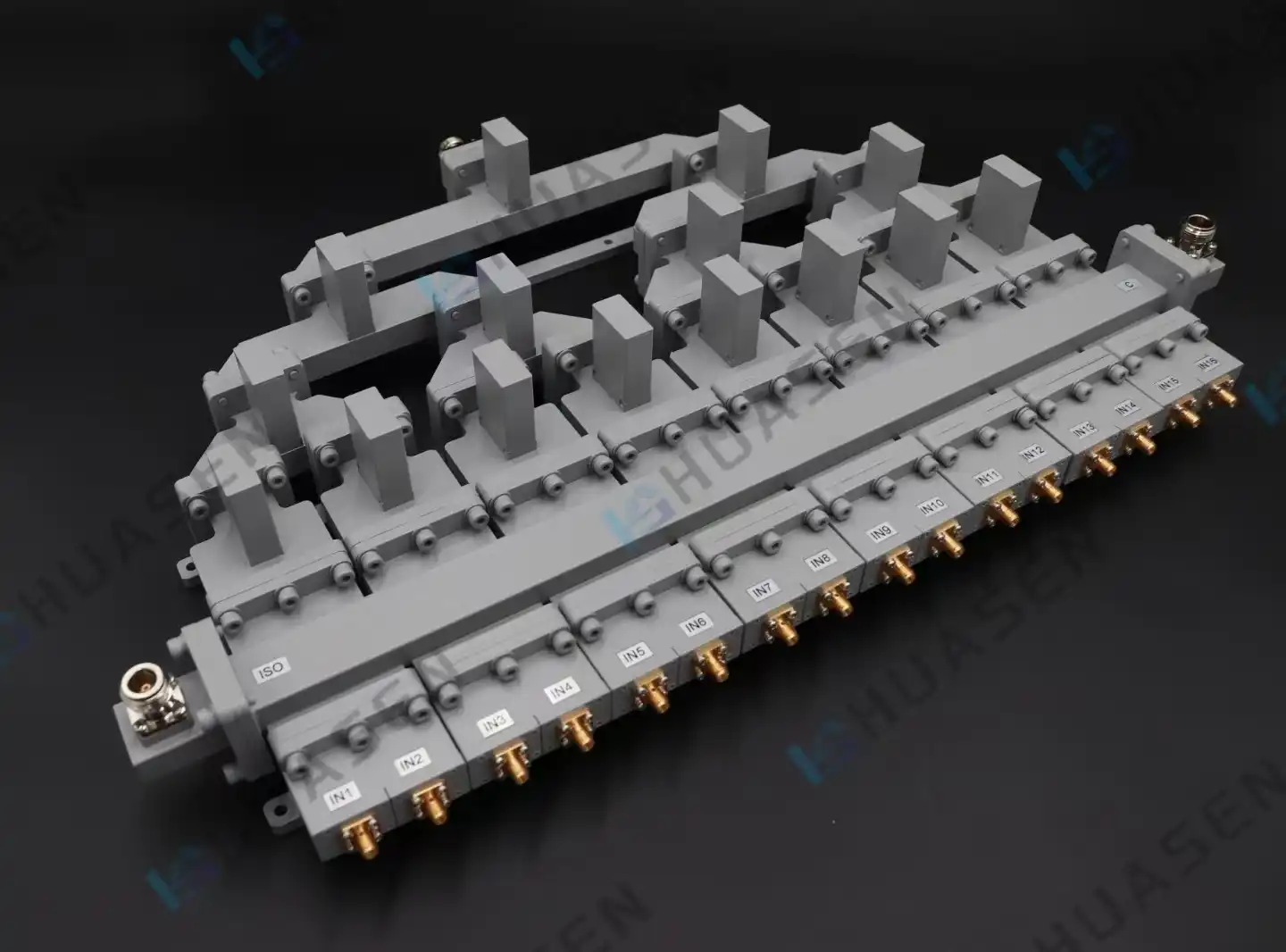
Technical Comparison of Wilkinson vs Hybrid Coupler RF Combiners
Detailed performance analysis reveals how each technology addresses specific engineering challenges in RF system implementation. Understanding these technical distinctions enables informed decision-making during the procurement process.
Power Handling and Thermal Management
Power handling capability directly impacts system scalability, RF splitter, and reliability. Wilkinson combiners face thermal limitations from their isolation resistors, which dissipate power proportional to the isolation requirement. High-power implementations require careful thermal design and often utilise forced-air cooling or heat-sinking strategies. Hybrid couplers achieve superior power handling through their resistorless design. The coupled-line structure distributes electromagnetic fields across larger conductor surfaces, reducing current density and associated losses. This advantage becomes pronounced in transmitter combining applications where kilowatt-level power handling is required.
Frequency Response and Bandwidth Considerations
Bandwidth performance significantly influences system flexibility and cost-effectiveness. Wilkinson designs typically operate across 20-30% fractional bandwidth while maintaining specified performance levels. The quarter-wave design constraint limits broadband operation unless complex multi-section implementations are employed. Hybrid couplers demonstrate exceptional bandwidth characteristics, often achieving multi-octave performance through careful impedance tapering and coupling optimisation. This broadband capability reduces inventory requirements and simplifies system design in applications spanning multiple frequency bands.
Signal Integrity and Linearity Performance
Signal quality preservation becomes critical in modern communication systems with complex modulation formats. Both combiner types exhibit excellent linearity when operated within their design parameters. Wilkinson combiners provide superior isolation, preventing signal leakage that could degrade adjacent channel performance. Hybrid couplers maintain excellent amplitude and phase balance across their operating bandwidth. This characteristic proves essential in applications requiring precise signal relationships, such as diversity combining or interference cancellation systems.
Practical Guidance on Selecting RF Combiners for Procurement
Strategic procurement decisions require balancing technical performance requirements against cost considerations and supplier capabilities. Understanding application-specific needs guides the selection process toward optimal solutions.
Application-Specific Selection Criteria
Base station infrastructure applications typically favour Wilkinson combiners for their isolation performance and cost-effectiveness. The ability to combine multiple amplifier outputs while preventing interaction makes these devices ideal for cellular and wireless infrastructure deployments. Power handling requirements and environmental specifications drive the selection of specific implementation approaches. Phased array and beamforming applications demand the phase control capabilities of hybrid couplers. Military radar systems, satellite communications, and advanced wireless infrastructure rely on these devices for their directional coupling and phase quadrature outputs. The broader bandwidth capabilities also support multi-band operation requirements.
Supplier Evaluation and Quality Assurance
Procurement professionals must evaluate supplier capabilities beyond basic technical specifications. Manufacturing consistency, quality control processes, and long-term supply chain stability influence the total cost of ownership. Suppliers with established track records in high-frequency component manufacturing provide confidence in performance reliability. Testing and validation protocols become essential for mission-critical applications. Vector network analyser measurements verify insertion loss, return loss, and isolation performance across the specified frequency range. Environmental testing ensures reliable operation across temperature, humidity, and vibration requirements.
Cost-Benefit Analysis and ROI Considerations
Total system cost extends beyond component pricing to include integration complexity, testing requirements, and long-term maintenance considerations. Wilkinson combiners often provide lower initial costs but may require additional thermal management in high-power applications. Hybrid couplers command premium pricing but offer superior performance in demanding applications. The broadband capability can reduce system complexity by eliminating multiple narrow-band components. Long-term reliability and consistent performance justify the investment in critical applications.
Implementation Examples and Case Studies
Real-world deployment examples demonstrate the practical advantages of each combiner technology across different industry sectors. These case studies provide valuable insights for similar application development.
Telecommunications Infrastructure Deployment
A major cell phone company recently updated their base RF splitter station infrastructure to handle 5G across a number of frequency bands. Wilkinson combiners were used to combine the outputs of eight power amplifier units. This made the total radiated power 500 watts, and the isolation between the amplifier chains was very good. It was possible to get less than 0.25 dB of insertion loss and more than 25 dB of separation across the 3.5 GHz band. Thermal management used forced-air cooling and aluminium heat sinks to keep junction temperatures below 85°C when traffic was heavy. The modular design made deployment quick and made upkeep easier in the field.
Aerospace and Defence Applications
A new program for developing phased array radars chose hybrid couplers to be used in their beam forming network. The system had to be able to precisely control amplitude and phase over a frequency range of 2:1 and handle power levels of kilowatts. Across the X-band frequency range, the hybrid coupler reached amplitude balance of ±0.1 dB and phase balance of ±2 degrees. As part of the environmental approval, the temperature ranged from -55°C to +125°C, the product was tested for vibrations according to MIL-STD-810, and it was tested at 70,000 feet above sea level. The strong design made sure that it would work reliably for the required 20 years.
Industrial and Scientific Applications
To power superconducting cavity resonators in a particle collider, RF power had to be combined. The application needed to be able to handle a lot of power, have low insertion loss, and work reliably in an area with a lot of radiation. With less than 0.1 dB of insertion loss, custom Wilkinson combiners made of silver-plated copper were able to handle 2.5 MW of power. Radiation-hardened materials and special coats made sure that the structure would stay stable over time, even after being hit by neutrons and gamma radiation. The design included features for remote tracking to help plan preventative maintenance.
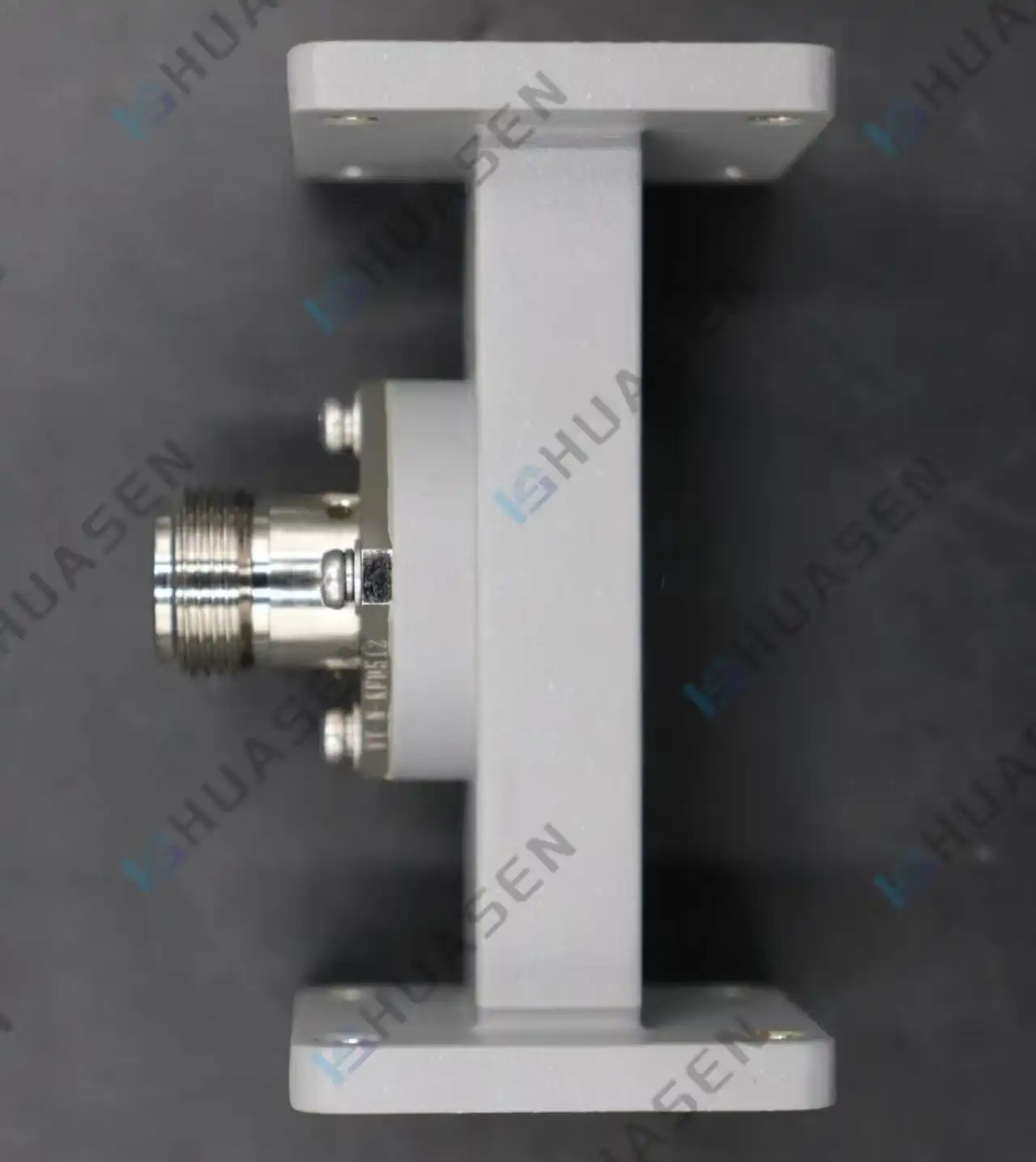
Future Trends and Strategic Insights for RF Combiner Procurement
The future of RF combiner development and procurement plans will be shaped by new technologies and changing market needs. Knowing about these trends lets you plan ahead and get a competitive edge.
Technological Innovation and Integration Trends
New combiner architectures with better performance characteristics are possible thanks to advances in manufacturing methods. Additive manufacturing lets you make parts with complicated inside shapes that improve the way electromagnetic fields are distributed while also making them smaller and lighter. These new ideas are especially helpful for aerospace and mobile applications that have to deal with a limited area. When digital control systems are added, adaptable combining networks are made that improve performance in real time. Smart combiners use sensors and control algorithms to account for changes in the surroundings and the ageing of parts. This feature makes the service last longer while keeping performance at its best throughout the operating envelope.
Market Evolution and Procurement Strategies
The market for RF components is still moving toward suppliers with a wide range of technologies and the ability to make parts all over the world. More and more, procurement plans focus on partnerships with suppliers instead of just doing business with them. Long-term contracts keep costs stable and make sure that the technology plan is aligned. As system needs become more specific, the ability to customise becomes a key differentiator. Companies that offer design modification services and fast prototyping cut down on development risks and speed up the time it takes to get a product on the market. This adaptability is especially useful for new apps whose needs are changing over time.
Sustainability and Lifecycle Considerations
Environmental laws and business RF combiner sustainability efforts affect the criteria used to choose components. Lead-free soldering, RoHS compliance, and products that can be recycled become the norm. When suppliers show they care about the earth, they get an edge in the procurement process. More and more, end-of-life disposal prices and environmental impact assessments are being added to lifecycle cost analysis. Parts that can be taken apart and reused are in line with the ideas of the cycle economy and lower the total cost of ownership.
Conclusion
Choosing between Wilkinson and hybrid coupler RF combiners relies on the needs of the application, the level of performance that is most important, and the limitations of the system. Wilkinson designs work best in situations that need good separation and cost-effective power combining. Hybrid couplers, on the other hand, offer better bandwidth and phase control for complex signal processing tasks. To get the best results for a system, modern procurement strategies need to find a balance between technical performance, supplier skills, long-term support, and total lifecycle costs.
FAQ
1. What are the primary differences between Wilkinson and hybrid coupler designs?
Wilkinson combiners use quarter-wave transmission lines with isolation resistors to achieve power splitting and combining with excellent port isolation. Hybrid couplers employ coupled transmission line structures to create directional coupling with precise phase relationships. The fundamental difference lies in their isolation mechanisms and resulting performance characteristics.
2. How do power handling capabilities compare between these combiner types?
Hybrid couplers typically achieve superior power handling due to their resistorless design, which eliminates thermal losses from isolation elements. Wilkinson combiners face power limitations from their isolation resistors, though careful thermal management can extend their capabilities. High-power applications often favour hybrid designs for this reason.
3. Which combiner type offers better bandwidth performance?
Hybrid couplers generally provide broader bandwidth operation, often covering multi-octave frequency ranges while maintaining performance specifications. Wilkinson designs typically operate across 20-30% fractional bandwidth due to their quarter-wave design constraints, though multi-section implementations can extend this range.
4. What environmental factors affect combiner performance?
Temperature variations can affect both combiner types through thermal expansion and dielectric property changes. Wilkinson combiners may experience thermal drift in their isolation resistors, while hybrid couplers can show coupling variations due to mechanical dimensional changes. Proper material selection and thermal compensation techniques address these concerns.
5. How do cost considerations influence combiner selection?
Wilkinson combiners typically offer lower initial costs but may require additional thermal management in high-power applications. Hybrid couplers command premium pricing but provide superior performance and broader bandwidth capabilities. Total system cost analysis should include integration complexity, testing requirements, and long-term reliability factors.
Partner with Huasen Microwave for Premium RF Combiner Solutions
Huasen Microwave Technology brings three decades of expertise in high-frequency component development to your most challenging RF system requirements. Our engineering team specialises in both Wilkinson and hybrid coupler RF combiner designs, offering customizable solutions that meet stringent performance specifications across telecommunications, aerospace, and defence applications. Whether you need a reliable rf combiner supplier for volume production or specialised designs for unique applications, our proven track record delivers consistent quality and performance. Contact our technical sales team at sales@huasenmicrowave.com to discuss your specific requirements and discover how our advanced rf combiner technology can optimise your system performance.
References
1. Pozar, David M. "Microwave Engineering: Wilkinson Power Dividers and Hybrid Couplers." 4th Edition, John Wiley & Sons, 2012.
2. Collin, Robert E. "Foundations for Microwave Engineering: Directional Couplers and Power Combiners." 2nd Edition, McGraw-Hill Education, 2001.
3. IEEE Standard 149-2021. "IEEE Recommended Practice for Antenna Measurements: RF Combiner Characterisation and Testing Procedures."
4. Cohn, Seymour B. "A Class of Broadband Three-Port TEM-Mode Hybrids." IEEE Transactions on Microwave Theory and Techniques, Vol. MTT-16, No. 2, February 1968.
5. Saleh, Adel A.M. "Planar Electrically Symmetric n-Way Hybrid Power Dividers/Combiners." IEEE Transactions on Microwave Theory and Techniques, Vol. MTT-28, No. 6, June 1980.
6. Reed, Jeffrey and Hsia, Hsiao. "RF Power Combining Techniques for High Power Transmitter Applications." Microwave Journal, Volume 45, Number 8, August 2002.
Send Inquiry