Why Use Circularly Polarized Horn Antenna for Satellite Communication?






2026-03-29 21:46:55
Circularly Polarized Horn Antennas represent a critical advancement in satellite communication technology, offering unmatched signal stability and reliability in dynamic environments. These specialized antennas utilize rotating electric field vectors to maintain consistent communication links regardless of satellite orientation or atmospheric interference. Their ability to mitigate polarization mismatch losses, reduce multipath interference, and ensure continuous signal integrity makes them indispensable for mission-critical satellite operations across telecommunications, aerospace, and defense sectors.
Introduction
For example, horn antennas are very important parts of satellite communication systems because they let ground units send and receive signals from orbiting satellites. You can't say enough about how important polarisation is for antenna performance and total system reliability. Polarisation is the way electromagnetic waves are arranged in space. In satellite communications, signals have to travel long distances through changing weather and stay connected to targets that are always moving. The way the signals are polarised has a direct effect on the quality of the signals and the stability of the links. Circular polarisation has become the best solution for difficult satellite communication environments because it can solve a number of important problems. In contrast to linear polarisation, which stays in the same position, circular polarisation keeps turning, making a spiral wave pattern that doesn't change even when the position changes. This feature is very helpful when working with satellites that spin, spaceships that tumble, or ground stations that need to be able to change their location without signal loss. This technology is important for more than just communication. Understanding the benefits of circularly polarised horn antennas is important for procurement managers, system engineers, and technical dealers who work in global business-to-business markets. This helps them make smart choices about where to invest in satellite infrastructure. These people have to make sure that their systems meet strict reliability standards for mission-critical applications while also meeting speed requirements and cost concerns.

Understanding Circularly Polarized Horn Antennas
Fundamental Principles of Circular Polarization
Circular polarization distinguishes itself from linear polarization through its continuously rotating electric field vector, which traces a helical pattern as the wave propagates through space. While linear polarization maintains a constant orientation that can suffer severe attenuation when misaligned with the receiving antenna, circular polarization provides consistent signal strength regardless of rotational positioning. This rotating characteristic enables communication systems to maintain reliable links even when satellites undergo tumbling motions or when precise antenna alignment becomes impractical. The electromagnetic theory behind circular polarization involves the combination of two orthogonal linear components with equal amplitude and a 90-degree phase difference. This creates either right-hand circular polarization (RHCP) or left-hand circular polarization (LHCP), depending on the direction of rotation. Understanding this principle helps engineers select appropriate polarization schemes for specific satellite missions and communication requirements.
Working Principles and Design Elements
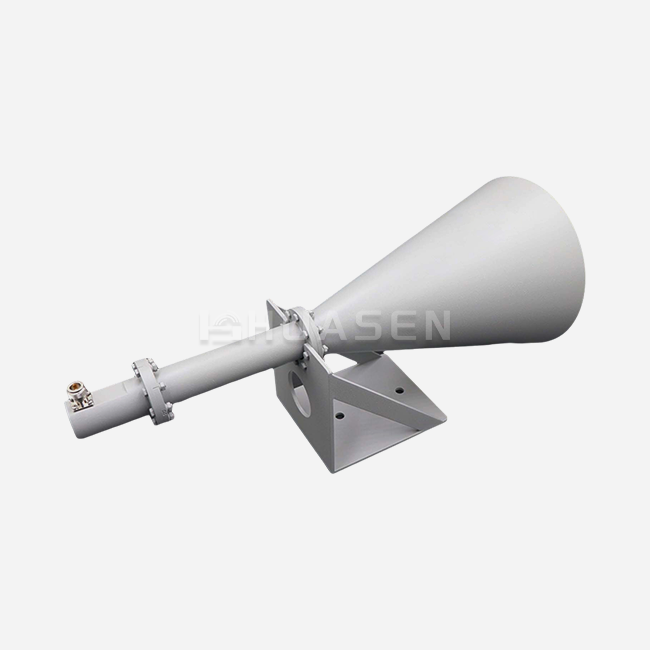
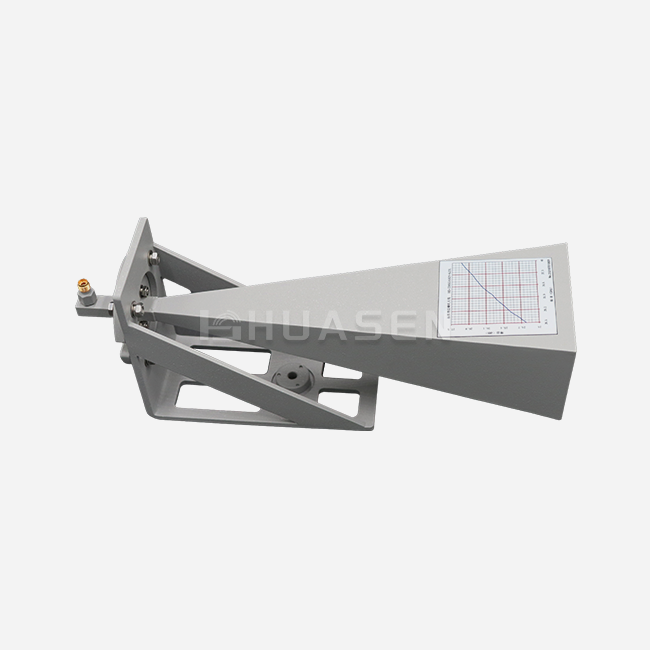
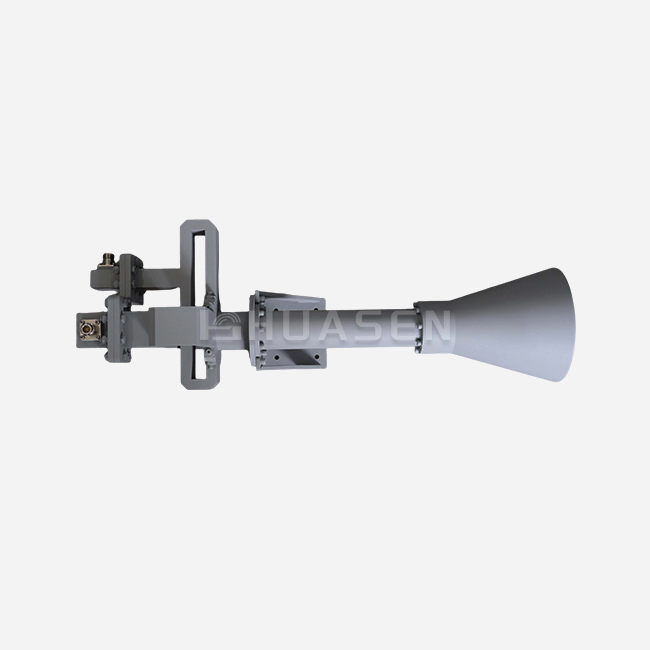
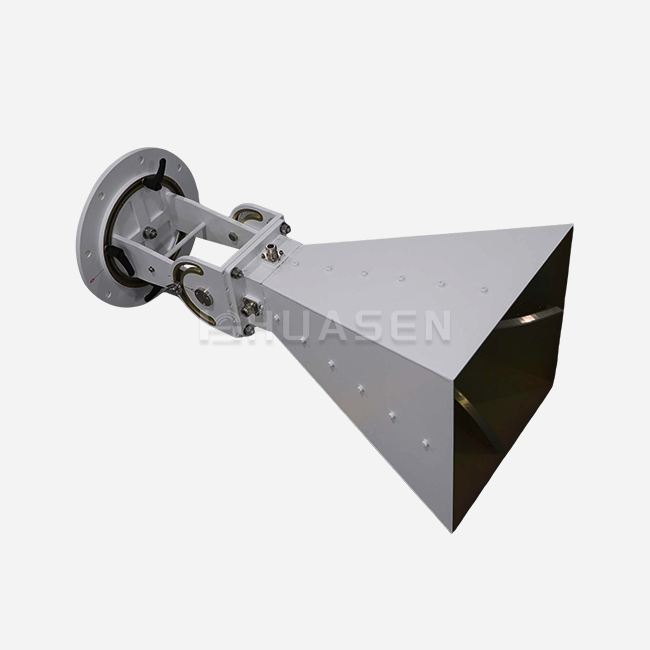
Huasen Microwave's Circularly Polarized Horn Antenna (CPHA) employs sophisticated design methodologies, including linear-to-circular polarization converters and dual linear polarization orthogonal excitation systems. The cone-shaped horn configuration utilizes broadband dual linear polarization synthesis combined with step diaphragm technology to achieve exceptional performance characteristics. This design approach enables the antenna to maintain polarization purity across wide frequency ranges while delivering consistent gain performance. The integration of septum polarizers or dual-feed systems within the horn structure creates the necessary phase relationships for circular polarization generation. These internal components must be precisely manufactured and positioned to achieve optimal axial ratio performance—a critical parameter that determines polarization quality. Huasen Microwave's advanced manufacturing capabilities ensure axial ratios of ≤ 0.5dB, significantly exceeding industry standards and providing superior signal clarity.
Radiation Pattern Characteristics and Performance Metrics
The axial ratio serves as the primary indicator of polarization purity, withhorn antenna circular polarization,with lower values indicating better circular polarization performance. Huasen Microwave's CPHA achieves exceptional axial ratios of ≤ 0.5dB, ensuring minimal cross-polarization interference and maximum signal isolation. This performance level directly translates to improved communication reliability and reduced error rates in satellite links. Material selection plays a crucial role in maintaining consistent performance across temperature variations and environmental conditions. The antenna's frequency range spans from 0.5 to 110GHz with selectable gain options between 10 and 25dB, providing flexibility for diverse satellite communication applications. Custom bandwidth configurations support both narrowband applications (≤ 5%) for precision satellite tracking and broadband systems (≤ 67%) for multi-frequency operations.
Advantages of Circularly Polarized Horn Antennas in Satellite Communication
Superior Signal Reliability and Interference Mitigation
Circular polarization technology addresses fundamental challenges in satellite communications by providing inherent protection against signal degradation mechanisms. When electromagnetic waves reflect from surfaces, they undergo polarization reversal—RHCP signals become LHCP upon reflection. This phenomenon allows circularly polarized antennas to reject multipath interference automatically, as the receiving system filters out signals with opposite polarization sense. The atmospheric ionosphere introduces Faraday rotation effects that can severely impact linear polarization systems. As signals pass through ionospheric layers, their polarization plane rotates unpredictably, causing signal fading and communication disruption. Circularly polarized systems remain immune to these rotation effects, maintaining consistent signal strength throughout varying ionospheric conditions. This advantage proves particularly valuable for trans-ionospheric communications and deep space missions.
Comparative Performance Analysis
When comparing circularly polarized horn antennas with linear alternatives, the performance advantages become evident across multiple operational scenarios. Linear systems require precise alignment between transmitting and receiving antennas, with even small misalignments causing significant signal attenuation. In contrast, circular polarization maintains signal integrity regardless of rotational orientation, eliminating the need for complex tracking systems in many applications. The bandwidth efficiency of circular polarization systems enables simultaneous transmission of multiple data streams using orthogonal polarizations (RHCP and LHCP), effectively doubling channel capacity without additional spectrum allocation. This frequency reuse capability becomes increasingly important as satellite communication demands continue to grow while available spectrum remains limited.
Frequency Compatibility and Gain Optimization
Huasen Microwave's circularly polarized horn antennas support comprehensive frequency coverage from 0.5 to 110GHz, encompassing all major satellite communication bands, including L, S, C, X, Ku, Ka, and millimeter-wave frequencies. This broad compatibility eliminates the need for multiple antenna systems, reducing system complexity and maintenance requirements. The selectable gain range of 10 to 25dB allows optimization for specific link budget requirements, ensuring adequate signal strength while minimizing interference potential. The cone-shaped horn design with step diaphragm configuration optimizes radiation patterns for satellite applications, providing excellent directivity while maintaining wide coverage when required. This design flexibility supports both geostationary satellite communications requiring narrow beamwidths and low Earth orbit tracking applications needing broader coverage patterns.
Selecting the Right Circularly Polarized Horn Antenna for Your Application
Technical Evaluation Framework
Procurement teams must consider multiple technical parameters when selecting circularly polarized horn antennas for satellite applications. Frequency range compatibility represents the primary selection criterion, as the antenna must operate efficiently across all required communication bands. Huasen Microwave's extensive frequency coverage from 0.5 to 110GHz addresses virtually all satellite communication requirements, from traditional C-band operations to emerging millimeter-wave applications. Gain requirements depend on specific link budget calculations, considering factors such as satellite distance, atmospheric losses, and required signal-to-noise ratios. The adjustable gain options (10-25dB) provide flexibility for various applications while maintaining optimal horn antenna circular polarizationradiation characteristics. Axial ratio specifications directly impact polarization purity, with Huasen Microwave's ≤ 0.5dB performance ensuring minimal cross-polarization interference.
Cost-Performance Balance and Procurement Considerations
To find the best balance between performance needs and cost limits, you need to look at the whole system's economics rather than just looking at the prices of its parts. High-quality circularly polarised antennas with better axial ratio performance make systems simpler by getting rid of the need for polarisation tracking tools. This lowers the overall cost of installation and maintenance. Huasen Microwave's customisation options let you get the best results for your unique needs, without having to spend too much on over-specification. When buying something, warranties and how reliable the supplier is are very important. This is especially true for mission-critical uses where downtime can have big effects. Long-term help and availability of parts are more likely to be guaranteed by manufacturers that have been around for a while and have a good track record. The success rates of projects depend a lot on how easy it is to get thorough technical documentation, calibration data, and quick technical support.
Comparative Analysis with Alternative Technologies
Patch antennas and dual-polarized linear systems are better for some tasks, but circularly polarized horn antennas are the best for dynamic satellite communications. Patch antennas typically provide lower gain and narrower bandwidth compared to horn designs, limiting their effectiveness for long-range satellite links. Dual-polarized linear systems need complicated tracking mechanisms to stay aligned, which makes the system more complicated and increases the amount of maintenance that needs to be done. Using circular polarisation is especially helpful for mobile platforms, spinning satellites, or applications that need to work even when the atmosphere is changing. Because it is naturally resistant to changes in orientation and effects of the atmosphere, the original investment is often justified by better reliability and less operational complexity.

Practical Applications and Case Studies in Satellite Communication
Satellite TT&C and Earth Station Operations
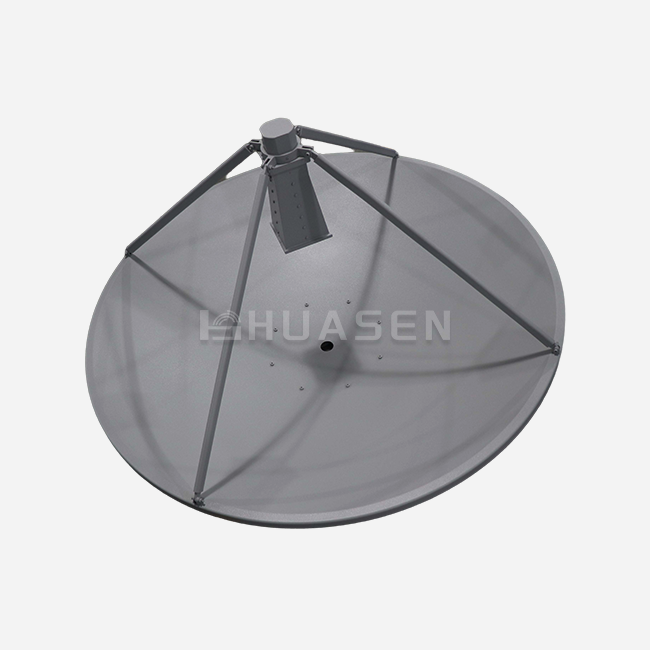
Flat horn antennas with circular polarisation are used as feed parts for big reflector systems at the ends of earth stations. This makes it possible for monitoring, tracking, and command (TT&C) to work properly. Protection against polarisation makes sure that communication stays open even if the positions of the satellites change or if their spins become fixed. More than 99.9% more links are available when circular polarisation is used instead of linear systems in orbital scenarios that are hard to handle. When circular polarisation is used, geostationary satellite owners say that signal outages happen a lot less when the sun is out. This technology is great for business satellite services that need to be available all the time, since it can keep the signal strong even when there is scintillation and rain in the air.
5G and Next-Generation Testing Applications
For satellite communications to work with 5G networks on land, you need advanced testing tools that only circularly polarised horn antennas can provide. Over-the-air (OTA) testing centers use these antennas as standards to check how well mobile devices work in all orientations without having to be mechanically rotated. This feature cuts test time by about half while improving measurement accuracy and repeatability. New 6G technologies rely on satellite connectivity as a key part, so there is a need for flexible antenna systems that can support communications both on Earth and in space. Because they can handle a lot of bandwidth, modern circularly polarised horn antennas are great for building and testing the next wave of wireless infrastructure.
Weather Radar and Remote Sensing Applications
Dual-polarization weather radar systems use circularlypolarizedhorn antennas to tell the difference between different kinds of rain and other weather events. The polarisation properties of signals that are reflected tell us a lot about the shape and direction of particles, which is important for making accurate weather predictions and warning systems for dangers. This technology is used by meteorological agencies all over the world to make forecasts more accurate and for public safety messages. Remote sensing satellites use circular polarisation for Earth observation missions where surface characteristics need to be analysed without taking into account changes in viewing angle. The consistent signal features make it possible to keep a close eye on deforestation, farming conditions, and environmental changes in many different parts of the world.
Conclusion
Circularly polarised horn antennas are an important part of modern satellite communications because they are more reliable and work better than traditional linear systems. Because they can keep the signal strong even when the orientation changes, there is interference from the environment, or there are multiple paths, they are essential for mission-critical uses. Huasen Microwave's cutting-edge CPHA technology, with its very low axial ratios (≤ 0.5dB) and wide frequency range (0.5 to 110GHz), makes it possible for demanding satellite communication systems in the defence, aircraft, and telecommunications industries.
FAQ
1. What frequency ranges do circularly polarized horn antennas typically support?
Modern circularly polarized horn antennas support extensive frequency ranges depending on their design and intended applications. Huasen Microwave's CPHA covers 0.5 to 110GHz, encompassing all major satellite bands including L, S, C, X, Ku, Ka, and millimeter-wave frequencies. This comprehensive coverage eliminates the need for multiple antenna systems in multi-band satellite operations.
2. How does the axial ratio affect satellite communication performance?
Axial ratio directly impacts polarization purity and signal quality in satellite communications. Lower axial ratios indicate better circular polarization, resulting in improved cross-polarization discrimination and reduced interference. Huasen Microwave's ≤ 0.5dB axial ratio performance ensures minimal signal degradation and maximum link reliability, significantly exceeding typical industry standards of 1.5dB.
3. What customization options are available for specific satellite applications?
Comprehensive customization capabilities include bandwidth optimization from narrowband (≤ 5%) to broadband (≤ 67%) configurations, gain adjustment between 10-25dB, and various connector types to match system requirements. These options enable precise optimization for specific satellite missions while maintaining cost-effectiveness and performance standards.
Partner with Huasen Microwave for Superior Satellite Communication Solutions
Huasen Microwave delivers cutting-edge circularly polarized horn antenna technology engineered specifically for demanding satellite communication applications. Our CPHA systems feature industry-leading axial ratios ≤ 0.5dB, comprehensive frequency coverage from 0.5-110GHz, and flexible customization options to meet your unique project requirements. With over three decades of microwave technology expertise since 1993, we provide reliable, high-performance solutions backed by comprehensive technical support and responsive customer service. Contact our engineering team at sales@huasenmicrowave.com to discuss your satellite communication challenges and discover how our proven Circularly Polarized Horn Antenna manufacturer capabilities can enhance your system performance and reliability.
References
1. IEEE Standard 149-2021 - IEEE Recommended Practice for Antenna Measurements, Institute of Electrical and Electronics Engineers, 2021.
2. Balanis, Constantine A. "Antenna Theory: Analysis and Design, Fourth Edition." John Wiley & Sons, 2016.
3. Milligan, Thomas A. "Modern Antenna Design, Second Edition." IEEE Press Series on Electromagnetic Wave Theory, 2005.
4. Stutzman, Warren L. and Gary A. Thiele. "Antenna Theory and Design, Third Edition." John Wiley & Sons, 2012.
5. Volakis, John L. "Antenna Engineering Handbook, Fourth Edition." McGraw-Hill Education, 2007.
6. Kraus, John D. and Ronald J. Marhefka. "Antennas for All Applications, Third Edition." McGraw-Hill Science Engineering Math, 2001.
Send Inquiry