Why Is Coax Cable Essential in Communication Networks?






2026-06-16 22:06:31
Coax Cable is still an important part of professional communication networks for sending high-frequency signals. Its protected design keeps electromagnetic interference to a minimum while keeping the signal's integrity in demanding environments, such as 5G base stations and aircraft radar systems. For system designers, test labs, and equipment makers who can't skimp on reliability or phase stability, Coax Cable's ability to handle frequencies from DC to 60 GHz with predictable insertion loss and low VSWR makes it essential.
Understanding Coax Cable: Structure, Types, and Functionality
The Layered Architecture That Protects Your Signals
The beauty of Coax Cables lies in the way they are built: they are circular. The RF signal is carried by a solid or stranded wire at the heart. This is usually copper that has been covered with silver. Around this wire is a dielectric insulator made of PTFE or FEP materials. This determines how fast the line can send signals and how much temperature it can handle. The protective layer, which can be solid or braided, keeps radiated energy inside and stops interference from outside sources. Wearing an outer jacket protects your skin from wear and tear, water, and UV rays.
This layered design gives you control over the characteristic resistance at either 50 or 75 ohms, based on your needs. At higher frequencies, the dielectric material has a direct effect on the speed of the signal and the rate at which it is attenuated.
Types That Match Your Application Profile
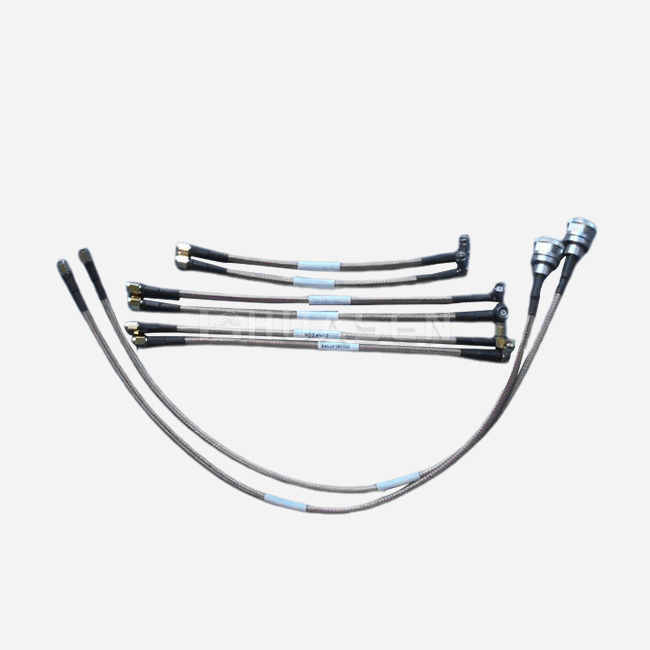
Different types of transmission systems need different types of cables. Stranded conductors used in flexible assemblies work well in test settings where lines move back and forth a lot. For permanent placements in base stations and radar systems, semi-rigid types with solid outer wires work better as shields. Conformable wires are a good compromise because they can be hand-formed for one-time routing and still provide good shielding once they are placed.
The performance is greatly affected by the thickness of the cable. Smaller diameter wires, like RG316, make placement more flexible, but they lose more signal per meter. Long runs with larger units like the LMR-400 have less signal loss, which is very important when connecting antennas on faraway radio heads in distributed antenna systems.
How Signals Travel Through Coaxial Structures
Transmission line theory says that electromagnetic waves move between the center wire and the shield, which is how signals move through Coax Cable connections. The transmission speed is set by the dielectric constant of shielding materials, which is usually between 66% and 84% of light speed. Lower dielectric constants make information move faster, but they may make the mechanical qualities worse.
Skin effect and dielectric absorption cause insertion loss to rise with frequency. At 40 GHz, high-quality systems keep VSWR below 1.5 and insertion loss below 6.5 dB, which are important requirements for millimeter-wave communications. Using time-domain reflectometry to measure to within one degree of electrical length, phase-matched sets make sure that signals arrive at the same time in phased array antennas.
Why Coax Cable Remains Vital vs Other Technologies
Shielding Superiority in High-Interference Environments
Ethernet twisted-pair lines and even some fiber optic systems aren't as good at blocking electromagnetic interference as Coax Cables. A Faraday cage effect is created by the continuous shield structure. This is important in places where radar emitters, high-power amplifiers, and dense RF equipment all work at the same time. For electronic warfare systems that must have data security and EMI immunity, military and aerospace uses require coaxial cable interconnects.
Cost-Effectiveness Across Deployment Scales
Long-distance communications are mostly done with fiber optics, but Coax Cable systems are better for shorter connections within equipment racks, between buildings, and in mixed fiber-coax networks because they are more cost-effective and perform better. When compared to fiber joining, installation requires less specialized training, and connectorization can happen in the field without the need for a clean room. In new low-PIM systems, passive intermodulation performance below -160 dBc meets carrier-grade standards without the cost of active optical components.
Durability in Harsh Operating Conditions
Depending on the jacket and dielectric specs, Coax Cables can handle temperatures ranging from -55°C to +200°C. Assemblies with IP67 and IP68 ratings, potting compounds, and adhesive-lined heat shrink can withstand salt spray and submersion, which are common in marine communications and offshore sites. Underground lines that are armored with curved stainless steel jackets are safe from damage from rodents and mechanical impacts.
Recent Advances Extending Performance Boundaries
Coax Cable technology today has changed from the old ways of doing things. At millimeter-wave frequencies, loss is lessened by improved insulating materials. Tighter impedance limits are possible across the whole frequency range, from DC to 60 GHz, thanks to more precise production methods. New types of connectors, such as push-pull couplings and blind-mate interfaces, make servicing easier in aircraft bays that are limited in space. These changes make Coax Cable systems more competitive with newer technologies, while still building on decades of field-proven dependability.
Selecting the Right Coax Cable for Your Communication Needs
Matching Cable Specifications to System Requirements
Before making a purchase choice, you should have a good idea of the working frequency, the insertion loss budget that you need, and the environmental exposure. Standard bendable systems with braided shields can be used in situations below 6 GHz. Systems that work at or above 40 GHz need stable-phase lines with low loss that are either solid or double-shielded to stop leaks and keep the phase coherence.
In emitter uses, the ability to handle power is important. High-temperature torsion-resistant versions can handle higher temperatures near power amps while still allowing for mechanical freedom during installation. Low-expansion dielectrics are used in phase-stable systems to keep electrical length changes to a minimum across a wide range of working temperatures. This is very important for beamforming networks and interferometry.
Connector Compatibility and Mechanical Interfaces
Standardizing interfaces makes it easier to connect systems. It has been shown that SMA links work reliably in test instruments with frequencies up to 18 GHz. 2.92 mm connections make the bandwidth useful up to 40 GHz while still working with SMA inputs. N-type connectors are strong enough to be used outside, and their bigger contact areas spread out mechanical stress during joining cycles.
Mounting needs affect the choice of connection. Panel-mount bulkhead designs make it possible for equipment spaces to be clean. Right-angle configurations let you move wires through tight areas without going over the minimum bend radius limits. Manufacturers that offer seven types of connectors, such as SMA, N, and 2.92mm versions, give big system designers the freedom they need to work with a wide range of equipment platforms.
Evaluating Manufacturers and Quality Certifications
Risk is lower when you work with sellers whose knowledge can be checked. Manufacturers who have been in business since 1993 and have their own research and development facilities know how to handle difficult custom needs. For defense uses, make sure it meets MIL-DTL-17 standards, and for European markets, look for RoHS approval. ISO 9001 quality control methods show that production processes are consistent.
Ask for test data that shows the vector network analyzer sweeps over the range of frequencies you've given it. Suppliers you can trust will give you insertion loss and VSWR data that show how well the product works without any resonance spikes or impedance discontinuities. The results of the mechanical pull-force test show that the connector's holding strength meets the requirements of IPC/WHMA-A-620 Class 3 for high-reliability uses.
Installation Best Practices and Maintenance Guidelines
Proper Handling Prevents Performance Degradation
To keep their specific electrical properties, Coax Cable systems need to be installed with care. Follow the minimum bend radius limits, which are usually six to ten times the width of the cable, to keep the dielectric from getting crushed and the middle conductor from deforming. When there is too much bending, impedance breaks happen, which show up as VSWR spikes at certain frequencies.
When installing the connection, make sure that the shield covers the whole thing and that the braided wires don't touch the center conductor. To get the recommended mating torque values, use measured torque tools. This will keep you from under-tightening, which lets water in, or over-tightening, which breaks the connector threads. When used outside, weather-sealed joints need to be properly heat-shrunk to keep their IP ratings.
Tools and Techniques That Ensure Reliable Connections
For professional construction, the right tools are needed. Crimp tools that are precisely sized for each connector and wire mix make sure that mechanical and electrical connections are always the same. With Coax Cable stripping tools, the jacket and dielectric sections can be taken off without damaging the shield or center wire. Testing cables for VSWR and insertion loss makes sure the quality of the setup is checked before the system is put together.
Routing methods are just as important as how well connectors are made. Secure wires at regular distances to keep the weight of the cords from putting stress on the connectors. Keep RF wires away from power cords to reduce interference caused by coupling. Drip loops keep water from getting into connectors along the wire path in outdoor setups.
Lifecycle Management and Troubleshooting Protocols
Set up regular review times to check joints for corrosion, mechanical damage, and water entry. Every year, portable network monitors should be used to check key links for degradation before they fail. Keep track of standard measures during installation so that you can see how performance changes over time.
Some common ways things go wrong are moisture getting into the dielectric and making it less effective, and connecting wear, making the contact resistance higher. If an assembly's VSWR rises above the limits set by the manufacturer or shows obvious mechanical damage, it should be replaced. Keep spare parts on hand so that you can change them quickly and keep mission-critical systems running as smoothly as possible.
Procurement Insights: Buying Coax Cable for Corporate and Wholesale Needs
Strategic Sourcing for Volume Deployments
For big projects, it's helpful to build relationships with makers who can make changes to their products. Custom assemblies made to exact electrical length specs get rid of the need for field changes and lower the cost of installation work. Protective caps and fittings that are already installed keep damage to a minimum during shipping and storage.
When getting parts in amounts that match deployment scales, buying them in bulk saves you more than 30% on the cost compared to buying them at retail. To keep your budget safe and get good unit costs, negotiate price levels that are in line with the stages of your project.
Evaluating Value-Added Service Offerings
In addition to product specifications, you should also look at how well the seller can support your project schedule. During the system architecture steps, design support helps choose the best cable routes and connectors. Samples are available so that interaction with current equipment can be tested before committing to large amounts of production. Options for expedited manufacturing work with tight plans that are common during building upgrades.
The level of a supplier's technical documentation shows how skilled they are. Full datasheets should have full two-port S-parameter data, mechanical models with dimensional tolerances, and values for the surroundings. Certificates of conformance that prove test results give customers more faith that the product will be the same on all big sales.
Aligning Procurement with Network Expansion Planning
Estimate how much cable will be needed based on when devices will be installed and how big the network is expected to get. Custom kits usually take between four and six weeks to make, but this depends on how complicated they are and how quickly they can be put together. Items on the critical path that need more time to be made should be bought early, and staging places should be set up so that inventory can be managed.
Set minimum order amounts by weighing the benefits of lower unit prices against the costs of keeping supplies. Plan transport times around building milestones to cut down on the time items are stored on-site and the damage that can happen during that time. Keep in touch with a number of skilled sources to make sure the supply chain can handle shortages of parts.
Conclusion
Coax Cable technology keeps giving unbeatable value in communication networks that need to send signals reliably, block electromagnetic waves, and last in harsh environments. Modern parts that can work from DC to 60 GHz and have an insertion loss of less than 6.5 dB at 40 GHz can handle the tough needs of 5G infrastructure, aircraft systems, and test instruments. When these important interconnects are properly specified, installed, and maintained, they keep the network running smoothly for as long as they're in use. By buying in bulk from makers with a lot of experience who offer a wide range of connectors and allow customization, businesses can put in place scalable, cost-effective solutions that keep up with changing technology needs.
FAQ
1. What frequency range do modern coaxial assemblies support?
Modern Coax Cable systems can handle frequencies from DC to 60 GHz, based on how the cable is made and which connectors are used. Standard types can handle uses up to 18 GHz, while precision 2.92mm connections can handle up to 40 GHz. For new uses, specialized millimeter-wave systems can hit 110 GHz.
2. How does cable length affect insertion loss?
The attenuation goes up linearly with the length of the wire. At any given frequency, signal loss doubles when the length of the circuit is doubled. Figure out your loss budgets based on the regularity of operation, and for longer runs, choose wires with a bigger diameter. Attenuation per meter drops by a lot when you go from a smaller width to a bigger one.
3. What defines low-PIM performance in base station cables?
Passive intermodulation happens when metals that are not the same make nonlinear joints that send out unwanted signals. Low-PIM assemblies get -160 dBc or better by carefully controlling the manufacturing process to keep it clean and make sure that all of the connectors and wire connections have the same amount of contact pressure. Performance under high-power situations is checked through testing.
4. Can coaxial assemblies achieve IP68 waterproof ratings?
When potted connection backshells and adhesive-lined heat shrink are used in the right way, they make hermetic seals that can withstand constant submersion. These designs keep out wetness that would damage dielectric qualities and rust metal parts, so electrical performance is kept up in harsh marine and outdoor settings.
Partner with Huasen Microwave for Custom Coaxial Solutions
With more than 30 years of experience in RF engineering, Huasen Microwave Technology helps companies that put together transmission systems and make tools. We make special Coax Cable systems that work from DC to 60 GHz. They have insertion loss specs that meet the strictest needs, with VSWR under 1.5 and insertion loss below 6.5 dB at 40 GHz. You can pick from seven different types of connectors, such as SMA, N, and 2.92mm connections, that are standard, high-temperature torsion-resistant, and low-loss stable-phase.
Our engineering team can help you with design and fast development, whether you need phase-matched sets for a phased array radar, low-PIM kits for 5G infrastructure, or ruggedized wires for flight platforms. Get in touch with our experts at sales@huasenmicrowave.com to talk about your needs with a Coax Cable manufacturer with a track record of providing solutions that improve network performance and stability.
References
1. Pozar, David M. 2011: John Wiley & Sons. "Microwave Engineering, 4th Edition."
2. Garg, Ramesh, et al. "Microstrip Lines and Slotlines, 3rd Edition." Artech House, 2013.
3. You, Constantine A. Balanis. The 2012 edition of "Advanced Engineering Electromagnetics" was published by John Wiley & Sons.
4. Howard W. Johnson, Jr. 2003: Prentice Hall published "High-Speed Signal Propagation: Advanced Black Magic."
5. Tech company Agilent. A Technical Publication from 2008 published a "Agilent Coaxial Cable and Connector Care Application Note."
6. For Rizzi, Peter A. IEEE, 1988. "Microwave Engineering: Passive Circuits." Prentice Hall International.
Send Inquiry