What Is a DC Power Amplifier in RF Signal Systems?






2026-06-24 21:04:58
In RF signal systems, a DC Power Amplifier is a precise mechanical device that boosts weak radio frequency signals by using direct current as its main power source. It gives a stable, adjustable output across a wide frequency range. Instead of using AC-to-DC modules like most amplifiers do, these units take a DC input straight and turn it into boosted RF energy with very little distortion. The DC Power Amplifier is an important part of radar systems, satellite communications, internet infrastructure, and test equipment because it ensures that signals are stable and that power stays stable. This amplification technology solves some of the most important problems in current wireless systems by keeping linear gain, lowering phase noise, and making sure that the power supply stays steady even in the most demanding situations.
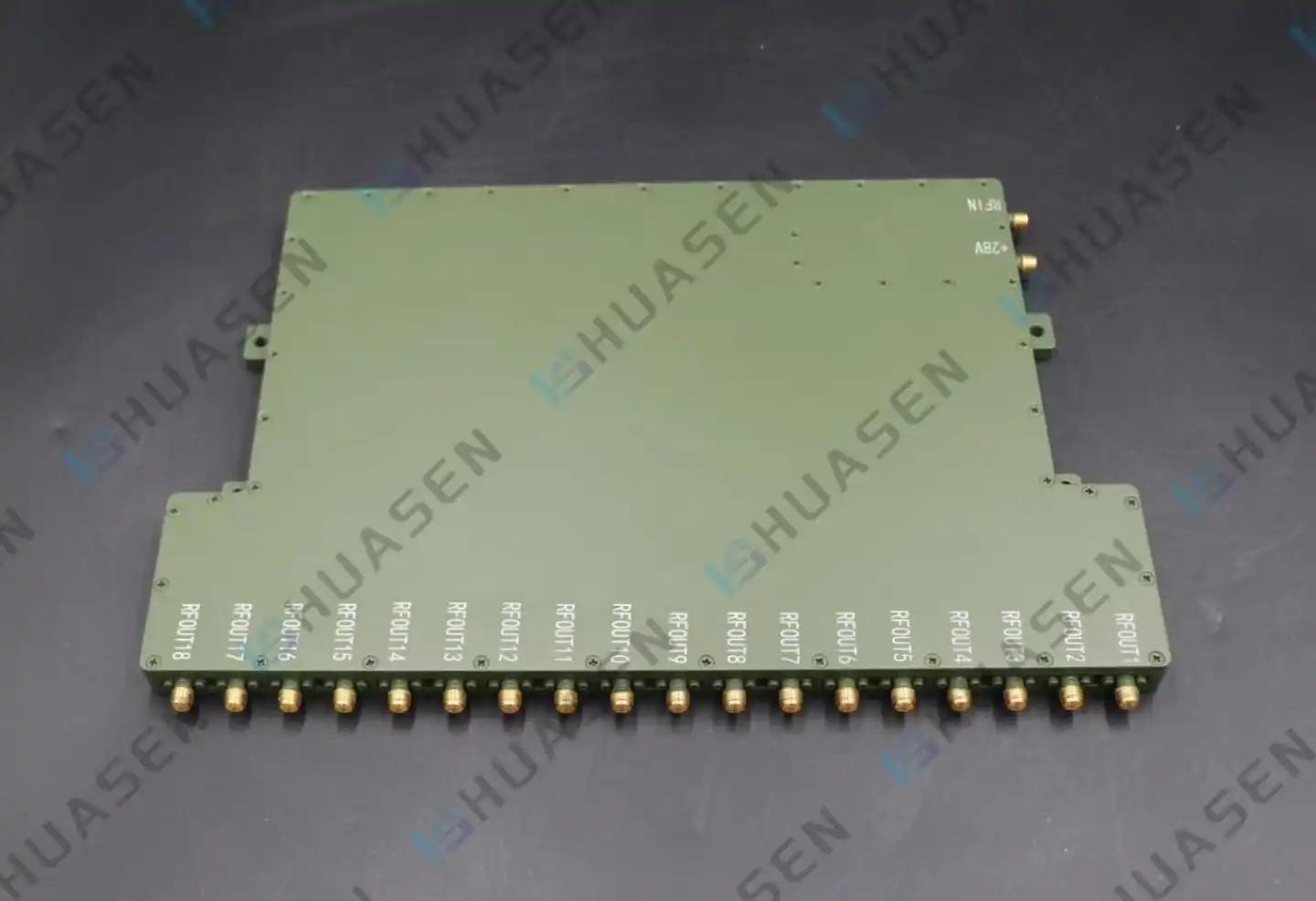
Understanding DC Power Amplifiers in RF Signal Systems
Core Architecture and Operating Principles
A DC Power Amplifier processes RF signals using transistor-based gain steps and a DC supply. Power transistors, generally GaN or SiGe, adjust DC depending on input signal strength. This modulation occurs in precisely skewed working areas that preserve waveform shape and prevent harmonic production and intermodulation products that degrade signal quality.
Heat disposal is a key design consideration since linear amplification converts excess power into heat. Even while running 24/7, forced air cooling, liquid cooling loops, and high-conductivity heat sinks keep junction temperatures safe. Engineers use bias points that balance linearity and efficiency. They know that a Class A operation has greater linearity but lower power efficiency, whereas Class AB has superior efficiency and tolerable distortion.
Frequency Response and Bandwidth Characteristics
Modern DC Power Amplifiers for RF applications operate across a wide bandwidth, from 0.1 GHz to 40 GHz, allowing them to operate with a variety of radar bands and transmission standards. The gain flatness standard ensures consistent amplification regardless of input frequency, typically within ±1 dB over the working band. This flat response prevents signal distortion in wideband systems like 5G large MIMO base stations and multiband satellite transponders.
Broadband matching networks at input and output ports enable this speed. These networks adjust impedance and reduce reflection losses, affecting power transmission. Good matching circuits keep VSWR below 1.5:1 throughout the operating range. This reduces transmission line standing waves and hot spots caused by signal echoes.
Linearity and Signal Fidelity Advantages
An amplifier's linearity is how well it matches an input signal without adding any undesired portions. DC Power Amplifiers are fairly predictable due to careful transistor selection and bias optimisation. Third-order intercept points (IP3) exceed +40 dBm in high-performance models. This consistency maintains constellation accuracy in digital modulation schemes like 256-QAM and prevents neighbouring channel interference in high-frequency situations.
Low intermodulation distortion (IMD) helps radar and electronic warfare detect bogus targets and find transmitters. Linear DC amplification eliminates switching noise and high-frequency ripple that destroy sensitive measurement equipment while characterising components and testing antennas.
Application Domains and System Integration
In high-fidelity signal replay, Huasen Microwave Linear DC Power Amplifiers excel. Phone companies utilise these amplifiers in base station front ends. They boost transmit power for 5G and 6G networks to improve reception in urban canyons and isolated places. The direct DC input eliminates power conversion stages, simplifying installation. This improves system reliability and cabinet space.
Satellite ground stations use these amplifiers to compensate for uplink path loss. They provide kilowatt-level output power and phase coherence across carrier signals. Small DC amplifier units help aerospace engineers develop phased array radar systems for planes and satellites. Lightness and vibration resistance determine component selection. Maritime communication systems benefit from rugged amplifiers with corrosion-resistant coatings and sealed casings approved for seawater exposure.
Labs characterise gadgets using DC Power Amplifiers. They generate RF signals to test antenna gain, filter insertion loss, and mixer conversion efficiency. When power levels can be altered without pauses, compression points and AM-PM distortion may be measured reliably.
Comparison and Selection of DC Power Amplifiers
Distinguishing Amplifier Topologies
DC Power Amplifiers and switching amplifiers handle signals differently. Transistors as on-off switches allow Class D and Class E amplifiers to exceed 90% efficiency. Burst currents induce gigahertz-range EMI and switching effects. To eliminate switching noise, linear DC amplifiers lose 30%–65% efficiency, depending on the class. The output is spectrally clean, ideal for accuracy.
Despite their similar appearance, operational amplifiers (op-amps) perform various functions. Op-amps can monitor and condition low-frequency signals, but they lack power and frequency response for RF applications. DC Power Amplifiers output amperes, not milliamperes. They bridge signal-level processing and antenna-driving power.
Performance Metrics for Procurement Decisions
Choosing the best DC Power Amplifier involves considering several interconnected criteria. The noise figure shows how much the amplifier decreases the signal-to-noise ratio. Receiver preamplifier steps benefit from values below 3 dB. Gain compression determines the input level when output power ends linearly. It also determines the maximum signal level before distortion is intolerable.
Power-added efficiency (PAE) measures how successfully an amplifier converts DC input power into RF output power, taking into consideration both the signal and the amplifier's power. Higher PAE reduces cooling and system costs, especially in high-duty-cycle applications like continuous-wave radar and TV broadcasting. System engineers balance linearity and efficiency. They know that pushing amps near saturation improves efficiency but increases distortion.
Long-term survival in severe temperatures and outdoor settings depends on temperature stability. Base station amplifier gain and output power must be steady from -40°C to +85°C. They accommodate transistor parameter changes with temperature-sensing feedback circuits.
Market Landscape and Technology Trends
RF power amplifiers are in demand worldwide as wireless technology becomes increasingly widespread. GaN technology is excellent for high-power applications because it has a higher power density and fits in smaller places without losing power. New GaN-on-silicon surfaces reduce production costs while maintaining wide-bandgap semiconductor performance.
Because they offer good noise performance above 20 GHz, silicon-germanium bipolar transistors are employed in 5G millimetre-wave low-noise amplifier (LNA) systems. These devices provide sensitive receiver front-ends that improve base station coverage and link budgets in signal-poor areas.
Procurement Guide for DC Power Amplifiers
Supplier Categories and Sourcing Strategies
To identify reliable DC Power Amplifier suppliers, and understand the sales path. OEMs like Texas Instruments and Analogue Devices offer catalogue items with standard features for consistent performance and availability. Application support resources like reference designs and training models speed up system development in these companies.
Specialised RF component manufacturers solely develop high-frequency products and are more scientific about matching network architecture, thermal management, and electromagnetic compatibility. Mission-critical radar, aviation, and telecoms require microwave parts from long-standing companies like Huasen Microwave Technology, founded in 1993.
Custom amplifier designers serve clients with unique demands that regular solutions can't meet. Suppliers offer customised solutions for certain frequency ranges, power levels, and environmental conditions. The wait time and minimum order quantity are frequently longer than for ordinary items.
Cost Structures and Budget Optimisation
The price for DC Power Amplifiers depends on the frequency range, output power, and technology node. Low-power amplifiers for test equipment and measurements cost hundreds to thousands of dollars, whereas kilowatt-class transmitter amplifiers cost over $50,000. Big savings apply to orders above 100 units. Some sellers offer 20–30% discounts for yearly contracts.
The initial purchase price is merely part of the ownership cost. Other factors include installation complexity, power consumption, and maintenance. An amplifier that requires elaborate cooling systems or regular recalibration may cost more than a more dependable, harsh-environment amplifier during its lifetime.
Quality Assurance and Compliance Requirements
MIL-STD-810 environmental testing and MIL-STD-461 electromagnetic interference must be satisfied for military and aviation usage. These markets' suppliers have AS9100-certified quality control systems. Lot tracking and burn-in testing detect newborn mortality issues before shipping.
Commercial telecommunications equipment must fulfil local electromagnetic compatibility regulations. FCC Part 15 in the US, EN 301 489 in Europe. Most markets need RoHS compliance, limiting lead and mercury consumption in the part manufacturing. Procurement teams verify supplier licenses and request product test data to ensure compliance.
How to Test and Verify DC Power Amplifiers?
Essential Measurement Procedures
In a controlled lab, check a DC Power Amplifier's fundamental specifications to ensure it works. To measure output power, regulated power meters or spectrum analysers are connected through accurate attenuators to reduce instrument input noise. Engineers monitor output power when changing input drive levels. They then produce gain compression curves showing the upper limit of linear functioning, P1dB.
Harmonic distortion measurements can determine spectrum purity by looking at output spectrum content at integer multiples of the fundamental frequency. Spectrum analysers reveal carrier-related harmonic values. Well-designed amplifiers lower second and third harmonics by 20–40 dB. Two-tone intermodulation tests assess third-order products with two closely spaced frequencies. This shows various signal handling, which is crucial for large communication systems.
Noise Figure and Signal Quality Assessment
Noise figure meters and vector network analysers with noise measurement profiles are needed to measure noise figures. The Y-factor approach calculates amplifier noise using known noise sources at two temperatures and the output power ratio. Careful calibration and link repeatability are needed to produce noise figure readings below 1 dB.
Amplifiers powering radar Doppler processing and phase-locked loop reference sources must characterise phase noise. At offset frequencies between 100 Hz and 10 MHz, signal source detectors detect single-sideband phase noise. This illustrates how the noise pedestal affects system timing jitter and reciprocal mixing.
Integration Verification and System-Level Testing
An amplifier added to a whole RF system must have matched resistance over the frequency spectrum. Vector network testers examine S-parameters, such as input/output return loss and forward gain (S21). Tuning matching networks may improve VSWR when amplifiers are linked to reactive impedance filters, switches, or antenna sections.
Real-world thermal testing validates the cooling system's suitability and identifies reliability concerns. Engineers monitor case temperature with thermocouples or thermal imaging cameras while amplifiers are running at full power. This keeps temperatures within datasheet limits throughout extended transmissions. MIL-STD-810 vibration testing demonstrates that installations may be operated on the move or in the air.
Future Trends and Innovations in DC Power Amplifiers for RF Systems
Semiconductor Material Advancements
Gallium nitride technology keeps getting better, allowing for higher rates and power levels. DC Power Amplifier designs working above 100 GHz with output powers greater than 10 watts have been shown to work in research labs. This makes it possible for small solutions for millimetre-wave 5G backhaul lines and car radar devices. Diamond surfaces, which conduct heat five times better than copper, could get rid of the thermal bottlenecks that stop multi-stage amplifier designs from putting out enough power.
Silicon carbide (SiC) supports make GaN devices more reliable by lowering the resistance to heat and the stress on the transistors. These improvements make the mean time between failures (MTBF) longer than 1 million hours. This meets the strict uptime needs of telecom infrastructure companies that build networks to last 20 years.
Digital Predistortion and Adaptive Linearization
Software-defined amplifier systems combine digital signal processing with analogue amplification to achieve a level of uniformity that has never been seen before. Digital predistortion (DPD) methods look at the properties of the output signal and apply inverse distortion to the input signals. This cancels out the nonlinearities that the amplifier's transfer function causes. This method lets Class AB and Doherty amplifiers get adjacent channel power ratios (ACPR) below -50 dBc while working close to saturation for the best efficiency.
Adaptive matching networks with adjustable capacitors and RF switches improve impedance transformation in real time, making up for changes in antenna VSWR caused by things like ice buildup or metal items nearby. These systems keep the amplifiers safe and make sure they give power efficiently even when the load changes without any help from a person.
Industry Demand Patterns and Market Growth
In the telecoms industry, operators are adding small cells to networks to make them denser and upgrading macro sites to massive MIMO setups, which need dozens of amplifier chains per base station. As more powerful advanced driver assistance systems (ADAS) and self-driving car platforms use multiple radar devices to sense their surroundings in all directions, the number of uses for automotive radar grows.
Defence upgrade projects spend money on radar and electronic warfare systems that can change quickly and are controlled by software. These systems use wideband amplifier technologies. Space research projects need amplifiers that are resistant to radiation and can work in high-energy particle settings that are outside of Earth's magnetosphere.
Conclusion
These days, DC Power Amplifiers are an important part of RF signal chains because they connect low-level signal sources to high-power communication needs. They work in a straight line, can accept direct DC input, and have a wide frequency range, which makes them perfect for uses that need high signal integrity and spectral purity. By knowing the differences between amplifier topologies, analysing key performance metrics, and following thorough testing methods, you can make smart purchasing choices that improve system performance while keeping costs low. New semiconductor materials and digital linearization techniques promise even better efficiency, power density, and operational flexibility. This means that DC Power Amplifiers will continue to be an important part of radar systems, telecommunications infrastructure, and precision test equipment for many years to come.
FAQ
Q1: How does amplifier gain flatness affect system performance?
Gain flatness tells you if an amplifier's amplification is the same across its entire working span. Changes greater than ±1 dB lead to frequency-dependent signal distortion, which is a big problem for wideband communication systems that send multiple channels at the same time. Radar systems need flat gain to keep finding targets accurately across frequency-changing patterns, while test equipment needs constant amplification when measuring spread frequencies.
Q2: How should high-power DC amps be cooled?
Fans move cool air across finned heat sinks in forced air cooling for amps up to several hundred watts. Kilowatt-class devices are cooled by liquids like water or special coolants that move fluid through cold plates that are in direct thermal contact with transistor packages. In sealed military situations where fans could be a problem for durability, conduction cooling moves heat to the outside of the frame.
Q3: Can DC power amplifiers operate with battery sources?
Battery operation is good for travel and emergency backup uses, but as the battery drains, voltage control becomes necessary. DC-DC converters keep the supply rails stable even when the input voltage changes. This keeps the amplifier gain and output power stable during the battery's rundown cycle. Lithium-ion batteries have a good energy efficiency for portable devices that need to send data continuously for several hours.
Q4: Why do specs list multiple power levels?
Depending on how they are used, amplifiers have different power outputs. Saturated output power means the highest level of performance with a lot of distortion, while P1dB means the highest level of power while still keeping linear operation. When signals are pulsed or modulated, the average power values take into account heat cycle effects that are different from continuous-wave operation.
Partner with Huasen Microwave for Your RF Amplification Needs
Huasen Microwave Technology has a wide range of linear DC Power Amplifiers that are perfect for challenging RF uses and are ready to help you with your system integration projects. Our amplifiers provide steady output from 0.1 GHz to 40 GHz, and their gain flatness is usually within ±1 dB. This means that they will always work well, whether you're setting up 5G networks, improving radar systems, or checking precision components. We offer customisation options to meet your unique frequency, power, and mechanical interaction needs, based on our thirty years of experience with microwave components. During the whole planning process, our engineering team provides specific technical support, such as simulation help, sample evaluation programs, and full documentation of test data. Reliability is still very important to us when we make things. Every amplifier goes through strict quality control steps that make sure it meets international standards and works well for a long time. As a reputable DC Power Amplifier maker that works with telecoms companies, aerospace integrators, and defence contractors all over the world, we keep our communication lines open and our production options fluid so that we can handle both small batches and large operations. Get in touch with our expert sales team at sales@huasenmicrowave.com to talk about how our RF power options can help your system work better.
References
1. Cripps, S. C. (2006). RF Power Amplifiers for Wireless Communications (2nd ed.). Norwood, MA: Artech House.
2. Grebennikov, A., Sokal, N. O., & Franco, M. J. (2012). Switchmode RF and Microwave Power Amplifiers (2nd ed.). Burlington, MA: Academic Press.
3. Bowick, C., Ajluni, C., & Blyler, J. (2008). RF Circuit Design (2nd ed.). Oxford: Newnes.
4. Gonzalez, G. (1997). Microwave Transistor Amplifiers: Analysis and Design (2nd ed.). Upper Saddle River, NJ: Prentice Hall.
5. Pozar, D. M. (2011). Microwave Engineering (4th ed.). Hoboken, NJ: John Wiley & Sons.
6. Colantonio, P., Giannini, F., & Limiti, E. (2009). High Efficiency RF and Microwave Solid State Power Amplifiers. Chichester: John Wiley & Sons.
Send Inquiry