What Are the Main Components of a Parabolic Antenna System?






2026-01-19 20:32:58
When satellite signal loss disrupts your telecommunications infrastructure or radar systems underperform due to inadequate antenna design, understanding the fundamental architecture of a Parabolic Antenna becomes critical. A Parabolic Antenna system consists of three essential components: the parabolic reflector, the feed assembly, and the supporting structure. These elements work together to focus electromagnetic waves with precision, delivering high-gain performance across frequencies from 1GHz to 300GHz. Whether you're designing satellite communication networks, deploying radar technology, or establishing wireless backhaul systems, mastering these components ensures optimal signal integrity and operational reliability in demanding environments.
Understanding the Parabolic Reflector: The Foundation of Antenna Performance
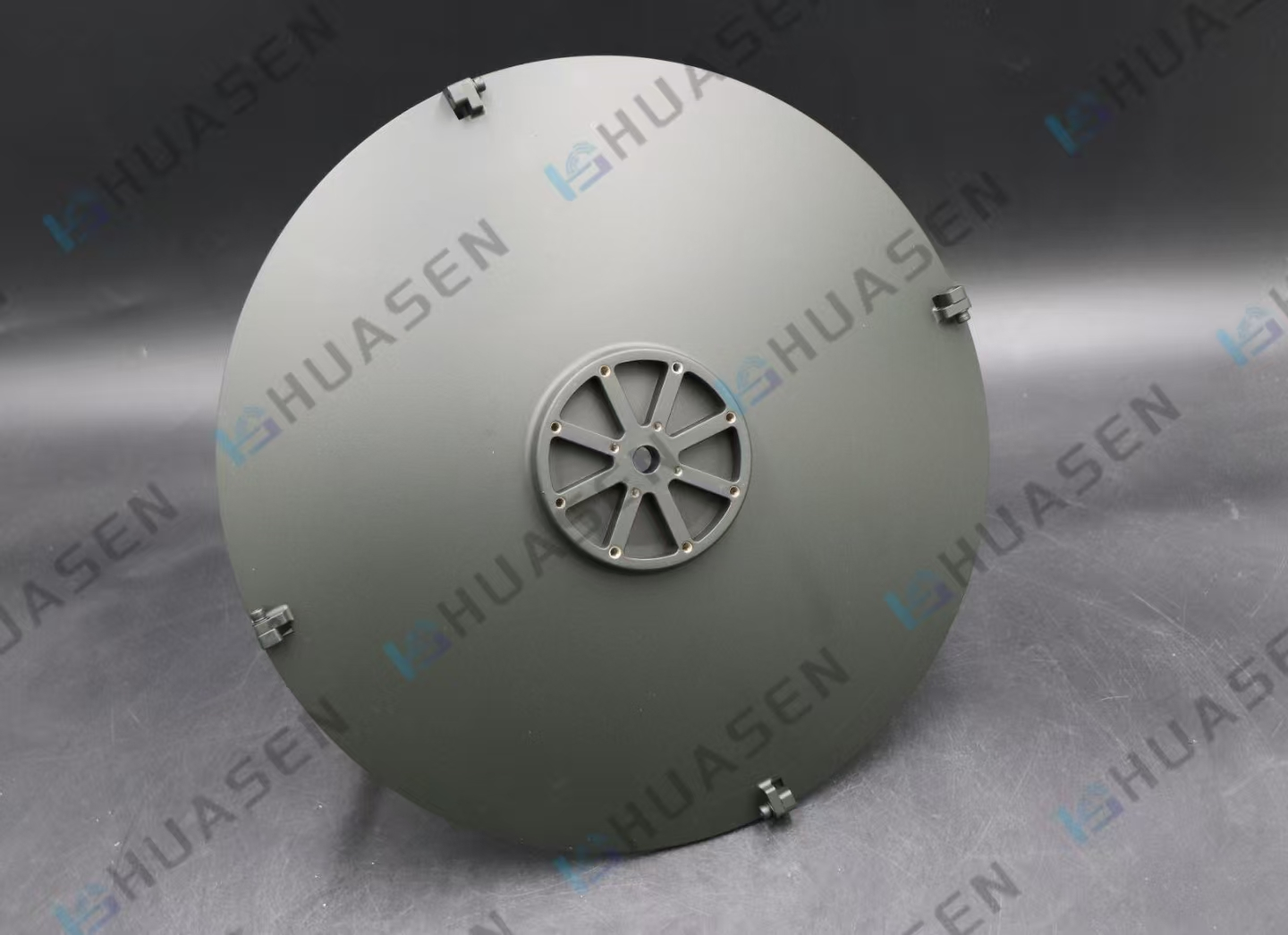
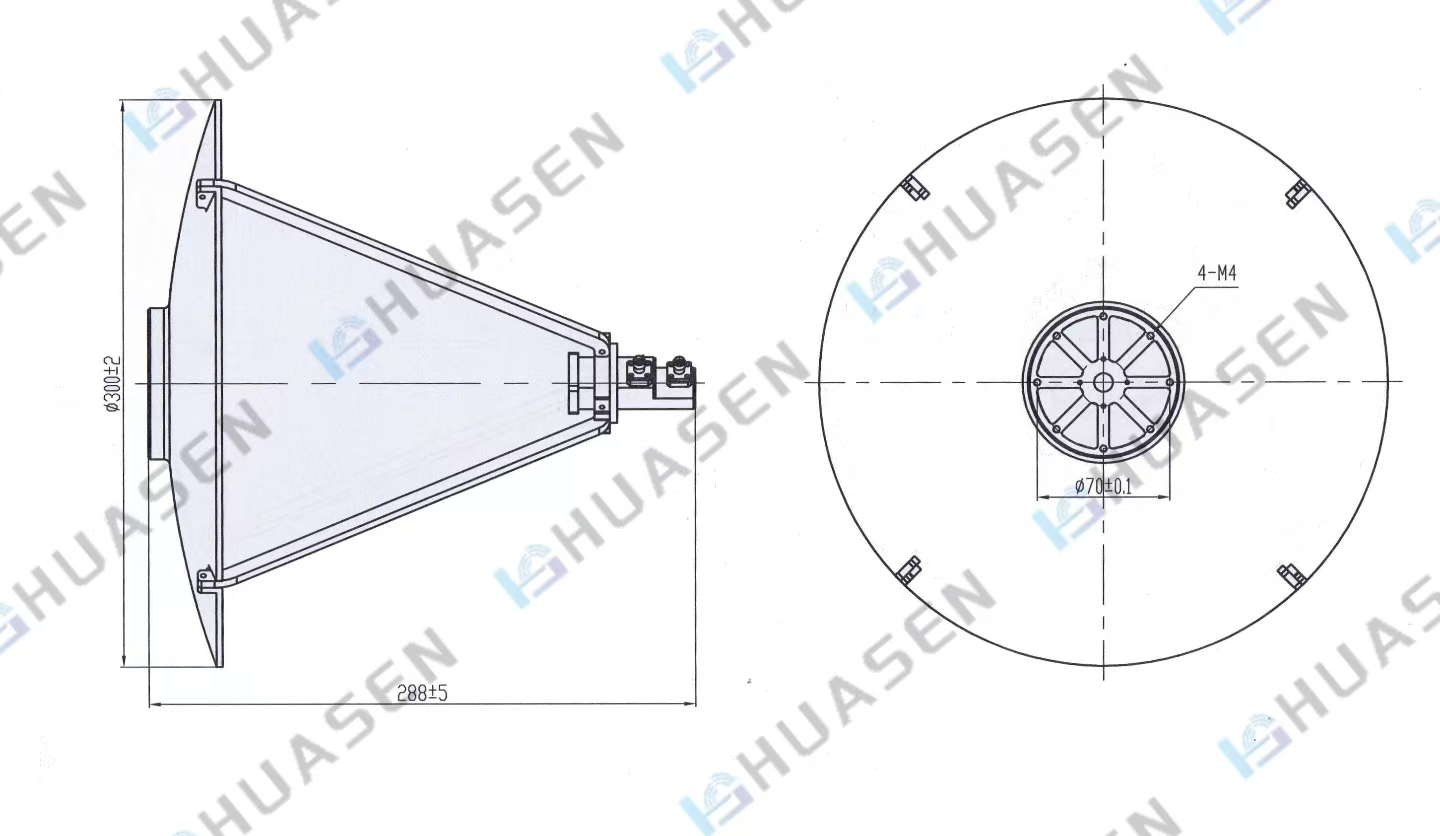
The parabolic reflector stands as the most critical component in any Parabolic Antenna system, serving as the primary surface that captures and focuses electromagnetic energy. This curved metallic structure follows the precise mathematical shape of a paraboloid of revolution, where every point on the reflector surface maintains a specific geometric relationship with the focal point. The reflector's parabolic geometry enables it to redirect incoming radio waves from multiple directions into a concentrated focal point, or conversely, to transform waves emanating from the focal point into a collimated parallel beam for transmission.
Manufacturing precision determines the reflector's performance capabilities. The surface accuracy must typically be maintained within λ/16 to λ/32 of the operating wavelength to achieve maximum efficiency and minimize signal loss. For Parabolic Antenna applications operating in the microwave and millimeter-wave spectrum, this translates to surface tolerances measured in fractions of millimeters. At Huasen Microwave Technology Co., Ltd., our advanced CNC machining capabilities produce carbon fiber reflectors with diameters ranging from 400mm to 1800mm, achieving surface accuracy between 0.03mm and 0.15mm through precision manufacturing techniques developed over three decades of industry experience.
The reflector material selection significantly impacts overall antenna performance. High-quality aluminum and copper materials provide excellent electrical conductivity while maintaining structural rigidity across varying environmental conditions. For larger installations, metal mesh construction offers reduced weight without compromising electromagnetic performance, provided the mesh openings remain smaller than one-tenth of the operating wavelength. Weather-resistant coatings protect the reflector surface from environmental degradation, ensuring consistent performance in outdoor installations exposed to moisture, temperature extremes, and solar radiation.
Aperture Size and Gain Characteristics
The aperture diameter of a Parabolic Antenna directly correlates with its achievable gain and beamwidth characteristics. Larger reflector apertures concentrate electromagnetic energy more effectively, producing narrower beamwidths and higher gain values essential for long-distance communication links. A typical relationship exists where doubling the aperture diameter increases antenna gain by approximately 6 dB, assuming constant frequency and efficiency parameters. Huasen Microwave's Dual Polarized Parabolic Antenna offerings feature customizable apertures from 0.05m to 12m and beyond, delivering gain values from 23 to 32.5 dB with beamwidths ranging from 3.3° to 9.5°, enabling precise targeting for satellite communications and point-to-point microwave links.
The aperture efficiency represents a critical performance metric that accounts for various losses reducing the ideal gain achievable from a given reflector size. Feed spillover occurs when radiation from the feed antenna extends beyond the reflector edges, failing to contribute to the main beam. Illumination taper describes how feed radiation patterns typically decrease in intensity toward the reflector's outer regions, resulting in underutilization of the complete aperture. Surface irregularities and material imperfections introduce phase errors that scatter energy away from the desired beam direction. Through rigorous testing for gain, VSWR, and cross-polarization discrimination across our three microwave anechoic chambers with frequency ranges spanning 0.5GHz to 220GHz, Huasen Microwave ensures each antenna achieves optimal aperture efficiency before delivery.
The Feed Assembly: Converting and Focusing Electromagnetic Energy
The feed assembly constitutes the active radiating element within a Parabolic Antenna system, positioned at the reflector's focal point to efficiently illuminate the parabolic surface. This component serves dual functions depending on operational mode: during transmission, it converts guided electromagnetic energy from transmission lines into free-space radiation directed toward the reflector; during reception, it captures the focused electromagnetic waves reflected from the parabolic surface and converts them into guided signals for processing equipment. The feed assembly design profoundly influences overall antenna performance through its radiation pattern, polarization characteristics, and impedance matching properties.
Various feed configurations address different application requirements and operational constraints. Horn feeds provide excellent bandwidth characteristics and pattern control, making them suitable for wideband communication systems. Waveguide feeds offer low-loss performance at microwave frequencies, particularly advantageous for high-power radar applications. Dipole and patch feeds serve specialized applications requiring compact form factors or specific polarization characteristics. The feed positioning accuracy at the focal point critically affects antenna performance—even small displacement errors introduce phase aberrations that degrade gain and increase sidelobe levels.
Polarization Configurations and Feed Systems
Modern Parabolic Antenna systems employ sophisticated polarization techniques to maximize spectrum utilization and communication capacity. Huasen Microwave offers two primary polarization configurations tailored to diverse operational requirements. The Dual Linear Polarization Parabolic Antenna (DPRA) supports horizontal and vertical dual linear polarization with working bandwidth not exceeding 15%, utilizing N-type or SMA connectors throughout the entire series for reliable connectivity. This configuration enables frequency reuse through orthogonal polarization channels, effectively doubling system capacity without requiring additional spectrum allocation.
The Dual Circular Polarization Parabolic Antenna (DCPRA) provides left-hand and right-hand dual circular polarization capabilities, particularly valuable for satellite communications where signal polarization rotation occurs during atmospheric propagation. Narrow-band DCPRA configurations achieve axial ratios of 1.5 dB or better, ensuring excellent polarization purity for demanding applications requiring high cross-polarization discrimination. Wideband variants maintain axial ratios within 3 dB across bandwidth not exceeding 15%, accommodating applications requiring greater frequency agility. These polarization configurations integrate with standard interfaces including WR-75 and CPR-229 waveguide flanges, ensuring seamless compatibility with major VSAT and satellite communication systems deployed globally.
Feed Illumination and Pattern Control
The feed antenna's radiation pattern must carefully balance multiple performance objectives to achieve optimal system efficiency. Ideal illumination would provide uniform intensity across the entire reflector surface while minimizing energy spilled beyond the reflector edges. However, practical feed antennas produce radiation patterns that inherently taper in intensity with increasing angular displacement from the feed axis. Pattern shaping techniques employ corrugated horn feeds or dielectric loading to control illumination taper, achieving efficiencies between 0.70 and 0.75 through optimized field distribution.
The edge illumination level—the ratio of feed intensity at the reflector edge compared to the boresight direction—represents a fundamental design trade-off. Higher edge illumination improves aperture utilization and increases gain but generates more spillover radiation that contributes to sidelobe levels and potential interference. Lower edge illumination reduces spillover and sidelobes but underutilizes the outer aperture regions, decreasing overall efficiency. Typical designs target edge illumination between -10 dB and -12 dB to balance these competing requirements. Through our advanced testing capabilities including 40 vector network analyzers and frequency coverage extending to 320GHz, Huasen Microwave optimizes feed illumination patterns to deliver E-plane sidelobes of -13 dB and H-plane sidelobes of -15 dB, with offset feed configurations achieving -25 dB or better for applications requiring exceptional sidelobe suppression.
Supporting Structure and Mounting Systems: Ensuring Mechanical Stability
The supporting structure provides the mechanical foundation that maintains precise alignment between the reflector and feed assembly while withstanding environmental loads including wind, ice, and seismic forces. This structural framework must exhibit sufficient rigidity to preserve the critical geometric relationships defining antenna performance, even under dynamic loading conditions. Structural deflections that alter the reflector surface shape or displace the feed from its optimal focal position directly degrade electrical performance through increased phase errors and pattern distortion.
Engineering considerations for supporting structures encompass multiple interrelated factors. The backing structure consists of struts, trusses, or a solid surface that supports the reflector while minimizing weight and wind loading. For large installations, space-frame designs using lightweight materials provide excellent strength-to-weight ratios while maintaining structural integrity. The mounting mechanism securely attaches the antenna assembly to towers, buildings, or tracking pedestals, incorporating adjustment provisions for precise pointing alignment. Materials selection balances structural performance against thermal expansion characteristics—temperature-induced dimensional changes must not compromise antenna alignment across operational temperature ranges.
Adjustment and Alignment Mechanisms
Precision pointing capabilities enable Parabolic Antenna systems to accurately target distant satellites or communication terminals separated by hundreds or thousands of kilometers. Mechanical adjustment mechanisms provide angular positioning control in azimuth and elevation planes, typically incorporating vernier scales or digital readouts enabling alignment accuracy within 0.1 degrees or better. For applications requiring sub-degree beamwidth, such precision becomes mandatory to achieve maximum received signal strength and avoid interference with adjacent satellite systems.
Huasen Microwave provides comprehensive mounting kits including all hardware, alignment tools, and detailed installation procedures enabling field technicians to achieve optimal antenna pointing without specialized equipment. Our modular design philosophy facilitates easy upgrades and maintenance, allowing feed assembly replacement or reflector surface repair without complete system disassembly. Technical support teams assist with complex installations, particularly for systems requiring automatic tracking functionality or integration with existing infrastructure. The mounting systems accommodate standard tower-top installations, ground-based pedestals, and specialized platforms including mobile and maritime applications where environmental motion introduces additional stabilization requirements.
Environmental Protection and Durability
Long-term reliability demands robust protection against environmental factors that accelerate degradation or compromise antenna performance. Weather-resistant coatings applied to reflector surfaces prevent corrosion while maintaining electromagnetic transparency. Radome enclosures shield feed assemblies and reflector surfaces from precipitation, ice accumulation, and ultraviolet exposure, extending service life in harsh climates. For installations in coastal environments, marine-grade materials and protective treatments combat salt-spray corrosion that rapidly degrades standard finishes.
Huasen Microwave produces radomes with sizes from 1m to 2.4m using advanced composite materials that combine mechanical protection with minimal electromagnetic insertion loss. Our ISO9001 certified manufacturing processes ensure RoHS and REACH compliant materials throughout production, maintaining strict quality standards that include 100% performance testing before shipment. Temperature shock chambers, alternating humidity and heat test chambers, and vibration test benches verify each antenna's resilience across specified environmental operating ranges. This rigorous quality control, backed by our one-year product warranty and dedicated after-sales support team, ensures reliable performance across telecommunications, radar, aerospace, and defense applications.
Advanced Features and Performance Optimization
Modern Parabolic Antenna systems incorporate advanced features that extend beyond basic components to address sophisticated application requirements. Exceptional bandwidth capabilities up to 40% enable coverage across multiple frequency bands simultaneously, particularly valuable for multi-mission platforms requiring operation from 1 to 300GHz. Ultra-wideband dual polarization configurations support concurrent transmission and reception across separated frequency ranges, maximizing spectral efficiency for satellite communications and wireless backhaul networks.
Low sidelobe performance represents a critical specification for applications requiring minimal interference with adjacent systems or enhanced electronic counter-countermeasures protection. Offset feed configurations eliminate aperture blockage caused by feed assemblies positioned in the main beam path, simultaneously improving efficiency and reducing sidelobes through elimination of feed support scattering. This architectural approach proves particularly effective for installations where multiple antennas operate in close proximity, such as satellite earth stations providing service across multiple orbital positions.
Manufacturing Excellence and Testing Capabilities
Huasen Microwave Technology Co., Ltd. leverages over 30 years of industry experience to deliver cutting-edge Parabolic Antenna solutions through state-of-the-art manufacturing capabilities. Our production department encompasses four large workshops with specialized facilities including technical offices for process development, machining workshops equipped with CNC lathes and milling machines, fitting workshops capable of silver brazing and vacuum furnace aluminum brazing, and composite materials workshops producing high-performance carbonyl iron absorption materials. More than 200 skilled employees and 40 specialized waveguide fitters ensure every antenna meets exacting specifications through precision fabrication techniques.
Our testing infrastructure includes three calibrated microwave anechoic chambers with dimensions of 21m, 9m, and 5m, providing far-field measurement capabilities across 0.5GHz to 220GHz. A planar near-field measurement system with 9m × 6m scanning frame coverage from 0.8GHz to 40GHz complements these facilities, along with 68-probe spherical field systems and external test sites offering measurement distances up to 2000m. This comprehensive testing capability, supported by over 60 advanced instruments including 110GHz vector network analyzers and 320GHz spectrum analyzers, validates every antenna's gain, VSWR, cross-polarization discrimination, and radiation pattern characteristics before customer delivery. Custom-designed protective crates with shock-absorbing materials ensure safe global shipment, maintaining precise alignment and protecting sensitive feed assemblies during transportation.
Conclusion
Understanding the main components of a Parabolic Antenna system—the parabolic reflector, feed assembly, and supporting structure—enables informed decisions for telecommunications, radar, and satellite communication applications. These integrated elements deliver high-gain, narrow-beam performance essential for modern wireless infrastructure when manufactured with precision and optimized through rigorous testing protocols.
Cooperate with Huasen Microwave Technology Co., Ltd.
Partner with Huasen Microwave Technology Co., Ltd., a National High-Tech Enterprise established in 1993 specializing in microwave and millimeter-wave components across telecommunications, radar, aerospace, and defense sectors. Our 3,000-square-meter R&D and production center delivers exceptional Parabolic Antenna solutions with 30 years of proven expertise. As a leading China Parabolic Antenna factory and China Parabolic Antenna supplier, we manufacture High Quality Parabolic Antenna systems as a trusted China Parabolic Antenna manufacturer. Contact our China Parabolic Antenna wholesale team for Parabolic Antenna for sale inquiries and competitive Parabolic Antenna price quotations at sales@huasenmicrowave.com today.
References
1. Balanis, Constantine A. *Antenna Theory: Analysis and Design*. Fourth Edition. John Wiley & Sons.
2. Silver, Samuel. *Microwave Antenna Theory and Design*. MIT Radiation Laboratory Series, Volume 12. McGraw-Hill.
3. Stutzman, Warren L., and Gary A. Thiele. *Antenna Theory and Design*. Third Edition. John Wiley & Sons.
4. Kraus, John D., and Ronald J. Marhefka. *Antennas: For All Applications*. Third Edition. McGraw-Hill Education.
5. Love, A. W. *Reflector Antennas*. IEEE Press Selected Reprint Series. Institute of Electrical and Electronics Engineers.
Send Inquiry