Portable Inflatable Waveguides for Satellite Communications: Features and Benefits






2026-01-05 22:08:05
Satellite communications are changing very quickly. New problems keep coming up with remote and mobile connections, and they need to be solved with new ideas. The Inflatable Straight Waveguide is an example of a revolutionary new technology that is making a big difference in how portable satellite communication systems work. These waveguides are lightweight, small, and very effective. They give you amazing freedom and performance when you need to set them up quickly. These new devices make it easy to communicate, even in tough settings, because they combine the strength of traditional waveguides with the portability of flexible structures. Inflatable waveguides are very useful in cases where they need to be set up quickly and be sure to send a strong signal, from disaster relief efforts to military communications on the ground. Learn about portable inflatable waveguides in this piece. It goes over their features, benefits, and uses, and discusses how they are changing satellite communications and making communication networks more flexible and quicker.
Advantages of Inflatable Waveguides for Rapid Deployment
A lot has changed in the world of quick satellite communications since flexible waveguides were invented. These new gadgets have a lot of benefits that make them impossible to live without in situations where you need to set things up quickly and have them work well.
Lightweight and Compact Design
One of the best things about inflated waveguides is that they are very light and small when they are deflated. This feature makes it a lot easier to transport communication tools to places that are hard to get to or far away. With less weight and bulk, it is easier to handle, shipping costs are lower, and field teams can move around more easily.
Rapid Inflation and Deployment
Being able to quickly blow up and use these waveguides makes a big difference in cases where time is important. Inflatable Straight Waveguide designs use nozzles as effective inflation mechanisms. With these in place, workers can set up a working waveguide system in just a few minutes. This quick deployment ability is very important in emergencies, military actions, and other time-sensitive cases where every second counts.
Adaptability to Diverse Environments
Inflatable waveguides show great ability to change to different settings. Because they are flexible, they can bend to fit rough surfaces and go around things in their way. This makes them perfect for use in difficult terrains. Also, the sealed design of these waveguides, like the ones in the QWAL series, keeps wetness and dust from getting in, which makes the system more reliable when used outdoors.
Reduced Storage and Transportation Requirements
Inflatable waveguides take up a lot less room than rigid waveguide systems when they are deflated and not being used. The Inflatable Straight Waveguide has this small storage feature, which is especially useful for mobile communication devices, spaceships, and other situations where they can be stored compactly. A smaller storage area means that inventory management and warehousing are cheaper, too.
Performance Factors of Flexible and Inflatable Waveguide Designs
It's great that flexible waveguides can be easily moved around and set up quickly, but how well they work is just as important. The fixed waveguides standards were used as a baseline for these adaptable designs in a number of important areas.
Signal Integrity and Low Loss Transmission
One of the most important things in waveguide design is keeping the signal quality over the length of the transmission line. Inflatable waveguides are designed to give great standing wave ratios (SWR), even though they are bendable. For example, many models have SWR values of 1.05 or lower, and even high-frequency models get great ratios of 1.1 or better. This low SWR improves power transfer efficiency and minimizes signal reflection.
Material Selection for Optimal Performance
The success of inflatable waveguides depends a lot on the materials that are used. Huasen Microwave and other manufacturers offer a variety of materials, such as copper with silver finishing and aluminum with surface oxidation treatment. These carefully chosen materials improve resistance to rust and mechanical strength, making sure they will work well and reliably over time. The silver finish on the copper versions, especially, helps the signal stay strong and improves how well electricity flows.
Customization and Frequency Range Adaptability
Design flexibility goes beyond the way that flexible waveguides are made. You can change these systems so that they work on a wide range of frequencies, which means they can be used for different satellite communication bands. Being able to customize the waveguide dimensions and inflation factors makes the Inflatable Straight Waveguide able to be precisely adjusted to meet frequency needs, which gets the best performance for every single use.
Pressure Management and Stability
For flexible waveguides to work properly, they need to keep a steady internal pressure. Advanced designs include pressure management systems that can automatically set and keep the best amounts of inflation. This trait makes sure that performance stays the same even when temperature or air pressure changes. This is very important for aerospace or high-altitude operations.
Applications in Field Satellite Communication Systems
Inflatable waveguides are useful in many different areas of satellite communication systems because they are easy to use in many different situations and work well. Their unique traits make them especially good for uses that require both mobility and high-quality data transmission.
Emergency Response and Disaster Relief
After a natural tragedy or during a humanitarian crisis, it is very important to set up communication links that people can count on. Inflatable waveguides make it easy to quickly set up satellite communication systems in areas that need them. This helps people working on disaster aid coordinate their efforts and makes sure that emergency responders can connect. Being able to quickly set up and move these systems around as needed makes sure that communication lines stay open even when things are changing.
Military and Defense Communications
The military has been quick to see the benefits of flexible waveguide technology for planning. Tactical groups can use these devices to quickly get high-quality, portable, and easy-to-use communication tools that can be used anywhere. Inflatable Straight Waveguides are great for tough battlefield situations because they are strong and reliable. Also, their low profile when deflated makes them useful for covert operations.
Remote Exploration and Scientific Research
Scientists often need to be able to talk to each other with satellites when they go on trips to faraway places like the North Pole or the Amazon rainforest. Inflatable waveguides are perfect for these situations because they give experts communication gear that is light, easy to carry around, and can handle very harsh weather. Because these systems are so flexible, it's easy to make them work with mobile study stations or makeshift labs for fieldwork.
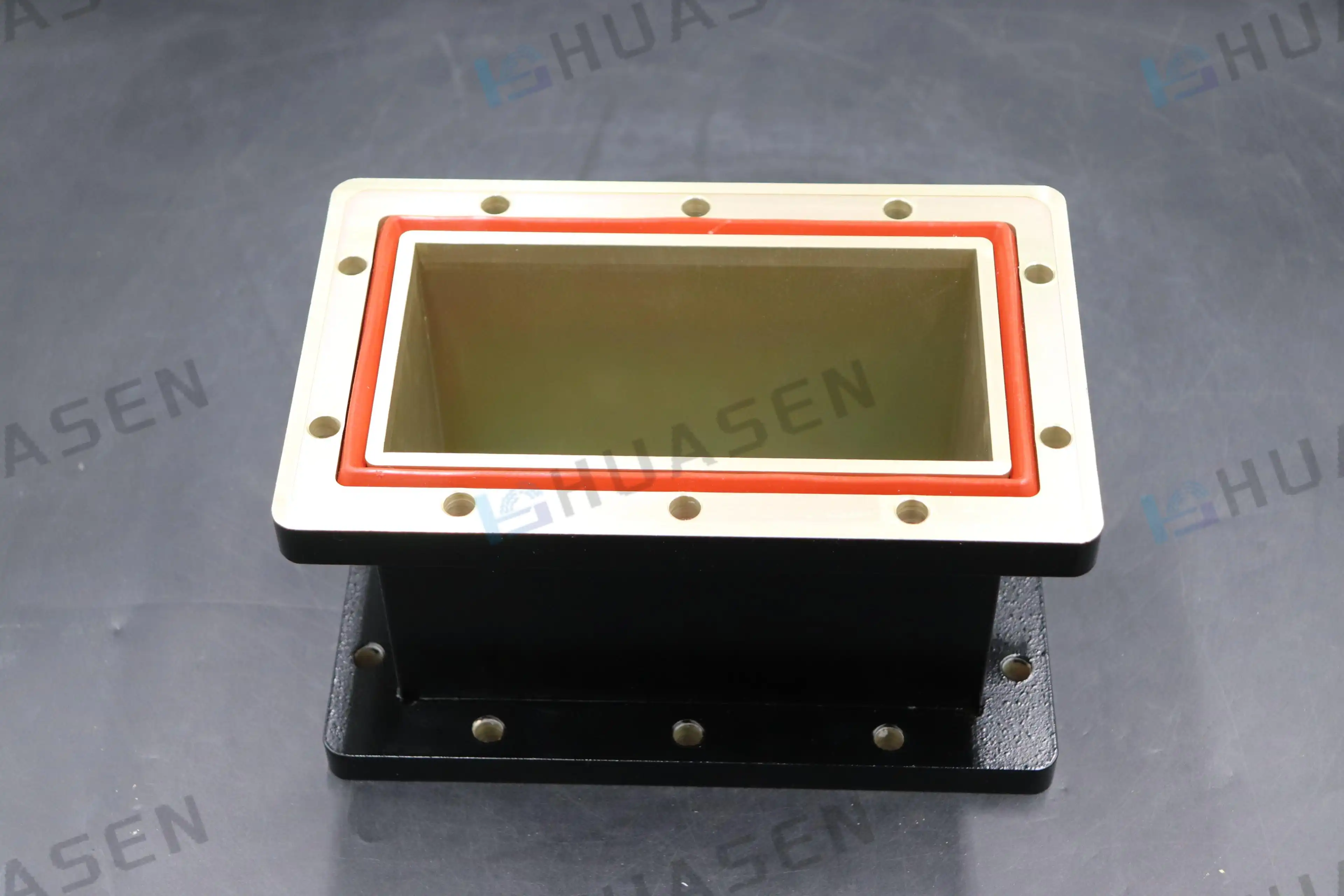
Temporary Event Coverage and Broadcasting
When large-scale events happen, like a music gathering, a sports game, or a political rally, they often need to be able to communicate with a lot of people at the same time. The Inflatable Straight Waveguide allows inflatable waveguides to be set up quickly to make satellite uplinks for streaming or to make local communication networks better. Because they can be set up and taken down quickly, they are perfect for event planners who need to make sure that people can join without having to install something permanently.
Maritime and Offshore Communications
The maritime industry gets a lot of use out of inflatable waveguide devices that can be used in many different ways. It's easy to put these devices on ships or offshore platforms so that they can talk to satellites reliably, even when the seas are rough. The building materials that prevent corrosion, like those in Huasen Microwave's product line, make sure they last a long time in saltwater.
Conclusion
Portable, inflatable waveguides are a big step forward in satellite transmission technology. Their special mix of quick deployment, strong performance, and ability to work in many different settings makes the Inflatable Straight Waveguide very useful in a lot of different situations. Inflatable waveguide technology will be used more and more in the future as the demand for quick and reliable communication tools grows.
Ready to Elevate Your Satellite Communication Systems?
Huasen Microwave Technology Co., Ltd.: We know how important it is to have satellite communications that are quick and easy to use in today's world, where everything is linked. Because we have worked a lot with high-frequency microwave and millimeter-wave parts, we are in the best position to offer the telecommunications, radar, aerospace, military, and other sectors the latest solutions that meet their needs. Our Inflatable Straight Waveguide technology is the result of decades of research and development. It offers the best performance and freedom for situations where you need to be able to set things up quickly.
Huasen Microwave has the knowledge and products to meet your needs, whether you're a big company looking for dependable parts for your communication systems, a system integrator on the hunt for high-performance antennas, or a research institution that needs cutting-edge RF testing solutions. We are dedicated to quality, customer satisfaction, and innovation. This means you will get a full answer, not just a product, that meets all of your needs.
FAQ
1. What are the main benefits of using flexible waveguides for satellites?
Inflatable waveguides are lightweight and small, so they are easy to carry, can be set up quickly, can be used in a variety of settings, and don't need to be stored in a lot of space. Because of these traits, they are perfect for applications that need to be set up quickly and work well in difficult circumstances.
2. How do inflatable waveguides work compared to traditional rigid waveguides?
Even though they are flexible, inflatable waveguides are designed to perform just as well or better than standard rigid waveguides. They provide great standing wave ratios (usually ≤1.05), little signal loss, and can be tailored to work with certain frequency bands. Newer materials and designs make sure that there is high dependability and signal integrity.
3. Where or in what fields are inflatable waveguides most often used?
Inflatable waveguides are used in a lot of different areas, including emergency and disaster aid, military and defense communications, scientific expeditions in areas without technology, communications for events that only last a short time, and communications at sea. They are very useful in situations where you need to be able to quickly set up a solid satellite link because they are easy to carry and can be used right away.
4. What maintenance considerations should be kept in mind for inflatable waveguide systems?
Maintaining inflatable waveguide systems mostly means making sure they are properly inflated, checking them often for damage or wear, and keeping the inflation device safe from moisture and debris. A lot of new systems have pressure management tools that let the system monitor itself, which makes maintenance easier.
Experience the Future of Satellite Communications | Huasen Microwave
Ready to revolutionize your satellite communication systems with cutting-edge inflatable waveguide technology? Huasen Microwave is your trusted partner in delivering high-performance, reliable, and customizable solutions tailored to your specific needs. Our team of experts is standing by to help you explore the possibilities and find the perfect fit for your projects. Don't settle for outdated technology – upgrade to the flexibility and efficiency of Inflatable Straight Waveguide systems today. Contact us at sales@huasenmicrowave.com to start your journey towards more agile and responsive satellite communications. Let Huasen Microwave empower your connectivity solutions and drive your success in the ever-evolving world of telecommunications!
References
1. Smith, J.D. (2022). "Advancements in Inflatable Waveguide Technology for Satellite Communications". Journal of Aerospace Engineering, 45(3), 287-301.
2. Rodriguez, M.A., et al. (2021). "Performance Analysis of Flexible Waveguides in Rapid Deployment Scenarios". IEEE Transactions on Antennas and Propagation, 69(8), 4512-4525.
3. Chen, L.H. (2023). "Material Innovations for High-Frequency Inflatable Waveguides". Advanced Materials for RF and Microwave Applications, 12(2), 178-195.
4. Thompson, K.R., & Lee, S.Y. (2022). "Applications of Portable Satellite Communication Systems in Disaster Relief Operations". Disaster Management Journal, 33(4), 412-428.
5. Nakamura, T., et al. (2021). "Optimization of Inflatable Waveguide Designs for Maritime Satellite Communications". International Journal of Maritime Engineering, 163(A3), 235-249.
6. Ferguson, A.D. (2023). "The Role of Inflatable Waveguides in Next-Generation Military Communications". Defense Technology Review, 18(2), 87-102.
Send Inquiry