Waveguide Probe Coupler vs Waveguide Loop Coupler: Which to Choose






2026-02-23 19:48:00
Choosing between a Waveguide Probe Coupler and a waveguide loop coupler mostly relies on the needs of your application, how much power you need to handle, and the limitations of your system. Waveguide Probe Couplers work great for high-frequency radar systems and satellite communications because they can precisely couple electric fields with very little insertion loss. On the other hand, loop couplers provide better isolation and magnetic field coupling, which is especially useful in complex RF testing settings and high-power tracking situations where directional coupling is very important.
Understanding the Basics of Waveguide Couplers
Waveguide couplers are important passive parts of microwave and millimeter-wave devices because they let engineers precisely sample, measure, and spread electromagnetic energy. In today's RF infrastructure, these units are important building blocks for everything from 5G base stations to complex radar networks.
How Waveguide Probe Couplers Operate
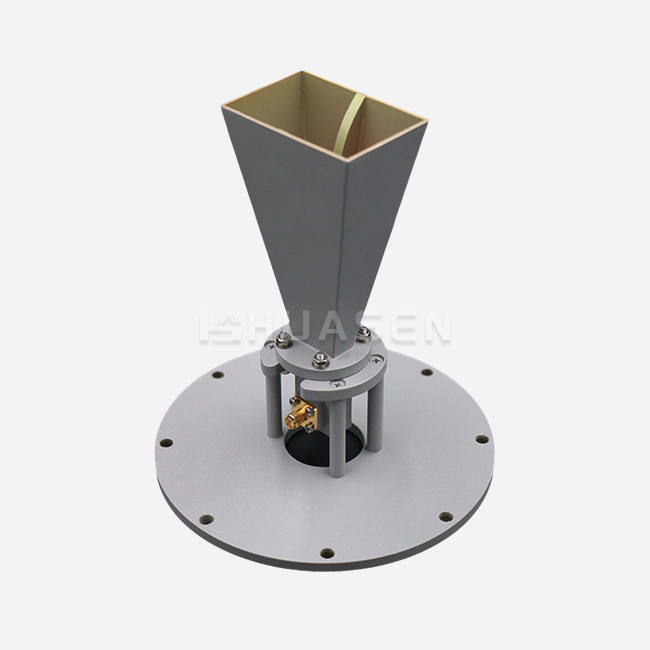
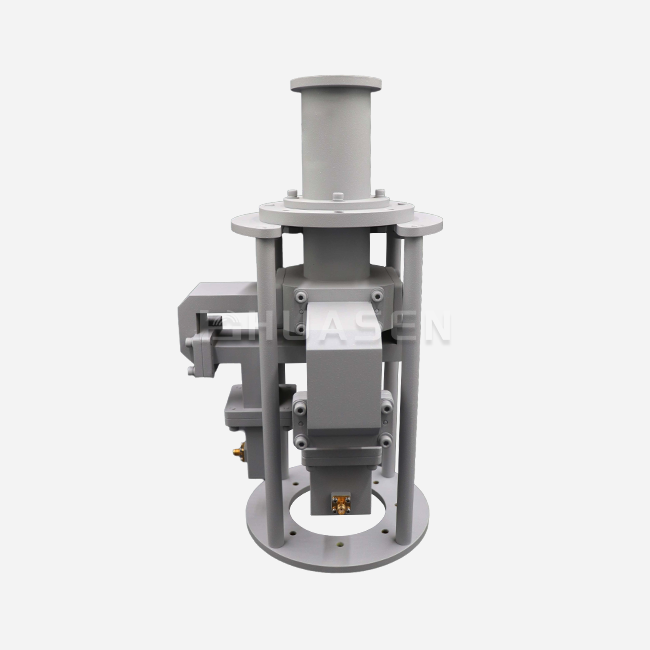
The waveguide probe coupler works by interacting directly with the electric field inside the waveguide frame. A carefully placed probe element stretches into the waveguide cavity, usually at a quarter-wavelength distance from a backshort wall, which is the best distance. It is best for energy coupling when reflections and insertion losses are kept to a minimum. The probe device directly takes energy from the TE10 mode that is most common in rectangular waveguides and changes it into a TEM mode that can be used for coaxial transmission lines. This conversion process makes it possible for waveguide-based antenna systems and normal 50-ohm circuits to work together without any problems. This solves a basic problem with matching impedances in high-frequency applications. Engineers like probe couplers because they are small and have an orthogonal shape, which makes them easier to put in places with limited room. When every cubic inch counts, the right-angle launch arrangement is very useful for communication systems in the air and on cell phones.
Loop Coupler Fundamentals
Waveguide loop couplers work in a very different way. They use magnetic field coupling through a loop antenna device that is built into the waveguide frame. The H-field components are caught by this loop, which provides great separation and strong power handling capabilities. There are clear benefits to using magnetic coupling in high-power situations, especially when tracking needs to be done without being invasive. Loop couplers are great for situations where the field needs to be adjustable, and many designs let you change the probe's depth and spin. This adaptability takes into account the need for adjustment while in the field, which is a very important thing to think about for military and aircraft uses. Loop couplers are different from probe couplers in that they can handle higher bandwidth needs while still keeping consistent coupling qualities over a wider frequency range. Because they work well across a wide range of frequencies, they are perfect for current wideband communication systems and multi-band radar uses.
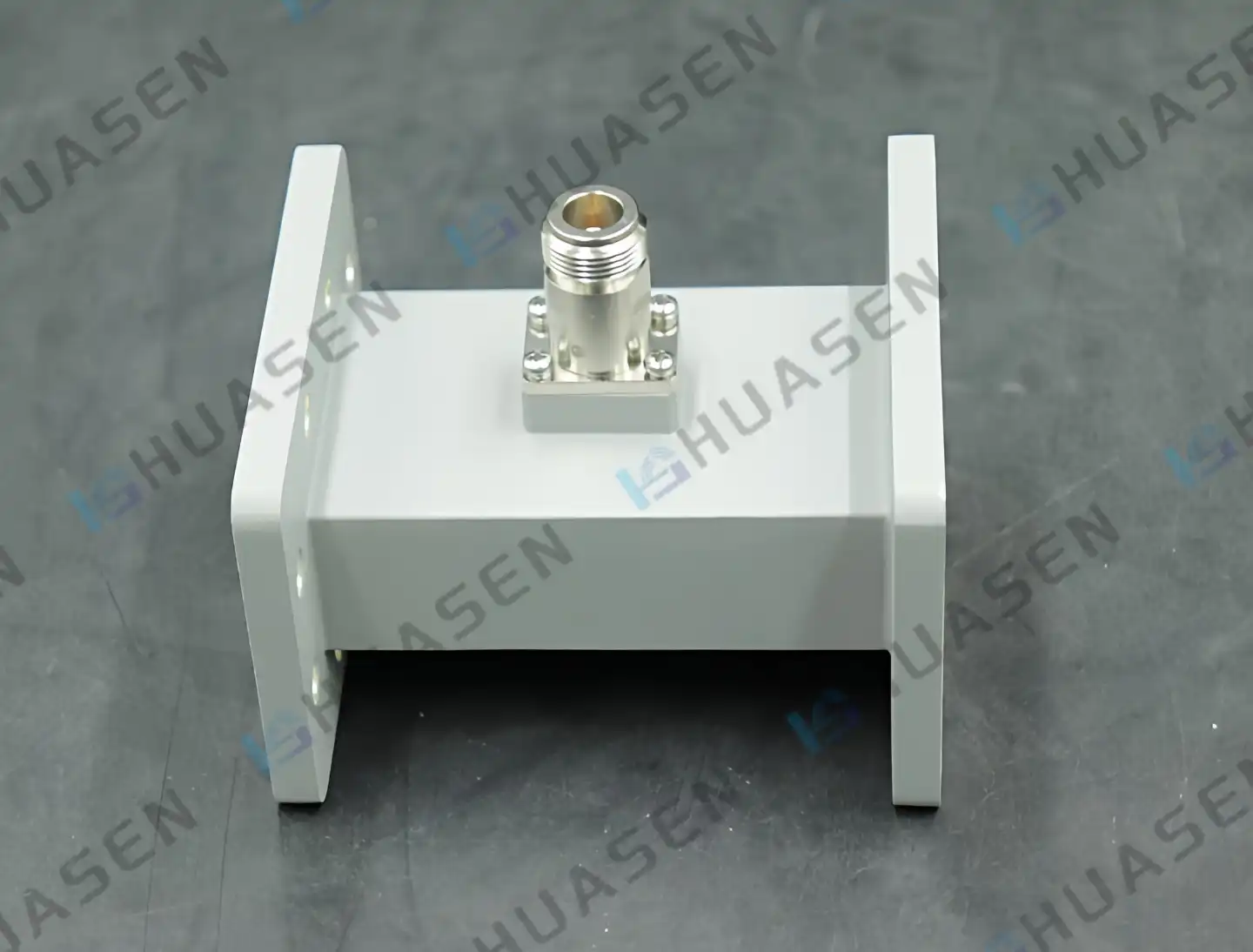
Key Comparison Metrics Between Probe and Loop Couplers
Knowing the basic differences between these connection types helps you make smart purchases that meet the needs of your system. Performance factors change a lot between probe and loop setups, which affects how well and reliably the system works as a whole.
Coupling Mechanisms and Performance Characteristics
In well-designed probe couplers, coupling levels are usually between 10 and 60dB, and insertion losses are usually less than 0.2dB. The electric field coupling mechanism is very sensitive for tracking signals, Waveguide Coupler, especially in places where accurate amplitude readings are needed. Loop couplers have similar coupling ranges, but they are much better at directed separation. In well-designed systems, they can often achieve better than 40dB of directivity. Some types of interference can't get through magnetic coupling, which makes loop designs better in places with a lot of electrical noise. Bandwidth shows that the two systems are very different in important ways. Standard probe designs cover about 20 to 30 percent of the waveguide's possible bandwidth. More complex loop arrangements can cover a wider range of frequencies. This difference is especially important for uses that need to work with more than one band or have the ability to add more bands in the future.
Physical and Environmental Considerations
In real-world applications, size restrictions often affect the choice of coupler. Probe couplers usually have shorter physical shapes, which is good for designing systems that are small. The orthogonal mounting arrangement makes mechanical integration easier, especially in RF systems that are made up of separate modules. Loop couplers are better for adjusting things, but the tuning devices may need more room. However, their strong mechanical design often makes them more resistant to shaking, which is very important for aircraft and mobile uses that need to meet MIL-STD-810G environmental standards.T he two methods have very different power handling skills. Probe couplers are limited by the breakdown voltage at the coaxial interface. Loop designs, on the other hand, can handle higher peak power levels because they use a spread coupling method. In high-power radar and transmission devices, this difference is very important.
Selecting the Right Coupler for Your Application
When choosing the best coupler, it's important to keep in mind that performance priorities change a lot from one business to the next. When procurement teams understand these differences, they can better match technology requirements with practical goals.
Radar and Defense Applications
Military radar systems need to be very reliable in harsh environments. They often choose probe couplers because they have been shown to work well in X- and Ku-band uses. The exact electric field coupling is needed for accurate target recognition, and the small size makes it possible to place in marine and airborne vehicles with limited room. More and more, defense communication systems use loop couplers for electronic countermeasure purposes. Their superior isolation properties stop signal leaks that could threaten operating security. Field workers can improve system performance to meet specific task needs thanks to the changeable coupling features. High-power radar sites benefit from the loop couplers' ability to handle a lot of power. This is especially true for ground-based monitoring systems that use megawatts of power. The non-intrusive tracking feature keeps the system from breaking down and gives important performance information for planning upkeep.
Telecommunications and 5G Infrastructure
Probe couplers are often used because they have low insertion loss, which is important for modern 5G base station setups that need to accurately track signals across multiple frequency bands. The small amount of signal loss protects important link gaps in networks with limited capacity, which has a direct effect on service quality and coverage area. A lot of probe couplers are used in LNB downconverter designs for satellite transmission systems, where keeping the noise figure low is very important. The effective electric field coupling keeps the system's sensitivity for stable satellite link performance by reducing signal loss in the important receive chain. Backhaul link applications are using loop couplers more and more because they are broadband, Waveguide Coupler, which means they can handle future frequency growth without having to change hardware. This adaptability lowers the total cost of ownership and allows for rollout scalability as the network grows.
Laboratory and Test Applications
RF testing settings need very accurate measurements, and probe couplers are often preferred because they stay connected even when the temperature changes. Because the performance can be predicted, precise calibration methods can be used to get accurate measurement results in production test settings. Probe couplers with low insertion loss are useful for vector network analyzers because they keep the measurement dynamic range in sensitive S-parameter evaluation. The small effect on the system makes sure that measurements are accurate and gives signal access needed for a full gadget evaluation.
Research organizations often choose loop couplers because they can be adjusted to work best with certain testing setups. The field-tunable features can adapt to different test needs without the need for multiple fixed-value parts.

Advanced Waveguide Probe Coupler Solutions from Huasen Microwave
Huasen Microwave's waveguide probe coupler range meets the strict needs of current RF systems by using new design methods and strict quality control procedures. Our tech team regularly goes above and beyond what customers expect because they have decades of experience making high-frequency parts.
Product Performance and Reliability
Our probe coupler designs have the lowest insertion loss requirements in the business, usually less than 0.15dB across certain frequency bands. The precise manufacturing methods make sure that performance is the same across production lots, which is very important for large-scale operations where matching parts is very important. As part of quality control, full outdoor testing is done according to MIL-STD-202 standards. This makes sure that the product works well in situations with high or low temperatures, humidity, and vibrations. This thorough validation process gives users faith in mission-critical apps that can't fail in the field. Thechoice of materials puts long-term safety first, using OFHC copper construction with special plating to prevent corrosion. The strong mechanical design can handle multiple mating cycles without losing performance, which lowers the need for upkeep in operating systems.
Customization and Engineering Support
Our design team works closely with customers to create solutions that are tailored to each application and meet the special needs of each system. Changes that can be made to customization include different connector setups, different coupling levels, and special environmental grades for harsh working conditions. Engineering help is given at all stages of the buying process, from creating the initial specifications to making sure the production runs smoothly and putting the equipment to use in the field. To make sure that system integration goes smoothly, technical literature includes thorough performance data, installation instructions, and troubleshooting steps. Rapid development lets you quickly test unique designs, and samples are usually sent out within two to three weeks of finalizing the specifications. This faster development process cuts down on the time it takes to get customer goods to market while still making sure they meet system standards for performance.
Conclusion
In the end, the choice between the waveguide probe and the loop Waveguide Probe Couplercomes down to the needs of the application. Each technology has its own benefits in different situations. Probe couplers work great in situations where low insertion loss and small size are important. They work especially well in high-frequency radar and satellite communication systems. Loop couplers are great for high-power tracking and adjustable coupling because they can handle more power and separation than other types of couplers. By knowing these basic differences, engineering teams can make smart choices about what to buy that improve system performance while still meeting cost and delivery goals.
FAQ
1. What determines the power handling capability of probe couplers?
The breakdown voltage at the coaxial connection interface and the air gaps around the probe element are the main reasons why the power handling is limited. When the peak power is high, arcing can happen, which can damage the part and stop the system from working. Power handling can be made better for certain uses by carefully planning the probe's shape and the materials that support it.
2. How does coupling accuracy affect system performance?
The accuracy of the coupling has a direct effect on the accuracy of measurements in tracking applications and the even distribution of signals in power splitting setups. When the coupling level changes, it can cause amplitude mistakes in radar calibration and change the signal-to-noise ratios in transmission systems. Tight manufacturing standards make sure that the connection works the same way, no matter how many are made.
3. Can these couplers operate across full waveguide frequency bands?
Standard designs usually cover 20 to 30 percent of the bandwidth, but more advanced ones that use ridge loading or multi-stage matching can cover the whole waveguide band. When engineers make broadband designs, they have to weigh the pros and cons of bandwidth, insertion loss, and coupling flatness against the needs of the application.
4. What maintenance procedures are recommended for field-deployed couplers?
Checking the connecting contacts and flange sealing surfaces on a regular basis keeps water out and stops corrosion damage. When cleaning, you should only use lint-free materials and the right chemicals, and you should stay away from internal insulating materials that could affect how well the electricity works. To make sure proper RF contact, the torque standards for flange fittings must be followed.
5. How do environmental conditions affect coupler performance?
Because metals expand when they get hot or cold, changes in temperature can cause coupling levels and insertion loss traits to shift. In systems that aren't well sealed, humidity can change the dielectric properties, and shaking can damage mechanical links and make the electrical performance worse. These effects can be lessened by closing properly and making sure the machines are strong.
Partner with Huasen Microwave for Your Waveguide Coupler Needs
Huasen Microwave is ready to help you with your waveguide probe coupler needs because they have a lot of scientific knowledge and have made these products before. Our engineering team offers in-depth advice services to help you choose the best parts for your unique application needs. We have a lot of experience working with the military, aerospace, and telecommunications industries, so we know the important performance factors that make a system launch go smoothly. Email our sales team at sales@huasenmicrowave.com to talk about the details of your project and to look at all of our waveguide probe coupler options. As a reliable company with customers all over the world, we can offer low prices for large orders while still meeting the high-quality standards needed for mission-critical uses.
References
1. Pozar, David M. "Microwave Engineering: Waveguide Coupling Mechanisms and Design Principles." Fourth Edition, John Wiley & Sons, 2012.
2. Montgomery, C.G., Dicke, R.H., and Purcell, E.M. "Principles of Microwave Circuits: Probe and Loop Coupling Analysis." McGraw-Hill Book Company, 1948.
3. Ragan, G.L. "Microwave Transmission Circuits: Waveguide Coupler Design and Applications." Dover Publications, 1968.
4. Collin, Robert E. "Foundations for Microwave Engineering: Coupling Mechanisms in Waveguide Systems." Second Edition, McGraw-Hill, 1992.
5. Baden Fuller, A.J. "Microwaves: An Introduction to Microwave Theory and Techniques Including Coupler Applications." Third Edition, Pergamon Press, 1990.
6. Harvey, A.F. "Microwave Engineering: Waveguide Component Design and Testing Methodologies." Academic Press, 1963.
Send Inquiry