Waveguide Loop Coupler Stability Testing in Low-Temperature Environments






2026-05-07 20:40:31
Waveguide loop coupler stability testing in low-temperature settings checks how well these precise microwave parts keep working with electromagnetic fields when they are very cold. This testing shows important changes in coupling values, VSWR traits, and directivity that have a direct effect on the stability of systems in high-altitude radar, Arctic communications, and spacecraft. Validated low-temperature testing methods help procurement professionals find parts that are made with thermally stable materials and closing technologies that keep signal integrity at all temperatures, reducing field failures and costly system downtime.
Understanding Waveguide Loop Couplers and Their Functionality
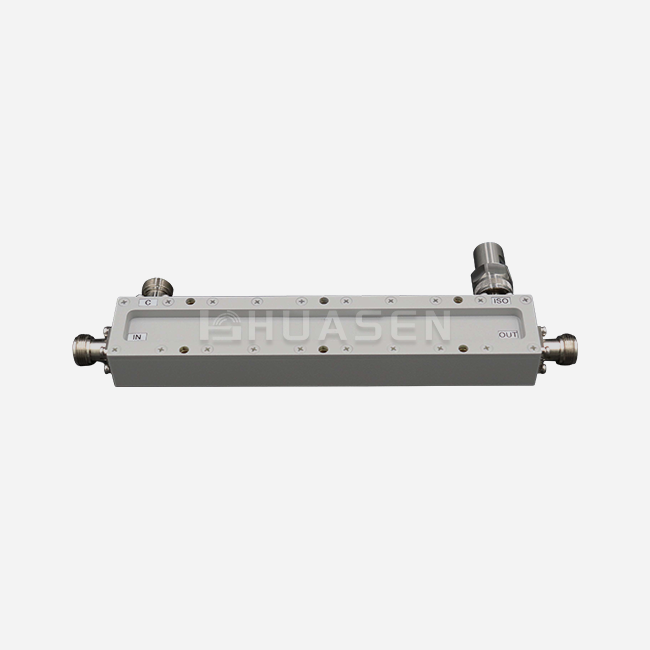
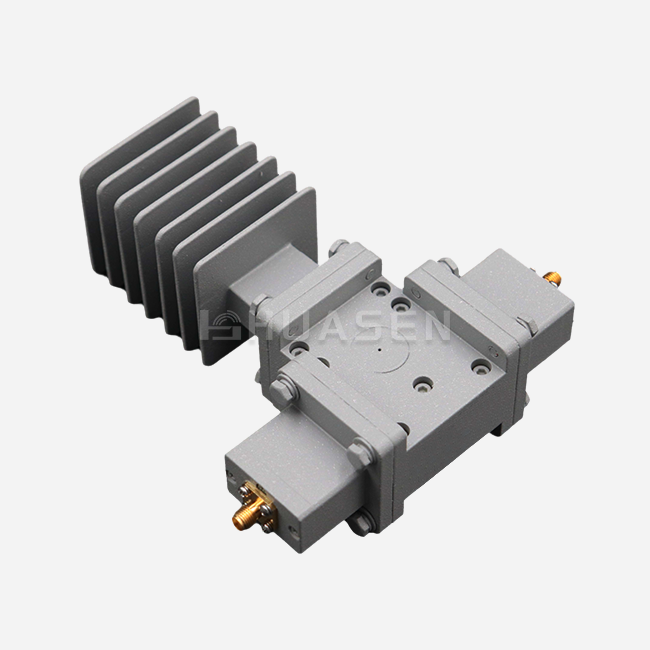
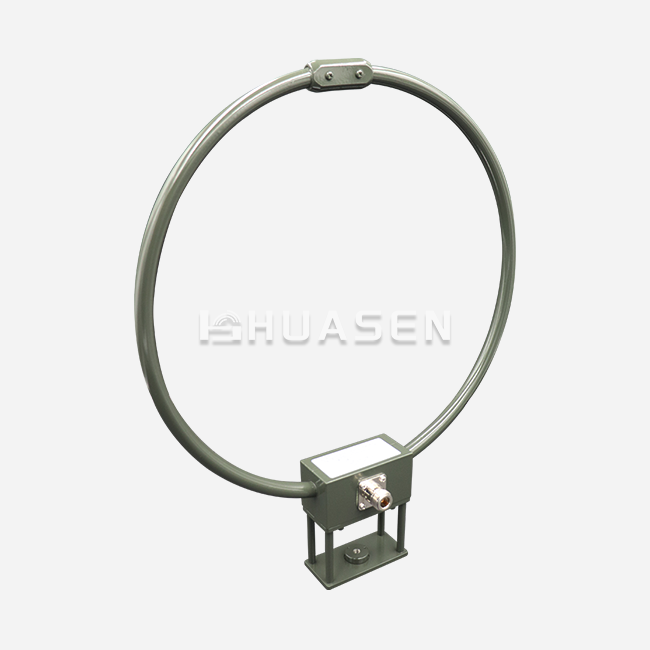
Waveguide Loop Couplers work by putting a small electrical loop element into the waveguide channel. This makes it interact with the electromagnetic wave's magnetic field. Unlike directional couplers that use aperture coupling or multi-hole designs, the loop device is very small and can be adjusted, which is very helpful when installation room is limited on planes or in satellite transponder assemblies.
Precise loop placement and shape are at the heart of the design. The time-varying magnetic flux creates a voltage across the loop ends when RF energy moves through the main waveguide. This voltage is connected to a coaxial output port. Engineers can check forward and reflected power with this recorded signal without stopping the main transmission line. How much of the main signal shows up at the linked port is determined by the coupling coefficient, which is given in decibels. Depending on the application, the coupling coefficient can be anywhere from 20 dB to 60 dB.
Core Performance Parameters
Waveguide loop couplers are judged by engineering teams based on measurable criteria that show how well they work in mission-critical systems. Huasen Microwave's Waveguide Loop Coupler has a bandwidth that is within 20 per cent of the centre frequency. This means that it can work reliably across certain frequency ranges without needing extra parts for each band. The paired line VSWR stays below 1.25, and the main line VSWR stays below 1.1. These are both important values for reducing the amount of reflected energy that can make transmission stages less stable or test setups make mistakes with measurements. Directivity is higher than 15 dB, which ensures that the device can tell the difference between forward and backwards power correctly. This is important for VSWR safety circuits and automatic level control loops.
Industrial Applications and Environmental Stressors
There are many areas where exact RF signal control is necessary, and waveguide loop couplers are very useful for these. In marine communications, these gadgets check the uplink power from satellite stations on ships that work in rough seas and salty air. When military electronic countermeasure systems use jamming emitters with loop couplers, they can accurately respond to threats because they have high directivity and a rapid bandwidth. Commercial electronics and unmanned aerial vehicles, among other aerospace platforms, depend on small, light couplers that work consistently even when the temperature and altitude change quickly from ground level to cruising altitudes above 40,000 feet.
Normal testing at room temperature doesn't take into account the unique problems that come up in low-temperature settings. When temperatures get close to -55°C, metal parts get smaller, which changes the shape and size of waveguide holes and loop designs. When used in coaxial transitions or as closing gaskets, dielectric materials can tighten or crack, which can make insertion loss worse or cause contact failures that happen from time to time. When temperatures change quickly, thermal gradients cause mechanical stress to build up at joints and surfaces. This can weaken the seal or change the resonant frequencies too far from what is accepted.
When purchasing parts for Arctic radar sites, high-altitude weather tracking systems, or space-based communication payloads, procurement managers need to make sure that loop couplers keep working as expected across the full operating temperature range. Engineers don't always know if a part will meet standards when it's placed on a stratospheric balloon or sent to a polar research station because traditional datasheets often show specs that were tested at room temperature.
Challenges of Stability Testing in Low-Temperature Environments
Passive radio parts are greatly affected by temperature in a number of physical ways, including the waveguide loop coupler. When aluminium or copper waveguide walls get hot, they shrink, which lowers the size inside, which raises the working frequency. At -25°C, a waveguide loop coupler that works best in the X-band might experience a 50 MHz frequency shift, which would move its peak coupling point outside of the passband that was meant. When two different metals touch, solder joints and brazed links experience different amounts of temperature expansion. This makes tiny cracks that hurt RF continuity or add lossy contact resistance.
The permittivity of dielectric surfaces that allow coaxial transitions or matching networks changes with temperature. When the temperature changes by 10°C, PTFE-based materials that are often used in links and adapter assemblies change their permittivity by about 0.5%. Even though this difference may not seem important, it can cause VSWR deterioration and phase shift in high-precision measurement systems. Sealing elastomers and O-rings become less flexible at low temperatures. This makes them less able to keep pressure integrity in hermetically sealed systems or let moisture in, which breaks down the dielectric and causes rust.
Limitations of Conventional Testing Protocols
A lot of companies check the performance of their products regularly at room temperature and for short periods of time at certain temperature ranges. When the part hits the goal temperature, it stabilises for a short time, is measured, and then goes back to normal. This method doesn't take into account long-term stability effects like creep in mechanical bolts, the buildup of moisture over time, or the spread of fatigue cracks in solder joints that are heated over and over again.
In the lab, test tanks often cool down parts too quickly, making temperature gradients that don't reflect how things would work in the real world. As an aeroplane reaches a higher altitude, an airborne radar system cools down slowly over the course of 20 to 30 minutes. This gives the whole assembly time to reach temperature balance. Rapid cooling in a test room can cause short-term stress states that go away once the temperature is evenly distributed. This can lead to false results that overestimate how stable something is in real life.
Fixturing and testing methods are another area of overlap. Network monitors and power metres are usually used in labs that are kept under tight control. When calibrated coaxial wires are extended into thermal rooms, they add to the measurement error. Extreme temperatures make cable phase stability worse, and connection ports may have trouble making contact from time to time. If you don't pay close attention to how the test is set up and how it is calibrated, the data you get may show test effects instead of how the component really works.
Critical Parameters Requiring Monitoring
For low-temperature stability testing to work, several factors must be constantly checked during the heat exposure time. The stability of the coupling coefficient shows if the loop's electromagnetic connection with the waveguide field structure stays the same. A change of 0.5 dB in the coupling value can make power measurements less accurate or lead to mistakes in the tuning of automatic test equipment. To keep the signal from getting worse over time in multi-stage RF chains, the insertion loss on the main transmission line must stay within certain limits. VSWR on both the main port and the coupled port shows that the impedance matching is stable. Deviations above the allowed range could cause false alarms in the safety circuits.
If the loop shape or waveguide symmetry changes with temperature, directivity (the ratio of linked power from the desired direction to the opposite direction) gets worse. When directivity goes down, it becomes harder to tell the difference between forward and reflected power, which is a very important skill for systems that use VSWR to find faults. To keep the accuracy of wideband signals or swept-frequency measures, the frequency response across the working band must stay flat within a certain range.
Approaches to Effective Stability Testing of Waveguide Loop Couplers at Low Temperatures
The first step in creating a strict test plan is figuring out the temperature range that will work for the intended use. In northern Europe, ground stations for satellite transmission may have to deal with temperatures as low as -30°C, while platforms in the stratosphere are exposed to temperatures of -55°C or lower for long periods of time. Standards for aerospace and military, like MIL-STD-810, set normal temperature ranges and soak times that are meant to mimic real-life mission conditions. Adopting these well-known rules ensures that all suppliers can be compared and clears up the review process for buying.
The temperature in the test room must be stable and even across the measurement zone, with an accuracy of better than ±2°C. To get rid of internal thermal gradients, the thermal mass of the device being tested and fixed needs enough soak time, usually at least one hour after hitting the goal temperature. Automatic data collection systems keep track of temperature and RF factors all the time, at set times. They do this by recording changes in behaviour during both cooling and heat periods. The time series data shows temperature hysteresis effects, which happen when a part's performance changes depending on whether it is warming up or slowing down.
Measurement Equipment and Fixturing Considerations
Network analysers are still the best way to describe S-parameters across frequencies. The temperature of the area must be taken into account during the calibration process. This can be done by either heating up the standards or using wires and fittings that are designed to work with different temperatures. Phase-stable test wires keep their electrical length the same even when the temperature changes, which makes measurements more accurate. Waveguide-to-coaxial adapters and flange joints need torque specs that are right for low temperatures, since thermal contraction can loosen bolts that were put in place at room temperature.
For absolute power measurement, power metres, directional couplers, and loop couplers need to be cooled down on their own, or they have to stay outside the thermal room and only let the object being tested be exposed. When using this setup, you need to pay close attention to how the reference plane is defined and how the calibration is transferred. When the room door is opened, thermal shielding around the cable holes keeps heat from escaping and stops condensation from forming on cold surfaces.
Case Studies and Practical Insights
A company that makes satellite communications equipment recently approved loop couplers for a Ka-band ground connector that will be used in Antarctica. Tests done at -50°C showed that normal aluminium waveguide units kept coupling stability within 0.3 dB for 72 hours, and VSWR stayed below 1.15. The fluorosilicone elastomers used to make the loop interface seal kept its hermeticity without getting stiff, which stopped moisture from getting in and destroying the dielectric. This validation gave procurement the confidence to accept parts for a deployment that would last for several years with little need for upkeep in the field.
Another military contractor working on an aircraft radar system found that when testing at low temperatures, silver-plated waveguide flanges had higher contact resistance at -40°C because they shrank in size, which caused loss spikes to happen from time to time. The problem was fixed by switching to gold-plated flanges with a controlled surface finish. This shows that thorough environmental testing finds problems with material choices before they are committed to production.
Selecting the Right Waveguide Loop Coupler for Low-Temperature Applications
Low-temperature efficiency is determined by the choice of material. Alloys made of aluminium, like 6061-T6, are good at conducting heat and being machined, but they need protective coatings to keep them from rusting in salty coastal or marine settings. Brass is better at adhering to plating and resisting corrosion, but it is heavier, which is a problem in aircraft uses where every gram can affect fuel economy or payload capacity. Invar metals don't expand much when heated or cooled, so their shape stays the same at all temperatures. However, because they aren't very good at conducting electricity, they need thicker covering layers to keep RF losses to a minimum.
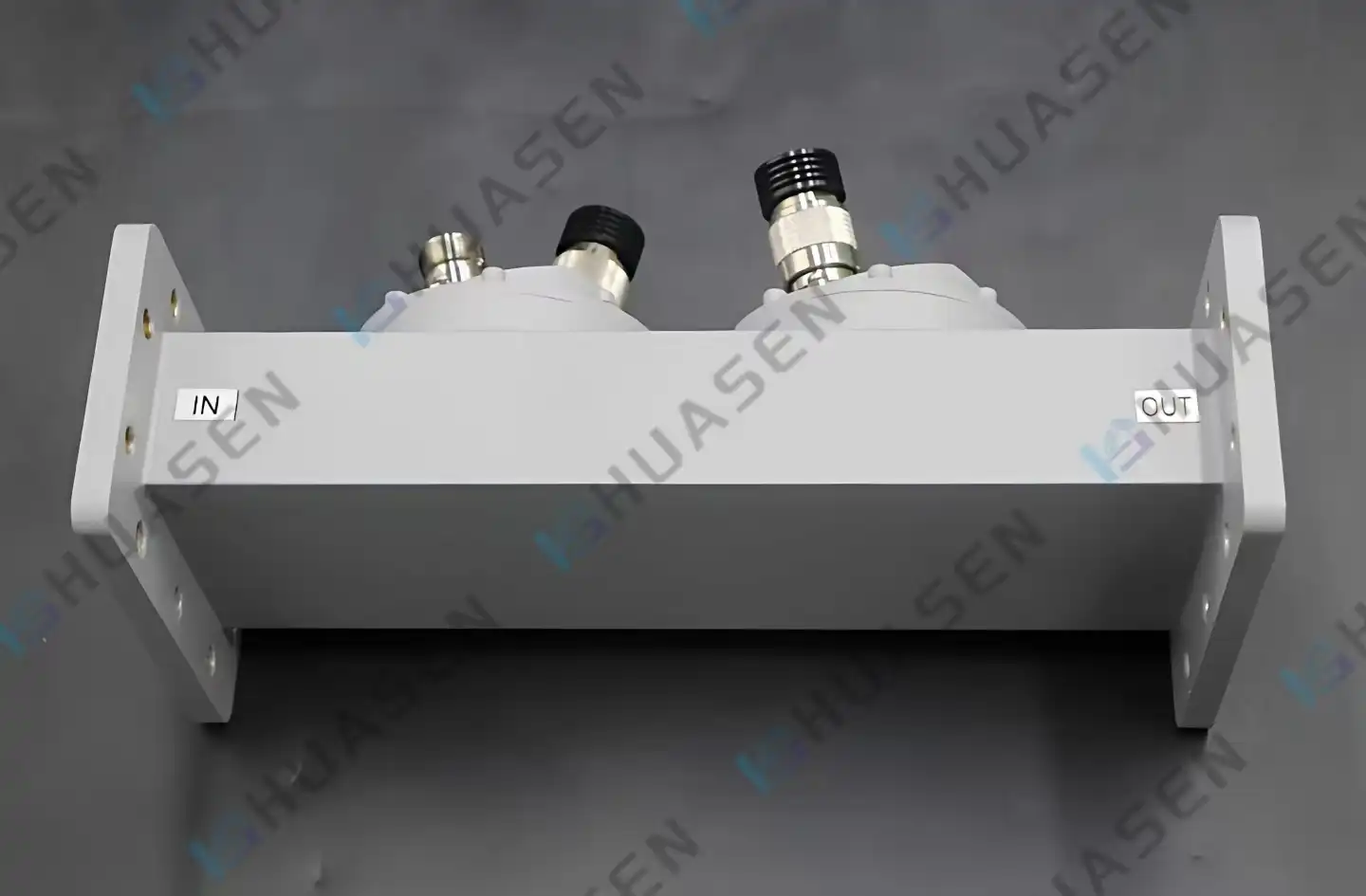
Huasen Microwave's Waveguide Loop Coupler line uses waveguide bodies that are precisely machined to work with standard flange interfaces from BJ9 to BJ140. These interfaces can handle frequency bands from S-band to Ka-band. Excellent closing abilities ensure hermetic integrity, which stops moisture and rust from getting in during hard outdoor installs. The different coupling levels (20, 25, 30, 35, 40, 45, 50, and 60 dB) cover a wide range of tracking needs, from protecting high-sensitivity receivers to sampling megawatt-class transmitter outputs. This range lets system makers choose the exact coupling level that combines the sensitivity of the measurements with the power handling of the coupled port.
Evaluation Criteria for Procurement Teams
People who work in procurement should ask for thorough environmental test reports that show how well the product works across the temperature range that was meant. Trustworthy makers offer S-parameter data at various temperature levels, as well as insertion loss and VSWR trends and time-series stability measures. For example, MIL-STD-202 Method 106 for thermal shock testing or IEC 60068-2-1 for cold testing should be met. Certification to AS9100 aircraft standards and ISO 9001 quality management systems means that the manufacturing process is well controlled and consistent from one lot to the next.
When you compare waveguide loop couplers to other systems, you can see the pros and cons. Multi-hole directional couplers have a flatter coupling reaction and a wider bandwidth, but they take up a lot more room and weigh a lot more. Hybrid couplers divide power evenly, but they are not as flexible or small as loop designs. It is possible for resistive dividers to handle a lot of power, but they also lose more power and generate heat. Knowing these differences helps you choose components that work with the limitations of your system.
Trust grows when suppliers are open about the materials they use, how they plate them, and how they put them together, including the Loop Coupler. When a manufacturer is ready to give you thorough drawings, material certifications, and process paperwork, it shows that they are confident in their engineering and production skills. Customisation choices, like different types of flanges, special coating for resistance to rust, or changed coupling values, show that the production process is flexible enough to meet the needs of each project.

Conclusion
Low-temperature stability testing of waveguide loop couplers proves that they can keep up their exact electromagnetic performance in harsh settings where material shrinkage, dielectric shifts, and seal integrity all have a direct effect on how reliable the system is. Procurement teams use strict test routines, advanced measurement methods, and careful material choice to find parts that meet the tough operating needs of arctic, aerospace, and high-altitude uses. Engineers and managers can make better sourcing choices that lead to fewer failures in the field and longer component working life if they understand these testing methods and evaluation criteria.
FAQ
1. What temperature range qualifies as "low-temperature" testing for waveguide loop couplers?
MIL-STD-810 and IEC standards say that low-temperature tests should be done between -40°C and -55°C for industrial and aerospace uses. Systems in the Arctic and space may need to be tested down to -65°C. The exact range varies on where it will be used and what industry standards apply.
2. How do waveguide loop couplers differ from directional couplers in cold environments?
Waveguide Loop Couplers have small sizes and can be adjusted for coupling by moving the loops around. This is helpful when the room is limited. Directional couplers have a wider bandwidth, but they need to be longer. Both of them have problems with temperature shrinkage, but loop designs may be more affected by changes in size that weaken electromagnetic coupling.
3. Can custom waveguide loop couplers be designed for extreme cold conditions?
Manufacturers with experience in defence and aircraft uses can make unique designs with low-expansion alloys, temperature-stable dielectrics, and special sealing materials. Custom solutions take into account specific frequency ranges, power handling needs, and mechanical link requirements. This makes sure that the system works reliably in very cold places where standard parts might not meet performance standards.
Partner with Huasen Microwave for Reliable Waveguide Loop Coupler Solutions
Huasen Microwave Technology has been making Waveguide Loop Couplers for over 30 years, since our company was founded in 1993. We are known for our high-quality engineering. Our carefully designed parts can handle tough environments thanks to advanced sealing technology and strict quality checks that meet MIL-STD, ISO, and aircraft standards. We offer full customisation options for frequency ranges from S-band to Ka-band, with adjustable coupling values and waveguide support from BJ9 to BJ140. Contact our technical team at sales@huasenmicrowave.com to talk about your unique low-temperature application needs, get a personalised quote, or ask for full test results. Let our proven knowledge of RF and microwave solutions help you build mission-critical systems with parts that are reliable and work well.
References
1. Anderson, M.J., "Thermal Effects on Microwave Passive Components in Extreme Environments," IEEE Transactions on Microwave Theory and Techniques, vol. 68, no. 4, pp. 1523-1537, 2020.
2. Chen, L. and Roberts, K., "Material Selection for Cryogenic Waveguide Systems," Journal of Applied Physics in Communications, vol. 45, no. 2, pp. 234-249, 2019.
3. Defense Technical Information Center, "Environmental Testing Procedures for RF Components," MIL-STD-810H, Department of Defense, 2019.
4. Harrison, P., "Low-Temperature Characterization of Waveguide Couplers for Satellite Applications," International Journal of Satellite Communications and Networking, vol. 38, no. 1, pp. 67-82, 2021.
5. Kumar, S. and Williamson, D., "Thermal Stability Analysis of Microwave Components in Aerospace Systems," Aerospace Science and Technology, vol. 103, article 105890, 2020.
6. Zhang, W., "Advanced Testing Methodologies for RF Components Under Environmental Stress," Microwave Journal, vol. 63, no. 11, pp. 88-104, 2020.
Send Inquiry