Waveguide Circulator Working Principle Explained






2026-05-29 22:00:32
Waveguide circulators use magnetised ferrite materials' gyromagnetic characteristics to steer microwave signal flow. RF energy entering Port 1 is routed entirely to Port 2, Port 2 to Port 3, and so on, with negligible reverse leakage. Faraday rotation at the ferrite junction, where a DC magnetic bias field breaks electromagnetic wave propagation symmetry, causes this non-reciprocal behaviour. The passive device shields high-power transmitters from damaging reflected signals and allows simultaneous transmission and reception through shared antenna systems in radar, satellite, and 5G infrastructure.
Understanding the Waveguide Circulator: Core Theory and Operation
What Defines a Waveguide Circulator?
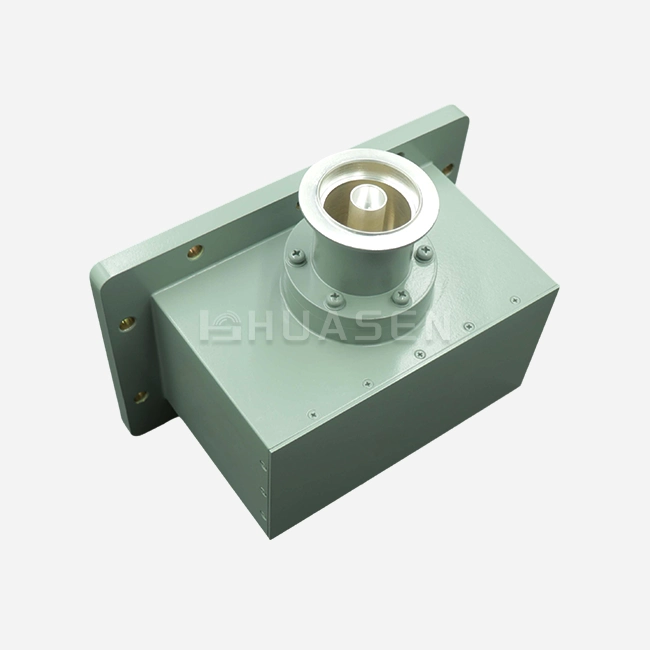
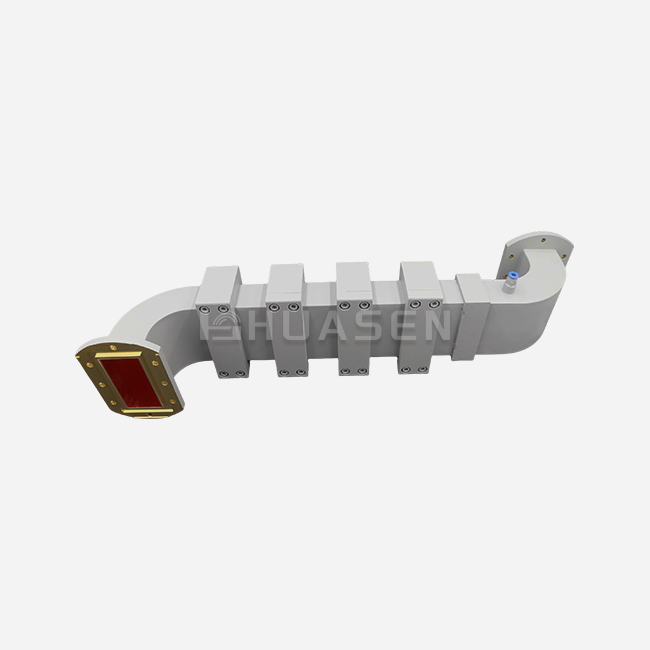
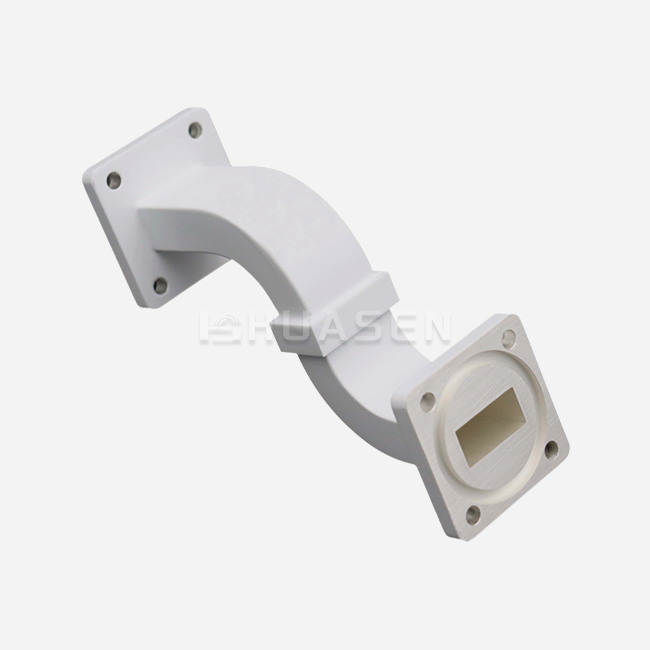
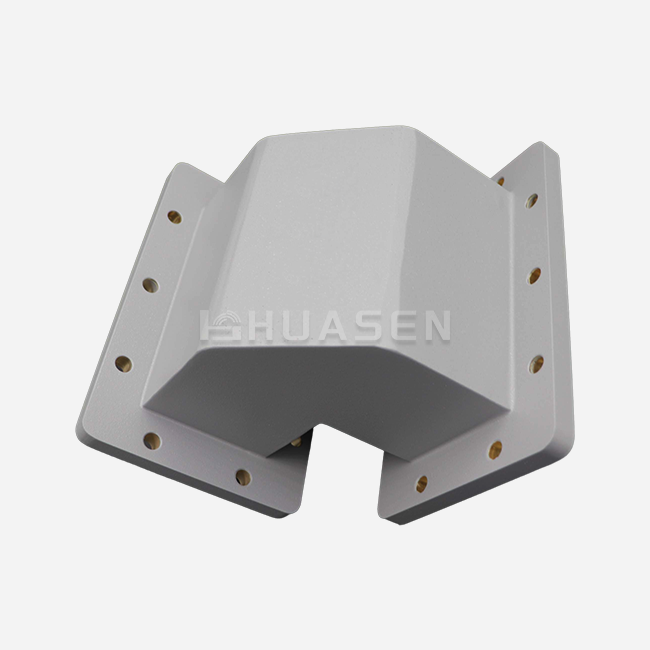
Waveguide circulators are three- or four-port passive microwave components that channel RF signals around a closed loop in one direction. Waveguide designs employ hollow metallic channels, which increase power management and lower millimetre-wave insertion loss compared to coaxial circulators with centre conductors and dielectric spacers. The device controls electromagnetic energy transmission, reducing signal interference and protecting delicate receiver components in high-power situations.
The Role of Ferrite Materials and Magnetic Biassing
Operating magic is in the waveguide junction's ferrite material. Ferrite has anisotropic permeability in static magnetic fields from permanent magnets or electromagnets. This implies microwave waves propagate differently depending on direction. The magnetic bias aligns the ferrite's magnetic domains, favouring energy flow. In well-designed circulators, tensor permeability and gyromagnetic resonance allow isolation surpassing 20 dB between non-adjacent ports and insertion loss below 0.5 dB.
Here, temperature stability matters. Ferrite materials lose magnetic characteristics above the Curie temperature. We solve outdoor base station and aircraft platform environmental adaptation issues by designing circulators with temperature-compensated magnets or active cooling systems to work consistently from -40°C to +85°C.
Key Performance Parameters Engineers Monitor.
Forward signal attenuation, measured by insertion loss, affects transmission efficiency. To protect sensitive amplifiers from reflected power, isolation measures reverse or non-adjacent port attenuation. High-performance devices have VSWR values below 1.25:1 for port impedance matching. Pulsed radar versus continuous-wave satellite uplinks depend on peak and average power management, respectively. These characteristics are within specification across a 10-20% fractional bandwidth for ordinary models; however, specialised wideband designs can span more frequencies.
These measures directly address mission-critical system procurement issues involving transmission efficiency, signal integrity, and component lifespan. Understanding these characteristics helps engineers design devices that balance performance and cost.

Comparing Waveguide Circulators: Choosing the Right Type for Your Application
Structural Differences and Their Impact
Where coaxial alternatives fail, waveguide circulators thrive in high-frequency, high-power applications. Coaxial designs' dielectric breakdown concerns and thermal management issues are eliminated without centre conductors. S-band through W-band radar systems and satellite ground stations need hollow waveguide constructions for kilowatt-level continuous and megawatt-level peak power.
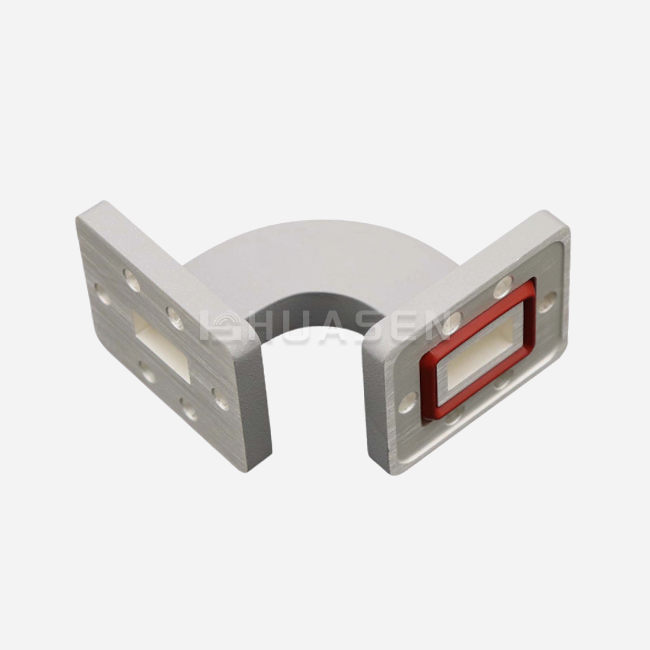
Junction circulators use Y-shaped or H-plane layouts with ferrite-loaded cavities for three waveguides. Operating frequency and bandwidth depend on junction geometry and ferrite disc size. Stripline circulators merge planar transmission lines with ferrite substrates for lower-frequency applications and have smaller footprints than pure waveguide circulators.
Material Properties Driving Performance
Ferrite composition greatly affects waveguide circulator performance. Yttrium iron garnet (YIG) is perfect for precision test equipment due to its low loss and wide temperature stability. Nickel-Zinc and Manganese- Zinc ferrites save commercial telecoms money. The ferrite's saturation magnetisation, dielectric constant, and loss tangent must match the frequency band and power requirements. High-power radar circulators use calcium-vanadium garnet compositions that resist RF fields.
Evaluation Criteria for Procurement Professionals
Purchasers should consider frequency coverage alignment with system architecture to reduce component count and inventory complexity. Power rating must surpass worst-case reflected power scenarios with safety margins. Installation times and prices depend on mechanical interface compatibility—UG/WR flanges or bespoke designs. Environmental ratings (IP67 waterproofing, MIL-STD-810 shock/vibration compliance) provide marine, aerial, and terrestrial reliability. ISO 9001, RoHS, and REACH certifications demonstrate manufacturing quality and regulatory compliance.
Procurement Considerations: How to Select and Source Waveguide Circulators?
Defining Technical Requirements
Purchase success starts with proper specification. Even tiny differences affect matching and isolation; thus, choose the operating frequency range with tolerance limitations. Calculate average and peak power, including transmitter output power and antenna VSWR, under fault situations. Use link budget and receiver sensitivity criteria to set insertion loss and isolation settings. Altitude, humidity, temperature fluctuations, and salt fog affect material and sealing choices.
Volume affects cost and lead times. One prototype device can ship in two weeks, while production orders of over 100 units can take eight weeks for typical designs and longer for unique combinations. Simple frequency tuning, multi-band designs, and integrated assemblies with waveguide switches and loads are all customisable.
Navigating Supplier Landscapes
Established manufacturers with reliable technical assistance are available worldwide. These companies have broad product portfolios from 1 GHz to 100 GHz, with watts to megawatts. Their engineers assist with design, including EM simulation validation and temperature analysis for component compatibility in bigger assemblies.
Huasen Microwave, founded in 1993, specialises in high-frequency microwave and millimetre-wave components. With established performance and solid supply chain management, our Waveguide Circulators serve telecommunications, radar, aerospace, and defence applications. Our customisation services for non-standard frequency bands, power levels, and mechanical connections include test data and prompt after-sales assistance.
Pricing Dynamics and Strategic Ordering
Frequency band, power rating, and high-power waveguide circulator substantially affect pricing. Ka-band circulators for kilowatt-level pulsed operation can cost several thousand dollars, whereas X-band devices for 100 watts' typical output may cost hundreds. Discounts surpass 20% for large orders of 50 items. Forecast visibility allows providers to pre-procure high-grade ferrite discs and precision-machined waveguide bodies six months in advance.
Real-World Applications and Case Studies of Waveguide Circulators
High-Power Radar Protection
Megawatt-level pulses from weather-monitoring radars detect precipitation hundreds of kilometres away. A duplexer, the waveguide circulator sends transmit energy to the antenna and faint return echoes to the receiver. Without this separation, transmitter leakage would damage the sensitive low-noise amplifier. The circulator's peak power handling over 1 MW and insertion loss below 0.3 dB maximise detection range and protect receiver electronics.
Thousands of circulators per transmit/receive module are used in military phased-array radars. Aircraft and ship vibration must not affect these devices' performance from Arctic cold to desert heat. Effective quality control and accelerated life testing during manufacture can achieve MTBF (Mean Time Between Failures) beyond 100,000 hours for field failures.
Satellite Communication Uplink Stations
Geostationary communication satellites orbit 36,000 kilometres above Earth and need kilowatt-powered uplink amplifiers. Reflected power from ice formation, radome damage, or targeting mistakes can kill the amplifier. Isolated waveguide circulators with Port 3 terminated in a high-power load absorb this reflected energy, ensuring amplifier stability and minimising signal-quality-degrading intermodulation distortion.
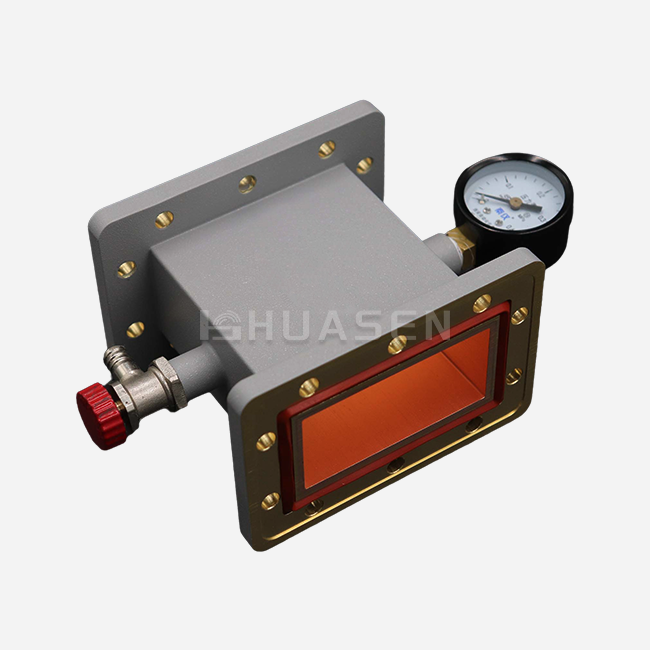
Earth stations are constantly exposed to wind, rain, and temperature changes. Pressurised circulators with dry nitrogen fill avoid ferrite degradation by internal condensation. Long-term deployments require environmental adaptation, and corrosion-resistant waveguide flange coatings enable decades of dependable operation with minimum maintenance.
Addressing Common Performance Issues
During installation, connection discontinuities or flange misalignment increase insertion loss. This may be avoided by torquing flange bolts and utilising precise alignment pins. If ferrite demagnetisation from extreme temperature or mechanical shock causes isolation deterioration, replacing the unit restores performance. Active systems can adjust for frequency drift with temperature using temperature-sensing feedback circuits, or passive solutions can accept performance variance within limitations.
Emerging Innovations
Low-loss tangent and high saturation magnetisation in rare-earth-based ferrite compositions allow smaller, lighter high-power waveguide circulators for space-constrained platforms like UAVs. 3D printing may create complicated waveguide shapes that conventional machining cannot, potentially increasing bandwidth and port-to-port isolation. Millimetre-wave bands over 60 GHz—essential for 5G backhaul and 6G research—drive precise microfabrication processes to preserve micrometre tolerances.
Conclusion
Modern microwave systems rely on waveguide circulators for signal routing, transmitter protection, and duplexing. Magnetised ferrite materials and gyromagnetic phenomena provide them with unequalled performance in high-power, high-frequency applications. Understanding physics, performance tradeoffs, and supplier capabilities allows procurement experts to define devices that maximise system dependability and minimise costs. Waveguide circulators will evolve through new materials and precise manufacturing to preserve their vital position in global infrastructure as communication systems move to higher frequencies and radar platforms need more power efficiency.
FAQ
1. What factors most significantly affect isolation performance?
Ferrite quality, magnetic field homogeneity, and junction symmetry determine isolation. Manufacturing tolerances in waveguide and ferrite disc installation reduce isolation. Ferrite permeability changes with temperature, lowering the ideal operating point. Thermal design and temperature-stable ferrite grades keep isolation over 20 dB in severe environments. Regular manufacturing calibration and testing guarantee units fulfil standards before distribution.
2. Can circulators be customised for non-standard frequency requirements?
Experienced manufacturers often customise. To target various frequency bands, we alter ferrite disc diameters, magnetic bias strength, and waveguide connection shape. Split-band designs for several non-contiguous ranges are possible, but trade isolation or insertion loss. After four to six weeks of prototyping, performance is tested against client criteria. Detailed mechanical drawings and RF performance data facilitate system integration and documentation with bespoke units.
3. What are typical lead times for bulk orders?
Standard catalogue goods arrive in two to three weeks for orders under 10. Production runs of 50 to 100 units require six to eight weeks for ferrite curing and multi-stage assembly. Custom designs take 10–14 weeks for engineering review, prototype manufacture, and testing. Early supplier involvement and demand forecast sharing improve planning and material pre-positioning, reducing lead times.
Partner with Huasen Microwave for Reliable Waveguide Circulator Solutions
Huasen Microwave Technology custom-engineers Waveguide Circulators for your system. Our 30 years of R&D make us a trusted Waveguide Circulator manufacturer for telecommunications, radar, aerospace, and defense applications globally. Our engineers work with your technical personnel to optimize frequency coverage, power management, and environmental resilience for easy integration into complicated RF infrastructures. Detailed test results, datasheets, and fast technical assistance speed procurement from specification to production deployment. Contact sales@huasenmicrowave.com to discuss your needs, request a quotation, or browse our vast product catalog. High-performance solutions that improve signal integrity, safeguard assets, and promote mission success in difficult operating conditions are our goal.
References
1. Pozar, David M. Microwave Engineering, 4th Edition. Wiley, 2011.
2. Helszajn, Joseph. The Stripline Circulators: Theory and Practice. Wiley-IEEE Press, 2008.
3. Schloemann, Ernst. "Circulators for Microwave and Millimeter-Wave Integrated Circuits." Proceedings of the IEEE, vol. 76, no. 2, 1988.
4. Baden Fuller, A. J. Ferrites at Microwave Frequencies. Institution of Electrical Engineers, 1987.
5. Linkhart, Douglas K. Microwave Circulator Design, 2nd Edition. Artech House, 2014.
6. IEEE Standard for Waveguide Components, IEEE Std 147-2017. Institute of Electrical and Electronics Engineers, 2017.
Send Inquiry