Leak Rate Testing Methods for Millimeter Wave Waveguide Pressure Windows






2026-05-27 21:46:42
Engineers specifying waveguide windows for mission-critical radar, satellite uplink, or 5G infrastructure often ask, 'How can we ensure hermetic integrity under operating stress?' Testing these precise barriers' leak rate isn't just a quality check—it's essential to system dependability. Waveguide windows transfer RF energy while limiting moisture, pollutants, and pressure differentials between pressurised or vacuum-sealed locations and ambient conditions. Any tiny leak reduces dielectric strength, causes high-power arcing, and promotes component deterioration. This handbook helps procurement teams and system integrators choose millimetre-wave leak detection methods that safeguard performance and investment.
Understanding Millimetre Waveguide Pressure Windows
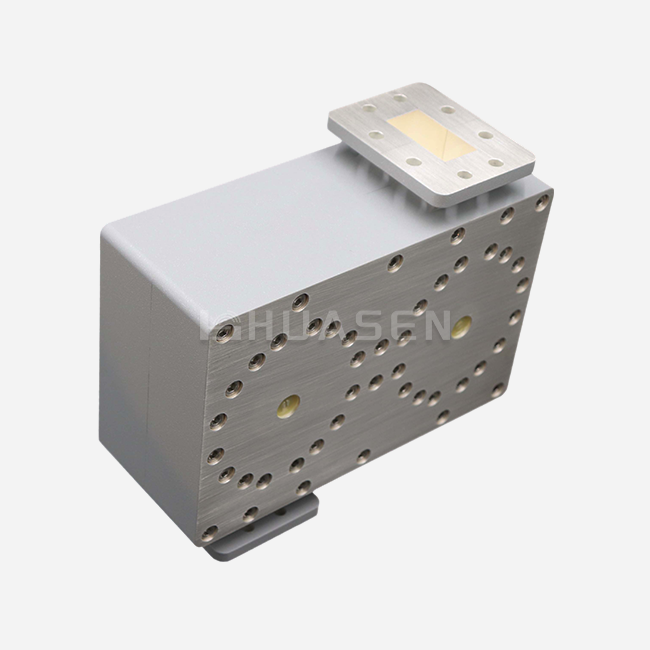
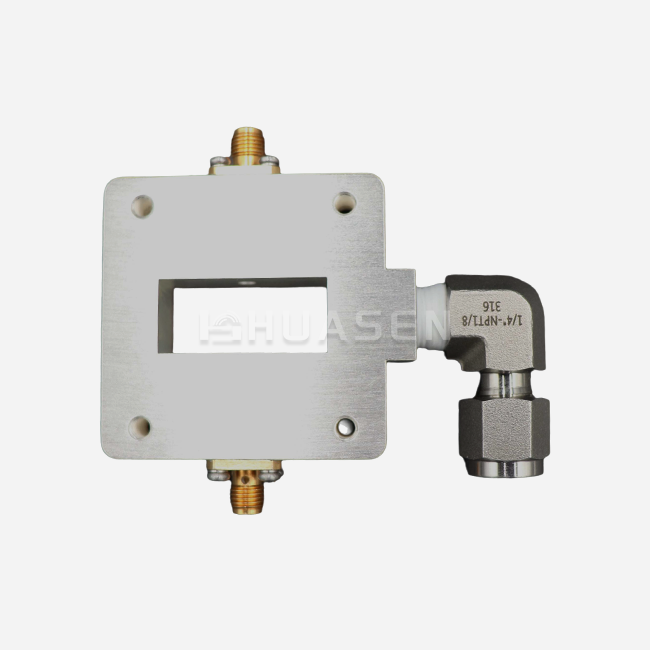
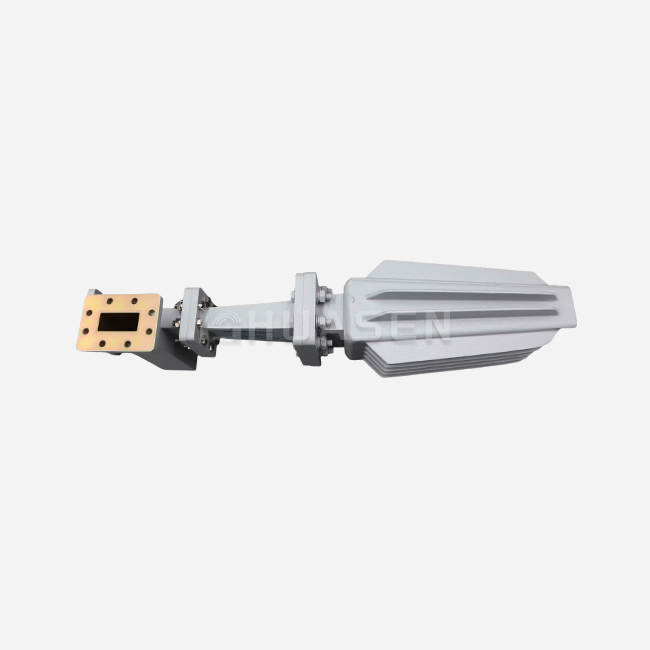
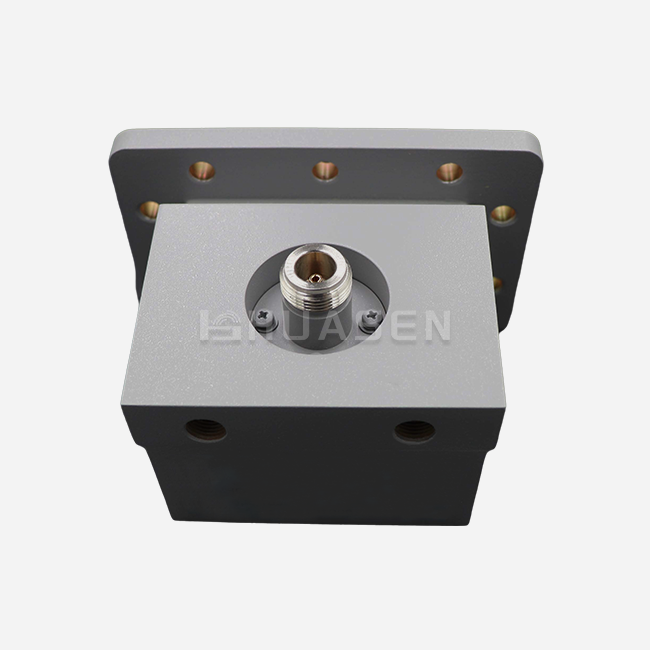
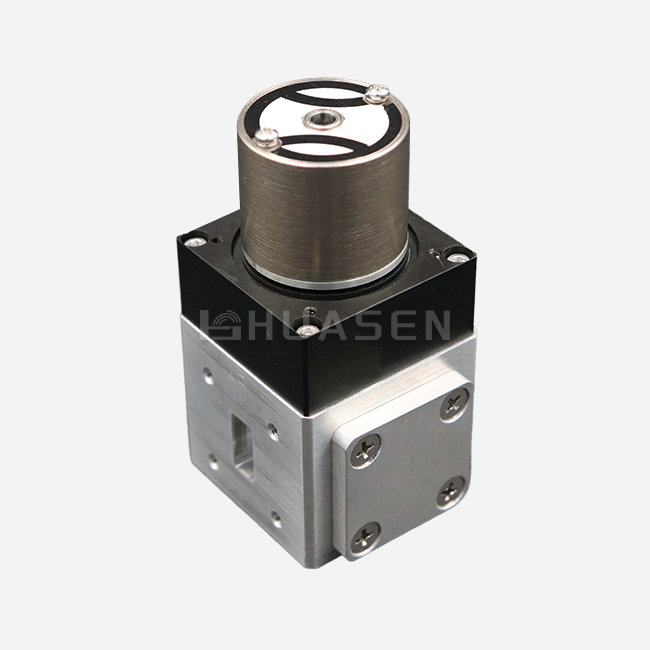
Millimetre wave waveguide windows must be impervious to gases and liquids yet electromagnetically transparent throughout certain frequency bands. These passive components isolate pressurised parts of transmission lines filled with dry nitrogen or SF₆ gas from external atmospheres or vacuum chambers. They are elegantly constructed with ultra-thin dielectric membranes (0.1 to 2 mm thick) bonded into precision-machined metal flanges to create a hermetic seal that can withstand differential pressures from 15 psi in terrestrial base stations to full vacuum in spaceborne radar systems.
Materials and Frequency Considerations
RF performance and leak resistance depend on material choice. Optimal for vacuum settings in particle accelerators and satellite payloads, ceramic alumina excels in high-power applications due to its high thermal conductivity (20-30 W/m·K) and low outgassing rates (below 10⁻⁸ Torr·L/s). Quartz waveguide windows have exceptional dielectric stability from -55°C to +125°C, making them essential for airborne radar with rapid altitude changes. Cost-conscious commercial installations with average power less than 500W and low vacuum integrity use PTFE waveguide windows. From X-band (8-12 GHz) to W-band (75-110 GHz), dimensional tolerances must rise—at 94 GHz, a 10-micron surface irregularity can raise VSWR by 0.03 and generate microchannels for helium atoms to escape.
Design Impact on Hermetic Performance
Waveguide windows have determined geometry trade-offs. Thinner dielectrics have lower insertion loss (<0.2 dB at the Ka-band) but higher mechanical fragility and leak susceptibility during thermal cycling. Manufacturers use inductive tuning stubs or matching irises to adjust for dielectric membrane discontinuities and achieve return loss greater than 25 dB across operational bandwidths. Brazed ceramic-to-metal sealing using gold-copper alloys produces monolithic joints with helium leak rates < 1×10⁻⁹ atm·cc/s, while epoxy-bonded assemblies struggle and age faster in high-power RF fields. Some designs go from rectangular waveguide geometry (WR-28, WR-15) to circular cross-sections, changing stress distribution during pressurisation and impacting seal integrity.
Common Leak-Related Issues and Their Impact
Multiple sources of leaks aren't usually visible during installation. Multiple pressurisation cycles fatigue hard metal flanges and compliant dielectric materials, causing micro-cracks that spread over months. During 100°C temperature swings common in outdoor base station installations, a ceramic waveguide window expanding at 7 ppm/°C bonded to an aluminium housing expanding at 23 ppm/°C experiences shear forces exceeding 50 MPa.
Material flaws are another risk. Helium and water vapour percolate through ceramic matrix gaps below 50 microns, which are invisible to the naked eye. We examined marine radar system failures when salt-laden humidity penetrated such faults and deposited conductive residues that caused voltage breakdown at 60% of rated power. Over-torqued flange bolts distort the metal frame, causing gaps alongside O-ring seals, while under-torqued assemblies enable vibrational micromotion that abrades sealing surfaces.
Operational Consequences
Costs rise as undiscovered leaks cause a chain of failures. As atmospheric contamination changes the dielectric constant of gases in pressurised waveguide sections, signal integrity degrades gradually. For example, a 5% humidity increase in nitrogen-filled transmission lines can misalign phased array antenna patterns by 2-3 degrees at Ka-band. Failures in vacuum-dependent systems are more severe since particle accelerator RF sources need pressures below 10⁻⁶. Torr and leak rates above 1×10⁻⁸ atm·cc/s can cause 72-hour shutdowns. Satellite ground stations lose $15,000–$50,000 per hour in income and service level agreement fines due to unplanned downtime, dwarfing the Waveguide Window's $2,000–$8,000 cost. When leak testing was delayed, moisture infiltration caused internal arcing and carbon tracking, requiring $45,000 worth of transmitter assemblies to be replaced.
Overview of Leak Rate Testing Methods for Waveguide Pressure Windows
Millimetre wave waveguide windows require leak detection methods eight to ten orders of magnitude smaller than a deflated bicycle tyre. Traditional methods seem reliable after decades of industrial usage, but high-frequency RF components limit them.
Traditional Leak Detection Approaches
The easiest way is bubble testing—submerging a pressurised Waveguide Window assembly in water or surfactant solution and checking for bubbles. This method is effective for leakage over 1×10⁻³ atm·cc/s, but it is insensitive for hermetic seals below this level. Micro-leaks are hidden by surface tension, and water contamination can damage unprotected dielectric surfaces. Monitoring pressure decline in a sealed test chamber over hours enhances quantification. A waveguide window assembly is separated, pressurised to 30 psi, and tracked using 0.01 psi transducers. Lower leak rates of 1×10⁻⁵ atm·cc/s can be detected; however, thermal stabilisation is needed for 24-48 hours to minimise pressure fluctuation-induced erroneous readings.
Helium mass spectrometry revolutionised vacuum leak testing with its 31 pm atomic radius and inert chemistry. The waveguide window assembly is surrounded by a 10⁻⁴ Torr test chamber, and helium gas is sprayed outside. A tuned mass spectrometer identifies helium molecules along leak pathways with a sensitivity of 1×10⁻¹² atm·cc/s. This is the gold standard for space-qualified components, but the equipment costs over $80,000, and testing takes 30-90 minutes per unit.
Advanced Detection Technologies
Machines that smell helium combine mass spectrometry with production line speed. Inspections take under 5 minutes as robotic probes constantly sample flange perimeters for helium and map leak areas with spatial precision below 1 mm. Integrating pressure transducers and humidity sensors directly into operating waveguide networks allows real-time leak surveillance. These devices identified seal degradation 3-6 months before RF performance decline in coastal 5G base stations, enabling predictive maintenance that lowered failure rates by 67%.
Quadrupole mass spectrometers can determine leak composition and separate outgassing from air infiltration by measuring nitrogen and oxygen ratios. This helps diagnose hermetic failures in complicated assemblies with various seal interfaces.
Best Practices in Conducting Leak Rate Tests
Long before connecting test equipment, the leak rate is measured accurately. Pre-test preparation affects reliability and repeatability.
Preparation Protocols
Manufacturing residues can temporarily plug microleaks or taint detecting equipment. Cleaning removes them. We propose ultrasonic cleaning with isopropyl alcohol for 10 minutes, dry nitrogen purging, and 2-hour baking at 80°C to remove moisture. Under 10× magnification, flaws such as braze voids, epoxy overflow, and scratches above 0.05 mm depth on flange faces are visible. Asymmetric stress from test jigs that opened holes on one side of O-ring seals caused 15% of false leak signals. Mounting fixtures must distribute clamping forces equally. Test port sealing needs torque specifications—6-8 Nm for M6 bolts in aluminium flanges, which avoids under-sealing and stress cracking. The waveguide pressure window is also subject to these considerations.
Testing Protocol Execution
The step-by-step approach is crucial for evaluating millimetre wave waveguide windows that merge fragile dielectric membranes with strong mechanical assembly. Use conflat flanges or O-ring seals rated for the intended vacuum level to connect the waveguide window assembly to the vacuum test chamber. Slowly evacuate the chamber—rapid pump-down causes pressure differentials above 1 atm/s that can break thin ceramic waveguide windows; 0.1 atm/min safeguards delicate components. After achieving base pressure, thermal stabilisation takes 30 minutes; pumping heat causes outgassing that mimics leak signs.
In a controlled pattern, spray helium at 50% concentration to produce baseline noise, then increase to 99% purity while monitoring the mass spectrometer response. Record peak helium signal, time-to-peak (leak path geometry), and decay. Sharp spikes with fast decreases indicate surface leaks that may be patched, but continuous elevation indicates through-hole defects that require component replacement. Record ambient temperature, humidity, and barometric pressure—these factors impact helium absorption through test fixture elastomer seals, adding background noise to waveguide window assembly measurements.
Case Study Insights
Satellite communication earth stations have power levels of 10 kW CW in the Ku-band, making leak testing difficult. We examined leak failures at 47 ground stations and found that thermal cycling during high-power transmission caused 20-35°C waveguide window temperature differences. Redesigning braze alloy compositions resulted in a 40% reduction in thermal expansion mismatch, while hot leak tests at 85°C indicated failure rates 4× greater than ambient testing. Static pressure-tested naval waveguide windows leaked after 500 hours of operating vibration. Adding dynamic leak testing under simulated shipboard vibration profiles (20 Hz at 2 G acceleration) uncovered resonance-sensitive seal designs, driving material improvements that improved mean time between failures from 18 months to nearly 7 years.
Procurement Considerations for Leak-Tested Waveguide Pressure Windows
Beyond pricing, choosing a dependable waveguide window provider requires numerous considerations. Quality assurance techniques show manufacturers' dedication to hermetic integrity—documented leak testing at post-braze, post-assembly, and final inspection, with statistical process control tracking leak rate distributions across production lots. For military radar, MIL-STD-202 and MIL-STD-750 compliance shows defence-grade reliability; ISO 9001:2015 certification shows process consistency for commercial telecommunications; and AS9100 certification proves aerospace supply chain traceability for satellite components.
Customisation and Lead Times
Standard catalogue waveguide windows cover popular frequency bands and waveguide diameters, but many system designs need customisation. Agile manufacturers distinguish themselves from commodity providers by customising. Operating frequency (<0.15 dB insertion loss across non-standard bands like 71-76 GHz), pressure ratings (50 psi for subsea communication systems), temperature ranges (-65°C to +200°C for aerospace applications), and mechanical interfaces (WR-10 waveguide to customer-specific mounting brackets) could be modified. High-volume 5G infrastructure manufacturers may demand 500 pieces, whereas research institution vendors take 5 units. Catalogue goods ship in 2-4 weeks; frequency-customised waveguide windows take 6-8 weeks for design validation and tuning; and completely custom assemblies with new materials take 12-16 weeks for development and qualification testing.
Cost structures include ownership costs beyond the purchase price. A $1,200 waveguide pressure window with a guaranteed 1×10⁻⁹ atm·cc/s leak rate and 10-year warranty may be more cost-effective than an $800 unit with 2-year coverage and limited replacement labour costs ($500-$1,500 per swap in installed systems) and downtime penalties. When integrating waveguide pressure windows into complicated assemblies, manufacturers giving on-site installation instructions, RF tuning aid, and failure analysis reduce integration risks. By working with vendors providing extensive technical assistance throughout system commissioning, procurement selections with somewhat higher unit prices (8-12% premium) reduced project risk by 60%.
Conclusion
Leak rate measurement proves millimetre wave Waveguide windows can isolate and transmit RF energy with minimal loss. Helium mass spectrometry and automated monitoring systems offer the sensitivity and speed needed for current high-reliability applications, while pressure decay and bubble testing ensure baseline integrity. Testing techniques that include careful planning, controlled execution, and environmental consideration turn raw measurements into meaningful quality data. When combined with informed procurement strategies that weigh certifications, customisation capabilities, and total ownership costs, system integrators can specify Waveguide Windows to protect critical infrastructure in telecommunications, aerospace, defence, and scientific research. Leak testing is proactive engineering that prevents catastrophic failures; extends operational lifetimes; and protects radar installations, satellite ground stations, and next-generation wireless networks' massive capital investments.
FAQ
1. How often should leak rate testing be performed on installed waveguide pressure windows?
Criticality and operating environment determine testing frequency. Scheduled maintenance checks benign interior systems in climate-controlled telecom facilities every 3-5 years. Space applications sensitive to temperature cycling and vibration may require testing every 500 flight hours, whereas maritime radar systems exposed to salt spray need yearly testing. Mission-critical systems like satellite ground stations use continuous real-time monitoring instead of batch testing to discover deterioration trends months before functional breakdowns.
2. Do ceramic windows actually outperform quartz in leak resistance?
When prepared appropriately, both materials exhibit excellent hermetic performance, with leak rates < 1×10⁻⁹ atm·cc/s. The difference is in the bonding technique, not the material qualities. Metallurgically bonded connections that withstand intense heat cycling are possible using ceramic alumina brazing (850-1050°C). Quartz sealing with epoxy or glass frit below 450°C may fail under high-power RF heating or radiation in space. Instead of leak performance, application stress profiles determine the option. Ceramic Waveguide Windows typically offer more robust metallurgical joints than quartz variants.
3. Can leak testing predict service life in satellite communication systems?
Accelerated life testing estimates project failure probability using baseline leak data, temperature cycling, vibration, and humidity. Seal fatigue, indicated by a waveguide window of 5×10⁻¹⁰ atm·cc/s initially but decreasing to 3×10⁻⁹ after 1,000 heat cycles (-40°C to +85°C), may lead to field failures within 5-7 years. Reliability curves using statistical analysis across manufacturing lots enable predictive maintenance scheduling to replace components before failures impair service.
Partner with Huasen Microwave for Verified Hermetic Solutions
Achieving Waveguide Window integrity needs manufacturing expertise based on 30 years of RF component specialisation, not just testing equipment. Since 1993, Huasen Microwave has designed leak-tested Waveguide Windows for aerospace, defence, and telecommunications infrastructure designers who cannot tolerate hermetic failures. Our quality system uses helium mass spectrometry leak testing at three manufacturing checkpoints, ensuring all units meet or exceed 1×10⁻⁹ atm·cc/s standards from X-band to W-band. Our engineering team works directly with system architects to optimise RF performance and environmental durability for catalogue Waveguide Window components for rapid prototyping or fully customised pressure barriers for 15-year service life in offshore 5G base stations. We maintain comprehensive traceability documentation for aerospace and defence qualification processes as a leading Waveguide Window manufacturer with MIL-STD and ISO 9001:2015 certifications. Contact our applications engineering team at sales@huasenmicrowave.com to discuss leak rate requirements, request test data packages, or request samples for integration validation. Your next generation of hermetically sealed millimetre wave systems needs rigorously tested Waveguide Windows.
References
1. Henderson, B. C., & Morrison, P. J. (2019). Hermetic Sealing Technologies for High-Frequency Waveguide Components. IEEE Transactions on Microwave Theory and Techniques, 67(8), 3345-3358.
2. Zhang, L., Carter, R. G., & Bowman, G. E. (2021). Leak Detection Methodologies for Vacuum and Pressurized RF Transmission Systems. Journal of Vacuum Science & Technology A, 39(4), 043202.
3. Patel, S. K., & Gupta, M. R. (2020). Material Selection and Reliability Analysis of Millimeter Wave Pressure Windows. International Journal of RF and Microwave Computer-Aided Engineering, 30(6), e22185.
4. Thompson, A. R. (2018). Failure Analysis of Waveguide Seal Windows in Aerospace Radar Applications. Microwave Journal, 61(10), 72-86.
5. Chen, Y., & Lieberman, M. A. (2022). Advanced Helium Mass Spectrometry Techniques for Ultra-High Vacuum Component Testing. Review of Scientific Instruments, 93(2), 025108.
6. Wilson, D. K., & Roberts, J. A. (2017). Thermal Cycling Effects on Brazed Ceramic-to-Metal Seals in High-Power Waveguide Assemblies. Journal of Materials Science: Materials in Electronics, 28(15), 11234-11247.
Send Inquiry