What Is a Waveguide Power Divider and How Does It Work in Radar






2026-05-26 21:38:51
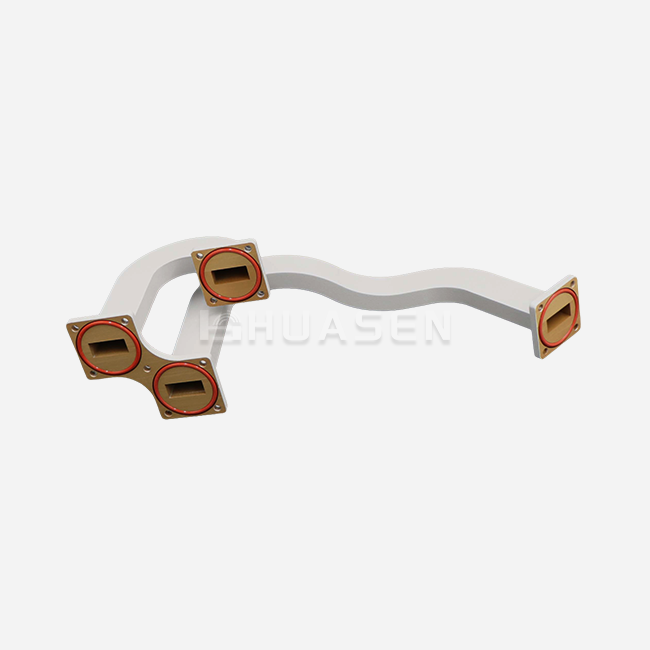
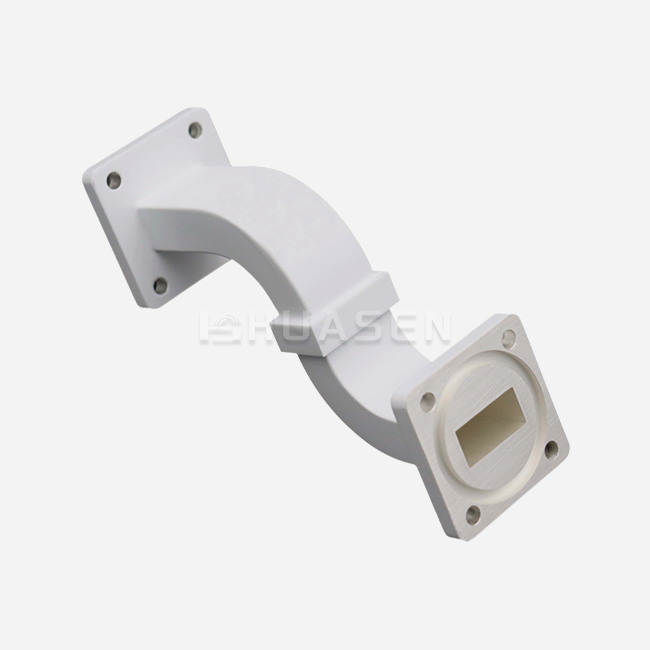
Selecting RF distribution components for radar systems that require high signal quality and power management is crucial. A waveguide power divider is a complex passive microwave component that splits an electromagnetic signal into two or more output pathways while maintaining amplitude and phase coherence. These hollow metallic waveguide structures operate in the TE10 mode, making them essential for high-frequency radar applications where thermal stability and minimal insertion loss affect detection range and target precision.
Understanding Waveguide Power Dividers: Definition and Working Principles
Waveguide power dividers manipulate electromagnetic wave propagation in precision-machined metallic enclosures. The basic working principle uses controlled impedance matching at junction locations when one input channel branches into many output ports.
The Physics Behind Signal Splitting
Power is divided using field distribution symmetric geometries like T-junctions, magic tees, or hybrid structures. The electromagnetic energy from a radar transmitter's input port splits at a waveguide dimension and an internal feature split point, determining power distribution among output channels. Key performance criteria include insertion loss (0.2-0.5 dB per port), output isolation (>20 dB), and phase balance (<3 degrees). These parameters directly affect radar beam accuracy and target discrimination.
Why Phase Coherence Matters in Radar?
Electronic beam steering in phased array radar systems requires accurate antenna timing. Any distribution network phase variation causes pointing mistakes and reduced resolution. Even during aerial or naval manoeuvres, high-quality waveguide power dividers retain phase stability across temperature extremes and mechanical stress, synchronising several radar channels.
Impedance Matching and Reflection Management
Return loss is minimised by impedance matching all ports, preventing reflected signals from altering transmitter performance or producing false echoes. Using stepped transformers or tapered waveguide transitions, engineers balance bandwidth with manufacturing complexity.
Types of Waveguide Power Dividers and Their Applications in Radar Systems
Different radar divider topologies are tailored for different operational conditions and frequency bands.
Double-Ridge Waveguide Magic T Power Divider
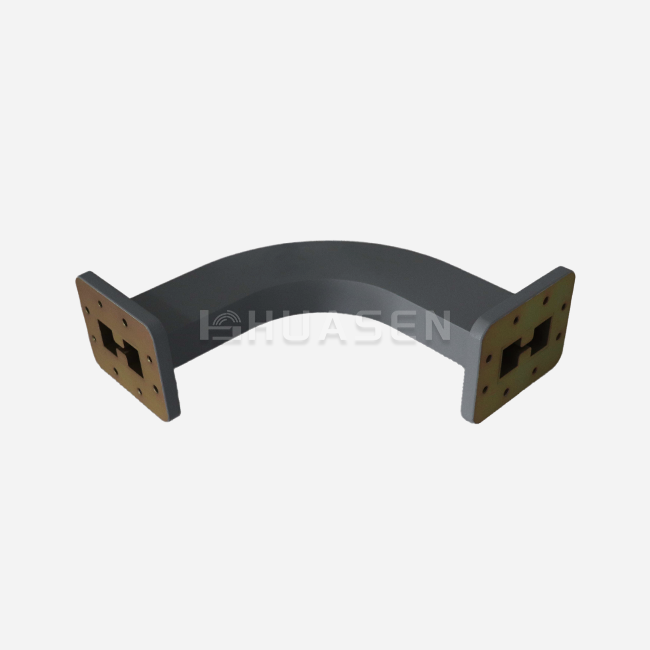
This sophisticated arrangement increases operating bandwidth over rectangular waveguides. The double-ridge shape decreases cutoff frequency while remaining small, making it excellent for multi-band radar systems covering L-band to Ku-band. Fighter aircraft fire-control radars use these dividers to distribute transmitter power to numerous antenna quadrants and track monopulses using sum and difference channels.
Waveguide Magic T Components
Magic Tee is a four-port junction with unusual properties: H-arm signals split evenly to the co-linear ports but stay isolated from the E-arm, while E-arm inputs create opposite-phase outputs. Waveguide Power Divider. Radar comparator networks use simultaneous sum and difference patterns for accurate angle monitoring. Magic Tees allows weather monitoring radars to dual-polarise and classify hydrometeors.
Waveguide In-Phase Power Divider
In-phase dividers are used for beam-forming networks that need identical output phase relationships. These devices transfer power evenly and maintain phase alignment across all ports, which is essential for ground-based air surveillance radar broadside array antennas. Multiple transmitter modules combine coherently due to symmetrical link lengths and matching impedances, enhancing radiated power.
One-to-Many Power Splitter Configurations
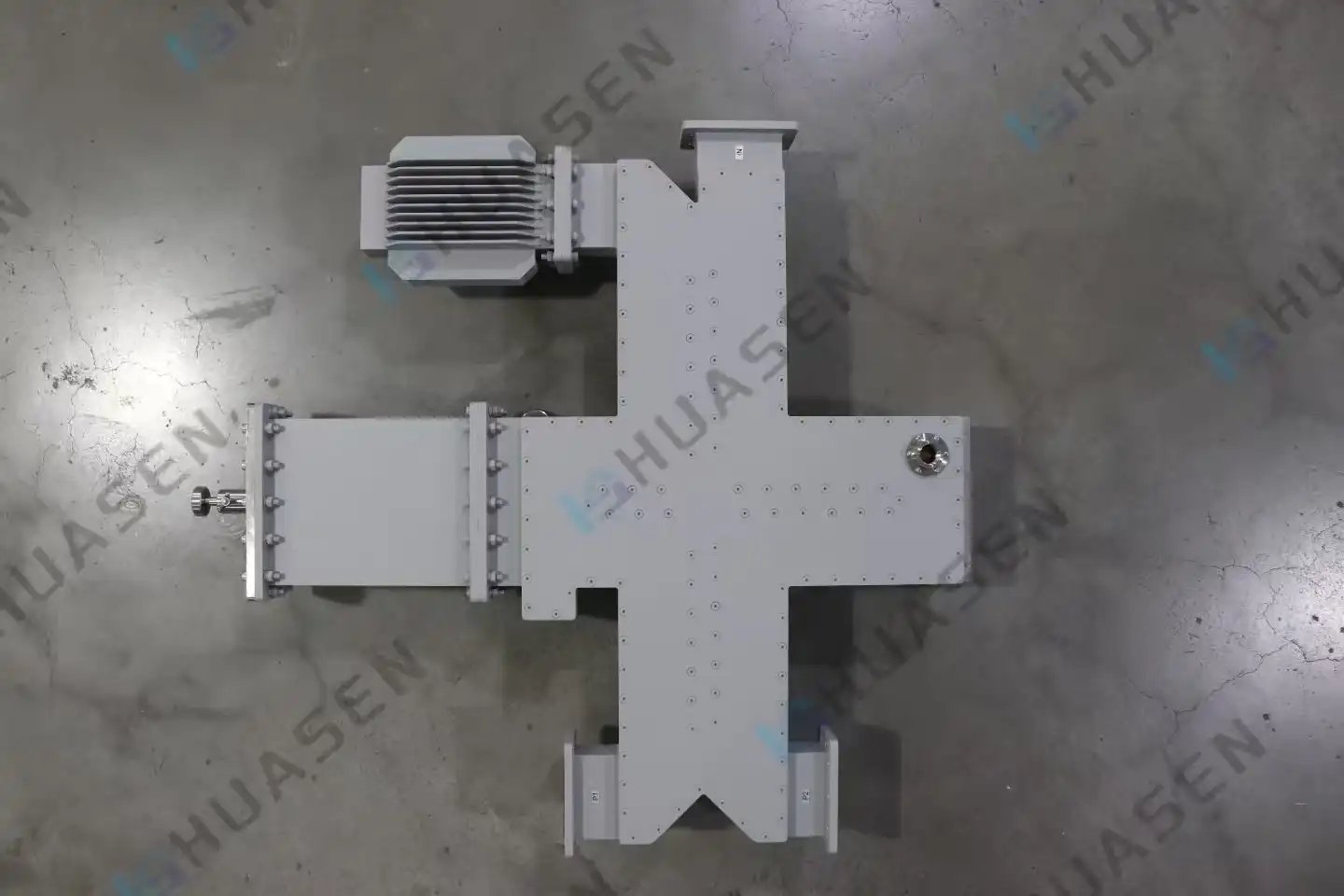
Splitting sources to feed dozens or hundreds of radiating units is common in complex radar designs. Cascaded divider networks in I-, U-, X-, Y-, or YU-type designs multiply. These multi-stage networks transfer solid-state amplifier outputs from missile defence system active electronically scanned array (AESA) radars while controlling amplitude and phase. Due to physical layout restrictions, U-type bends accommodate narrow equipment racks, while Y-type junctions optimise signal route symmetry.
Huasen Microwave manufactures these diverse architectures, covering frequency ranges from 0.32 GHz to 112 GHz, supporting BJ22 through BJ320 standard waveguide interfaces. The typical operating bandwidth remains within 10% of the centre frequency, balancing performance with practical manufacturing tolerances. Power handling specifications meet demanding radar requirements: average power exceeds 200W while peak power capability reaches beyond 2 kW, preventing multipactor breakdown during high-duty-cycle pulse transmission.
Comparing Waveguide Power Dividers with Alternative Solutions
Understanding how waveguide technology compares to alternatives aids procurement decisions.
Waveguide Versus Coaxial Dividers
In sub-6 GHz systems, coaxial power dividers are small and easy to integrate. Above X-band frequencies, coaxial cable dielectric losses rapidly increase, reducing system efficiency. Even at millimetre-wave frequencies, waveguide technologies reduce insertion loss to fractions of a decibel by eliminating dielectric materials. Sealing waveguides protects naval radar links from salt fog better than many coaxial interconnections.
Microstrip and Planar Circuit Alternatives
Mass manufacture and easy assembly are possible using printed circuit board dividers. However, substrate thermal characteristics and conductor cross-sections restrict their power handling. Microstrip dividers fail at 10-20 watts continuous power, but waveguide power dividers handle kilowatts. Only waveguide technology eliminates dielectric breakdown and conductor vaporisation in ground-based search radars sending megawatt peak pulses.
Hybrid Coupler Trade-offs
Directional couplers achieve power division with excellent directivity but introduce higher insertion loss compared to simple junctions. Hybrid couplers are useful for radar topologies that need tight coupling control, such as -10 dB taps for monitoring circuits. Standard power dividers reduce loss and split evenly, making them ideal for feeding antenna arrays for optimal gain.
Priorities at the system level determine the selection of an RF power divider. Waveguide power dividers thrive in high power, millimetre-wave frequencies, hostile environments, and applications that need phase accuracy, such as current radar systems.
Procurement Guide: How to Choose and Buy the Best Waveguide Power Divider?
Frequency Compatibility Assessment
Single-mode operation must exceed the highest frequency, while the waveguide cut-off frequency must be below the lowest. The standard waveguide bands (WR-340 for S-band, WR-90 for X-band, and WR-28 for Ka-band) cover 1.5:1 frequency ratios. Ridge-loaded waveguides or numerous waveguide power dividers may be needed for longer-range radars.
Power Rating Verification
Thermal stability requires at least a 50% buffer over continuous operation levels in average power standards. Peak power ratings must account for voltage standing wave patterns that cause localised field concentrations and pulse compression ratios and duty cycles. Aircraft and military applications use MIL-STD-220 for power handling verification.
Insertion Loss and VSWR Requirements
Each decibel of insertion loss reduces radar range according to the fourth-power relationship in two-way propagation. Specifying VSWR above 1.2:1 keeps reflected power below -20 dB, safeguarding transmitter terminal stages. To avoid clutter residue deterioration, coherent Doppler radar phase stability must be kept within degrees throughout temperature fluctuations.
Mechanical Interface Standards
Compatible connectors between dividers and nearby components prevent adapter losses and failure locations. Custom layouts can enhance integration density in space-constrained installations, while standard flanges (UG-series and IEC R-series) ensure mechanical interchangeability. Airborne platforms must consider weight since every kilogram affects fuel efficiency.
Customisation Capabilities
Off-the-shelf devices have numerous uses, but radar system optimisation requires custom solutions. Ground-mapping radars can shape beams with custom power splitting ratios like 70:30 instead of 50:50. In technology transitions, specialised connectors accommodate mixed coaxial-waveguide topologies. Rapid prototyping and design assistance speed up development.
Huasen Microwave provides comprehensive customisation for power splitting ratios and connector specifications, backed by over three decades of RF engineering expertise. Our technical team collaborates with clients to translate system-level requirements into optimised divider designs, supported by full electromagnetic simulation and network analyser verification.
Practical Insights and Future Trends in Waveguide Power Dividers for Radar
Proven Performance in Operational Systems
Long-range air traffic control radars running for decades show waveguide power divider endurance. These installations undergo billions of transmit cycles without performance loss, proving the technology's durability. Waveguide distribution networks maintain calibration without active adjustment for airborne early warning platforms flying from -55°C to +70°C.
Material Science Advancements
Traditional aluminium with silver coating works for most purposes, including RF power divider applications. New aluminium alloy compositions enhance heat conductivity and reduce weight, which is useful for unmanned aerial vehicle radars with limited payloads. Additive manufacturing allows complicated internal geometries that traditional machining cannot, possibly lowering insertion loss through improved field transitions.
Integration with Active Electronics
Next-generation radar topologies spread solid-state amplifiers among antenna arrays instead of centralising power. Demand for small divider-combiner assemblies with heat management features rises. Temperature sensors and health monitoring circuits may provide predictive maintenance before problems in future designs.
Millimetre-Wave Expansion
Waveguide power divider manufacturing accuracy gets harder when radar systems go to W-band and beyond for better resolution. Advanced metrology and machining are needed for thousandths- to ten-thousandths-of-an-inch tolerances. Millimetre-wave companies are well-positioned for automotive radar and 6G backhaul markets.
Procurement should balance present needs with technology trends. Using suppliers with continuous innovation and manufacturing ensures component availability as radar architectures evolve. Early contacts give engineering resources for vital development.
Conclusion
Waveguide power dividers are essential in radar systems where component limitations cannot affect performance. High power levels with minimal loss and phase coherence across temperature extremes make them indispensable in military, aerospace, and critical infrastructure applications. Procurement professionals can specify optimal solutions for radar architectures by understanding Magic Tees, in-phase dividers, and cascaded networks. Selecting manufacturing partners with proven expertise and customisation capabilities becomes increasingly important for programme success as system requirements increase frequency and integration density.
FAQ
1. What insertion loss should I expect in X-band radar dividers?
At X-band frequencies (8-12 GHz), typical two-way dividers have 0.3-0.5 dB insertion loss beyond the theoretical 3 dB split. Impedance mismatch, conductor resistance, and manufacturing tolerances cause excess loss. Through precision machining and optimised transitions, premium designs achieve 0.2 dB.
2. How does isolation affect radar system performance?
Multiple channels operate without crosstalk due to output port isolation. Insufficient isolation in transmit-receive modules causes grating lobes that degrade the beam pattern purity. Above 20 dB isolation ensures minimal interaction in most applications.
3. Can dividers be customised for non-standard frequency bands?
Custom designs accommodate non-standard frequency allocations or multi-band systems. Ridge-loaded waveguides increase bandwidth over rectangular guides but increase manufacturing complexity. Fully custom configurations take 8-12 weeks, while catalogue products with modified connectors take 2-4 weeks.
Partner with Huasen Microwave for Your Radar Power Distribution Needs
Huasen Microwave has 30 years of high-frequency component manufacturing experience for your most demanding radar projects. We design Waveguide Power Dividers for harsh defence and aerospace applications with power handling exceeding 2 kW peak from 0.32 GHz to 112 GHz. We precision manufacture BJ22–BJ320 standard interfaces and customise power ratios, connector types, and mechanical configurations.
We offer design support from concept to production qualification as a leading waveguide power divider manufacturer. Our engineering team works with your system architects to optimise component specifications for your radar architecture, providing network analyser characterisation and environmental qualification testing. We guarantee on-time delivery even for high-volume purchases thanks to our production capacity and quality management systems.
Contact sales@huasenmicrowave.com today to discuss your specific radar system requirements. Our applications engineers can recommend optimal divider configurations, provide fast quotes, and send sample units for evaluation. Discover how Huasen Microwave simplifies procurement and ensures component performance that meets modern radar system standards.
References
1. Pozar, David M. Microwave Engineering, 4th Edition. Wiley, 2011.
2. Matthaei, George L., Leo Young, and E.M.T. Jones. Microwave Filters, Impedance-Matching Networks, and Coupling Structures. Artech House, 1980.
3. Skolnik, Merrill I. Radar Handbook, 3rd Edition. McGraw-Hill Education, 2008.
4. Marcuvitz, Nathan. Waveguide Handbook. IET Press, 1986.
5. Saad, Theodore S. Microwave Engineers' Handbook, Volume 2. Artech House, 1971.
6. Balanis, Constantine A. Antenna Theory: Analysis and Design, 4th Edition. Wiley, 2016.
Send Inquiry