Top Materials for Durable Waveguide Bend Components






2026-01-22 21:53:57
When signal integrity fails in critical microwave systems due to moisture infiltration or material degradation in waveguide bends, research projects stall and equipment fails. Selecting the right materials for waveguide bend components directly impacts system longevity, performance stability, and operational costs across telecommunications, aerospace, and defense applications.
Understanding Material Requirements for Waveguide Bend Performance
The foundation of any high-performance waveguide bend lies in material selection that addresses both electrical and mechanical demands. Waveguide bend components must maintain precise dimensional tolerances while withstanding environmental stresses including temperature fluctuations, humidity exposure, and mechanical vibration. The material choice determines insertion loss characteristics, power handling capabilities, and long-term reliability in field deployments. Engineers working with high-frequency systems from L-band through W-band frequencies require materials that exhibit consistent dielectric properties, minimal surface roughness, and resistance to oxidation over extended operational periods.
Modern waveguide bend applications demand materials that can support frequencies ranging from 0.32 to 330 GHz while maintaining VSWR specifications of 1.2:1 or better. The material must facilitate precision CNC machining to achieve sub-millimeter tolerances essential for optimal electromagnetic performance. Furthermore, materials selected for inflatable waveguide bend designs must accommodate specialized sealing and welding processes that ensure airtight construction, particularly critical when gas injection technology is employed to prevent moisture intrusion and extend component lifespan in harsh outdoor environments.
Electrical Conductivity and Surface Finish Considerations
Material electrical conductivity directly influences insertion loss performance in waveguide bend assemblies. Copper and aluminum alloys dominate waveguide bend manufacturing due to their excellent conductivity-to-weight ratios and machinability. Oxygen-free copper provides superior electrical performance with insertion losses as low as 0.1 dB, making it ideal for applications where signal degradation must be minimized. The material's surface finish quality affects high-frequency performance significantly, with smoother inner surfaces reducing ohmic losses and improving power handling up to 500W continuous wave ratings.
Aluminum alloys offer weight advantages critical for aerospace and satellite communication systems where mass constraints drive design decisions. The material's natural oxide layer, while providing corrosion resistance, requires careful surface preparation and plating processes to maintain optimal electrical characteristics. Silver plating on aluminum waveguide bends enhances conductivity at the surface layer where high-frequency currents concentrate, achieving performance levels approaching solid copper construction while maintaining weight benefits essential for airborne and space-based applications.
Copper Alloys for High-Performance Waveguide Bend Applications
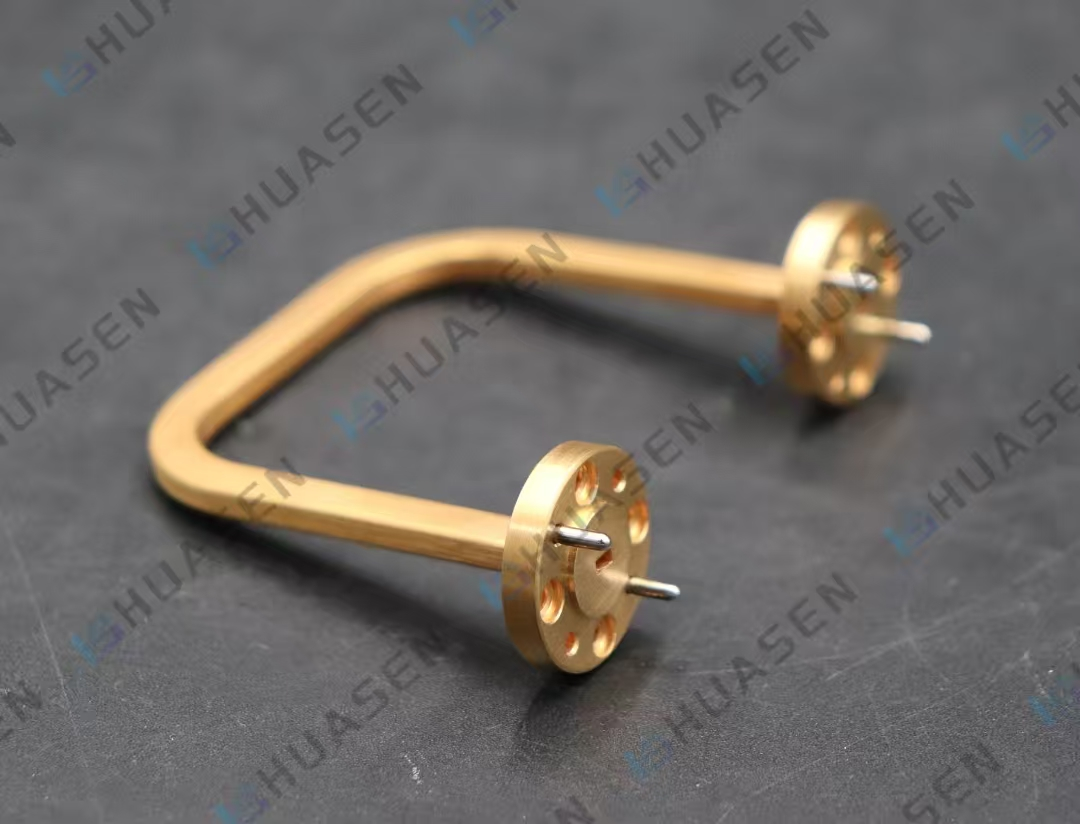
Oxygen-free copper (OFC) represents the premium material choice for waveguide bend components requiring maximum electrical performance and longevity. This material's exceptional thermal conductivity facilitates efficient heat dissipation in high-power applications, while its malleability supports complex bending geometries without compromising structural integrity. Manufacturing facilities equipped with precision CNC machining, EDM, and slow wire cutting capabilities can achieve the exacting dimensional control necessary to produce waveguide bends meeting stringent specifications for radio astronomy observatories, particle accelerator facilities, and electromagnetic research laboratories.
The manufacturing process for copper waveguide bends involves multiple stages including rough machining, heat treatment for stress relief, precision finishing, and rigorous dimensional inspection using coordinate measuring machines. Advanced facilities employ specialized welding techniques including silver brazing and vacuum furnace aluminum brazing to create hermetic seals essential for inflatable waveguide bend designs. The gas injection process utilized in advanced waveguide bend configurations requires exceptional airtightness only achievable through high-performance sealing technology applied to properly prepared copper surfaces.
Aluminum Construction for Weight-Critical Applications
Aluminum alloys provide compelling advantages for applications where weight reduction directly impacts system performance and deployment costs. Aviation, aerospace, and mobile communication platforms benefit from aluminum waveguide bend components that deliver reliable performance at fraction of the weight compared to copper equivalents. The material selection process considers specific alloy compositions that balance machinability, strength, and corrosion resistance requirements unique to each application environment.
Modern aluminum waveguide bend manufacturing employs advanced CNC machining technologies including multi-axis milling centers that produce complex geometries with customizable dimensions, bending angles, arm lengths, and interface specifications. The fitting workshop capabilities extend to TIG welding, arc welding, and specialized heat treatment processes that optimize material properties for long-term environmental resilience. Surface treatments including anodizing and specialized coatings protect aluminum waveguide bends deployed in high-humidity and dusty conditions where bare metal would deteriorate rapidly, ensuring stable operation throughout extended service lives.
Composite Materials and Advanced Protection Technologies
Carbon fiber reinforced composites have emerged as transformative materials for large-aperture waveguide bend applications where traditional metallic construction proves impractical. Manufacturing processes for carbon fiber reflectors with diameters ranging from 400mm to 1800mm achieve surface accuracies between 0.03mm and 0.15mm, critical specifications for millimeter-wave and terahertz applications. These composite structures provide exceptional dimensional stability across wide temperature ranges while maintaining significantly lower mass compared to equivalent metal fabrications.
Specialized composite materials workshops equipped with dedicated process personnel and technical workers produce radomes ranging from 1m to 2.4m that protect sensitive waveguide bend assemblies from environmental exposure. The integration of high-loss carbonyl iron absorption materials into waveguide bend designs addresses electromagnetic interference challenges in complex system installations. These customizable absorption materials function effectively across L-band, S-band, C-band, X-band, KU-band, Ka-band, and W-band frequencies in small power environments up to 5W, finding application in waveguide matching loads, high-directional couplers, isolators, circulators, and traveling wave array antennas.
Gas Injection Technology for Enhanced Durability
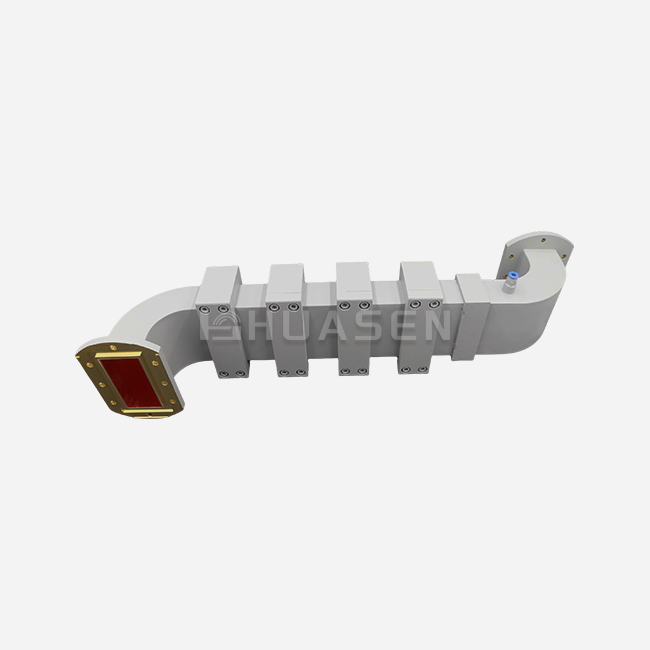
Inflatable waveguide bend technology represents a significant advancement in component longevity and environmental resilience. The specialized gas injection process creates positive internal pressure that actively prevents moisture infiltration, addressing the primary failure mechanism in outdoor waveguide installations. This technology requires exceptional airtightness achieved through advanced sealing and welding processes that maintain stable internal air pressure throughout the component's operational life, significantly reducing signal transmission loss compared to conventional sealed designs.
The customizable design approach enables engineering teams to specify exact requirements including size, bending angle, arm length, pressure threshold, and interface specifications tailored to unique research and operational requirements. Rapid prototyping capabilities support iterative design processes essential in electromagnetic research, radio astronomy, and particle acceleration applications where performance optimization demands multiple design refinements. The combination of precision manufacturing with sub-millimeter tolerances and smooth inner surface finishes ensures optimal performance across frequency ranges from 0.32 to 330 GHz.
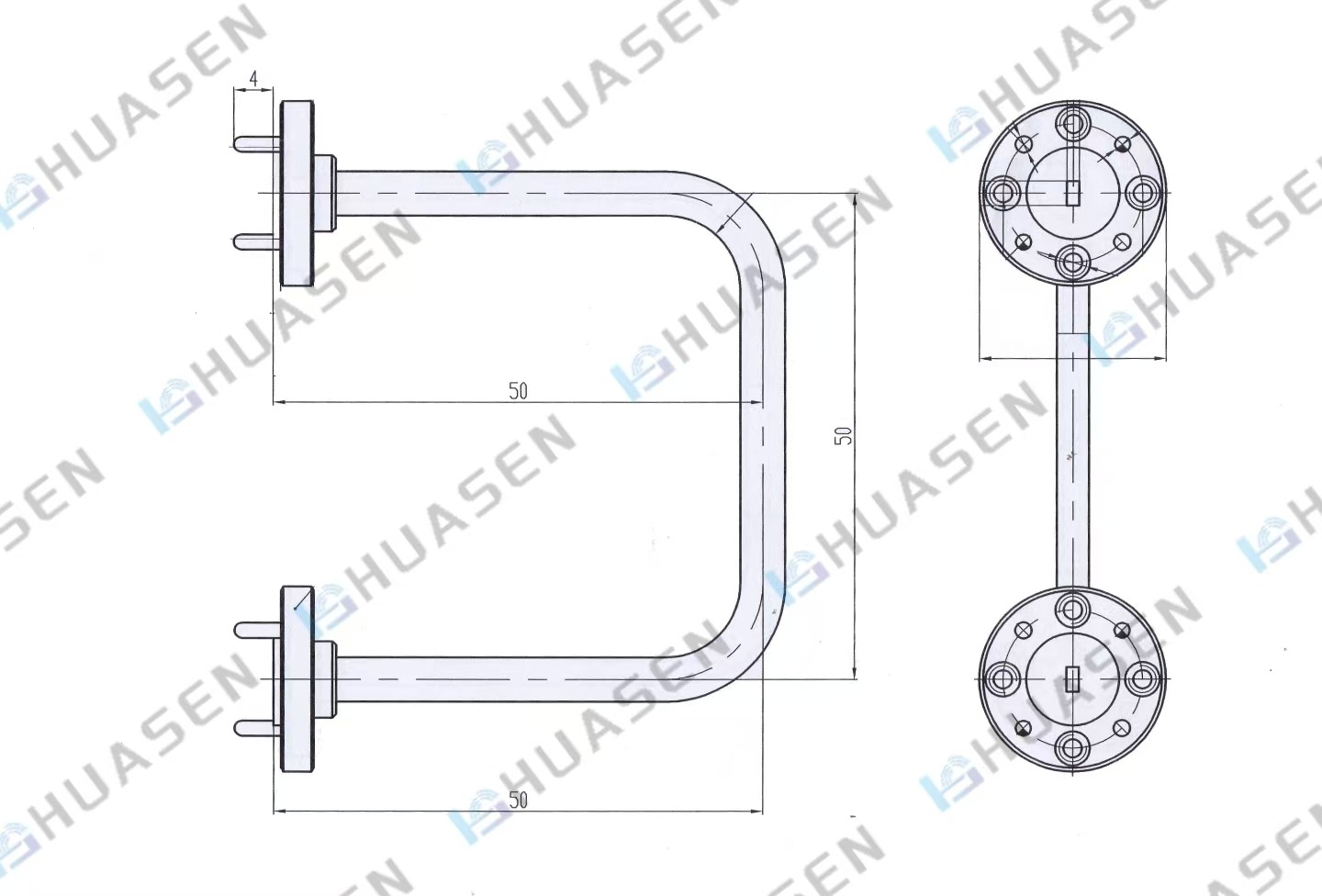
Quality Assurance and Testing for Material Verification
Comprehensive testing infrastructure validates material performance and manufacturing quality throughout the production process. Multiple microwave anechoic chambers including 21-meter, 9-meter, and 5-meter facilities provide controlled environments for far-field measurements across frequency ranges from 0.5GHz to 220GHz. These chambers, calibrated by certified metrology laboratories, support rigorous antenna radiation characteristic analysis essential for waveguide bend performance verification in complete system configurations.
Advanced testing capabilities extend to planar near-field measurement systems with 9m by 6m scanning frames covering 0.8GHz to 40GHz, complemented by 68-probe spherical field systems operating from 0.4GHz to 8GHz. External test sites with distances extending to 2000m enable real-world performance validation across frequency ranges from 30MHz to 110GHz with measurement dynamic ranges reaching 50dB. The extensive instrumentation suite including 40 vector network analyzers, 6 signal generators, 6 spectrum analyzers, and specialized equipment up to 320GHz ensures comprehensive characterization of waveguide bend electrical performance, mechanical stability, and environmental resilience.
Environmental stress testing employing temperature shock chambers, alternating humidity and heat chambers, and vibration test benches validates material durability under conditions exceeding operational specifications. RoHS testing, coordinate measuring machines, and image measuring instruments provide additional quality control touchpoints ensuring every waveguide bend component meets exacting standards before deployment. This rigorous quality control approach, supported by ISO9001, RoHS, and REACH certifications, delivers confidence in long-term performance across demanding aerospace, defense, telecommunications, and research applications.
Conclusion
Material selection fundamentally determines waveguide bend component performance, durability, and cost-effectiveness across diverse applications from satellite communications to particle accelerators. Copper, aluminum, and advanced composites each offer distinct advantages when properly matched to specific operational requirements and environmental conditions.
Cooperate with Huasen Microwave Technology Co., Ltd.
As a leading China Waveguide Bend manufacturer and China Waveguide Bend supplier, Huasen Microwave Technology Co., Ltd. brings three decades of expertise to your most challenging RF and microwave component requirements. Our China Waveguide Bend factory delivers High Quality Waveguide Bend solutions with competitive Waveguide Bend price structures backed by ISO certifications and comprehensive testing capabilities. Whether you need standard Waveguide Bend for sale or require China Waveguide Bend wholesale quantities with custom specifications, our experienced team stands ready to support your project from concept through production. Contact our technical specialists at sales@huasenmicrowave.com to discuss your waveguide bend requirements and discover how our precision manufacturing, rapid prototyping, and rigorous quality control deliver the performance your application demands.
References
1. Pozar, David M. "Microwave Engineering" Fourth Edition, John Wiley & Sons, 2012.
2. Balanis, Constantine A. "Advanced Engineering Electromagnetics" Second Edition, John Wiley & Sons, 2012.
3. Collin, Robert E. "Foundations for Microwave Engineering" Second Edition, IEEE Press, 2001.
4. Clarricoats, P.J.B. and Olver, A.D. "Corrugated Horns for Microwave Antennas" Peter Peregrinus Ltd., 1984.
5. Saad, Theodore S. "Handbook of Microwave Techniques and Equipment" John Wiley & Sons, 1963.
Send Inquiry