Testing Stability of Coupled Fixed Waveguide Attenuator






2026-05-26 21:38:43
Testing a coupled fixed waveguide attenuator's stability is essential for signal integrity, attenuation precision, and VSWR consistency in demanding RF and microwave systems. These precision devices with high-directionality couplers and absorptive elements must perform repeatably under environmental stressors like temperature cycling, vibration, humidity, and ageing to protect 5G infrastructure, satellite communications, radar systems, and aerospace platforms. Stability testing ensures attenuation flatness, insertion loss, and phase linearity stay within specification, eliminating costly system downtime and meeting strict industry requirements.
Introduction
Stability is the standard for passive microwave components in mission-critical applications. Engineers, procurement managers, and system integrators worldwide know that even a small attenuation error may affect connection budgets, test bench measurements, and radar cross-section analysis. The stability of coupled fixed waveguide attenuators may be tested and verified utilising practical methods that demonstrate long-term performance trends.
We'll explain these devices' basic operation, highlight environmental and material factors that endanger stability, and define industry-standard testing processes. Telecommunications, defence, and research case studies will demonstrate the benefits of thorough stability verification. You'll have the technical underpinning to accurately evaluate vendors and specify attenuators that operate consistently across their operational lives.
Understanding Coupled Fixed Waveguide Attenuators
Core Operating Principles and Design Architecture
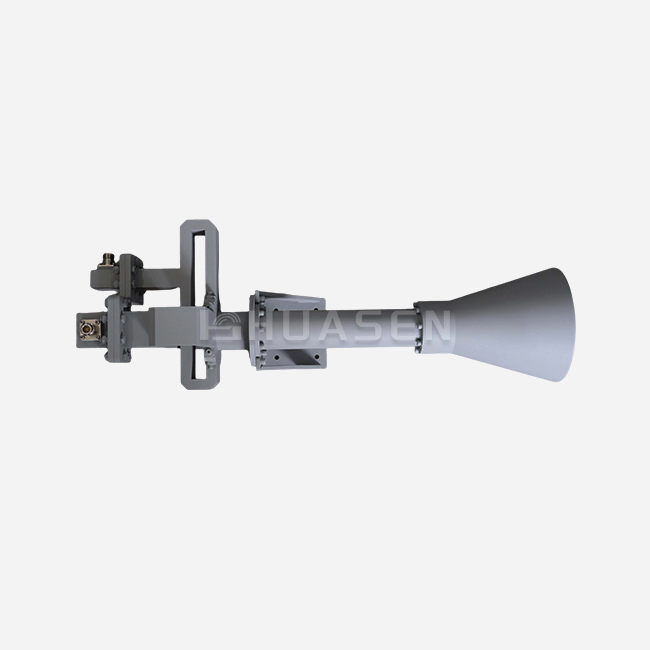
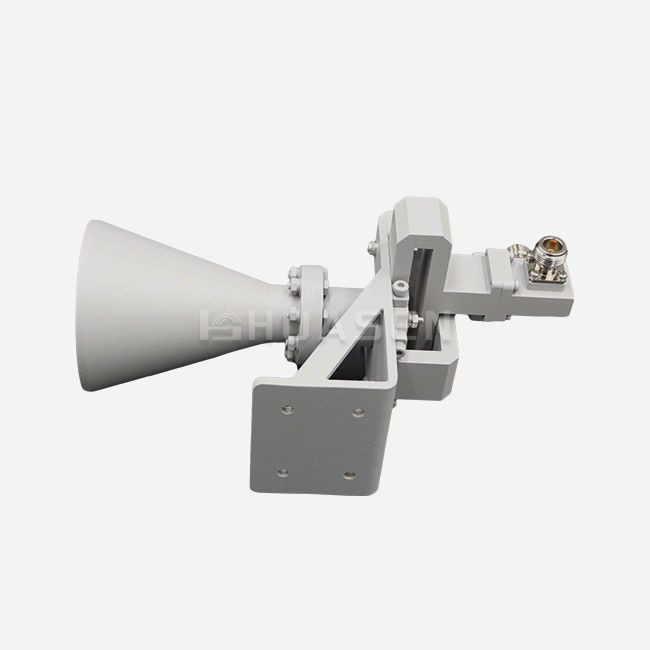
A Coupled Fixed Waveguide. An attenuator decreases signal amplitude by a given value without phase distortion or waveform degradation. A resistive vane or lossy dielectric element in the waveguide converts electromagnetic energy into heat dissipation. Directional coupling systems remove a portion of the primary signal via a secondary waveguide port and terminate it into a matched load, decreasing transmitted power while maintaining impedance continuity.
Key Technical Specifications That Define Performance
Its frequency range is 0.96 GHz to 112 GHz, suitable for L-band satellite downlinks, W-band backhaul systems, and millimetre-wave radar. FDP, FBP, and FUGP flanges ensure mechanical compatibility with conventional waveguide trains, while anodised aluminium or silver- and gold-plated copper balance weight, corrosion resistance, and heat conductivity. The absorptive element's thermal mass and the device's heat dissipation design determine continuous wave and peak pulse power management.
Industrial Applications Across High-Reliability Sectors
In base station front-end topologies, waveguide attenuators insulate high-power amplifiers from monitoring equipment, shielding spectrum analysers and power metres from kilowatt signals. Simulating air path loss in satellite ground stations lets engineers test receiver sensitivity under realistic signal-to-noise settings. For radar calibration loops, aerospace and defence systems use these components to recreate target echo profiles and clutter conditions. Research facilities employ them in particle accelerator RF chains to stabilise klystron source-resonant cavity phase relationships.

Importance of Stability Testing for Coupled Fixed Waveguide Attenuators
Defining Stability in the Context of Passive Attenuation
Stability is the device's ability to retain its attenuation value, VSWR, and insertion loss over time and in different environments. Coupled fixed waveguide attenuators are supposed to wander less than active components; however, resistive coatings, mechanical contacts, and thermal expansion can change internal dimensions. In phase-sensitive applications like phased array antennas and coherent radar processing, even modest changes can move attenuation accuracy outside tolerance windows and compromise system performance.
Critical Metrics Evaluated During Stability Testing
Attenuation consistency over operational bandwidth is the main stability measure for a coupled fixed waveguide attenuator. Engineers assess flatness deviation—the highest departure from nominal attenuation at each frequency—to maintain signal conditioning uniformity. Phase stability, frequently disregarded in non-coherent systems, is crucial for accurate timing or beamforming. Return loss stability ensures impedance matching, preventing standing waves from pulling oscillator frequencies or saturating amplifier stages.
Environmental and Material Factors Challenging Long-Term Stability
Temperature coefficients, usually dB/dB/°C, measure attenuation per degree Celsius. Well-designed units have coefficients < 0.001 dB/dB/°C, allowing outdoor installations to tolerate seasonal temperature changes from -40°C to +70°C without recalibration. Equipment is tested in condensing situations to ensure moisture doesn't erode flanges or damage resistive elements.
Relevant Industry Standards and Compliance Protocols
Military waveguide components must meet MIL-DTL-3928 vibration profiles, shock resistance, and thermal endurance requirements. RoHS compliance addresses material limits, whereas ISO 9001 certifies industrial quality. IEEE measurement and calibration traceability standards are used in procurement requirements to standardise supplier-buyer communication.
Methods to Test and Ensure Stability of Coupled Fixed Waveguide Attenuators
Systematic Testing Setup and Baseline Establishment
Stability verification starts with a calibrated vector network analyser baseline measurement. A temperature-controlled test fixture records S-parameters—S21 for insertion loss and S11 and S22 for return loss—across the frequency range at 25°C for the attenuator. Reference data establishes the device's initial performance signature.
Key Performance Indicators and Acceptance Criteria
Insertion loss stability measures the attenuator's extra loss due to resistive element losses, flange reflections, and waveguide mode conversion. High-quality devices maintain insertion loss below 0.2 dB and stay steady within ±0.05 dB during their lifespan. The difference between measured and prescribed attenuation must be within tolerance at all frequencies and temperatures.
Real-World Case Studies from Telecom, Aerospace, and Radar Sectors
Thermal cycling between day and night produced early attenuation drift in low-cost coupled fixed waveguides. Attenuators in 5G millimetre-wave backhaul lines from a major telecoms equipment vendor. Maintenance expenses dropped 40% by switching to thermally compensated designs with gold-plated copper structures and eliminating recalibration. Phase instability in attenuators subjected to altitude-induced temperature gradients was identified by an aerospace contractor building phased array radar for unmanned aerial vehicles.
Best Practices for Maintaining Quality Across Production Batches
Material procurement and process control are constant when choosing recognised manufacturers with quality processes. Requesting lot-specific attenuation tables, VSWR graphs, and temperature coefficient values allows inspection verification. Acceptance sampling strategies based on AQL standards balance inspection costs and risk tolerance to identify process abnormalities before substantial volumes reach inventory.
Comparing Coupled Fixed Waveguide Attenuators with Other Attenuator Types
Stability Advantages Over Variable Attenuators
Motor-driven vane or PIN diode variable attenuators cause mechanical wear or semiconductor junction drift, limiting long-term stability. Over decades, coupled fixed waveguide attenuators provide exceptional repeatability without moving parts or active biasing. They are useful for calibration standards when traceability to national metrology institutions requires low drift.
Power Handling and Frequency Coverage Comparisons
Compact coaxial attenuators have mode conversion and greater VSWR over 40 GHz in millimetre-wave frequencies. Fixed Waveguide Attenuator. Waveguide designs reduce insertion loss and sustain single-mode propagation in W-band and beyond. Waveguide types can handle kilowatt CW levels and megawatt peak pulses, whereas pad attenuators on printed circuit boards are easy to integrate but struggle to handle power above tens of watts.
Noise Performance and Phase Linearity Considerations
Absorptive waveguide attenuators reduce noise beyond thermal Johnson noise, keeping delicate receiver chain signal-to-noise ratios. Their group delay characteristics are flat over large bandwidths, eliminating phase distortion in coaxial setups. They are ideal for coherent radar, electronic warfare, and precise RF test equipment.
Decision Factors for Long-Term Deployment Scenarios
For low-power, narrow-band applications, budget-constrained projects may use coaxial systems with frequent recalibration. Coupled Fixed Waveguide Attenuators' unsurpassed durability and decreased lifespan costs justify their premium pricing in mission-critical infrastructure, including satellite gateways, national military radar networks, and scientific research centres.
Procurement Insights and Supplier Considerations for B2B Clients
Identifying Authorised Distributors and OEM Suppliers
To avoid counterfeit coupled fixed waveguide attenuators in worldwide supply chains, check the manufacturer's authorisation. Genuine providers give compliance certifications, traceability documents, and technical assistance. Trade fairs, including IEEE MTT-S symposia, European Microwave Week, and regional defence exhibits, allow face-to-face partner screening.
Lead Times, Bulk Order Advantages, and Custom Manufacturing
Standard catalogue goods arrive in two to four weeks, but unique frequency ranges, attenuation settings, and flange configurations take eight weeks or more. For purchases over 50 units, volume pricing offers 15-30% reductions, encouraging aggregated purchasing across numerous projects. Blanket orders with planned releases balance inventory costs and responsiveness.
Evaluating Brand Reputation, Certifications, and Warranty Offerings
Manufacturers with decades of experience commit to quality and customer service. AS9100 certification shows aerospace-grade process controls, whereas ITAR registration indicates defence project capabilities. Product lifetime is supported by one- to five-year warranties with important application coverage options.
Pricing Models Versus Long-Term Value and Logistics Strategies
The total cost of ownership is hidden by unit pricing comparison. Considering recalibration frequency, mean time between failures, warranty support costs, and the fixed waveguide attenuator shows the premium components' economic advantage. Just-in-time delivery reduces warehousing costs but requires extensive supplier logistics and inventory visibility. Regional stocking agreements speed maintenance and repair fulfilment, reducing downtime.
Conclusion
Coupled Fixed Waveguide Attenuator stability testing protects complicated RF systems from mission-compromising failure. Procurement experts lower lifespan costs and operational hazards by knowing environmental stressors, material behaviours, and long-term reliability testing methods. Partnerships with manufacturers that provide rigorous testing standards, comprehensive documentation, and rapid technical assistance guarantee that these crucial passive components maintain attenuation precision, phase stability, and VSWR performance across their service life.
FAQ
1. What frequency ranges are supported by modern waveguide attenuators?
Modern designs encompass 0.96 GHz to 112 GHz for L-band satellite systems and W-band automobile radar. WR-90, WR-28, and WR-10 Coupled Fixed Waveguide Attenuators' diameters match frequency bands, with centre frequency and bandwidth driving model selection.
2. How does environmental temperature affect attenuation stability?
Resistive element conductivity and mechanical dimensions fluctuate with temperature. Quality attenuators have temperature coefficients < 0.001 dB/dB/°C to prevent attenuation drift over industrial temperatures. Temperature-controlled enclosures or thermally compensated designs assist outdoor installations.
3. Can waveguide attenuators be customised for unique applications?
Manufacturers customise attenuation, frequency bands, flanges, power ratings, and materials. Custom configurations for space-grade thermal cycling, naval shock standards, or unique waveguide system integration may need lead periods and minimum order quantities.
Partner with Huasen Microwave for Superior Attenuator Solutions
Huasen Microwave, a renowned waveguide component manufacturer since 1993, makes stable WCFAX series Coupled Fixed Waveguide Attenuators from 0.96 to 112 GHz. Devices satisfy MIL-DTL-3928 specifications and surpass industry reliability expectations with our comprehensive temperature cycling, power handling verification, and attenuation flatness testing. Our technical team offers design assistance, sample assessment, and calibration data support for 5G infrastructure, aerospace radar, and research instruments catalogue configurations and custom-engineered solutions. Contact sales@huasenmicrowave.com to discuss your waveguide attenuator supplier needs and learn how three decades of RF knowledge create mission-critical components.
References
1. Pozar, D. M. (2011). Microwave Engineering, 4th Edition. Wiley.
2. IEEE Standard 1785-2012: Waveguide and Coaxial Transmission Line Standards.
3. Military Standard MIL-DTL-3928/70D: Waveguide Attenuators, Fixed and Variable.
4. Kumar, A., & Singh, R. (2019). "Temperature Stability Analysis of Passive Waveguide Components." International Journal of Microwave Engineering.
5. Collin, R. E. (2001). Foundations for Microwave Engineering, 2nd Edition. Wiley-IEEE Press.
6. Satellite Communications Industry Association (2020). "RF Component Reliability in Ground Station Infrastructure." Technical White Paper Series.
Send Inquiry