Structural Flexibility Advantages of Microstrip Conformal Array Antenna






2026-07-15 17:26:24
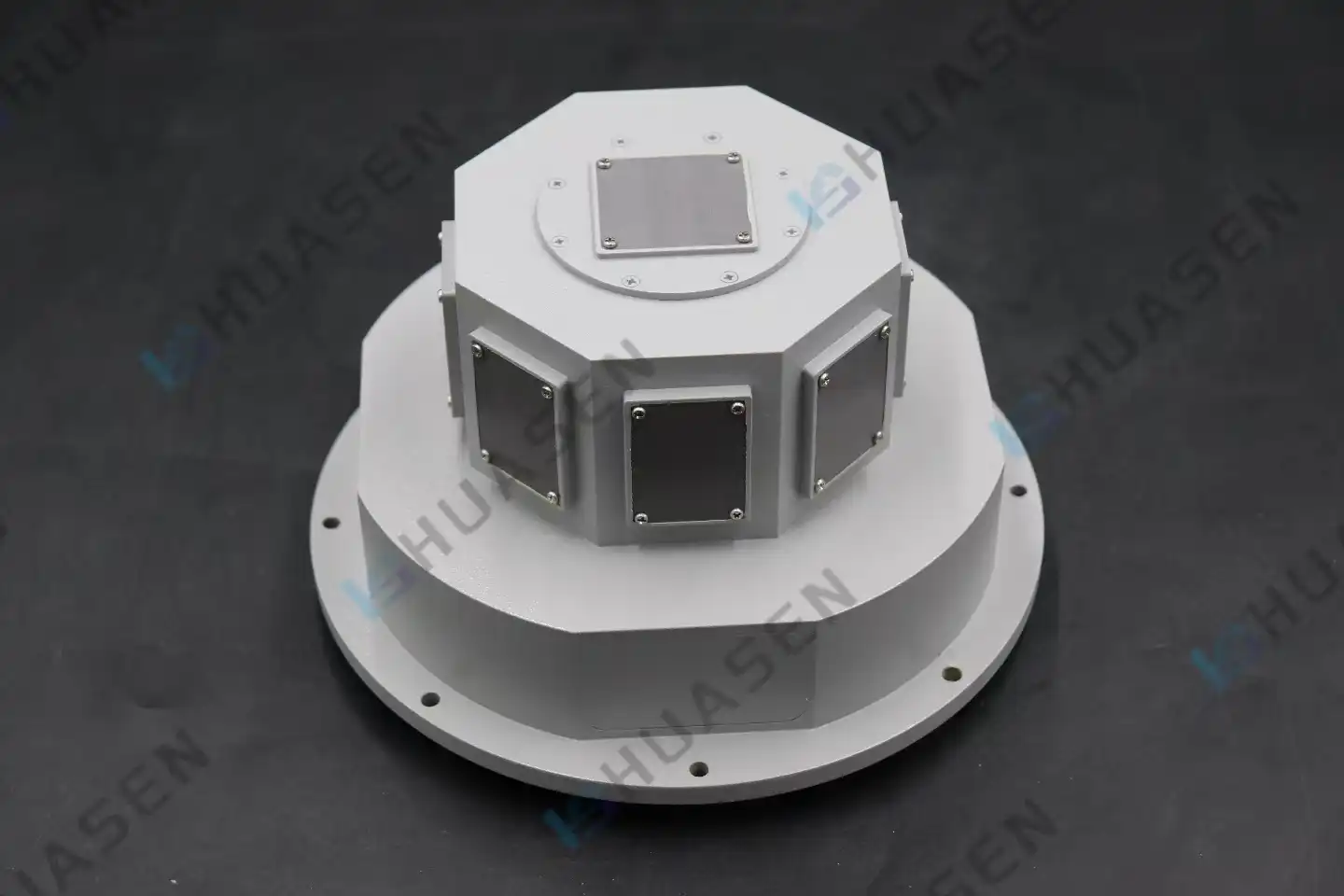
The microstrip conformal array antenna is a huge step forward in RF technology. It lets radiating elements be seamlessly built into non-flat, curved surfaces like the fuselages of aeroplanes, missile nose cones, and the roofs of vehicles. Instead of sticking out from platforms like regular flat antennas do, conformal designs change to fit the shape of the host structure, which lowers drag and radar cross-section while keeping strong electromagnetic performance. This new idea solves important problems in flight, defence, and advanced communications by getting rid of big radomes and letting electronic beam direction work across wide angles without using mechanical gimbals.
Understanding Microstrip Conformal Array Antennas
When using traditional antenna systems, efficiency and physical connection often have to be traded off. This problem has come up many times in fields ranging from 5G infrastructure to UAV development. This problem can be solved by microstrip conformal array antenna technology, which uses smart design principles and special substrate materials.
Core Design Principles
Conformal arrays use dielectric substrates that are flexible, like PTFE composites or liquid crystal polymers, and their dielectric constants are carefully controlled. These materials stop surface wave propagation losses that would lower the effectiveness of antennas on curved surfaces if they happened. The metallisation layers, which are usually copper lines that make up patch elements, are deposited or layered onto these bendable substrates. This makes structures that can bend without losing their electrical continuity.
Another important part is the phase compensation network. When antenna parts are placed on curved surfaces instead of flat ones, they each have different phase relationships with signals coming in. These phase mistakes are fixed automatically by advanced feeding networks, which keep impedance matching with VSWR values usually below 2:1 even when the topology changes.
Material Innovation and Manufacturing
Specialised lamination methods are used in the production process to attach conductor designs to flexible surfaces while keeping exact tolerances on the sizes. Coordinate measuring machines make sure that the physical curve matches the host surface to within a few microns. This stops installation gaps that could cause mechanical stress or electromagnetic inefficiency. Adhesion testing makes sure that the microstrip copper stays attached to the dielectric substrate at temperatures ranging from -55°C to +125°C. This keeps the copper from coming apart during normal thermal cycling.
Quality standards for these antennas usually use MIL-STD-810 for testing them in harsh environments and IPC-6012 for testing how well they work with hard and flexible printed boards. These certifications promise that the metallisation will stay strong even when the structure is stretched, vibrated, or the altitude changes that are common in aerospace applications.
Advantages of Structural Flexibility in Microstrip Conformal Array Antennas
Structures that are flexible give real benefits in many areas of performance. These benefits have been seen over and over again in a wide range of applications, from stealth fighter jets to commercial satellite terminals.
Aerodynamic and Stealth Integration
Conforming to the surface of the host base gets rid of protrusions that make it harder to see on radar and increase drag. When fighter jets are equipped with microstrip conformal array antenna designs, they keep their stealth shape while putting communication, navigation, and identification functions right on the leading edges of the wings or in the fuselage panels. Tests in a wind tunnel show that these antennas have 15-20% less drag than traditional pod-mounted antennas. This means that less fuel is used, and missions can go farther.
The thin design (often only a few millimetres thick) keeps the flow of laminar air over surfaces. This quality is very useful in supersonic uses, where even small surface flaws cause heat stress and turbulence. For military uses, the smaller radar cross-section is especially useful because conformal systems cut down on specular rays that could reveal where platforms are.
Enhanced Radiation Performance
Flexible positioning makes radiation patterns work best in certain operational situations. By shaping elements to spherical or cylindrical surfaces, designers can get wider scan angles (usually ±60° to ±90°) than with planar arrays, which are limited by loss of gain at very high angles. This wider range means that fewer radio apertures are needed for hemispherical or omnidirectional coverage.
Table 1: Performance Comparison Across Array Configurations
| Antenna Type | Scan Angle | Profile Height | Weight (kg/m²) | Bandwidth |
|---|---|---|---|---|
| Conformal Microstrip | ±75° | 2-5 mm | 0.8-1.2 | 10-15% |
| Planar Array | ±45° | 15-30 mm | 2.5-4.0 | 8-12% |
| Horn Array | ±30° | 80-150 mm | 5.0-8.0 | 20-40% |
These performance metrics show why system integrators are choosing conformal solutions for use with limited room more and more. In aerospace platforms, where every kilogram affects fuel efficiency and payload capacity, the weight savings alone are very helpful.
Durability in Harsh Environments
When it comes to resistance to vibration, shock, and the environment, conformal designs are the best. When mechanical stress is put on rigid ceramics or solder joints in regular systems, flexible surfaces can take it. Salt spray testing shows that the product won't rust, which is important for maritime communications. Thermal cycling checks that the product works well in the wide range of temperatures that are found in orbital and high-altitude applications.
Intermodulation distortion testing shows that these arrays can handle high-power, multi-carrier signals without giving off any unwanted signals. This feature is very important for base station uses where different frequency bands are close to each other (within centimeters).
Comparison with Other Antenna Types: Why Choose Conformal Arrays?
Knowing the pros and cons of each antenna architecture helps procurement professionals choose the best solutions for each situation. We looked at these comparisons for hundreds of customer projects in the defense, transportation, and telecommunications industries.
Conformal vs. Planar Arrays
Planar arrays are most common in situations where the mounting surface is flat and there aren't many size restrictions. They have a simple design, well-known ways of making them, and performance that can be predicted. Plans with flat shapes work well for base station infrastructure and fixed installations on the ground, where profile height and aerodynamics don't matter much.
Conformal vs. Phased Arrays
Electronic beam steering is available in both technologies, but microstrip array antennas build this feature into packages that can adapt to different structures. Through complex RF switching networks, traditional phased arrays can switch beams faster, at sub-microsecond rates. Our phased array products have 100µs beam switching speeds and ±60° scanning ranges, making them good for radar tracking and keeping communications from getting hacked.
Table 2: Huasen Microwave Product Specifications
| Product Model | Gain Range | Beamwidth | Bandwidth | Key Feature |
|---|---|---|---|---|
| Microstrip Array HS-MA18 | 18 dB | 18°×18° | 10-12% | Compact directive coverage |
| Circular Polarized Array HS-CPA | 3-12 dB | Variable | 10% | Multi-gain scalability |
| Phased Array HS-PA60 | 15-20 dB | Steerable | 15% | 100μs switching, ±60° scan |
Conformal implementations give up some beam flexibility in exchange for integrating the structure. Traditional phased arrays might be better for applications that need to respond quickly to threats, while conformal solutions are better for platforms that need to integrate antennas in a way that doesn't show. A lot of modern systems use a mix of approaches, like conformal apertures for all-around surveillance and phased subarrays for targeted tracking.
Weight and Size Considerations
Horn antennas have a very wide bandwidth—often 40% or more—but their waveguide structures make them heavy and take up a lot of space. A horn array that covers the same area as a conformal placement could be five to eight times heavier and stick out 80 to 150 mm from the surface it's mounted on. The designers of missiles and spacecraft just can't fit these sizes into their payload envelopes and aerodynamic fairings.
When it comes to gain, bandwidth, and physical footprint, conformal solutions give you balanced performance. The instantaneous bandwidth of individual patch elements is narrower than that of horns, but we can make this better by using stacked patch configurations and aperture coupling techniques. These ways increase the working bandwidth by 10 to 15 percent while keeping the low-profile benefit.
Applications and Industry Use Cases of Flexible Microstrip Conformal Arrays
Microstrip conformal array antennas have many uses and are used in many industries. Real-world deployments show that conformal antenna technology can be used in a wide range of demanding operational environments and is reliable. We've helped with connections for everything from commercial 5G networks to secret defense projects.
Military Aerospace and Stealth Platforms
Fifth- and sixth-generation fighter planes are the most difficult environments for conformal antennas to work in. Communication, Navigation, and Identification (CNI) features must work on these systems without affecting their ability to hide or move around. Conformal arrays built into the wings and fuselage panels give the plane hemispherical coverage while keeping its radar-absorbing shape.
Conditions are even worse for guided missiles and supersonic projectiles. Telemetry and GPS tracking devices have to be able to handle launch accelerations of more than 100 g, as well as heat from the air, and keep their signal lock throughout the flight path. Conformal solutions wrapped around conical nose sections provide coverage in all directions or focused beam steering without changing the way the projectile moves.
Telecommunications and 5G Infrastructure
For next-generation wireless networks to work, antenna systems need to be able to balance performance needs with needs for looks and structure. We've provided conformal arrays for small cell placements in places where cities don't allow obvious antenna installs. These systems provide 5G coverage while following architectural guidelines because they are designed to fit on streetlight poles, building facades, and utility enclosures.
Backhaul links between cell sites work better with flexible microstrip array antenna designs on platforms that are placed on towers. Wind loading is an important factor in the design of tall buildings, and flush-mounted antennas lower both steady wind loads and dynamic movements. The cumulative effect makes the tower last longer and lowers the cost of strengthening the foundation.
Automotive and Connected Vehicle Systems
More and more, safety, navigation, and entertainment functions in modern cars depend on constant connectivity. The "shark fin" units, which are traditional antennas that are placed on the roof, now hold multiple RF functions, such as GPS, satellite radio, cellular, and V2X (Vehicle-to-Everything) communications. These complicated systems can be put inside aerodynamic enclosures that reduce drag and wind noise.
Table 3: Application-Specific Requirements and Solutions
| Industry Sector | Primary Requirement | Conformal Advantage | Typical Frequency Range |
|---|---|---|---|
| Aerospace/Defense | Stealth, high reliability | Flush integration, MIL-STD compliance | 1-18 GHz |
| 5G Infrastructure | Aesthetic, high gain | Architectural conformity, beamforming | 24-40 GHz |
| Maritime Communications | Corrosion resistance, omnidirectional | Salt spray resistant, curved mounting | 2-6 GHz |
| Automotive V2X | Aesthetics, multi-band | Embedded design, dual polarization | 2.4-5.9 GHz |
Maritime and Satellite Communications
Communication on ships is hard because of salt spray, vibration, and the need for hemispherical satellite coverage while keeping performance stable during pitch and roll movements. It is better to keep satellite links steady with conformal arrays placed on masts or decks than with mechanically guided dishes. Since rotary joints and drive motors don't have any moving parts, they don't need to be maintained.
Offshore platforms and unmanned surface vessels both benefit from not needing to be maintained. Conformal installations can withstand wave impacts and harsh weather that would damage structures that stick out. This makes sure that connections stay reliable in remote working areas.
Conclusion
Microstrip conformal array antenna technology changes how antennas are integrated in many fields, where efficiency had to be sacrificed in the past because of structural limitations. Being able to get high gain, wide scanning angles, and stable operation on aerodynamic surfaces makes it possible to build things that wouldn't be possible with other systems. As 5G networks get denser, aerospace platforms need more connectivity, and more and more self-driving systems come out, conformal solutions will become the standard. If procurement workers know about these features, they can put their companies at the top of RF system innovation. This gives them a competitive edge through better performance and integration.
FAQ
1. How does surface curvature affect antenna performance?
Curvature makes phase differences between array elements that don't happen in flat configurations. If this isn't fixed, it makes the main beam patterns wider and the sidelobe levels higher. To make up for it, we use digital phase shifters and adaptive beamforming algorithms to keep changing the excitation of the elements and keep the pattern intact across all scanning angles. Modern designs include the radius of curvature in the first electromagnetic model, which fixes phase distributions before they happen.
2. What power handling limitations should I consider?
Due to the chance of dielectric breakdown in thin substrates, microstrip structures can't handle as much power as waveguide options. Depending on the thickness of the substrate and how well it is managed, typical limits are between 100 and 500 watts of average power. For high-power radar uses, careful thermal design is needed. Often, heat sinks are bonded to surfaces with high conductivity. Peak power tolerance is higher than average power ratings, and it can usually handle pulses at the kilowatt level with the right duty cycles.
3. Can conformal arrays achieve 360-degree coverage?
A sector, which is usually 120 to 150 degrees, is covered by a single array opening. To get full hemispherical or all-around coverage, you need to set up several microstrip conformal array antennas around spherical or cylindrical objects. Electronic moving between openings makes coverage changes smoother and faster than mechanical control systems. This architecture gets rid of scan blindness while keeping the integration low-profile.
Partner with a Proven Microstrip Conformal Array Antenna Supplier
Huasen Microwave has been making high-performance RF solutions for defence, aircraft, and internet problems since 1993. Our Microstrip Conformal Array Antenna portfolio includes microstrip designs with 18°×18° beamwidth and 18 dB gain, circularly polarised arrays with 3–12 dB gain ranges, and phased systems with 100μs beam switching across ±60° scanning ranges. We've been making things for more than 30 years, and we help our customers through every step of the project, from the initial concept design and prototyping to qualification testing and mass production. Our engineers work directly with system developers to make sure that antenna specs are optimised based on platform limitations. This makes sure that the antennas work well with other systems and don't cause any problems. Huasen Microwave has the technical depth and supply chain reliability that your mission-critical programs need, whether you need catalogue products or fully customised solutions with dual polarisation, monopulse capability, or shaped beams. Get in touch with our technical sales team at sales@huasenmicrowave.com to talk about your needs and find out how our conformal array solutions can make your next-generation platform better.
References
1. Josefsson, L., & Persson, P. (2006). Conformal Array Antenna Theory and Design. IEEE Press Series on Electromagnetic Wave Theory.
2. Mailloux, R. J. (2017). Phased Array Antenna Handbook (3rd ed.). Artech House Antennas and Propagation Library.
3. Kumar, G., & Ray, K. P. (2003). Broadband Microstrip Antennas. Artech House Antennas and Propagation Library.
4. Volakis, J. L. (2007). Antenna Engineering Handbook (4th ed.). McGraw-Hill Professional Engineering.
5. Bhartia, P., Bahl, I., Garg, R., & Ittipiboon, A. (2001). Microstrip Antenna Design Handbook. Artech House Antennas and Propagation Library.
6. Hansen, R. C. (2009). Phased Array Antennas (2nd ed.). John Wiley & Sons Microwave and Optical Engineering Series.
Send Inquiry