Design Guidelines for Low Insertion Loss Waveguide Power Dividers in Communication Systems






2025-12-09 22:33:24
Getting waveguide power dividers to have as little insertion loss as possible is a big technical problem in today's communication systems. To get the best RF performance, engineers have to find the right mix between a number of factors, such as impedance matching, mechanical precision, and material choice. A well-made waveguide power divider is the core of signal distribution networks that work well, allowing for dependable use in 5G infrastructure, satellite communication links, and radar uses. System designers can get the most out of transmission while keeping good phase balance and isolation across the entire operational bandwidth by understanding basic design principles.
Understanding Waveguide Power Division Fundamentals
Power division in waveguide structures operates through controlled electromagnetic field manipulation within metallic enclosures. The scattering matrix parameters define performance characteristics, where insertion loss directly impacts overall system efficiency. Modern communication systems demand exceptional performance metrics, particularly in high-frequency applications spanning millimeter-wave bands.
Wave propagation physics governs how electromagnetic energy splits within these structures. Engineers must consider fundamental mode characteristics, ensuring proper impedance transformation across all output ports. The dielectric properties within the waveguide structure influence field distribution patterns, affecting both amplitude and phase relationships between output signals.
Impedance matching techniques play a crucial role in minimizing reflections. Stepped transformers, gradual transitions, and optimized junction geometries contribute to broad bandwidth performance. Signal distribution networks require careful attention to symmetry, maintaining equal amplitude and phase relationships across multiple output paths.
Critical Design Parameters Affecting Insertion Loss
Surface roughness significantly influences conductor losses, particularly at higher frequencies where skin depth decreases. Manufacturing tolerances directly correlate with performance degradation, making precision fabrication essential. Material conductivity determines ohmic losses, while surface treatments can enhance electrical characteristics.
Junction design represents another critical factor affecting overall performance. Sharp discontinuities create reflections and unwanted mode excitation, increasing insertion loss. Smooth transitions with optimized profiles minimize these effects, maintaining low VSWR across operational bandwidths.
Bandwidth considerations require careful balancing of competing requirements. Broader operational ranges often necessitate design compromises that may slightly increase insertion loss. However, optimized Waveguide Power Divider structures can achieve excellent performance across typical communication bands without significant degradation.
Thermal effects introduce performance variations under varying operating conditions. Expansion coefficients of different materials can create mechanical stress, potentially affecting electrical performance. Environmental stability requirements demand robust designs capable of maintaining specifications across temperature extremes.
Advanced Topologies for Enhanced Performance
Magic T configurations provide excellent isolation between output ports while maintaining low insertion loss. These structures excel in applications requiring high port-to-port isolation, such as antenna feed networks and measurement systems. The symmetrical design inherently provides good phase balance characteristics.
Double-ridge waveguide structures enable broader bandwidth operation compared to rectangular alternatives. The modified field distribution reduces higher-order mode excitation while maintaining acceptable insertion loss performance. These designs prove particularly valuable in wideband communication applications.
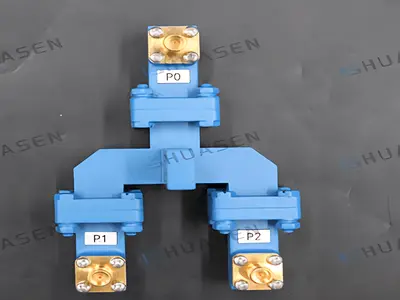
Y-junction topologies offer compact solutions where space constraints limit alternative approaches. Optimized branching angles minimize reflections while maintaining adequate isolation between output ports. Careful attention to junction geometry ensures minimal insertion loss degradation.
In-phase power dividers maintain coherent signal relationships across all output ports. These structures prove essential in phased array applications where precise phase control determines beam steering accuracy. Symmetrical designs inherently provide excellent phase tracking characteristics.
Manufacturing Considerations and Quality Control
Precision machining techniques directly impact electrical performance characteristics. Modern CNC equipment enables tight tolerances necessary for optimal operation at millimeter-wave frequencies. Surface finishing procedures must minimize roughness while maintaining dimensional accuracy throughout the structure.
Assembly procedures for Waveguide Power Divider require careful attention to joint quality and mechanical alignment. Poor connections introduce parasitic effects that degrade overall performance. Proper plating techniques ensure long-term reliability under varying environmental conditions.
Testing protocols must verify performance across operational parameters including frequency response, insertion loss, return loss, and isolation characteristics. S-parameter measurements provide comprehensive characterization data essential for system integration planning.
Quality assurance procedures ensure consistent performance across production quantities. Statistical process control helps identify manufacturing variations that could affect electrical characteristics. Proper documentation provides traceability throughout the production process.
Environmental and Reliability Engineering
Communication systems generally have to work in tough environments, thus their parts need to be strong. Temperature cycling, exposure to humidity, and resistance to vibration must all fulfill strict standards. Military and aerospace uses must follow certain environmental rules.
Corrosion resistance is especially crucial for installations that are outside or on the water. Choosing the right materials and treating the surface correctly will keep the performance stable over time. Sealing methods keep electrical properties intact while keeping dirt and other contaminants out of the inside surfaces.
Mechanical stress analysis can help you guess how something will work under different load circumstances. Thermal expansion imbalances can cause internal strains that affect electrical performance. Design margins that are right make guarantee that the component works reliably for its whole life.
Power handling capabilities must be able to handle both normal and maximum power needs. In high-power applications, where too much heat could harm internal structures, thermal control becomes very important. Safe operating temperatures are kept by the right channels for heat to escape.

Integration Strategies for Modern Communication Systems
System-level integration requires careful consideration of interface requirements and connector compatibility. Standard waveguide flanges ensure mechanical compatibility across different manufacturers. Electrical specifications must align with overall system performance requirements.
Antenna feed networks benefit from optimized power division strategies that minimize insertion loss while providing required amplitude and phase distributions. Beamforming applications demand precise phase relationships across all signal paths.
Base station front-end systems require reliable components capable of handling high power levels while maintaining low insertion loss. Signal-to-noise ratio considerations make efficient power division essential for overall system performance.
Testing and measurement applications often require stable reference standards with known characteristics. Calibrated Waveguide Power Divider enable accurate measurement procedures essential for component characterization and system verification.
Conclusion
Low insertion loss waveguide power dividers are important parts of modern communication systems. To be successful, you need to pay close attention to the basics of design, the accuracy of manufacturing, and the effects on the environment. Engineers must balance conflicting needs while making sure that electrical performance is always good across all operational parameters. Advanced topologies give us more options that help new communication technologies like 5G networks and satellite systems. Working with experienced manufacturers guarantees access to tried-and-true solutions with full technical support. These important parts are still changing to satisfy the growing performance needs of next-generation communication systems.
Partner with Huasen Microwave for Superior Power Division Solutions
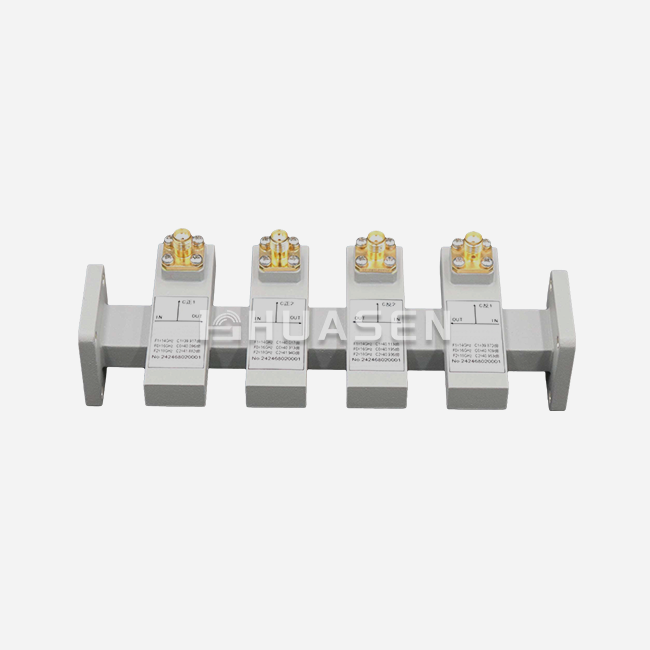
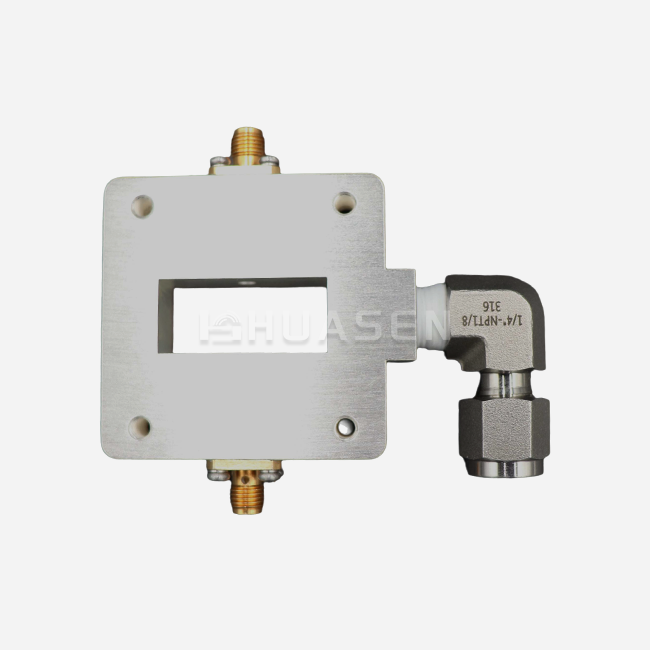
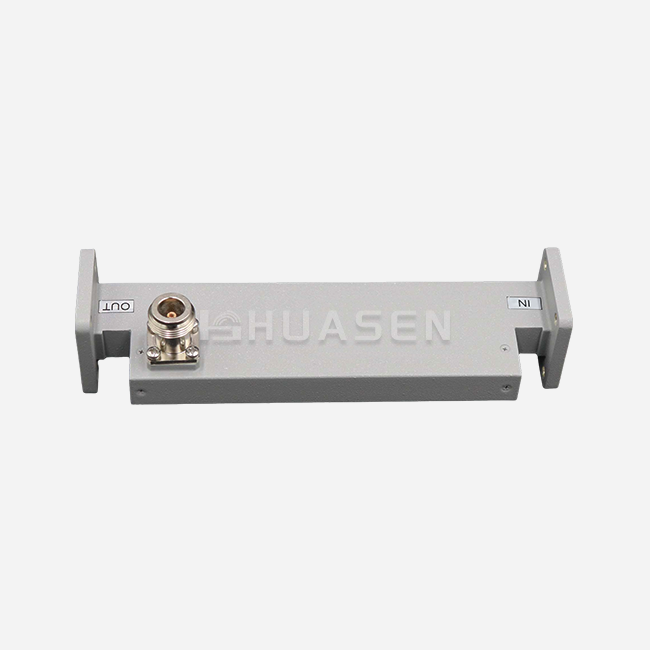
Huasen Microwave delivers industry-leading waveguide power divider technologies engineered for demanding communication applications. Our extensive product portfolio spans 0.32 GHz to 112 GHz frequency ranges with exceptional insertion loss performance. Whether you need standard configurations or custom solutions, our engineering team provides comprehensive support throughout your project lifecycle.
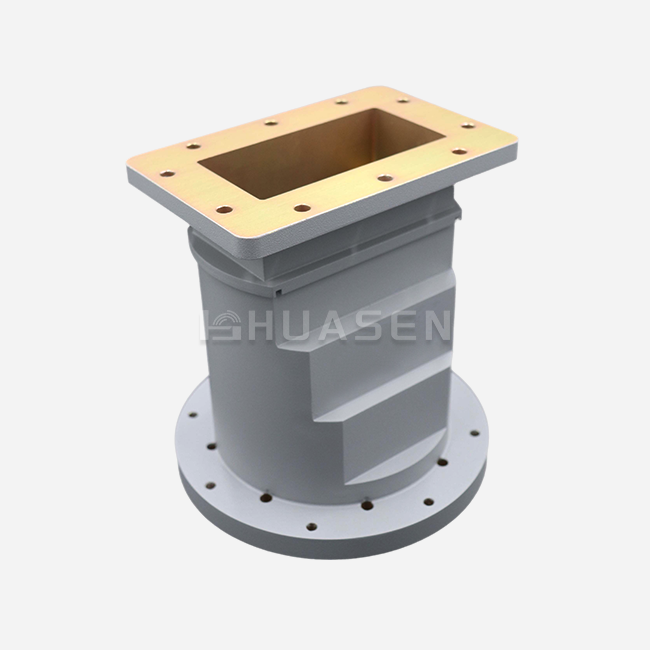
Our manufacturing capabilities encompass multiple structural configurations including I-type, U-type, X-type, Y-type, and YU-type designs. Each configuration undergoes rigorous testing to ensure compliance with demanding specifications. Power handling capabilities exceed 200W average and 2KW peak, meeting requirements for high-performance communication systems.
Custom solutions address unique application requirements through collaborative engineering partnerships. Our technical team works closely with system integrators to optimize performance characteristics while meeting mechanical and environmental constraints. As a trusted waveguide power divider manufacturer, we maintain stringent quality standards throughout our production processes.
Technical support services include design assistance, sample evaluation, and comprehensive test data packages. Our experienced engineers understand the challenges facing modern communication system designers and provide practical solutions that enhance overall performance. Contact us at sales@huasenmicrowave.com to discuss your specific requirements and discover how our expertise can benefit your next project.
References
1. Montgomery, C.G., Dicke, R.H., and Purcell, E.M., "Principles of Microwave Circuits," IEEE Press Series on Electromagnetic Wave Theory, 1987.
2. Pozar, David M., "Microwave Engineering," Fourth Edition, John Wiley & Sons, 2011.
3. Collin, Robert E., "Foundations for Microwave Engineering," Second Edition, IEEE Press, 2001.
4. Ragan, G.L., "Microwave Transmission Circuits," MIT Radiation Laboratory Series Volume 9, Artech House, 1984.
5. Harvey, A.F., "Microwave Engineering," Academic Press Series in Engineering, 1963.
6. Matthaei, G., Young, L., and Jones, E.M.T., "Microwave Filters, Impedance-Matching Networks, and Coupling Structures," Artech House Microwave Library, 1980.
Send Inquiry