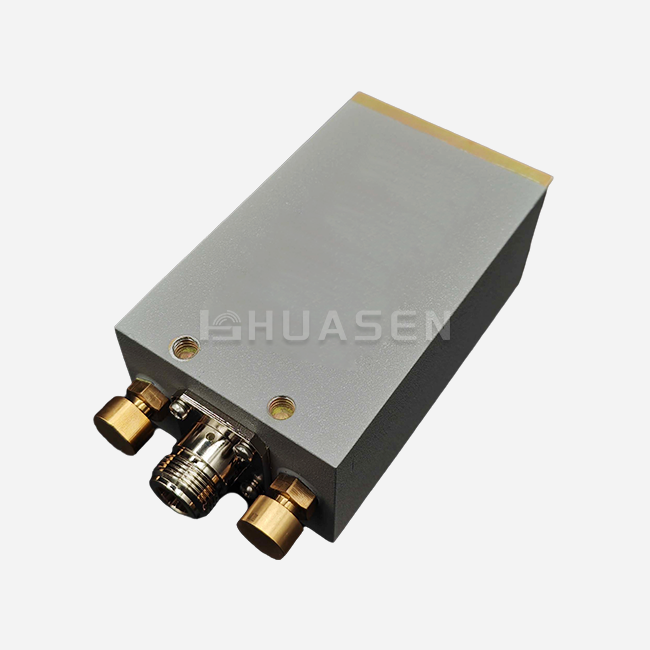
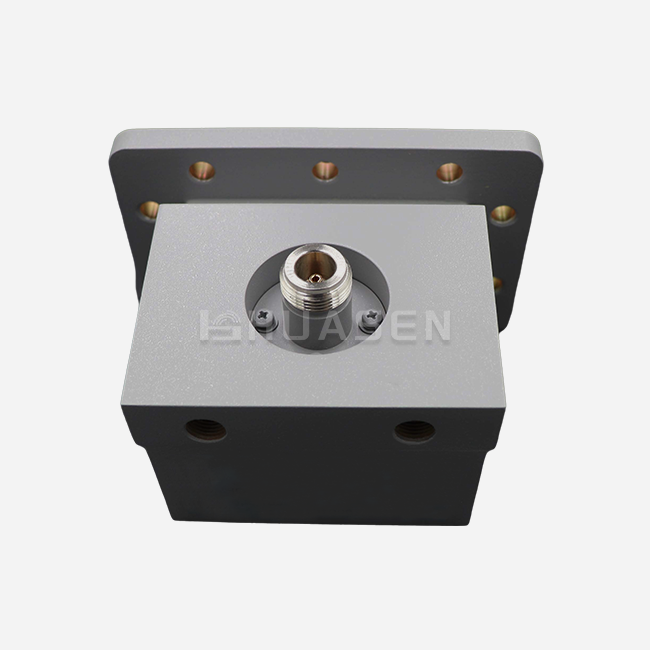
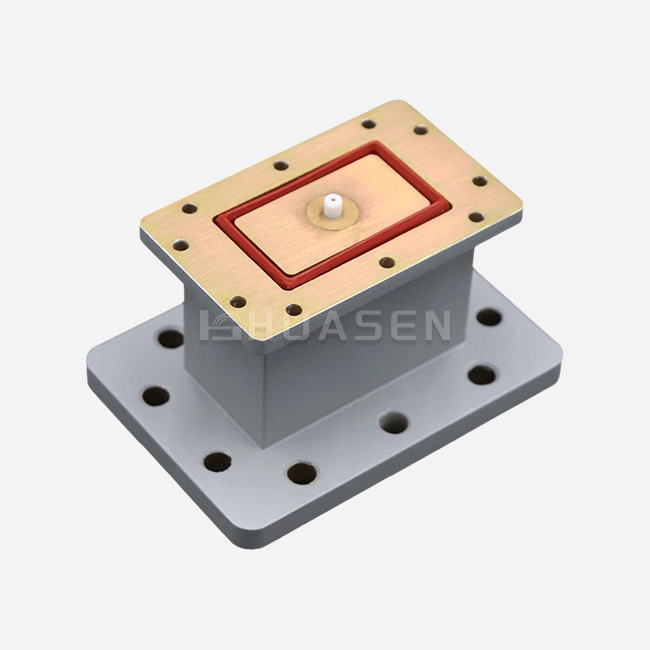
Standard gain horn antenna Characteristics and Specifications






2026-06-24 21:05:03
It is important to know what makes a standard gain horn antenna different when choosing measurement-grade antennas for calibration labs, 5G test areas, or aerospace validation programs. These high-precision instruments have gain levels that are usually between 10 dBi and 25 dBi across certain waveguide bands. This is possible with aperture shapes that can be predicted mathematically. Standard gain horn antennas have low gain error, usually less than 0.3 dB. This makes them the standard for traceability in antenna measures, EMC tests, and radar cross-section characterisation in fields that need consistent, proven performance. Broadband horns that can be used for many things, on the other hand, give up accuracy for frequency range.
Understanding Standard Gain Horn Antenna Fundamentals
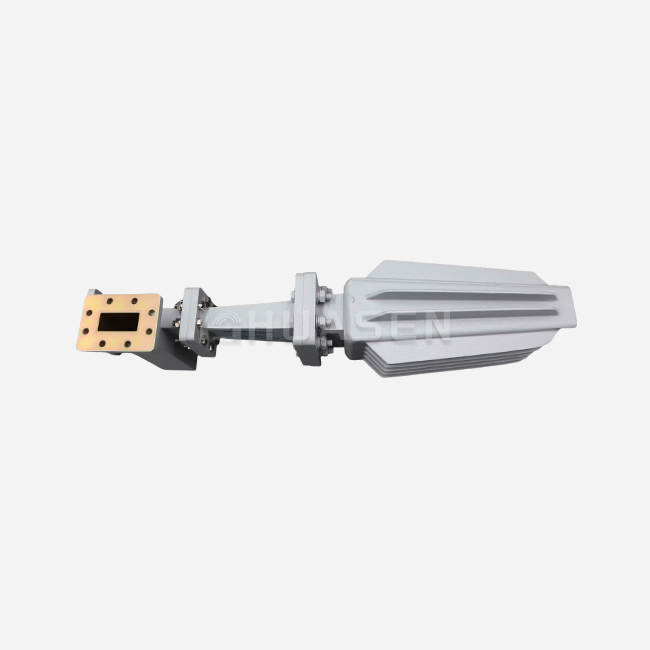
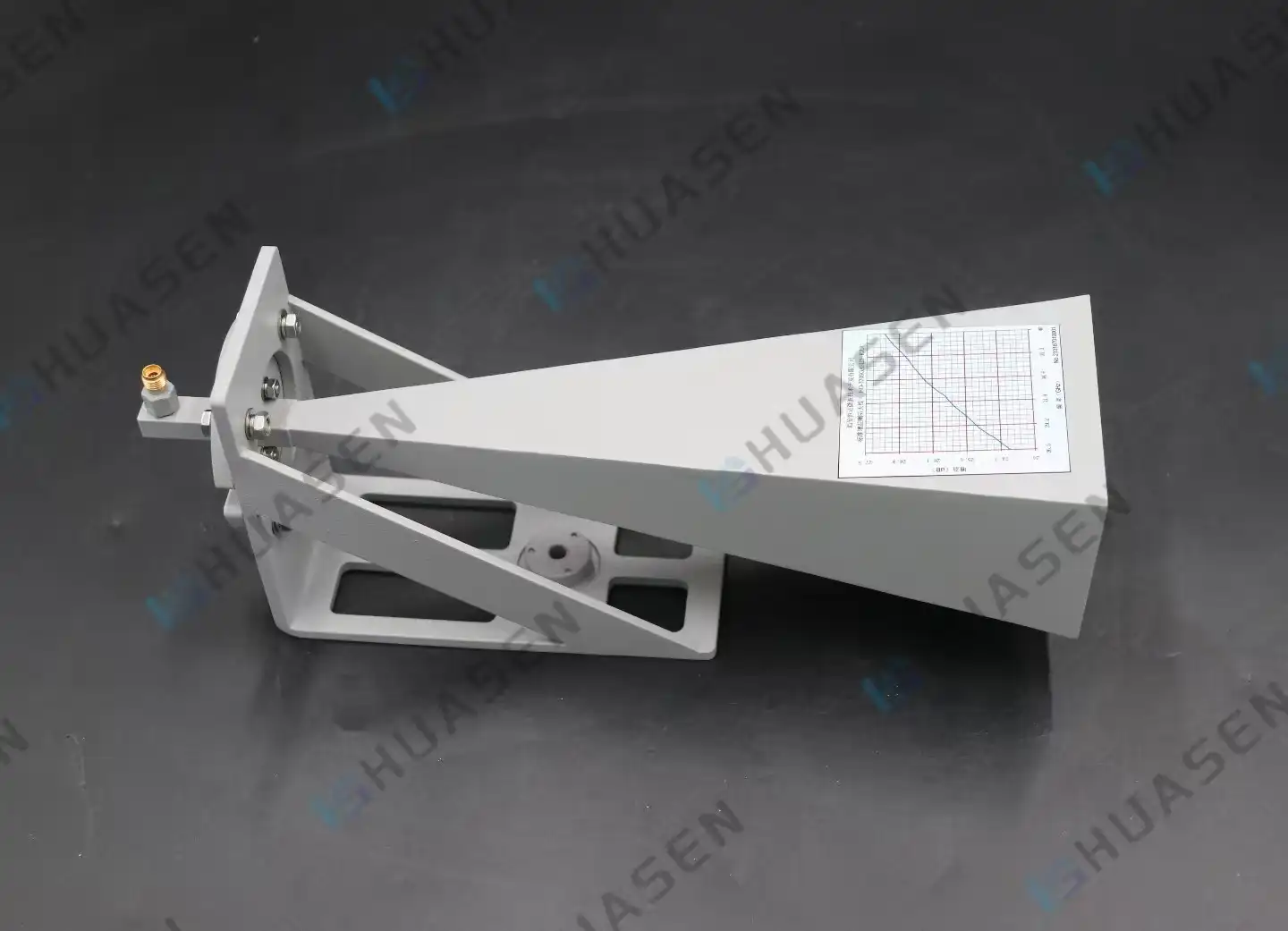
Pyramidal horn antennas, which are used as gain standards, are designed with dimensional stability in mind. Engineers carefully cut these instruments out of high-quality aluminium alloys or brass, making sure that the opening sizes match up with the theorised gain estimates. This relationship takes the guessing out of measuring things.
How Signal Propagation Works
Electricity comes in through a square waveguide contact and slowly spreads out through the horn's tapering shape. This controlled growth changes the waveguide mode into a quasi-plane wave at the opening, which lets it radiate efficiently into space. The opening size relates to the frequency and determines the directionality. The flare angle determines the quality of the impedance matching. When horns are built correctly, they have smooth changes that reduce reflections, which has a direct effect on how well return loss works.
Impedance Matching and VSWR Control
For power flow to work well, the voltage standing wave ratio (VSWR) must be low. Standard gain horn antennas usually keep their VSWR below 1.5:1 throughout their working range, and at center frequencies, they often hit 1.25:1. These results come from carefully figuring out flare angles and length ratios that make the impedance change slowly from the 50-ohm coaxial connection (or waveguide interface) to the 377-ohm free-space impedance. Poor matching often leads to measurement mistakes, which are passed down the calibration chain.
Radiation Pattern Characteristics
The beamwidths in the E-plane and H-plane are different because the opening is rectangular. Depending on the gain level, half-power beamwidths usually run from 20 to 60 degrees. Models with higher gains have smaller beams. When compared to the main lobe, the side lobe levels generally stay below -20 dB, which gives cross-polarization detection above 25 dB. When you test an antenna with these controlled patterns, you can be sure that you are measuring its true properties and not any unwanted side bands.
Material Selection and Environmental Durability
Precision CNC cutting of aerospace-grade aluminium is used to make these reference antennas. The surfaces are then treated with Alodine paint or electroplated with gold or silver. These methods keep the electrical conductivity high for decades and protect against rust in wet or salty places. Because they don't have any internal insulating materials, they can handle kilowatt-level power without breaking. This is different from PCB-based antennas, which break when the field intensity is high.
Key Characteristics and Technical Specifications
Understanding the technical parameters that define horn antenna performance helps match capabilities to specific testing requirements. These specifications directly influence measurement accuracy and the success of system integration.
Gain and Directivity Metrics
Within the operating band, gain increases monotonically with frequency. The relationship follows the aperture antenna principle, where gain (in dBi) approximately equals 10 log₁₀(4πA/λ²), with A representing the physical aperture area and λ representing the wavelength. As frequency rises and wavelength decreases, the electrical size of the fixed aperture grows, naturally boosting directivity. Calibration certificates typically provide gain values at multiple frequency points with uncertainties traceable to national standards.
Frequency Range and Bandwidth
Each horn model corresponds to a specific waveguide band. For example, WR-90 covers 8.2 to 12.4 GHz (X-band), WR-62 spans 12.4 to 18 GHz (Ku-band), and so forth up through millimeter-wave frequencies reaching 300 GHz. The usable bandwidth typically spans a 1.5:1 frequency ratio, balancing VSWR performance with gain flatness. Labs working across multiple bands maintain sets of standard gain horn antennas rather than compromise with wideband alternatives that introduce gain ripples and higher measurement uncertainty.
Polarization Purity and Cross-Pol Performance
Standard horn designs utilize linear polarization, with the electric field aligned parallel to the narrower aperture dimension. Cross-polarization discrimination exceeding 25 dB means unwanted orthogonal polarization remains 300 times weaker than the desired component. This purity is critical when characterizing dual-polarized base station antennas or satellite terminals, where polarization isolation directly impacts channel capacity and interference rejection.
Connector and Interface Standards
Common interfaces include Type-N, SMA, and precision waveguide flanges following UG-series or IEC standards. Waveguide interfaces offer advantages at millimeter-wave frequencies where coaxial losses become prohibitive. Flange types like UG-387/U (WR-90) or UG-383/U (WR-62) ensure repeatable mechanical contact and electrical continuity. Precision alignment features maintain phase center stability across connect/disconnect cycles, which is essential for repeatable far-field measurements.
Comparing Standard Gain Horn Antennas with Other Antenna Types
Making informed procurement decisions requires understanding how different antenna technologies stack up against measurement-grade horns in terms of accuracy, bandwidth, and application suitability.
Standard Gain vs. Wideband Ridged Horns
Double-ridged horns extend bandwidth to 10:1 or greater ratios by loading the waveguide with metallic ridges that slow the cutoff frequency. However, this bandwidth comes at the cost of gain ripples (±1.5 dB or worse) and higher VSWR (often 2:1), making them unsuitable as absolute references. Standard gain horn antennas sacrifice bandwidth for the predictable, calculable gain essential in calibration roles. When a measurement uncertainty budget allows only 0.5 dB total error, wideband convenience is not worth the accuracy penalty.
Pyramidal Horns vs. Parabolic Reflectors
Parabolic reflector antennas achieve higher gains (30–50 dBi) but introduce feed-induced errors and surface tolerance sensitivities. Their larger physical size also complicates chamber integration. Standard pyramidal horns offer superior phase center stability and predictable near-field characteristics, making them preferable for compact antenna test range (CATR) feed applications and situations requiring mathematically tractable radiation patterns for measurement correction algorithms.
Horn Antennas vs. Patch Arrays and Sector Antennas
Microstrip patch arrays used in base stations provide dual polarization and beam steering but suffer from dielectric losses, temperature sensitivity, and complex feed networks that complicate gain prediction. Sector antennas optimize coverage patterns for cellular deployments rather than measurement accuracy. Neither type provides the dimensional traceability needed for laboratory reference standards. The choice depends on whether you are building infrastructure or validating it; standard gain horn antennas excel at the latter.
Applications and Industry Use Cases
The precision characteristics of these horns translate into tangible value across multiple high-stakes industrial sectors where measurement confidence drives product quality and regulatory compliance.
Antenna Calibration and Gain Transfer Method
In accredited test laboratories, the substitution method establishes antenna under test (AUT) gain by comparing received power levels. First, signal strength is measured using the reference horn with its known, certified gain. Then, the AUT replaces it for a second measurement. The gain difference equals the power difference in dB, transferring traceability from the standard to the unknown antenna. This method's simplicity and accuracy make it the foundation of antenna characterization worldwide.
EMC Testing and Immunity Validation
Automotive suppliers validating electronic control units per CISPR 25 or aerospace manufacturers qualifying avionics under DO-160 rely on horns to generate high-intensity fields. Their ability to handle multi-kilowatt pulses without saturation or nonlinear distortion ensures that immunity tests truly stress the device at declared field strengths. Stable gain across the sweep ensures that devices are not accidentally under-tested or over-stressed, which could cause false failures or missed vulnerabilities.
5G mmWave Base Station Characterization
As wireless networks migrate to 24 GHz, 28 GHz, and 39 GHz bands, active antenna system (AAS) validation requires horns as CATR feed sources. The horn illuminates a collimating reflector that creates a plane-wave quiet zone where the base station is positioned. Precise horn patterns ensure uniform field distribution across the test zone, directly affecting the measurement accuracy of beamforming performance, effective isotropic radiated power (EIRP), and beam steering accuracy.
Radar Cross-Section Measurement
Defense contractors measuring the RCS of stealth aircraft components or maritime researchers characterizing ship signatures require bistatic or monostatic radar ranges. In these configurations, standard gain horn antennas serve as both transmit and receive antennas. Their low side lobes minimize clutter reflections from chamber walls, while predictable patterns enable accurate target signature extraction through background subtraction techniques.
Procurement Guide for Standard Gain Horn Antennas
Navigating the selection and purchasing process requires balancing technical requirements against budget constraints while ensuring long-term reliability and vendor support.
Defining Your Technical Requirements
First, determine your operational frequency range and whether your testing covers one waveguide band or many bands needing horns. Next, identify minimum gain needs; higher gain improves measurement sensitivity but increases size and expense. Consider environmental conditions for outdoor ranges or maritime applications that require corrosion protection. Milliwatt-level receiver calibration differs from kilowatt immunity testing; therefore, power management is important.
Evaluating Manufacturers and Supply Chain
Premium items from North American and European manufacturers have NIST or NPL-traceable calibration data. Asian vendors, especially those in Shenzhen's RF manufacturing cluster, provide reasonable prices and production testing and validation quality. Check vendor S-parameter data, authorised calibration certifications, and standard and bespoke design lead times.
Customization Options and Considerations
Suppliers may customise aperture size for gain objectives, add weatherproof radomes for outdoor use, and add absorptive materials for side lobe suppression. Connector types should match test equipment; however, waveguide-to-coaxial interface conversion may cause loss and VSWR deterioration. Consider cost surcharges and four-to-eight-week delivery times when customising.
Pricing Models and Total Cost Analysis
Basic X-band models cost $800, whereas precise millimeter-wave models with high tolerances cost over $15,000. Quantities of five or more generally get volume discounts. ISO 17025 requires recalibration every one to three years and connection replacement, which are hidden expenditures. Initial acquisition expenses should be weighed against dependability, calibration stability, and vendor longevity in lifetime value assessments.
Conclusion
Standard gain horn antennas represent the metrological backbone of modern RF and microwave measurements, providing the accuracy and traceability that underpin everything from 5G infrastructure validation to aerospace system qualification. Their mathematically predictable performance, derived from precise geometric design and premium materials, solves the critical industry challenge of measurement uncertainty. When testing protocols demand confidence within fractions of a decibel, accepting nothing less than a properly calibrated reference standard protects product quality, accelerates regulatory approval, and safeguards your reputation in demanding markets.
FAQ
Q1: What frequency bands do standard gain horns cover?
These reference antennas align with rectangular waveguide standards, covering frequencies from approximately 1 GHz through 300 GHz. Common bands include L-band (1-2 GHz), S-band (2-4 GHz), C-band (4-8 GHz), X-band (8-12 GHz), Ku-band (12-18 GHz), K-band (18-27 GHz), and Ka-band (27-40 GHz), extending into V-band and W-band for millimeter-wave applications. Each model operates across a specific waveguide band with a typical 1.5:1 bandwidth ratio.
Q2: How do I determine the required far-field measurement distance?
Calculate the Fraunhofer distance using R = 2D²/λ, where D represents the largest antenna dimension (either the horn or the antenna under test) and λ equals the wavelength. Operating closer than this distance places the measurement in the near-field region, requiring complex mathematical corrections. Compact antenna test ranges (CATR) circumvent this by using collimating reflectors to create plane-wave conditions in smaller spaces.
Q3: Can standard horns handle high power for immunity testing?
Yes. The absence of internal dielectric materials or balun components allows these horns to handle kilowatt-level continuous wave (CW) power and high peak power in pulsed applications. Power limits typically stem from connector ratings or air breakdown voltage. For example, Type-N connectors handle roughly 1 kW at X-band, while waveguide flanges support multi-kilowatt levels suitable for MIL-STD-461 or IEC 61000 radiated immunity standards.
Partner with Huasen Microwave for Precision RF Solutions
Selecting the right standard gain horn antenna manufacturer impacts your measurement capability for years to come. Huasen Microwave brings over three decades of specialized experience in high-frequency component design and manufacturing, serving telecommunications, aerospace, and defense sectors globally. Our precision-machined horn antennas deliver the gain stability and low VSWR your calibration lab or test range demands, backed by comprehensive S-parameter documentation and optional accredited calibration services. Whether you need a single X-band reference horn or a complete millimeter-wave measurement suite, our engineering team provides application guidance to match antenna specifications to your exact testing requirements. Bulk purchasing programs offer competitive pricing for system integrators outfitting multiple facilities. Contact our technical sales team at sales@huasenmicrowave.com to discuss your project requirements and request detailed specifications for our standard gain horn antenna product line.
References
1. Balanis, Constantine A. "Antenna Theory: Analysis and Design, Fourth Edition." Wiley, 2016.
2. IEEE Standard 149-2021, "IEEE Recommended Practice for Antenna Measurements."
3. Milligan, Thomas A. "Modern Antenna Design, Second Edition." Wiley-IEEE Press, 2005.
4. National Institute of Standards and Technology (NIST), "Antenna Calibration Standards and Measurement Techniques," Technical Note 1988.
5. Rudge, Alan W., et al. "The Handbook of Antenna Design, Volume 1." Peter Peregrinus Ltd., 1982.
6. Skolnik, Merrill I. "Radar Handbook, Third Edition." McGraw-Hill Education, 2008.
Send Inquiry