Slot Geometry Effects on Planar Slot Antenna Radiation Efficiency






2026-07-08 22:23:43
How well a planar slot antenna sends out radiation depends a lot on how the slots are made—their form, size, spacing, and where they are positioned in the waveguide. Small changes in the size of a hole can move resonant frequencies, change how resistance matches, and affect how well gain works. The shape of the slots directly affects how electromagnetic waves leave the waveguide and enter empty space. If the holes are set up correctly, they cut down on surface currents that cause losses and unwanted reflections. Engineers can get higher efficiency, better bandwidth control, and better polarization uniformity across frequency bands from L-band to millimeter-wave uses by understanding these geometric effects.
Understanding Planar Slot Antennas and Radiation Efficiency
Planar slot antennas work by making precise holes in a metal surface that conducts electricity. This surface is usually the wide wall of a rectangular waveguide. When electromagnetic energy moves through the waveguide, these resonant slots stop the flow of current and send energy out into the medium. Babinet's principle, which says that the way a slot radiator behaves is similar to how its complementary dipole behaves, is at the heart of this process. This design makes it possible to integrate low-profile antennas into airframes, base station cases, and radar systems, where standard antennas that stick out would cause aerodynamic drag or mechanical weakness.
Core Operating Principles and Industrial Materials
Modern designs use a waveguide slot array layout that uses air or low-loss dielectrics as the main medium for transmission. Slotted waveguide designs stay very efficient even in millimeter-wave bands, while microstrip patch antennas lose dielectric at higher frequencies. For marine and aircraft uses that are used outside, corrosion-resistant coatings are usually put on industrial-grade aluminum alloys. Copper and brass alloys are used for laboratory and indoor telecommunication systems.
The choice of material affects both how long something lasts and how well it works electrically. Aluminum is very strong for its weight, so it can meet the strict needs of robotic aerial vehicles and satellite communication devices. Precision CNC cutting keeps slot measurements within micron-level standards. This is very important because a difference of just 0.05 mm in slot length can change the resonant frequency and make return loss performance worse.
Linking Slot Geometry to Key Radiation Parameters
The shape of the slots affects gain, bandwidth, polarization uniformity, and sidelobe levels all at the same time. Vertical polarization is made by rectangular slots that are perpendicular to the waveguide plane. For satellite links, circular polarization is made by slots that are curved or crossed. The distance of the slot from the waveguide axis determines the coupling strength, which in turn affects how power is spread out across the array.
To get the most radiation efficiency, engineers have to find a balance between a number of different factors. Narrower slots lower bandwidth but raise the quality factor (Q), while wider slots raise bandwidth but lose the ability to match impedances precisely. Mutual coupling effects are controlled by the array width between each slot. Depending on phase relationships, these effects can either improve or worsen total pattern performance.
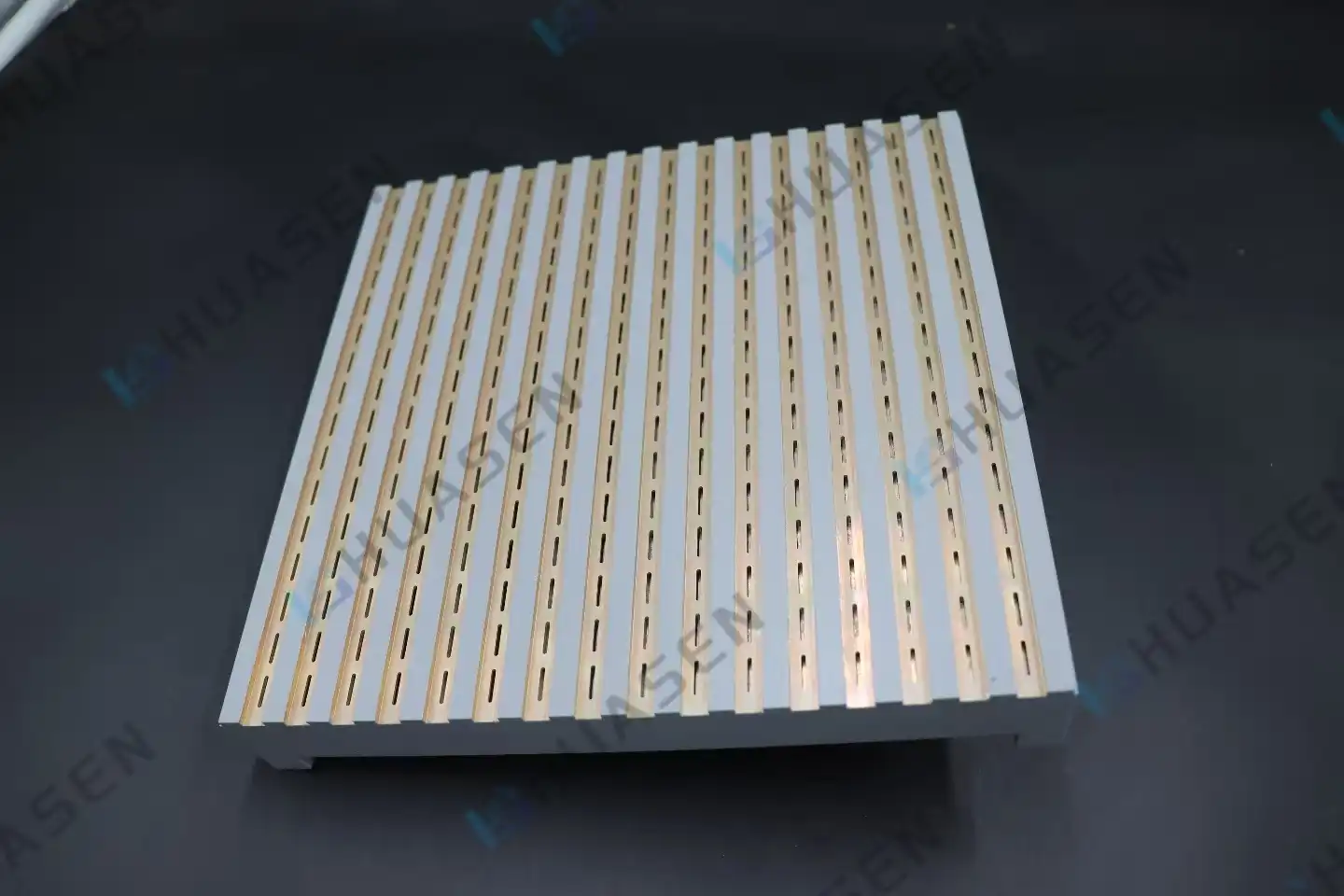
Detailed Analysis of Slot Geometry Parameters
An in-depth look at the parameters of slot geometry. To figure out how certain physical traits affect antenna performance, you have to look at shape, size, and arrangement separately.
Impact of Slot Shapes on Radiation Patterns
How the shapes of slots affect the patterns of radiation. Different hole forms give off different kinds of radiation. Rectangular holes are standard in the industry because they are easy to make and have known resistance behavior. They keep the polarization purity constant and provide stable resonance over narrow to intermediate bandwidths (5% to 8% on average). Even though circular slots aren't used very often in waveguides, they can be useful for uses that need coverage in all directions in the azimuth plane because they have wider beamwidths and are less sensitive to manufacturing errors.
Planar Slot Antenna, By adding more resonance modes, elliptical and dog-bone-shaped slots increase the operating bandwidth. These shapes make the flow of current more even, which lowers the amount of burning in high-power radar emitters. Complex forms, such as H-slots or U-slots, make it possible for two separate resonant paths to operate on two different bands. This meets the need for multi-band base stations that can handle both sub-6GHz and millimeter-wave 5G bands.
Slot Size and Miniaturization Strategies
Slot size and strategies for making things smaller. The length of the slot is usually about half of the guided wavelength at the design frequency, but the exact measurements rely on the height of the waveguide, the width of the wall, and the dielectric loading. Miniaturization problems happen in small Internet of Things (IoT) devices and small-cell base stations, where power needs are higher than the available space. Putting dielectric plugs or capacitive stub elements into holes shortens the effective resonant length. This cuts the size by 30% to 40% while causing small losses in efficiency (usually 2 to 3 dB).
Huasen Microwave's waveguide slot array designs have small sizes because the slot shapes are carefully optimized. The flexible slot array layout lets you change the vertical beamwidth by 3.2° to 4.5°. This lets you send directed energy in point-to-point backhaul links with limited elevation coverage, which makes the most of the link budget. This controllability comes from carefully managing the size of the slot opening and the distance between the elements.
Slot Arrangement and Array Configuration Effects
Effects of slot arrangement and array configuration. Through constructive and negative interference, the array shape determines the patterns of far-field radiation. Fan-beam patterns can be made with linear arrays, which are good for horizon-scanning radar and marine monitoring systems. Two-dimensional arrays make pencil beams whose azimuth and elevation beamwidths can be controlled separately. This is important for phased-array radar and active electronically scanned arrays (AESAs) in aircraft usage.
When the slot spacing is less than half the frequency, grating lobes show up and waste power in areas that aren't needed. On the other hand, pattern uncertainty happens when the spacing is greater than one wavelength. The best distance between them is usually between 0.6° and 0.9λ, which is the middle ground between beam-steering range and sidelobe reduction. Sidelobe levels drop below -25 dB when the individual slot connection is changed through offset changes. This is called amplitude tapering across the array, and it meets strict requirements for electronic countermeasure systems.
Comparing Planar Slot Antennas with Other Antenna Types for Procurement Decisions
Planar Slot Antennas and Other Types of Antennas for Making Buying Decisions. When purchasing managers look at different radio options, they have to compare how well they work with the costs and how hard it is to integrate them. Slotted waveguide arrays work great in situations that need to handle a lot of power, be very efficient, and be resistant to harsh environments.
Performance Metrics Comparison
Comparison of performance metrics. Commercial markets are dominated by microstrip patch antennas because they are easy to make and don't cost much to integrate into PCBs. But their electrical losses go up a lot above 20 GHz, which means that at millimeter-wave frequencies, their efficiency drops to 60% to 70%. Through air-filled waveguide transmission, planar slot antennas keep 85% to 90% efficiency across the 1–40 GHz range. This makes them better for long-distance communications and high-resolution radar images.
Dipole, Slot Antenna, and helix antennas have a wide bandwidth and are easy to build, but they aren't as good at mechanical integration as flush-mounted slot arrays. Their sticking-out parts make the wind load and radar cross-section bigger, which makes them less suitable for bases that are hard to see. Dielectric resonator antennas work well in a wide range of temperatures, but they need complicated feeding networks and cost more per element when used in big groups.
Manufacturing Cost and Application Suitability
Cost of production and suitability for use. Because they need to be machined precisely, slotted waveguide stacks have higher starting tooling costs. When production rates go over a few hundred units, as they do in defense contracts and telecommunications infrastructure projects, this spending starts to make sense. In many situations, the strong mechanical structure gets rid of the need for a separate radome. This lowers the cost of production by making the system simpler.
Over the past ten years, mass production methods such as die-casting and chemical etching have made waveguide components much cheaper. OEMs that work with 5G base stations are using substrate integrated waveguide (SIW) types that are made using normal PCB methods more and more. These variants combine waveguide performance with cost savings in printed circuit manufacturing.
Practical Guidelines for Customizing and Procuring Planar Slot Antennas
Practical Advice for Making and Buying Planar Slot Antennas. A good procurement process starts with making sure that practical needs are clearly defined and working closely with makers who have a lot of experience.
Simulation-Driven Design Validation
Validation of designs based on simulations. Modern antenna creation uses electromagnetic simulation tools to guess how well an antenna will work before making a real prototype. The finite element method (FEM) and the method of moments (MoM) are two types of tools that accurately model the effects of slot shape on frequency bands by finding the best dimensions. To map performance choices, parametric studies look at slot length, width, and spacing. This speeds up the design completion process.
Huasen Microwave uses advanced simulation processes that have been checked against decades of production data. This knowledge makes it easy to quickly change the structure of slot arrays to meet specific vertical beamwidth, polarization, and bandwidth goals. Vector network analyzer measurements and anechoic chamber pattern tests are used to confirm the simulation results and make sure that the production units perform as expected.
Supplier Selection and Quality Assurance
Choosing a supplier and making sure of quality. When looking at possible providers, you need to look at both their professional skills and how reliable their business is. Some important requirements are ISO 9001 certification, MIL-STD compliance for defense uses, and proof of experience with frequency bands and power levels that are identical. Asking suppliers for sample units to be tested by a third party shows whether the performance is what was claimed or not, revealing suppliers who don't have good quality control.
Lead times are very different depending on how complicated the plan is and how deep the production queue is. Standard catalogue items usually ship in two to four weeks, but unique designs that need new tools can take eight to twelve weeks. Setting up a framework that deals with chosen sellers cuts down on the time it takes to buy things and guarantees priority production times during times of high demand.
Material Standards and Long-Term Reliability
Standards for materials and long-term dependability. The environmental requirements need to cover the worst situations that the system will have to deal with during its lifetime. For outdoor systems, you need ingress protection of IP67 or higher, coatings that don't rust and meet the standards for ASTM B117 salt spray tests, and temperature ranges from -55°C to +85°C. Testing for thermal cycling makes sure that the dimensions stay the same at all temperature levels. This stops resonant frequency shifts that hurt performance.
As part of after-sales support, calibration data is sent, new parts are made available, and expert help is given for problems with system interaction. Slot antenna manufacturers with a good reputation keep detailed test records for each production lot that show the return loss, gain, sidelobe levels, and cross-polarization discrimination. These reports make it possible to track and check the quality of the products throughout the entire supply chain.
Conclusion
In conclusion, planar slot antenna emission efficiency is largely determined by the shape of the slots, which affects how well the impedance matches, how the current flows, and how well the slots couple with each other. Optimized designs find the best mix between slot shape, size, and spacing to meet goal bandwidth, gain, and pattern requirements while still being easy to manufacture and low in cost. Comparative research shows that slotted waveguide designs work best in high-frequency, high-power situations where reliability and efficiency are more important than starting cost. To successfully buy something, you need to carefully look at the suppliers, make sure the simulations work, and pay attention to the material standards. It was shown in the case studies that geometry-focused design optimization improves system range, interference avoidance, and mechanical integration in a wide range of industrial settings.
FAQ
1. How does slot geometry affect antenna bandwidth?
What effect does slot shape have on radio bandwidth? The size of the slots determines the quality factor and the resonance frequency. Longer, thinner slots give you a higher Q with a smaller bandwidth (2% to 5%), which is good for fixed-frequency radar. For wideband transmission systems, the bandwidth goes up to 10% to 15% when the slots are wider or the shapes are more complicated, like dog-bone designs. Bandwidth is also affected by the size of the waveguide and the power of the slot connection.
2. What advantages do slotted waveguide antennas offer over microstrip designs?
What are the pros of slotted waveguide antennas over microstrip designs? Slotted waveguide designs get rid of the dielectric losses that happen in microstrip antennas at millimeter-wave frequencies. This keeps the efficiency at 85% to 90%, while patches only get 60% to 70%. They can handle kilowatt-level power without breaking down and offer better mechanical integration by fitting flat. The trade-off is more complicated production and higher prices for making the first tools.
3. What criteria matter most when selecting planar slot antenna suppliers?
What are the most important things to look for in planar slot antenna suppliers? Check the accuracy of the production process by specifying tolerances and testing sample units. Make sure that the outdoor testing requirements (MIL-STD-810, IP grades) are met for your application. Check out the simulation and testing tools that can help you make sure the plan is correct. Check the wait time promises, warranty terms, and how quickly the expert support team responds after the sale. For informed quality assurance, ask for thorough test results that include pattern measurements and data on how well the product works.
Partner with Huasen Microwave for Precision-Engineered Slot Array Solutions
The Planar Slot Antenna product line from Huasen Microwave meets tough needs in the radar, aircraft, and telecoms industries. Our waveguide slot array design provides a 5–8% bandwidth over a range of frequencies from 1 to 40 GHz. The vertical beamwidth can be changed from 3.2° to 4.5°, and it supports both vertical polarization and 360° horizontal coverage. Because the slot shapes are so well optimized, the small, light structure fits perfectly into platforms with limited room while still delivering high radiation efficiency.
Whether you need solutions from a catalogue or designs that are made just for you based on frequency bands, power levels, and weather conditions, our engineering team can help you with everything, from the first test to making sure the product is ready for production. As a well-known company that has been making planar slot antennas for 30 years, we have strict quality control that meets international standards and dependable supply chain performance.
Get in touch with our technology experts at sales@huasenmicrowave.com to talk about what antenna you need. We're happy to get enquiries about testing prototypes, buying in bulk, and working together on development projects.
References
1. Balanis, Constantine A. "Antenna Theory: Analysis and Design." 4th Edition. Wiley, 2016.
2. Elliott, Robert S. "Antenna Theory and Design." Revised Edition. IEEE Press, 2003.
3. Hansen, Robert C. "Phased Array Antennas." 2nd Edition. Wiley, 2009.
4. Mailloux, Robert J. "Phased Array Antenna Handbook." 3rd Edition. Artech House, 2017.
5. Volakis, John L. "Antenna Engineering Handbook." 4th Edition. McGraw-Hill, 2007.
6. Josefsson, Lars and Persson, Patrik. "Conformal Array Antenna Theory and Design." IEEE Press, 2006.
Send Inquiry