Pyramidal Horn Antenna Performance in Direction Finding






2026-04-15 21:22:35
When precision matters in signal localization, the Pyramidal Horn Antenna stands as an indispensable tool for direction finding systems. This specialized microwave antenna leverages a pyramidal flare geometry that gradually transitions rectangular waveguide dimensions to free-space impedance, minimizing reflections and maximizing directional accuracy. Its predictable radiation patterns, controlled beamwidth, and exceptional polarization purity make it the preferred choice for applications demanding reliable signal detection—from military electronic surveillance to 5G base station diagnostics. The antenna's inherent structural simplicity, combined with low VSWR and high power handling capacity, addresses critical pain points faced by system integrators who require stable, repeatable performance in complex RF environments where accuracy directly impacts operational success.
Introduction
Direction finding capabilities define the performance ceiling of modern telecommunications infrastructure, defense systems, and industrial RF testing platforms. Across telecom networks deploying 5G backhaul links, maritime communication vessels navigating contested electromagnetic environments, and radar installations monitoring airspace, the ability to accurately pinpoint signal origins separates functional systems from mission-critical assets. We recognize that global procurement teams face mounting pressure to source antennas that deliver not just theoretical specifications but proven field reliability. The challenge intensifies when considering the diverse operating conditions these systems must endure. Offshore telecommunications platforms demand corrosion-resistant components that maintain phase coherence despite salt spray exposure. Radar countermeasure systems require antennas capable of handling high pulse power without degradation. Laboratory environments need traceable calibration standards with documented linearity across multiple frequency bands. These scenarios share a common requirement: direction finding precision that remains consistent regardless of environmental stressors or signal complexity. This guide examines how pyramidal waveguide horn antennas address these challenges through inherent design advantages. We explore the electromagnetic principles governing their superior directional performance, compare their capabilities against alternative antenna architectures, and provide actionable procurement criteria for system integrators. By partnering with established manufacturers who understand the intersection of technical specifications and operational demands, procurement professionals can secure components that transform direction-finding accuracy from a specification line item into a tangible competitive advantage.
Understanding Pyramidal Horn Antennas in Direction Finding
Structural Geometry and Electromagnetic Fundamentals
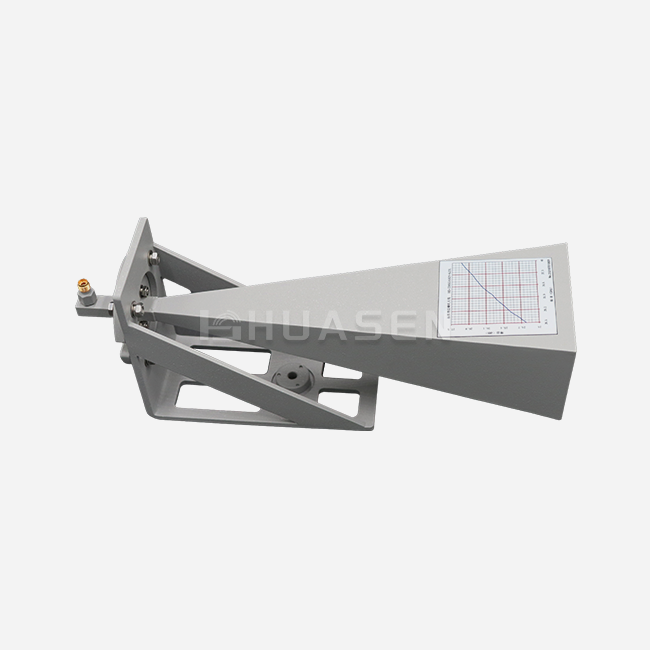
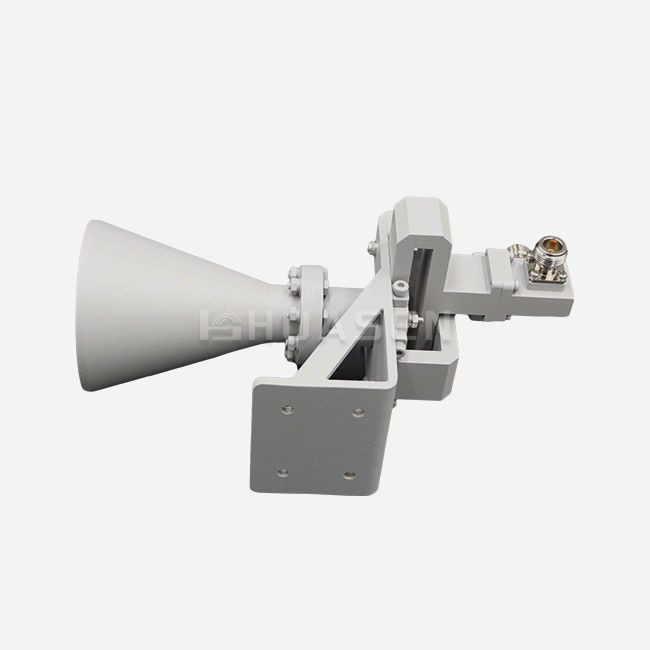
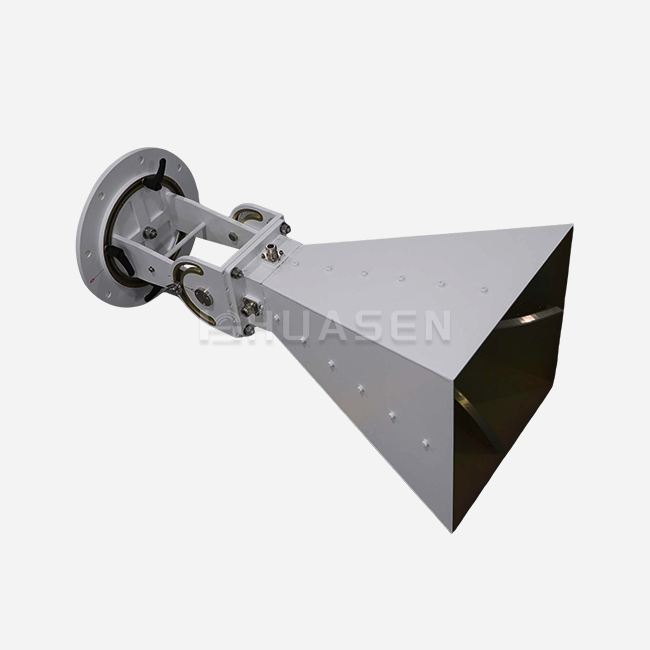
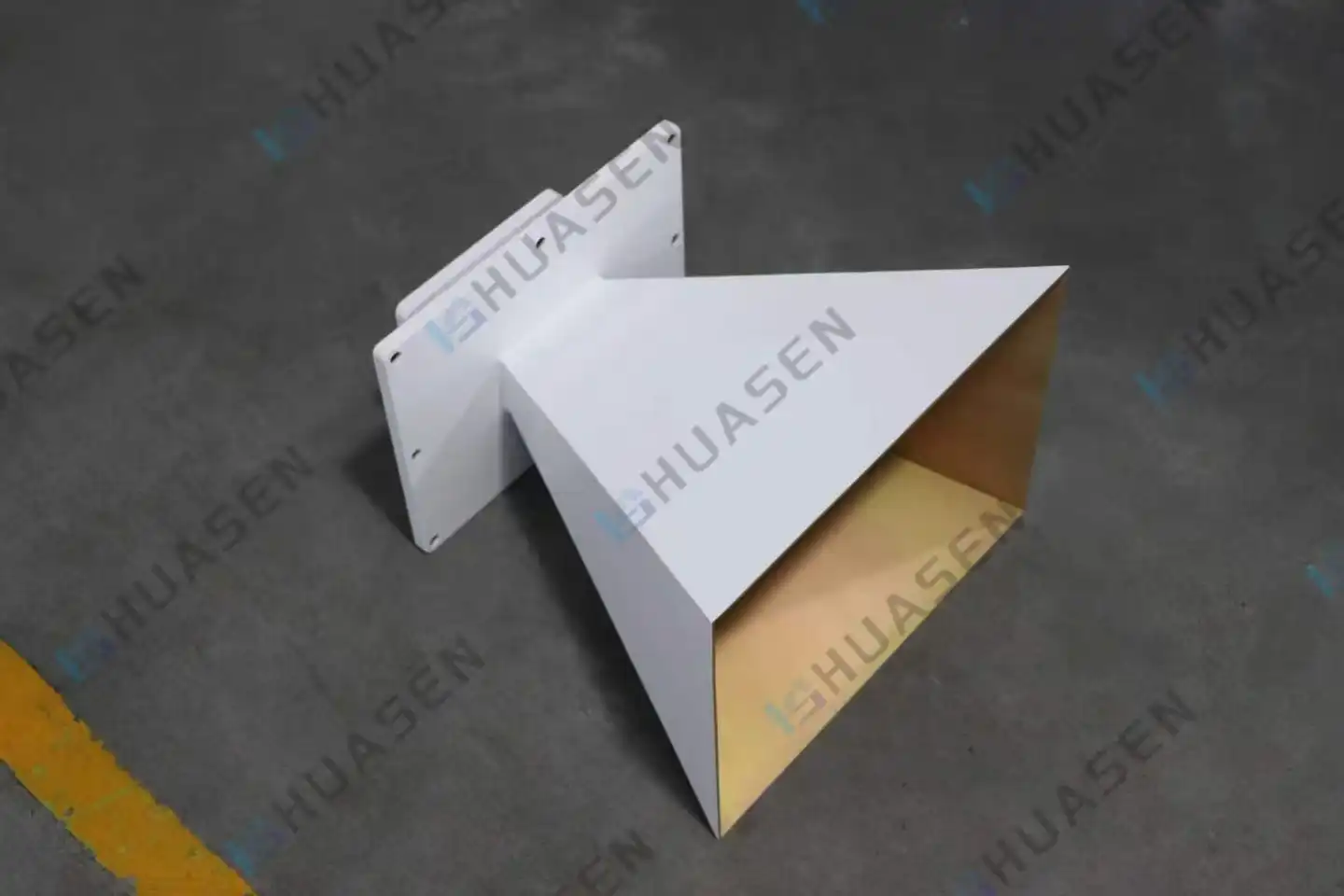
The pyramidal horn antenna derives its name from the four-sided flare that expands outward from a rectangular waveguide feed. Unlike conical horns that transition from circular waveguides, the pyramidal configuration maintains compatibility with standard rectangular waveguide sizes—eliminating the need for mode converters that introduce loss and phase uncertainty. This direct interface preserves electric field orientation, which proves essential when direction finding systems rely on polarization discrimination to separate overlapping signals. The flare geometry follows precise mathematical relationships between aperture dimensions and length. Engineers calculate the E-plane and H-plane flare angles to control phase error across the radiating aperture. When phase error remains below 90 degrees in the E-plane and 180 degrees in the H-plane, the antenna achieves optimum gain condition—a balance point where aperture size and field uniformity produce maximum directivity without introducing distortion that degrades angular resolution.
Radiation Pattern Characteristics for Direction Finding
Direction finding accuracy depends fundamentally on the antenna's ability to produce sharp, predictable radiation patterns. Pyramidal horns generate a main lobe with a defined half-power beamwidth (HPBW) that narrows as aperture dimensions increase relative to wavelength. This relationship allows system designers to select specific horn geometries that match the angular resolution requirements of their application—broader beams for wide-area surveillance, narrower beams for precision bearing measurement. The antenna's side lobe structure presents equally important considerations. Well-designed pyramidal horns exhibit side lobe levels typically 20-25 dB below the main lobe peak. This suppression ratio directly impacts the system's ability to reject interfering signals arriving from off-axis directions. When direction finding receivers process signals in dense electromagnetic environments—such as urban base station deployments or electronic warfare scenarios—controlled side lobes prevent false bearing indications that could compromise situational awareness.
Technical Parameters Defining Direction Finding Capability
The frequency range establishes the operational envelope for any direction-finding system. Pyramidal horns cover specific bands determined by waveguide dimensions, with standard designs spanning from L-band (1-2 GHz) through W-band (75-110 GHz). The impedance matching inherent in the gradual flare design maintains VSWR below 1.5:1 across these bandwidths, ensuring consistent performance without the need for external tuning networks that would introduce frequency-dependent phase shifts. Gain values typically range from 10 dBi to 25 dBi, depending on aperture size and operating frequency. Direction finding systems benefit from this moderate gain level because it provides sufficient signal amplification to improve receiver sensitivity while maintaining beamwidths practical for scanning or rotation. Excessive gain would narrow beamwidths to impractical levels, requiring mechanical positioning systems with unrealistic precision tolerances. Polarization purity distinguishes quality implementations from marginal designs. High-performance pyramidal horns achieve cross-polarization isolation exceeding 25 dB, meaning the antenna responds primarily to the intended polarization of thepyramidal antenna plane while rejecting orthogonally polarized signals. This characteristic proves vital when direction finding systems must discriminate between co-channel transmitters using polarization diversity—a common scenario in satellite ground station monitoring and spectrum management applications.
Performance Factors Impacting Direction Finding Accuracy
Gain and Directivity Relationships
Higher gain directly translates to improved angular discrimination in direction finding systems. When an antenna concentrates radiated power into a narrower solid angle, the receiver can more precisely determine the bearing to a signal source by identifying the rotational angle producing peak response. This relationship becomes particularly significant when tracking weak signals embedded in thermal noise or when attempting to resolve multiple closely-spaced emitters. The pyramidal horn's predictable gain versus frequency curve simplifies calibration procedures for measurement systems. Unlike antennas employing resonant elements that exhibit sharp gain variations across their bandwidth, horns demonstrate smooth, monotonic gain increases with frequency. This characteristic allows direction finding receivers to apply straightforward correction factors when processing signals across wide frequency spans, reducing computational overhead and improving real-time processing speeds.
Beamwidth Control and Side Lobe Management
Half-power beamwidth defines the angular range over which the received signal strength remains within 3 dB of the peak value. Narrower beamwidths enable finer angular resolution when scanning or rotating direction-finding antennas to locate signal sources. Pyramidal horns offer beamwidths ranging from approximately 10 degrees for large-aperture X-band designs to 60 degrees for compact S-band units, providing options suited to different operational scenarios. Side lobe performance directly affects false alarm rates in direction finding systems. When unwanted signals enter through side lobes, receivers may incorrectly identify these responses as legitimate targets. The pyramidal horn's gradually expanding aperture produces well-behaved side lobe structures without the sharp nulls and peaks characteristic of array antennas, resulting in predictable response patterns that sophisticated signal processing algorithms can readily characterize and compensate.
Polarization Matching and Multi-Frequency Operation
Direction finding accuracy suffers when antenna polarization mismatches the incident signal. Linearly polarized pyramidal horns maintain polarization plane alignment determined by their mounting orientation, providing a consistent response to horizontally or vertically polarized transmissions. This predictability allows system operators to deliberately select polarization configurations matching their target signals, or to employ dual-polarized installations that simultaneously monitor both orientations. Broadband operation presents unique challenges for direction-finding systems that must cover multiple communication bands or adapt to frequency-agile threats. The pyramidal horn's inherent wideband impedance match—often spanning octave bandwidths or more—eliminates the need for switched filter banks or tunable front-ends that introduce switching delays and calibration uncertainties. A single antenna covering 8-12 GHz, combined with appropriate receiver architecture, can monitor X-band radar emissions, satellite downlinks, and point-to-point microwave links without mechanical reconfiguration.
Comparative Performance Analysis
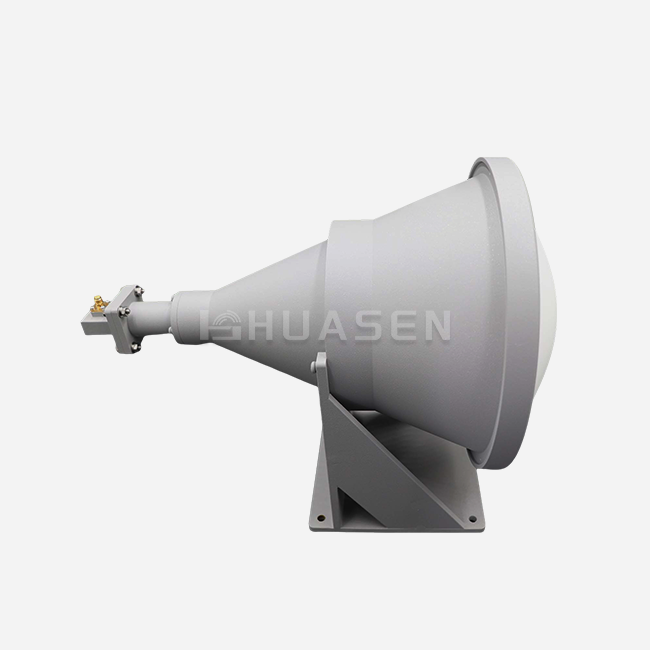
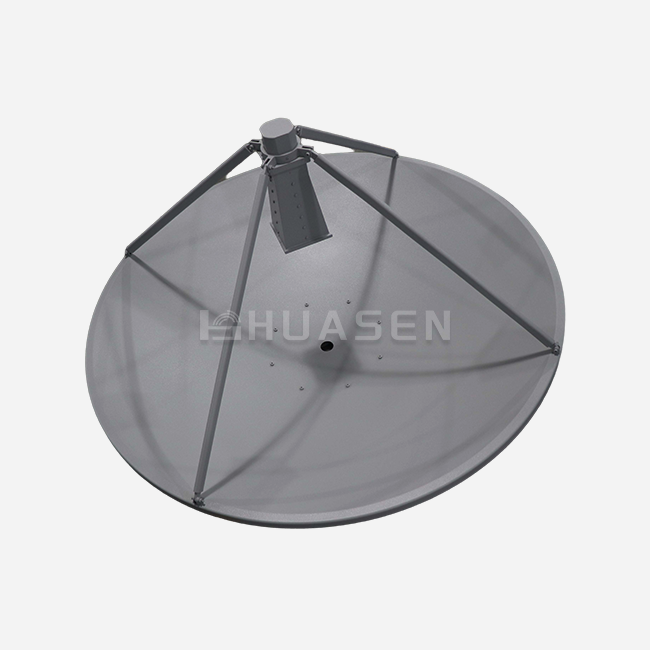
Conical horns offer circular symmetry that produces identical beamwidths in all planes, which simplifies some direction-finding implementations. Yet their requirement for circular waveguide feeds introduces mode conversion losses and complicates polarization control. Parabolic reflector systems achieve higher gain but suffer from narrow instantaneous bandwidth and mechanical complexity unsuitable for rapid scanning applications. Phased arrays provide electronic beam steering, but at substantially higher cost and power consumption. The pyramidal horn occupies a performance space optimized for applications requiring moderate gain, predictable patterns, and rugged reliability. System integrators selecting components for fixed monitoring stations, shipboard installations, or transportable surveillance systems find that horn antennas deliver the most practical balance of electrical performance, environmental durability, and total cost of ownership.
Optimizing Pyramidal Horn Antenna Design for Direction Finding Applications
Critical Design Parameters
Aperture dimensions establish fundamental performance limits. Larger apertures produce narrower beamwidths and higher gain but increase physical size and weight—considerations that matter for airborne platforms, drone payloads, and space-constrained installations. Engineers must balance electromagnetic requirements against mechanical constraints when specifying horn dimensions. Modern electromagnetic simulation tools allow designers to model field distributions and optimize aperture dimensions before committing to fabrication, reducing prototype iterations and accelerating deployment schedules. Flare angle selection involves tradeoffs between antenna length and radiation pattern quality. Shallow flare angles produce longer horns with excellent pattern control but impose packaging constraints. Steeper angles create compact designs at the cost of increased phase error and pattern degradation. Direction-finding applications prioritizing angular accuracy typically favor longer horns with carefully controlled flare geometry, accepting the mechanical complexity in exchange for superior electrical performance. Horn length affects both gain and input impedance. The gradual electromagnetic transition from waveguide mode to free-space propagation requires sufficient physical distance to maintain low reflections. Insufficient length results in impedance mismatch that degrades VSWR and introduces frequency-dependent phase variations—both detrimental to direction finding accuracy. Proven designs incorporate flare lengths calculated to keep phase error within optimum gain criteria across the entire operating bandwidth.
Material Selection and Manufacturing Quality
Material choices directly impact both the electrical performance of thepyramidal antennaand environmental durability. Aluminum alloys provide excellent conductivity, light weight, and machinability, making them popular for laboratory standards and commercial systems. Copper and brass offer superior conductivity for applications demanding minimum insertion loss, but add weight and require protective plating to prevent oxidation. High-performance military and aerospace systems often specify precious metal plating—silver or gold—that maintains stable surface resistance despite temperature cycling and humidity exposure. Manufacturing precision determines how closely production units match design specifications. CNC machining achieves dimensional tolerances within thousandths of an inch, ensuring consistent flare geometry and aperture dimensions. Internal surface finish affects power handling and loss characteristics, with smooth, polished interiors minimizing current crowding and preventing breakdown at high power levels. Quality manufacturers provide comprehensive dimensional inspection reports and RF test data verifying that each antenna meets specified electrical parameters before shipment.
Tailored Solutions for Emerging Applications
The 5G network buildout creates demand for direction finding capabilities supporting interference localization and coverage verification. Compact pyramidal horns operating in 24-28 GHz and 37-40 GHz millimeter-wave bands enable technicians to rapidly identify rogue transmitters or characterize propagation patterns around base station installations. These antennas must survive outdoor conditions while maintaining calibrated accuracy across temperature ranges and weather conditions. Radar development programs require antennas that handle high peak power while preserving measurement accuracy. Pulse radar systems subject components to instantaneous power levels orders of magnitude above CW ratings. Pyramidal horns accommodate these demands through their air-dielectric construction—the absence of internal dielectric materials eliminates breakdown paths and thermal management concerns that limit other antenna types. Defense contractors developing next-generation radar systems rely on horn antennas for both antenna pattern measurements and as reference standards during system characterization. Electronic warfare platforms demand direction-finding antennas covering extremely wide frequency ranges to detect and locate diverse threat emitters. Custom pyramidal horns with optimized flare profiles achieve octave-bandwidth performance while maintaining pattern stability. These specialized designs incorporate features such as corrugated interior surfaces or dielectric loading that extend bandwidth beyond conventional limits, supporting mission requirements where a single antenna must address L-band through X-band threats without mechanical reconfiguration.
Procurement Guide: How to Select and Buy the Best Pyramidal Horn Antenna
Balancing Performance Requirements and Budget Constraints
Procurement decisions begin with clear application requirements. Direction-finding systems designed for fixed installations tolerate larger, heavier antennas that optimize electrical performance. Mobile platforms require compact, lightweight designs, even if this necessitates accepting slightly reduced gain or broader beamwidths. Power handling needs vary dramatically—laboratory calibration applications rarely exceed milliwatt levels while radar testing may involve kilowatt pulses. Frequency coverage defines the fundamental starting point for supplier discussions. Standard waveguide bands offer off-the-shelf availability and competitive pricing. Custom frequency ranges require engineering analysis and tooling investment that extends delivery schedules and increases unit costs. Procurement teams should evaluate whether their application truly requires custom designs or if standard products with slightly broader coverage would satisfy operational needs while reducing both cost and lead time.
Supplier Evaluation Criteria
Manufacturer reputation provides insight into product reliability and support capabilities. Established suppliers with decades of horn antenna production demonstrate proven design methodologies and manufacturing processes. Companies serving defense and aerospace markets typically maintain quality systems compliant with ISO 9001 and AS9100 standards, providing process documentation and traceability that satisfy audit requirements for government contracts. Technical support capabilities separate commodity suppliers from solution partners. Direction finding system integration often uncovers unexpected challenges—pattern anomalies, mounting resonances, or environmental effects that weren't apparent during initial design. Suppliers offering application engineering support, electromagnetic simulation services, and custom measurement capabilities become valuable partners rather than mere component vendors. Procurement professionals should verify supplier capabilities through reference checks with existing customers facing similar application challenges. After-sales service encompasses warranty terms, repair capabilities, and calibration services. Standard commercial warranties typically cover manufacturing defects for one year. Extended warranties and calibration agreements provide long-term cost predictability for programs requiring sustained performance over multi-year deployments. Suppliers offering factory recalibration services with certified test data enable customers to maintain measurement traceability without investing in expensive in-house antenna ranges.
Market Comparison and Ordering Processes
Leading manufacturers maintain extensive product catalogs covering standard waveguide bands with documented electrical specifications, mechanical drawings, and test data. Off-the-shelf products ship within days or weeks, depending on inventory availability. Custom designs require quotation cycles ranging from days for minor variations to weeks for complex requirements involving new tooling or specialized materials. Bulk procurement provides opportunities for volume pricing negotiations. Manufacturers typically offer quantity discounts for orders exceeding 10-50 units, depending on product complexity. Long-term supply agreements further reduce unit costs while guaranteeing production capacity allocation during periods of high demand. Procurement teams managing programs with multi-year production runs should negotiate framework agreements establishing pricing, delivery schedules, and engineering support terms.OEM relationships extend beyond simple purchasing transactions. Suppliers willing to develop custom variants, apply customer branding, or integrate antennas into larger assemblies become strategic partners, enabling product differentiation. These collaborations require clear specifications, intellectual property agreements, and quality assurance protocols ensuring consistent production standards across potentially years-long manufacturing relationships.
Future Trends and Innovations in Pyramidal Horn Antenna Technology for Direction Finding
Advanced Materials and Manufacturing Techniques
Additive manufacturing technologies—commonly Pyramidal Horn Antennacalled 3D printing—now achieve the dimensional precision and surface finish quality required for microwave components. Metal printing processes deposit aluminum or copper alloys layer-by-layer, enabling complex internal geometries impossible with conventional machining. This capability opens design possibilities such as integrated filtering structures or optimized flare profiles that improve bandwidth while reducing size. Composite materials combining metallic and dielectric elements promise weight reduction for airborne platforms. Researchers explore carbon fiber structures with conductive coatings that maintain RF performance while achieving strength-to-weight ratios superior to traditional metal fabrication. These developments particularly benefit drone-mounted direction finding systems, where payload capacity directly limits operational endurance and sensor capability.
Integration with Smart Systems and Networks
Modern direction-finding installations increasingly incorporate digital signal processing and network connectivity that transform standalone antennas into nodes within distributed sensor networks. Pyramidal horns with integrated amplifiers, digitizers, and communication interfaces enable rapid deployment of monitoring stations that report bearing data to central processing facilities in real-time. This architecture supports applications ranging from spectrum enforcement to counterterrorism operations, where multiple geographically separated sensors collaboratively locate transmitters through triangulation. Artificial intelligence algorithms applied to direction finding data extract insights impossible through traditional analysis methods. Machine learning models trained on vast datasets recognize emission patterns characteristic of specific transmitter types, automatically classifying signals and prioritizing threats without human intervention. High-quality antenna patterns provided by precision horn designs give these algorithms the clean, consistent input data necessary for reliable classification performance.
Expanding Application Domains
Defense modernization programs worldwide invest heavily in electronic warfare capabilities requiring sophisticated direction-finding systems. Pyramidal horns designed for military applications must survive shock, vibration, and extreme temperatures while maintaining calibrated accuracy. Manufacturers developing products for these markets implement rigorous environmental testing protocols and provide detailed reliability data supporting mean-time-between-failure predictions. Commercial telecommunications expansion into millimeter-wave frequencies creates opportunities for compact horn antennas supporting 5G and future 6G network deployments. As operators deploy increasingly dense base station networks, interference management becomes critical to maintaining service quality. Portable direction finding systems equipped with appropriate horn antennas enable rapid identification of interference sources, reducing downtime and improving customer satisfaction.
Conclusion
Pyramidal horn antennas represent the intersection of electromagnetic theory, precision manufacturing, and practical operational requirements in direction finding applications. Their predictable radiation patterns, controlled polarization, and robust construction address fundamental challenges faced by system integrators across telecommunications, defense, and industrial sectors. Procurement professionals selecting these components gain not merely specifications on datasheets but proven performance in demanding field environments. The evaluation criteria explored throughout this guide—from technical parameters to supplier capabilities—provide a framework for matching antenna characteristics to application requirements while managing budget constraints and delivery schedules. Success in direction finding ultimately depends on components that consistently deliver specified performance regardless of environmental conditions or operational stresses.
FAQ
1. What frequency ranges do pyramidal horn antennas typically cover?
Standard pyramidal horns operate across waveguide bands spanning 1 GHz to beyond 110 GHz. Common configurations include S-band (2-4 GHz), C-band (4-8 GHz), X-band (8-12 GHz), Ku-band (12-18 GHz), and Ka-band (26-40 GHz). The specific frequency range matches the rectangular waveguide feed dimensions, with each waveguide size supporting approximately an octave bandwidth before encountering mode propagation issues. Custom designs can extend these ranges through specialized flare geometries and internal structures.
2. How does antenna gain affect direction finding accuracy?
Higher gain concentrates the radiation pattern into narrower beamwidths, improving angular resolution when locating signal sources. A 20 dBi antenna with 15-degree beamwidth provides better bearing accuracy than a 10 dBi antenna with 40-degree beamwidth when scanning or rotating to find peak response. The tradeoff involves coverage area—narrow beams require more time to scan wide angular sectors. Optimal gain balances resolution requirements against scan time and mechanical complexity.
3. Can manufacturers customize pyramidal horn antennas for specific applications?
Quality manufacturers routinely customize frequency coverage, polarization, mounting provisions, and interface connectors. Custom designs accommodate specialized bandwidth requirements, unusual physical constraints, or integration with existing equipment. The customization process typically involves application discussions, electromagnetic simulation to verify performance, prototype fabrication and testing, and production of quantities ranging from single units to hundreds, depending on program requirements. Lead times vary from weeks for minor modifications to months for complex new designs.
Partner with Huasen Microwave for Superior Direction Finding Solutions
Huasen Microwave Technology brings three decades of specialized expertise in high-frequency component manufacturing to your most demanding direction finding challenges. Our pyramidal horn antenna portfolio spans L-band through millimeter-wave frequencies, each design validated through rigorous testing in our ISO-certified facilities. We understand that procurement decisions involve more than comparing specification sheets—you need assurance that components will perform reliably in actual operating environments, backed by responsive engineering support when integration questions arise.
Our manufacturing capabilities combine precision CNC machining with proprietary assembly processes that maintain dimensional tolerances critical for consistent radiation patterns. Every antenna undergoes comprehensive RF testing with documented VSWR, gain, and pattern measurements traceable to national standards. Whether your program requires catalog products shipping within days or custom variants engineered specifically for your system architecture, our applications team collaborates with you from initial concept through volume production. As an established pyramidal horn antenna supplier serving telecommunications, defense, and research sectors globally, we provide the technical depth and manufacturing capacity that transforms procurement from a transactional challenge into a strategic partnership. Contact our team at sales@huasenmicrowave.com to discuss your direction finding requirements and discover how Huasen Microwave solutions deliver measurable performance advantages.
References
1. Balanis, Constantine A. Antenna Theory: Analysis and Design, 4th Edition. John Wiley & Sons, 2016.
2. Stutzman, Warren L. and Thiele, Gary A. Antenna Theory and Design, 3rd Edition. John Wiley & Sons, 2012.
3. IEEE Standard 145-2013. IEEE Standard for Definitions of Terms for Antennas. Institute of Electrical and Electronics Engineers, 2014.
4. Poisel, Richard A. Electronic Warfare Target Location Methods, 2nd Edition. Artech House, 2012.
5. Milligan, Thomas A. Modern Antenna Design, 2nd Edition. IEEE Press, 2005.
6. Love, A.W. Electromagnetic Horn Antennas. IEEE Press Series on Electromagnetic Waves, 1976.
Send Inquiry