
Home / Blog
Blog
0
When to Choose a Dual Channel vs. Single Channel Waveguide Rotary Joint?
Choosing between a Dual Channel Waveguide Rotary Joint and a single channel variation is a basic choice that can essentially affect the execution and capabilities of your RF framework. The choice pivots on your particular application necessities, framework complexity, and execution needs. Double channel rotating joints are perfect for frameworks that require concurrent transmission of two autonomous signals, advertising upgraded usefulness and proficiency. These components exceed expectations in applications requesting tall segregation between channels, such as radar frameworks with partitioned transmit and get ways. Then again, single channel rotational joints are more appropriate for less difficult setups where as it were one flag needs to be transmitted over a pivoting interface. They regularly offer lower addition misfortune and can be more cost-effective for less complex frameworks. Understanding the trade-offs between these alternatives is vital for optimizing your RF system's execution, unwavering quality, and cost-effectiveness.VIEW MORE
What Is a Dual Polarized Yagi Antenna?
A Dual Polarized Yagi antenna recieving wire is an progressed directional recieving wire plan that combines the conventional Yagi-Uda structure with double polarization capabilities. This inventive radio wire sort permits for the synchronous transmission and gathering of signals in two orthogonal polarizations, regularly even and vertical. By consolidating different components, counting a driven component, reflector, and chiefs, the Double Polarized Yagi radio wire accomplishes tall pick up and directivity whereas keeping up the capacity to handle signals in different polarizations. This interesting combination of highlights makes it an important apparatus in cutting edge communication frameworks, advertising upgraded execution, made strides flag quality, and expanded flexibility over a wide extend of applications.VIEW MORE
How to Pick the Right Waveguide Switch: Key Differences Between Electric and Manual Models
Selecting the fitting waveguide switch for RF and microwave applications requires understanding the crucial contrasts between electric and manual setups. The choice between these operational modes specifically impacts framework execution, computerization capabilities, reaction time, and operational effectiveness. An Electric Waveguide Switch offers robotized control, fast exchanging capabilities, and consistent integration with advanced communication and radar frameworks, making it perfect for applications requesting high-speed flag directing and farther operation. Manual waveguide switches give straightforwardness and cost-effectiveness for inactive setups or research facility situations where exchanging recurrence remains moo. Understanding these refinements empowers engineers to optimize framework plan, diminish operational costs, and guarantee solid flag administration over broadcast communications, aviation, defense, and testing foundation.VIEW MORE
How to Achieve Low Insertion Loss: Selection Tips for High Power Adapters
Achieving minimal insertion loss in high-power RF systems requires meticulous attention to adapter selection, interface design, and material specifications. The transition between waveguide and coaxial transmission lines presents inherent challenges demanding precision engineering to maintain signal integrity while handling substantial power levels. A High Power Waveguide to Coaxial Adapter serves as the critical interface component, bridging two fundamentally different transmission technologies while preserving electromagnetic wave characteristics across wide frequency ranges. Selection criteria must balance multiple performance parameters including VSWR, power handling capacity, frequency response, mechanical precision, and environmental durability. Understanding how material choices, surface treatments, connector configurations, and manufacturing tolerances impact insertion loss enables engineers to optimize system performance for telecommunications infrastructure, radar installations, satellite communications, and aerospace applications where signal degradation directly affects operational capabilities.VIEW MORE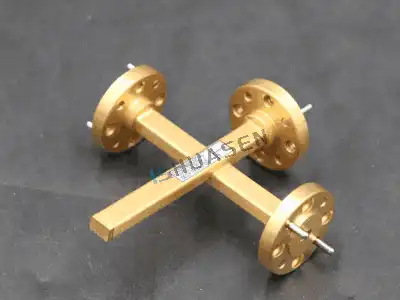
What Affects Crossguide Couplers’ Phase Stability? Factors to Control in System Design
Phase stability in microwave systems represents a critical parameter directly influencing measurement accuracy, signal integrity, and overall system performance. Understanding the factors affecting phase stability in Crossguide Coupler implementations enables engineers to design robust systems capable of maintaining precise phase relationships across varying environmental conditions and operational scenarios. A Crossguide Coupler serves as a directional coupling device that samples electromagnetic energy from the main transmission path while maintaining specific phase relationships between coupled and through ports. Phase stability depends on multiple interrelated factors including thermal expansion effects, mechanical tolerances, dielectric material properties, frequency response characteristics, and electromagnetic field distribution within the coupling structure. Temperature-induced dimensional changes, humidity absorption, mechanical stress, and aging effects all contribute to phase drift that can compromise system accuracy in radar applications, communication testbeds, radio astronomy projects, and advanced physics research where phase coherence determines measurement validity and system functionality.VIEW MORE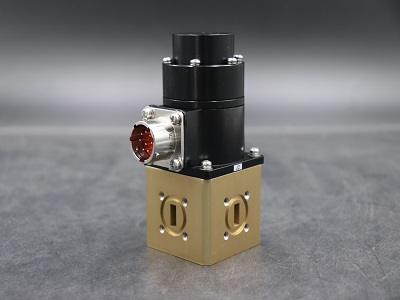
Features and Selection Guide: Manual Waveguide Switches vs. Electric Waveguide Switches
This paper analyzes the performance of manual and electric waveguide switches across multiple key performance indicators, application-specific criteria, and economic/technical trade-offs, and concludes that electric switches perform better in most modern RF and microwave systems due to their superior performance, automation capabilities, and scalability.VIEW MORE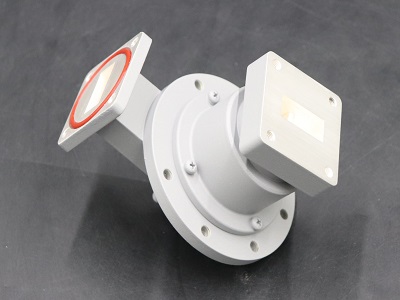
What are the types and application scenarios of waveguide rotary joints?
Waveguide rotary joints are important parts of modern RF and microwave systems because they let signals keep going from parts that aren't moving to parts that are. In radar systems, satellite communications, and aerospace uses, a waveguide rotary joint is an important part that keeps the electromagnetic flow going while letting the parts rotate mechanically. These high-tech devices make sure that there is little signal loss and that they can handle the most power across a wide range of frequency bands, from 0.6 GHz to 40 GHz, meeting both peak power needs of up to 600KW and continuous wave needs of the same amount.VIEW MORE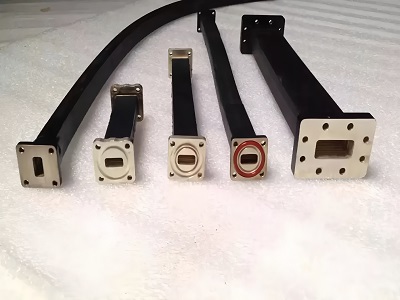
Flexible Twistable Waveguides vs. Traditional Rigid Waveguides: A Performance Comparison
A comparison between flexible twistable waveguides and traditional rigid waveguides reveals that each has its own advantages and is suitable for different application scenarios: traditional rigid waveguides still maintain core advantages in high-power transmission and ultra-precision applications, while flexible twistable waveguides stand out with more excellent installation flexibility, environmental adaptability, and system integration convenience.VIEW MORE
- 1
- 57
- 58
- 59
- 60
- 61
- 62
Total 62 pages
