Mobility Features of Waveguide Elevating Platform






2026-05-08 21:40:32
When talking about the Waveguide Elevating Platform, "mobility" doesn't just mean being able to move it around; it also means being able to precisely position it vertically, which is important for RF and microwave testing. With these specialized electromechanical systems, engineers can precisely line up antenna feeds, waveguide transitions, and test fixtures by adjusting the elevation within a set range, usually between 36mm and 260mm. The mobility mechanism makes sure that heavy RF parts, which usually weigh between 40 and 80 kilograms, can be moved around without putting any mechanical stress on the transmission path or making the phase unstable. This basic feature meets a very important need in antenna measurement labs and satellite ground stations, where sub-millimeter positioning accuracy has a direct effect on the validity of measurements.
Understanding the Mobility Features of Waveguide Elevating Platforms
The ability of these platforms to move around is due to their carefully designed mechanical parts. Unlike most industrial lifts, which are mostly used for moving things around, these devices focus on positioning repeatability and structural rigidity throughout their entire height range. The military-grade stability of the full metal construction keeps the antenna from bending, which would have caused problems with RF phase coherence during measurement cycles.
Precision Elevation Mechanisms
The precision-engineered elevation system is what makes the mobility feature what it is. Our platform can move vertically in a controlled way over a 224mm range, from 36mm at its lowest point to 260mm at its highest point. This range works great for a variety of waveguide routing configurations and test setup geometries that are common in millimeter-wave experiments, especially those involving devices with frequencies between 26.5 and 40 GHz. The actuation system uses either ball screws or linear actuators to make sure that the positioning is always accurate to within 0.05mm. This is a very important feature for setting up phase reference planes in close-range antenna measurement ranges.
Load-Bearing Capacity and Structural Integrity
Another defining trait is the ability to move while carrying weight. The platform can hold payloads of up to 80 kilograms, which includes the weight of rigid waveguide sections, rotary joints, frequency converters, and high-power amplifiers that are usually used in RF test setups. This load capacity is kept by the structural framework across the whole range of elevations without any backlash or positional drift. This stability is very important when the platform is part of an automated measurement sequence, and the Vector Network Analyzer changes the elevation more than once during a test run.
Integration with Test Equipment
The platform can move in more ways than just moving up and down. Standard waveguide flanges, such as WR-series configurations, can fit into mounting interfaces, which also provide secure attachment points for coaxial-to-waveguide transitions. This mechanical compatibility makes system integration easier, which cuts down on setup time and makes it easier for test engineers to change the way measurement chains are set up. The base footprint and height profile of the platform have been designed to fit perfectly in small antenna test ranges and anechoic chambers, where floor space is at a premium.
When these mobility features are used together, they make what could be a difficult manual alignment process into a controlled one that can be done over and over again. Test engineers can do elevation sweeps automatically, collecting data on radiation patterns in a variety of vertical positions without making mistakes caused by human handling. The stable insertion phase is ensured by the rigid mechanical path that is kept during elevation cycles. This is something that becomes more important as operating frequencies rise into millimeter-wave bands.

Advantages of Mobility in Waveguide Elevating Platforms
Better mobility in these specialized platforms, including the Waveguide Elevating Platform, has real operational benefits that lead directly to more accurate measurements and more work getting done in the lab. Because it can precisely position vertically, you don't have to improvise or make adjustments by hand during test setup. This cuts down on configuration time by up to 60% compared to static mounting solutions.
Operational Efficiency Gains
A lot of good things come from programmable elevation control in antenna characterization labs. Standard communication protocols let the platform connect to automation controllers, which allows measurements to be taken in a certain order at different heights without any help from a person. This feature is especially useful for mapping three-dimensional radiation patterns, where the probe or device being tested needs to be in a lot of different places. The time saved adds up over several test cycles, increasing the throughput of the lab and lowering the cost per measurement for places that are working on multiple projects at the same time.
Measurement Quality Improvements
It is very important for coherent measurement systems that the mobility mechanism keeps the mechanical phase center even when the elevation changes. When flexible RF interconnects bend when they are moved, they introduce phase uncertainty into traditional cable-suspended arrangements. The rigid design of the waveguide elevating platform gets rid of this source of error, so the measured phase data shows the real performance of the antenna and not the effects of the test fixture. These features are very important for facilities that test satellite antennas because they help them meet the strict phase stability requirements set by aerospace industry standards.
Safety and Reliability Enhancements
Controlled mobility cuts down on the amount of heavy RF components that need to be handled by hand, which helps with safety issues that are common in labs. When the power goes out, the platform's electromechanical brake system stops vertical movement right away. This keeps expensive test equipment from falling suddenly. The double-layer load-retention system of the self-locking drive gives defense contractors and research institutions the dependability they need to work with expensive prototypes and secret hardware. These safety features are in line with rules about occupational health and safety, and they also protect expensive equipment that can cost more than a few hundred thousand dollars per measurement system.
Applications of Mobile Waveguide Elevating Platforms in Industrial Settings
These platforms' precise mobility makes them useful for many things, like building telecommunications infrastructure, testing spacecraft, and making defense electronics. Different types of applications use positioning in different ways, but they all benefit from the basic mix of load capacity, accuracy, and structural stability.
Antenna Testing and Characterization
Near-field antenna measurement ranges are where most applications take place. Engineers can use the platform to precisely place probe antennas or feed horns in relation to the measurement aperture. This lets them gather the spatial field data they need for far-field pattern transformation algorithms. During the development of a satellite antenna, the platform moves the feed assembly up through the focal region while keeping it in line with the reflector aperture. Because the feed is mobile, engineers can find the best position for it by trial and error, changing the elevation until they get the best peak gain and minimum sidelobe performance. There are a lot of small changes that need to be made throughout the process. The platform can make these changes with repeatable accuracy that is not possible with manual methods.
System Integration for Communication Links
Manufacturers of telecommunications equipment use these platforms to test how well base station front-end modules work together. The ability to rise makes it easier to line up waveguide feeds and radome assemblies. This is especially helpful in multi-band antenna systems where different frequency ranges need separate feed positioning. The platform can hold combined duplexers, filters, and transition assemblies, so the mounting stays stable during environmental qualification testing. The rigid structure of the platform helps vibration testing protocols because it keeps the test article and instrumentation connections from moving relative to each other, which could throw off test results.
Millimeter-Wave Research and Development
In millimeter-wave characterization laboratories, these platforms, including the Waveguide Elevating Platform, are used by research institutions that are making parts for new 5G and 6G wireless technologies. Since the wavelengths in these experiments are only a few millimeters long, they need to work at frequencies between 26.5 and 40 GHz. Researchers can map field distributions inside oversized waveguide components and quasi-optical beam systems thanks to the platform's vertical position. The elevation range is big enough to look into Gaussian beam waist locations and test how well cascaded optical elements couple with each other. These are important measurements for making millimeter-wave technology more ready.
For defense purposes, the platform can be used in places like radar cross-section measurement labs and electronic warfare testing grounds. Being able to precisely raise target fixtures or illumination antennas by less than a millimeter makes it possible to get a full picture of electromagnetic scattering effects. Facilities that test how stealthy an airplane is rely on this positioning accuracy to tell the difference between true target returns and measurement range artifacts. This helps make important design decisions for aerospace programs.
Comparing Waveguide Elevating Platforms with Other Mobility Solutions
To choose the right lifting equipment, you need to know how specialized platforms stack up against standard lifting solutions that are widely available from industrial suppliers. The comparison shows big differences in how the two were designed, which have an effect on the accuracy of measurements and the safety of operations.
Specialized RF Platforms versus Industrial Lifts
Standard scissor lifts and hydraulic platforms focus on having the highest lift height and carrying capacity, but they often lose structural rigidity and positioning accuracy in the process. Instead of the sub-millimeter accuracy that dedicated waveguide elevating platforms can offer, these devices usually have positioning repeatability measured in centimeters. Because scissor linkages and hydraulic cylinders are mechanically flexible, they introduce positional uncertainty that is not acceptable for RF phase-critical applications. Electromagnetic interference from motor drives and control systems in industrial lifts can also mess up sensitive measurements in shielded test environments.
Waveguide-specific platforms get around these problems with electronics that block electromagnetic interference (EMI) and rigid linear motion. Instead of articulating linkages that build up backlash, the mechanical design uses direct-drive linear mechanisms that keep positioning accuracy no matter how heavy the load is. Power supplies and motor housings that are shielded keep conducted and radiated emissions from getting to the test equipment. Because of these design choices, platforms are made so that they are best for measuring accuracy rather than lifting as much as possible.
Cost-Benefit Analysis for Laboratory Investment
When choosing equipment, budget issues come into play, especially for places that are adding new measurement capabilities. Buying a generic industrial lift is cheaper at first, with basic models starting at a few thousand dollars. Specialized platforms are more expensive because they were carefully designed and have features that are only useful for certain applications. But when you figure out the total cost of ownership, you have to take into account both productivity factors and measurement uncertainty.
When labs measure antennas over and over, they find that using a specialized platform cuts the time it takes to do a test cycle by 40 to 50 percent compared to using manual positioning. Because of this increase in productivity, commercial testing labs will make more money, or manufacturers testing large amounts of products will save money on the cost of characterizing each unit. When you use rigid mechanical design to lower measurement uncertainty, you don't have to do expensive retesting or design iterations. This is especially helpful during aerospace qualification programs, where measurement errors can delay product certification by months.
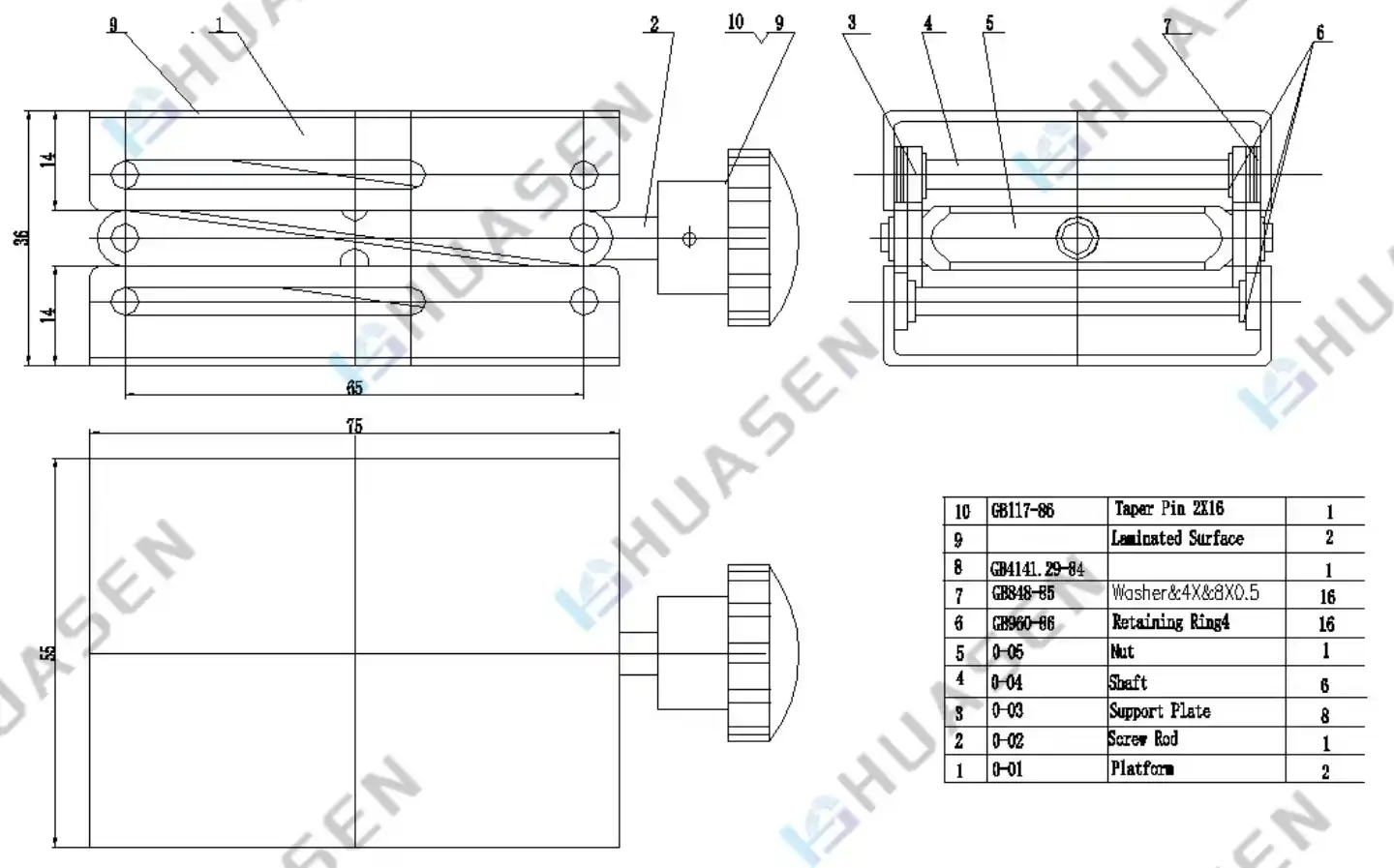
Procurement Guide: Acquiring Mobile Waveguide Elevating Platforms
Clearly stating the operational needs is the first step to a successful platform acquisition. Managers in charge of buying things should write down how much weight each component is expected to hold plus a 50% safety margin. The needed elevation range needs to be big enough to fit both the way tests are set up now and how they will be expanded in the future.
Technical Specification Considerations
Positioning accuracy is an important specification factor. For millimeter-wave applications above 30GHz, repeatability needs to be better than ±0.1mm in order to keep phase coherence between measurement cycles. For lower-frequency uses, less strict requirements might be okay, which could lower the cost of the equipment. Buyers should ask for validation test data that shows how well positioning works under typical load conditions, since accuracy specs usually only show how well the platform works when it's not loaded.
Pay close attention to interface compatibility, including the Waveguide Elevating Platform. The platform mounting surface needs to be able to fit the waveguide flange standards used in the buyer's lab, whether those standards are EIA, IEC, or military. To make sure the integration goes smoothly, the bolt hole patterns, surface flatness, and clearance dimensions need to be checked against existing test equipment. Suppliers that offer customizable mounting plates give labs that use a variety of measurement programs a lot of useful flexibility.
Supplier Evaluation and Quality Assurance
Suppliers you can trust will give you a lot of technical information, like mechanical drawings, electrical schematics, and performance test reports. Accredited metrology laboratories' third-party calibration certificates back up claims of positioning accuracy, giving buyers confidence in the specs that are listed. Suppliers should show that they have worked with similar applications before, which can be done through case studies or customer references from similar industries.
Long-term reliability is part of quality assurance, which goes beyond the initial product specifications. Suppliers who offer extended warranty coverage—usually longer than the standard one-year period—show that they are confident in the quality of their products. Preventive maintenance programs and spare parts inventories that are easy to get reduce the risk of downtime, which is very important for labs that are working on tight project schedules. Buyers should find out how long it takes to get parts that wear out quickly, like drive belts, bearings, and limit switches.
Conclusion
Mobility features built into specialized Waveguide Elevating Platform solutions allow for precise positioning, which is necessary for modern RF and microwave testing tasks. The combination of sub-millimeter elevation accuracy, high load capacity, and military-grade structural stability meets important needs in millimeter-wave research, characterization of antennas, and the integration of telecommunications equipment. These platforms are different from other industrial lifting solutions because they have a rigid mechanical design, electronics that block electromagnetic interference (EMI), and application-specific interface standards that make lab integration easier. For procurement to go smoothly, precise details about positioning accuracy, load requirements, and interface compatibility must be carefully specified. This must be paired with a thorough evaluation of suppliers that focuses on quality assurance and after-sales support.
FAQ
1. How does vertical positioning accuracy affect antenna measurement validity?
Positioning errors cause phase uncertainty that is proportional to the size of the displacement in relation to the operating wavelength. At 40GHz (7.5mm wavelength), a positioning error of 0.1mm causes phase uncertainty of about 4.8 degrees. Adding up phase errors can mess up calculations for far-field patterns that are based on measurements taken in the near field, which could hide the real performance characteristics of an antenna. Precision platforms reduce this error contribution as much as possible, making sure that measurement results accurately show how well the device works and not just how well the test fixture works.
2. Can these platforms operate within electromagnetically shielded environments?
Quality platforms have shielded motor housings and filtered power supplies that stop EMI. This lets them work in anechoic chambers and shielded test enclosures. Buyers should ask for conducted and radiated emission test data that shows the product meets CISPR standards for electromagnetic compatibility. When characterizing low-noise amplifiers or evaluating receiver sensitivity specifications, platforms that produce too many emissions mess up sensitive RF measurements.
3. What maintenance intervals apply to precision elevation systems?
As part of regular maintenance, mechanical parts should be inspected once a year. This includes checking for wear on bearings, lubricating the drive mechanism, and making sure the limit switch works. For high-duty-cycle applications, service may need to be done every six months. Platforms with sealed bearing assemblies and maintenance-free linear guides need less maintenance than systems with exposed slideways that need to be cleaned and oiled on a regular basis. During the evaluation process, buyers should look over the maintenance guidelines suggested by the supplier.
Partner with Huasen Microwave for Your Precision Positioning Needs
Huasen Microwave has 30 years of experience making high-frequency parts, which they bring to our Waveguide Elevating Platform solutions. As a well-known company that makes products for the defense, aerospace, and telecommunications industries, we know exactly what is needed in RF test environments. Our platforms are made of metal and have precision-engineered elevation mechanisms. This gives them the positioning accuracy and structural stability that your measurement applications need. Before it is shipped, each unit goes through strict quality checks, such as laser interferometry positioning verification and loaded stability testing. In addition to delivering equipment, our technical team also offers full integration support to help you get the best platform configuration for your measurement needs. We keep a large stock of spare parts and offer quick technical support to keep operations running as smoothly as possible. Our applications engineers are ready to talk about how our platforms can help you with your specific problems, whether you're adding new antenna testing tools or improving the ones you already have. Please email our team at sales@huasenmicrowave.com to talk about your needs with a knowledgeable Waveguide Elevating Platform provider who is dedicated to helping you succeed with your measurements.
References
1. Balanis, Constantine A. "Antenna Theory: Analysis and Design, Fourth Edition." John Wiley & Sons, 2016.
2. Institute of Electrical and Electronics Engineers. "IEEE Standard for Definitions of Terms for Antennas." IEEE Std 145-2013, 2014.
3. Milligan, Thomas A. "Modern Antenna Design, Second Edition." IEEE Press/Wiley, 2005.
4. Pozar, David M. "Microwave Engineering, Fourth Edition." John Wiley & Sons, 2011.
5. Slater, David. "Near-Field Antenna Measurements." Artech House, 1991.
6. White, Joseph F. "High Frequency Techniques: An Introduction to RF and Microwave Engineering." IEEE Press/Wiley, 2004.
Send Inquiry