OEM Microstrip Conformal Array Antenna Selection Guide






2026-01-24 22:06:05
Choosing the right Microstrip Conformal Array Antenna for your aerospace or defense project can mean the difference between mission success and costly system failures. With critical applications demanding precise beam control, adaptive scanning capabilities, and conformal integration on curved surfaces, engineers face mounting pressure to select antenna solutions that deliver reliable performance in harsh environments while meeting strict size, weight, and power constraints. This comprehensive selection guide addresses these challenges by providing technical insights, performance parameters, and practical considerations to help you identify the optimal Microstrip Conformal Array Antenna configuration for your specific application requirements.
Understanding Microstrip Conformal Array Antenna Technology
Microstrip Conformal Array Antenna systems represent a sophisticated evolution in antenna engineering, combining the low-profile advantages of microstrip technology with the performance benefits of phased array configurations. These antenna systems utilize multiple radiating elements arranged in precise geometric patterns on flexible or curved substrates, enabling conformal mounting on aircraft fuselages, missile bodies, or vehicle surfaces. The fundamental architecture consists of microstrip patch elements fed through carefully designed transmission line networks that control amplitude and phase distribution across the array. This configuration allows engineers to achieve directional radiation patterns, adjustable beamwidths, and electronic beam steering capabilities that would be impossible with traditional single-element antennas. The Microstrip Conformal Array Antenna design provides exceptional versatility through scalable arrangements, supporting both one-dimensional linear arrays and two-dimensional planar configurations depending on application requirements.
Key Performance Parameters in Array Antenna Selection
When evaluating Microstrip Conformal Array Antenna options, several critical performance parameters demand careful consideration. Gain characteristics typically range from 5dB to 22dB depending on array size and element count, with larger arrays delivering higher directivity and longer communication ranges. Beamwidth specifications directly impact coverage patterns, with options ranging from narrow 10-degree beams for long-range point-to-point links to broader 60-degree patterns for wide-area surveillance applications. The frequency coverage capability is equally crucial, as modern Microstrip Conformal Array Antenna systems operate across broad spectrum ranges from 1GHz to 36GHz, supporting multiple communication bands including L-band, S-band, C-band, X-band, Ku-band, and Ka-band frequencies. Bandwidth performance varies significantly based on substrate materials and matching network design, with typical values ranging from 3% for narrowband applications to 30% for wideband communication systems. Polarization flexibility represents another essential parameter, with available configurations including single linear, dual linear, left-hand circular, right-hand circular, and dual circular polarization modes to optimize signal transmission and reception based on operational requirements.
Array Configuration Types and Their Applications
Different Microstrip Conformal Array Antenna configurations serve distinct operational needs across various industries. Microstrip Array Antennas with 18dB gain and 18-degree by 18-degree beamwidth excel in medium-range communication systems where focused directivity enhances signal quality and reduces interference. Circular Polarized Directed Arrays offering 3dB to 12dB gain with 10% bandwidth find widespread use in satellite communication terminals and GPS navigation systems where polarization independence is critical for reliable signal reception regardless of orientation. Phased Array Antennas featuring 100-microsecond beam switching speed and plus-minus 60-degree scanning range enable advanced radar systems and electronic warfare applications requiring rapid beam repositioning without mechanical movement. End-fire array configurations maximize gain along the array axis, making them ideal for applications with severe space constraints along one dimension. Dipole arrays provide omnidirectional coverage patterns suited for base station antennas and broadcast applications. Slot array configurations integrated into metallic surfaces offer exceptional conformal capabilities for aerodynamic vehicles where external protrusions must be minimized.

Critical Selection Factors for OEM Applications
Selecting the appropriate Microstrip Conformal Array Antenna for original equipment manufacturer applications requires systematic evaluation of multiple technical and operational factors. Environmental conditions heavily influence material selection and protective coating requirements, with operating temperature ranges, humidity exposure, vibration levels, and chemical resistance all demanding careful consideration. Size and weight constraints become particularly critical in aerospace and portable applications where every gram impacts fuel efficiency or mobility. Integration requirements including connector types, mounting interfaces, and radome compatibility must align with existing system architectures to avoid costly redesigns. Power handling capabilities need verification against transmitter output levels, with small power applications under 5 watts requiring different thermal management approaches than high-power radar systems. Customization flexibility enables optimization for specific missions, with options for dual polarization, monopulse tracking, shaped beam patterns, and adaptive null steering enhancing system performance beyond standard catalog products.
Manufacturing Quality and Testing Standards
The manufacturing processes and quality control measures employed during Microstrip Conformal Array Antenna production directly impact long-term reliability and performance consistency. Advanced fabrication techniques utilizing CNC milling machines, electrical discharge machining, and precision wire cutting ensure tight tolerances on critical dimensions that determine resonant frequencies and impedance matching. Specialized assembly capabilities including silver brazing, aluminum brazing, vacuum furnace operations, and TIG welding maintain electrical continuity and mechanical integrity across array elements and feed networks. Quality assurance testing in microwave anechoic chambers validates radiation pattern characteristics, measuring parameters such as gain, beamwidth, sidelobe levels, cross-polarization isolation, and pattern symmetry across the specified frequency range. Environmental testing using temperature shock chambers, humidity cycling equipment, and vibration test benches confirms product survivability under operational stress conditions. Vector network analyzer measurements verify impedance matching, return loss performance, and insertion loss characteristics across all operational frequencies, ensuring that the Microstrip Conformal Array Antenna meets stringent specifications before delivery.
Customization Options and Design Flexibility
Modern Microstrip Conformal Array Antenna systems offer extensive customization possibilities to address unique application requirements. Array element configurations range from single patch designs for simple applications through 2x2, 4x4, and 6x8 arrangements for applications demanding higher gain and narrower beamwidth. Element spacing adjustments enable optimization of grating lobe suppression, mutual coupling effects, and overall array efficiency. Feed network architectures can be tailored for corporate feeding, series feeding, or hybrid approaches depending on bandwidth requirements, amplitude taper needs, and manufacturing complexity constraints. Substrate material selection provides control over dielectric constant, loss tangent, thermal expansion coefficient, and mechanical flexibility to match specific environmental and performance targets. Beam-shaping capabilities allow engineers to create custom radiation patterns including cosecant-squared beams for ground mapping radar, shaped beams for satellite coverage zones, and adaptive patterns with electronically controllable nulls for interference rejection. Monopulse configurations enable precision angle tracking in radar and communication systems through sum and difference pattern generation within a single antenna aperture.
Integration Considerations and System Compatibility
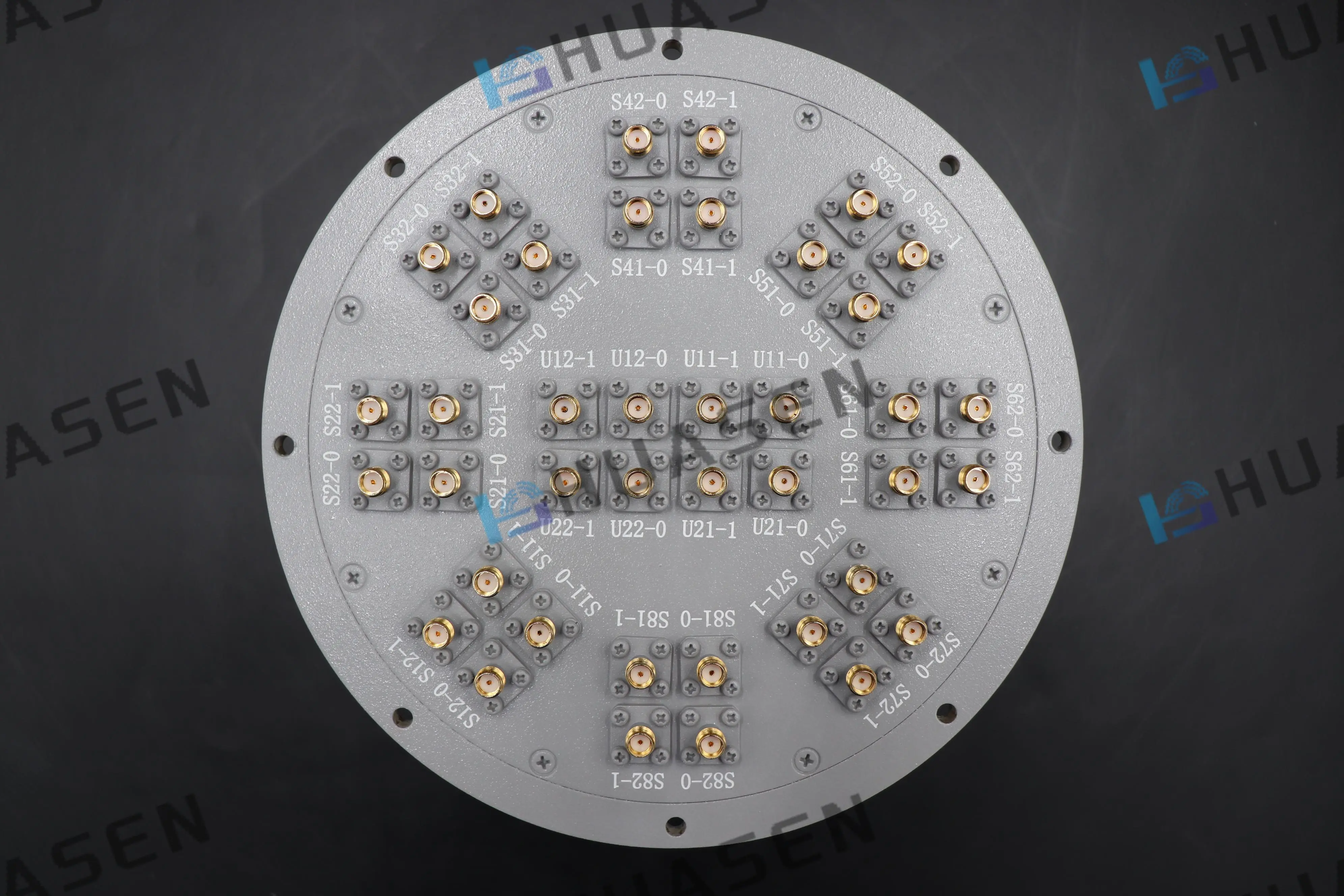
Successful integration of Microstrip Conformal Array Antenna systems into larger platforms requires attention to numerous interface and compatibility factors. RF connector selection impacts signal integrity, with SMA connectors suitable for frequencies up to 18GHz while N-type connectors extend usability to 40GHz in precision applications. Mounting interface designs must accommodate both flat and curved surfaces while maintaining precise element positioning and orientation tolerances that preserve radiation pattern characteristics. Low-profile mechanical designs minimize aerodynamic drag and radar cross-section for stealth applications while simplifying radome integration. Software tools for performance optimization enable system engineers to model radiation patterns, evaluate scan performance, assess polarization purity, and predict system noise temperature before hardware fabrication. Installation procedures must address grounding requirements, lightning protection measures, cable routing considerations, and weatherproofing techniques to ensure long-term operational reliability. Compatibility verification with existing transmitters, receivers, signal processors, and control systems prevents integration surprises during final system assembly and testing phases.
Quality Assurance and Manufacturing Certifications
Reputable Microstrip Conformal Array Antenna manufacturers maintain comprehensive quality management systems and industry certifications that provide confidence in product consistency and reliability. ISO9001 certification demonstrates commitment to documented quality procedures, continuous improvement processes, and customer satisfaction metrics. Environmental management system certifications ensure compliance with RoHS directives restricting hazardous substances and REACH regulations controlling chemical usage in manufacturing processes. Occupational health and safety management system certifications indicate responsible manufacturing practices protecting workforce wellbeing. Equipment manufacturer qualifications validate capabilities for defense and aerospace applications requiring strict adherence to military specifications and industry standards. Testing equipment calibration by national metrology institutes ensures measurement accuracy and traceability to international standards. Production process controls including incoming material inspection, in-process testing, and final product validation prevent defective units from reaching customers. Warranty provisions typically extending one year demonstrate manufacturer confidence in product quality while after-sales technical support teams assist with installation guidance, troubleshooting assistance, and performance optimization recommendations throughout the product lifecycle.
Conclusion
Selecting the optimal Microstrip Conformal Array Antenna requires balancing performance specifications, environmental constraints, customization needs, and quality standards. This guide provides the technical foundation for informed decision-making that ensures successful system integration and reliable long-term operation across demanding applications.
Cooperate with Huasen Microwave Technology Co., Ltd.
As a China Microstrip Conformal Array Antenna factory and China Microstrip Conformal Array Antenna supplier with over 30 years of expertise, Huasen Microwave Technology Co., Ltd. stands as your trusted China Microstrip Conformal Array Antenna manufacturer offering China Microstrip Conformal Array Antenna wholesale solutions. Our High Quality Microstrip Conformal Array Antenna products for sale deliver exceptional performance at competitive Microstrip Conformal Array Antenna prices backed by ISO certification, state-of-the-art testing facilities including three microwave anechoic chambers, and over 60 advanced testing instruments. Contact our technical team at sales@huasenmicrowave.com to discuss your specific requirements and receive customized quotations for your next project. Bookmark this guide for future reference when evaluating antenna solutions for your critical applications.
References
1. Balanis, Constantine A. "Antenna Theory: Analysis and Design" - Fourth Edition, John Wiley & Sons, covering fundamental principles of array antenna design and conformal antenna applications.
2. Mailloux, Robert J. "Phased Array Antenna Handbook" - Third Edition, Artech House Publishers, providing comprehensive coverage of phased array technologies including microstrip implementations.
3. Garg, Ramesh et al. "Microstrip Antenna Design Handbook" - Artech House Antennas and Propagation Library, detailing microstrip antenna design methodologies and array configurations.
4. Skolnik, Merrill I. "Radar Handbook" - Third Edition, McGraw-Hill Education, discussing antenna requirements for radar systems including conformal array applications.
5. Pozar, David M. "Microwave Engineering" - Fourth Edition, John Wiley & Sons, covering transmission line theory, impedance matching, and microwave component design principles applicable to antenna systems.
Send Inquiry