Key Specifications When Buying Waveguide Attenuator






2026-05-13 21:55:07
When choosing a waveguide attenuator for your RF or microwave system, it's very important to know the important specs to get the best performance and long-term dependability. These precise parts lower the power of a signal by set or programmable amounts while keeping the signal's purity across important frequency ranges. When putting parts together in 5G base stations, satellite ground systems, or radar test benches, it's important to know which technical parameters are the most important. These include attenuation range, frequency compatibility, power handling capacity, VSWR performance, and mechanical interface standards. Knowing which ones to prioritize will directly affect how well the system works and how accurately measurements are made. Proper specification matching avoids expensive redesigns, reduces signal distortion, and guarantees seamless mechanical integration into existing waveguide assemblies. This is why procurement professionals in the defense, aerospace, and telecommunications sectors need to make smart buying decisions.
Understanding Waveguide Attenuators: Basics and Key Functions
Waveguide attenuators are passive microwave parts that are designed to lower the strength of signals in waveguide transmission systems without changing the frequency or phase too much. At their heart, these devices work by adding resistance elements to the electromagnetic field that is moving through the waveguide. These elements are usually lossy dielectric vanes or materials that absorb electromagnetic waves. When radio frequency (RF) energy hits these resistant elements, some of the signal power is turned into heat. This lowers the strength of the signal by a certain number of decibels.
Fixed vs. Variable Waveguide Attenuators
The difference between set and changeable attenuators is very important for choosing the right one for the job. Fixed waveguide attenuators offer a set attenuation value that doesn't change. This value is usually between 3 dB and 30 dB. They work great for tasks that need to consistently lower signals, like keeping sensitive low-noise amplifiers from over-saturation or making transmission lines more impedance-matched. Because these units are more stable and repeatable, even when the temperature changes, they are good choices for long-term installs in radar detector chains and base station front ends.
On the other hand, variable waveguide attenuators let you change the amount of reduction continuously or in steps, usually from 0 dB to 40 dB or higher. To make this change mechanically, precise millimeter controls are used to move vanes that are resistant to electricity deeper into or out of the electric field. This dynamic control feature is very useful in the lab, where engineers can model signal fading, set receiver sensitivity limits, or test amplifiers and transceivers' dynamic range. Being able to change attenuation on the fly cuts down on the need for multiple fixed-value parts and speeds up test processes in R&D labs and quality assurance labs.
Construction Materials and Performance Impact
The choice of material has a direct effect on both electrical function and longevity in harsh environments. High-grade aluminum metal housings are most common in industrial settings because they are inexpensive, light, and good at conducting electricity. Putting silver or gold plating on the inside of the waveguide reduces insertion loss and stops rust, which can slow down performance over time. When corrosion protection is more important than weight, stainless steel construction is needed for marine communications and offshore sites. Even though brass parts are heavier, they are easier to machine into complicated shapes and custom flange configurations that are needed for certain aerospace uses.
The resistive elements' dielectric materials, which are usually polymer blends or ceramic surfaces filled with carbon or iron particles, need to be able to absorb electricity steadily over a wide temperature range. The best makers use materials that keep their attenuation values the same from -40°C to +85°C. This makes sure that the electronics work reliably in base stations that are outside in harsh weather and in aircraft systems that have to deal with rapid temperature changes during flight operations.
Applications Across Critical Industries
Waveguide attenuators solve specific technical problems in many fields. These parts keep sensitive receiver front-ends safe from high-power backhaul signals in 5G and 6G infrastructure. They also allow accurate power measures to be made during network setup. Precision attenuators are used by satellite ground stations to set the uplink power levels and model air loss for link budget analysis. They are used a lot in test benches for military radar systems to check the receiver's dynamic range and see how well it can find targets when the signal strength changes.
In terms of frequency bands, these attenuators work with L-band (1-2 GHz), W-band (75–110 GHz), and even millimeter waves. It is still common to use X-band (8-12 GHz) and Ku-band (12-18 GHz) for satellite messaging and weather radar. When you're buying something, you need to know which standard waveguide sizes—like WR-90 for X-band or WR-62 for Ku-band—work with your system design. This is important to make sure that everything works physically and electrically.
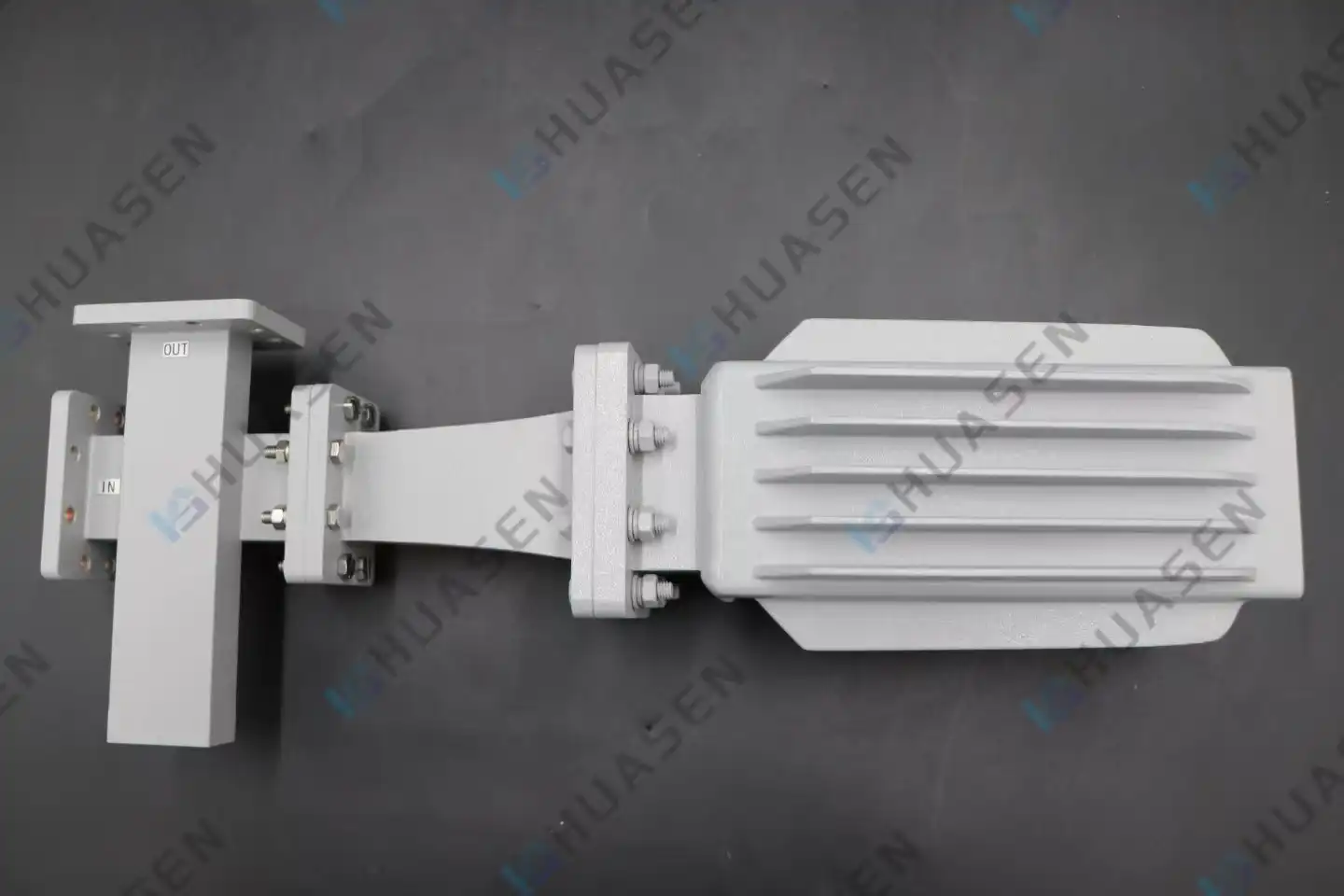
Core Specifications to Evaluate When Buying Waveguide Attenuators
Making choices about what to buy depends on how well the technical requirements match up with the working settings and system needs. The following factors are what make intelligent waveguide attenuator selection possible.
Attenuation Value and Range
The attenuation number, which is given in decibels, shows how much the signal power is being lost. Most fixed attenuators come in normal numbers of 3 dB, 6 dB, 10 dB, 20 dB, and 30 dB, and their tolerances are usually ±0.5 dB or better. The total range and precision of variable attenuators are given. Digital readouts on high-precision lab units may allow adjustments from 0 to 30 dB with a range of 0.01 dB, while manual versions offer steps of 0.1 dB. When you match the attenuation range to your application, you avoid either over-specification, which raises costs needlessly, or under-specification, which lowers the accuracy of the measurements.
Frequency Range Compatibility
Because of how they are made, waveguide attenuators naturally pick certain frequencies. Based on its cutoff features, each waveguide size supports a certain frequency band. The WR-90 reduction works well from 8.2 GHz to 12.4 GHz, and the WR-229 unit works well from 3.3 GHz to 4.9 GHz. Broadband models may be able to increase the useful bandwidth by 15 to 20 percent above the standard ranges, but performance drops near the edges of the bands. The procurement teams need to make sure that the working frequency range they've been given covers all channels or sub-bands in their deployment situation. They also need to think about how the spectrum will grow in the future as telecommunications infrastructure does.
Power Handling Capacity
Waveguide attenuators are different from their coaxial cousins in terms of how they handle power. Waveguide units can handle anywhere from 100 watts to several kilowatts of power, based on their size and how they are cooled. For bursts lasting milliseconds, peak power handling can go above 10 kW, which is very important in pulsed radar and electronic warfare systems. These features come from the waveguide's big cross-sectional area and lack of a center wire, which makes it better at getting rid of heat than coaxial designs. Pay close attention to both average and peak power specs when using high-power amplifiers, magnetron sources, or klystron emitters to avoid thermal damage and ensure long-term dependability.
Insertion Loss and VSWR Performance
Insertion loss is a measure of how much the gadget weakens the signal beyond its planned level of weakening. When set to zero attenuation, premium variable attenuators have insertion losses below 0.3 dB, while fixed units keep their losses below 0.1 dB. Lower insertion loss keeps measurement accuracy high in test sets and makes the most of transmission systems' link budgets.
It shows how well the attenuator's input and output impedances fit the system characteristic impedance, which is usually 50 ohms for coaxial or a similar waveguide impedance. A VSWR of 1.15:1 or higher across the working band means that there isn't much signal reflection. This lowers the error of the measurements and stops standing waves from forming, which could damage parts further upstream. For changeable units, the specs should make it clear what the VSWR values are at both the lowest and highest attenuation levels, since impedance matching often gets worse at high attenuation levels.
Physical Dimensions and Flange Compatibility
When deciding which parts to use, mechanical integration limits often play a bigger role than electrical performance. Waveguide attenuators are connected by standard flanges, which come in the UG-series (for example, UG-135/U for WR-90), UDR, or PDR types. Each type has its own bolt hole shapes and gasket gaps. By checking to see if the flange is compatible with current waveguide runs, you can avoid buying expensive adapters and get rid of any places where signals could be leaking. Overall length is very important in places with limited room, like electronics bays on airplanes or communication systems on ships, where even an extra inch can mean redesigning the mounting brackets. In aerospace uses, where every gram affects fuel economy and payload capability, weight standards are very important.
Customization Options for System Integration
Many uses are met by standard stock parts, but custom solutions are often better for complicated systems, including the integration of a waveguide fixed attenuator. To check out the customization options, you can choose from non-standard attenuation values, optimized vane shapes for wider frequency coverage, ruggedized construction for MIL-STD-810 shock and vibration environments, and unique flange setups for proprietary waveguide interfaces. Manufacturers with fast development and sample evaluation programs let engineering teams check how well the product works in their particular system design before committing to large-scale production. This method for lowering risk works especially well for defense contracts and space programs where the prices of qualifying parts have a big effect on project budgets.
Procurement Considerations: Navigating Price, Lead Time, and Customization
Technical needs, price limits, delivery dates, and supply chain risk management must all be balanced in order for procurement to work well. Learning about the things that affect prices and schedules helps you negotiate and plan better for a waveguide attenuator project.
Pricing Drivers and Cost Negotiation Strategies
25–35% of the price of a normal aluminum waveguide attenuator component comes from the cost of the materials. Another 30–40% comes from the cost of the work used to machine and put the component together. The high cost of variable attenuators is largely due to their precise control mechanisms, which are often micrometer drives made in Switzerland. Most of the time, quantity savings start at 10 units, and prices drop at 25, 50, and 100 pieces for normal catalog items. When you sign an OEM deal for more than 500 units a year, you can get 20–30% off the price of a single unit.
Engineering fees for custom designs range from $2,000 to $15,000, based on how complicated they are. These NRE fees pay for electromagnetic modeling, mechanical design, making prototypes, and testing their performance. Customization is cost-effective for sales over 50 units when NRE costs are spread out over multiple production amounts. To protect unique system structures, procurement teams should discuss terms for NRE recovery, who owns the intellectual property of custom designs, and terms of exclusivity.
Lead Time Expectations and Production Scheduling
Standard stock attenuators from reputable sources ship within two to four weeks. Faster shipping options are available for an extra 15 to 25 percent of the price. Custom setups take six to twelve weeks, which includes multiple rounds of design changes, building a prototype, testing it, and starting to make more of them. Important project deadlines require adding 20 to 30 percent to plans to allow for possible changes to the design or problems with the manufacturing process.
Supply chain problems have made wait times longer across the board, especially for precise mechanical parts that come from European machine shops. Risk can be reduced by making framework deals with multiple qualified suppliers, but keeping two sources requires investment in qualification. Strategic inventory placement, which means buying long-lead parts ahead of time for projects that will happen in the future, strikes a balance between keeping costs low and keeping projects on schedule. This is especially helpful for defense programs with unpredictable funding cycles.
Benefits of Custom Manufacturing Solutions
Customized parts improve system performance even more than standard parts can. Custom attenuation values that fill in the gaps between standard offers get rid of the need for multiple cascade attenuators, which lowers insertion loss and raises VSWR. Optimized vane shapes allow frequency range extensions to work with non-standard bands in scientific study or private communication systems. Integrated fixing features, like threaded plugs, brackets, or alignment pins, make installation easier and lower the cost of assembly work in large-scale production.
Environmental hardening for harsh circumstances is another way to make it your own, such as adding a waveguide fixed attenuator. Designs that are hermetically sealed can handle differences in pressure in unpressurized spaceships or planes, and conformal coatings on internal parts protect against humidity in tropical operations. Vibration-isolated adjustment mechanisms keep the accuracy of tuning in mobile radar platforms that are constantly under mechanical stress. These improvements raise the base price by 15–40% but get rid of failures in the field that could cost thousands of dollars in fixes and lost time.
Conclusion
To choose the correct waveguide attenuator, you have to balance technical requirements, application needs, and the facts of buying. By knowing the difference between set and variable designs, matching frequency ranges and power handling to system needs, and checking the identities of suppliers, you can be sure that the parts you buy will work reliably for a long time. You can make choices that are better for certain operating settings by choosing the right materials, customizing them, and keeping records of your compliance. By following best practices for installation and putting in place regular verification procedures, businesses get the most out of their investments while reducing downtime and upkeep costs.
FAQ
1. How do I determine the appropriate attenuation value for my system?
Find the highest signal level that your monitor or test equipment can safely handle, and then take that level away from the signal level that you expect to be coming in. The difference is the minimum reduction you need, but adding an extra 3–6 dB keeps the signal from getting too weak when the power changes suddenly. For testing situations that change quickly, changeable waveguide attenuators let you see how well a system works at different power levels without having to switch out parts.
2. Can waveguides and coaxial attenuators be used interchangeably?
No, these technologies serve different frequency ranges and power levels. Waveguide attenuators excel above 18 GHz and in high-power applications exceeding 50 watts, where their low insertion loss and superior heat dissipation prove essential. Coaxial designs dominate lower frequencies and lower-power scenarios where compact size and flexible connections matter most. Physical interfaces—flanges versus threaded connectors—also differ fundamentally, preventing direct substitution.
3. What are typical lead times for customized waveguide attenuators?
Standard changes, like non-standard attenuation values or different flange types, take six to eight weeks to deliver after the order is placed. Custom designs that are more complicated and need new mechanical shapes, wider frequency ranges, or special weather hardening can add ten to fourteen weeks to the lead time. With extra fees, expedited programs can cut down on plans by 25–30%, but performance testing on prototypes may still take weeks before they are released to the public.
Partner with Huasen Microwave for Your Waveguide Attenuator Needs
With more than 30 years of research and manufacturing experience, Huasen Microwave is ready to meet your needs for RF and microwave components. Our Waveguide Attenuator portfolio includes units from the L-band to the W-band. We offer both basic catalog units and solutions that are fully designed to meet your exact needs. We have strict quality standards that can be fully tracked, a lot of test data, and safety certifications that meet foreign standards. Our technical team works closely with your experts to make sure that the system works well together, whether you need a dependable waveguide attenuator supplier for ongoing production or a specialized maker that can create unique configurations for difficult uses. Email us at sales@huasenmicrowave.com to talk about the needs of your project, get full datasheets, or set up test units for samples.
References
1. Pozar, David M. "Microwave Engineering, 4th Edition." Wiley, 2012.
2. Institute of Electrical and Electronics Engineers. "IEEE Standard for Precision Coaxial Connectors (DC to 110 GHz)." IEEE Std 287-2007.
3. U.S. Department of Defense. "MIL-DTL-3933: Attenuators, Fixed and Variable, Waveguide." Defense Logistics Agency, 2018.
4. Hiebel, Michael. "Fundamentals of Vector Network Analysis." Rohde & Schwarz, 2007.
5. Saad, Theodore S. "Microwave Engineers' Handbook, Volume 1." Artech House, 1971.
6. International Electrotechnical Commission. "IEC 60154: Flanges for Waveguides." IEC Standards, 2015.
Send Inquiry