RF Combiner Layout Optimization in Anechoic Chamber Test Environments






2026-05-12 23:23:18
RF combiner layout optimization in anechoic chamber test settings includes placing passive combining devices in a way that keeps the signal's integrity and gets rid of unwanted echoes. When an RF combiner combines several signal lines inside a test box that is electromagnetically isolated, the placement of the absorber panels, the shape of the cables, and the placement of the fixtures all have a direct effect on the accuracy of the insertion loss measurements and the port isolation measurements. Operators of test chambers and test engineers often have problems with measurement drift because standard benchtop plans don't directly translate into confined, reflection-free areas. This is because even small metal-surface proximity can cause parasitic coupling.
Understanding RF Combiner Layout Challenges in Anechoic Chambers
When you test radio frequency components in anechoic chambers, you are limited in ways that are very different from when you test them on a lab bench. Even though these controlled places don't let outside noise in, their small size and absorber-lined surfaces make them harder to use, which affects the repeatability of measurements.
Space Limitations and Measurement Zone Constraints
A lot of the time, anechoic rooms have measurement zones for far fields that have very tight size limits. When positioning joining networks in these areas, it's important to find a balance between the need for equipment usability and the need for electromagnetic quiet zones. Engineers often find that standard rack-mounted setups take up too much space, which means that the RF combiner chassis has to be placed close to the absorber pyramids, where the dielectric loading can change the resonant frequencies. When checking more than one frequency band at the same time, it becomes more difficult because the distances between the bands may need to be different in order to keep the measurement settings correct. We saw testing sites with 0.3 dB insertion loss errors at L-band frequencies because there wasn't enough space between the power RF combiners and the ferrite tile absorbers. These changes were caused by small changes in the field that would never show up during lab testing.
Electromagnetic Interference and Crosstalk Prevention
Even though anechoic rooms stop interference from the outside, signal loss between RF combiner ports is still a problem. Crosstalk can happen between low-level measurement routes and poorly shielded wire bundles carrying high-level test signals, which can mess up isolation readings. Often, the problem starts with disagreements over grounding principles—some devices need chassis grounding while others need moving setups. When describing multi-channel radar feed networks or base station antenna systems, port-to-port separation decline is very important. Standard star-point RF combiner designs expect settings with equal impedance, but chamber test tools add uneven loads that lower isolation by 5 to 8 dB compared to what the maker says should happen. This difference leads engineers to make bad choices about what to buy when they think that performance numbers on a datasheet directly reflect how a system works when it is installed.
Cable Management and Signal Path Integrity
How cables are routed inside rooms has a big effect on how accurate measurements are. When semi-rigid coaxial feedlines are bent at right angles, they cause impedance discontinuities that show up rf splitter as ripple in frequency response curves. During tests for 5G millimeter waves, we saw standing wave patterns that were caused by parallel cable runs that were spaced at quarter-wavelength intervals. These caused coherent reflections that messed up the readings of the radiation pattern. One more problem is that phase-stable wire systems are heavy, which makes things harder. When cable bundles in the air sag due to gravity, mechanical strain changes the length of the cable. This has a direct effect on phase-coherent readings that are needed to evaluate beamforming networks. Test engineers often have to move wires around for hours on end to get stable standard readings. This wastes important chamber time and pushes back project deadlines.

Core Optimization Techniques for RF Combiner Layouts
Strategic design approaches can mitigate the constraints inherent to anechoic chamber testing while maintaining signal integrity across wide bandwidths. There are practical ways to match academic electromagnetic concepts with the realities of installation in the real world.
Component Placement and Electromagnetic Compatibility
The best place to put the RF combiner starts with drawing the chamber's quiet zone edges and finding places where echoes from fixtures are at their weakest. We suggest putting power dividers and hybrid RF combiners on non-conductive support structures, like foam columns with dielectric constants close to 1, at least two wavelengths away from the absorber surfaces that are closest to them at the lowest test frequency. The position of the device is very important. Putting the output ports of the RF combiner perpendicular to the main measurement line lowers the direct connection between the antennas of the Device Under Test (DUT) and the chassis reflections of the RF combiner. During recent tests of an AESA radar module, this geometric layout was very important. A 15-degree rotation of the company feed network got rid of unwanted nulls in elevation plane patterns.
Cable Routing Best Practices for Minimum Reflection
Using strict wire management practices protects the accuracy of measurements and makes troubleshooting easier. Routes should have bend radii that are more than ten times the width of the wire and should avoid sharp turns that cause VSWR spikes. Using absorber-backed cable trays that are fixed to the walls of the room gives physical support while keeping the electromagnetic field open. When checking phased array systems or multi-channel radios, where time accuracy is key to how well the system works, phase-matched cable sets are required. We only use wires that have matched electrical length tolerances of within ±2 degrees at working frequencies. This is checked by measuring them with a VNA before they are installed. Color-coded wire jackets that match the ports make it easier to connect devices when the test setup needs to be changed quickly. The choice of connector needs the same amount of care. Precision SMA and 2.92mm interfaces keep their contact resistance even after hundreds of mating cycles, while lower-quality connectors sometimes lose contact, which causes measurement mistakes to happen at random. Thread-locking compound stops vibrations from loosening things up during long test runs, but this has to be weighed against the need to take the unit apart later.
Modular and Scalable Design Approaches
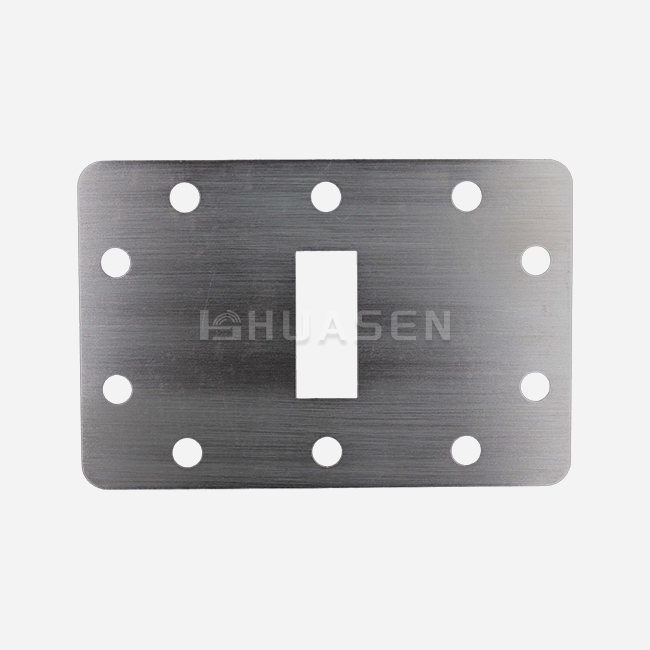
By making RF combiner layouts flexible, they can be quickly rearranged when test needs change. When you use standard interface planes, like WR-90 waveguide flanges or 7-16 DIN connections, you can switch out RF combiner modules without having to rethink the whole wire harness. This method worked for a client in satellite communications who had to switch between testing setups for linear and circular polarization within test windows of one day. When thinking about scalability, you need to think about how the bandwidth and channel count will grow in the future. Manifold-style RF combiners with easy-to-reach tap points can easily add more channels compared to sealed chamber designs. We've made designs with empty port spots that can hold future filter modules. This cuts down on the time it takes to get new parts when a program moves from pilot testing to production testing.
Evaluating RF Combiner Tools and Software for Layout Planning
Planning tools that are very advanced can speed upthe RF splitterdesign process by modeling the RF combiner electromagnetic interactions before the actual installation. These platforms for software cut down on expensive rounds of trial and error and predict success in complicated settings.
Electromagnetic Simulation Capabilities
Full-wave finite element analysis is used by modern computer programs to describe how RF combiners work in settings with absorber lines. These models look at the material properties of ferrite tiles, show how current flows on metal fixtures, and guess how nearby assemblies will be coupled. For accurate chamber models, you need to know the exact shape of the absorber and the dielectric constant, which is information that chamber makers often don't give you. We use simulation processes that bring mechanical CAD systems straight into electromagnetic solvers, keeping the exact shape of the fixtures. When you use parametric sweeps across frequency bands, you can find resonant modes that you might not be able to find with spot-frequency readings. One military client found out through modeling that the mounting bracket for their waveguide RF combiner created a parasitic cavity resonance exactly at the working frequency of an X-band radar. If this flaw had been found after deployment, it would have meant the mission failed.
Comparative Analysis of Planning Tools
There is a wide range in how well commercial electromagnetic solvers can deal with electrically big problems, such as those found in chamber settings. High-frequency structure computer platforms are great at modeling complex connectors, but not so good at modeling chamber sizes on a meter scale. Asymptotic methods are good at working with big areas, but they aren't very good at working with complex shapes. Combining ray-tracing with localized full-wave analysis in a hybrid method is a practical solution. Our review factors put a lot of weight on how well the solutions match up with measured standards, how quickly they can be computed for iterative design cycles, and how well they work with mechanical design environments. Engineering time is cut down by a large amount when tools have built-in material sets for popular absorbers and can automatically make meshes for RF connectors. Licensing models should be able to handle both node-locked setups for safe defense projects and flexible licenses for engineering teams that work in different places.
Supporting Rapid Layout Iteration and Validation
Effective planning tools make it easy to see field patterns and S-parameter results, which lets engineers quickly compare different design options. We like platforms that have design optimization tools that change the placement of components automatically to meet goals for insertion loss and isolation. These features are very helpful when there isn't enough room in the chamber for both the ideal placement of electromagnetic fields and easy mechanical entry. Physical measures must still be used for validation. We keep a collection of setups that have already been tried with correlated simulation models. This lets us set confidence levels for how accurate our predictions are. This real-world basis helps teams decide when modeling results mean they can move on to manufacturing and when they need to do more research.
Case Studies and Real-World Applications of Layout Optimization
Using real-world systems as examples shows how systematic RF combineroptimization can improve test quality and operating efficiency in a way that can be measured. The scope of these projects includes infrastructure for telecommunications, military radar systems, and interactions in space.
Telecom Base Station Multi-Band Combiner Testing
A big company that makes telecommunications equipment needed to test four-band base station RF combiners that work from 700 MHz to 2.7 GHz at the same time in the same chamber session. During the first efforts at planning, measurements were very inconsistent, with isolation readings changing by 4 dB between test runs. An investigation showed that cable bundles carrying strong 700 MHz signals were running next to sensitive 2.7 GHz measurement lines, which caused crosstalk by connecting shield currents. Isolation repeatability was brought back to within 0.5 dB by redesigning the plan to include separate cable routing zones. Low-band paths were placed on the room floor, and high-band paths were mounted on the roof. By using ferrite beads to block DC bias lines, a second way for coupling was cut off. By getting rid of the need for multiple calibration runs, these changes cut the test cycle time by 35%, which directly increased production output.
Aerospace Radar Feed Network Validation
A program using an AESA radar in the air needed to measure the patterns of RF combiner feed networks over a range of 8 to 12 GHz. Because the RF combiner has 64 ports, it needs a complex test device that fits inside a small 3-meter room. Early tries had problems with pattern distortion caused by fixtures, especially in sidelobe areas, where measurement accuracy has a direct effect on how well clutter rejection works. Electromagnetic simulation showed that the metal support structure made scatter centers that messed up azimuth cuts that were more than 45 degrees off. By redesigning the supports with carbon fiber composite, mechanical scatter was removed while the structure stayed rigid. With this method and spot absorbers placed carefully near the edges of the RF combiner, the pattern measurement accuracy was within 0.8 dB across all angular regions, meeting the program's strict proof requirements.
Satellite Communication Ground Station Testing
A company that works with satellite communications had to describe precise phase-matched RF combiners for a ground station update that would handle both C-band and Ka-band downlinks. For the test, the phase relationships had to stay the same within 3 degrees while the temperature went from -20°C to +50°C inside an outdoor room with no noise. We made a thermally stable test device with Invar mounting rails that took into account the fact that the RF combiner chassis and room walls expand and contract at different rates. Using phase-stable cable systems with matched temperature factors kept the phase accuracy even when the temperatures changed. This all-around method made sure the RF combiner design was good before going into full production, which kept expensive field upgrades from being needed.
Conclusion
To get the best RF combiner plans in anechoic chambers, you have to pay close attention to electromagnetic basics, installation limitations, and operating needs throughout the lifecycle. When there isn't a lot of room, you have to come up with creative ways to balance measurement accuracy with ease of access. Chamber testing goes from being a random process of trial and error to being a planned engineering process with strict cable management, strategic component placement, and proven simulation routines. When companies invest in proper layout optimization, they get faster test processes, more accurate measurements, and trust in the results that directly affect choices about product development. The methods described here give procurement managers and test engineers models they can use to get through the complicated process of current RF system validation.
FAQ
1. How does combiner placement affect measurement accuracy in anechoic chambers?
The electromagnetic environment near the RF combiner changes when it comes to absorber surfaces and chamber edges. This is because the RF combiner adds dielectric loading that changes the resonance frequencies and causes echoes that weren't meant to happen. Maintaining minimum separation distances—usually two waves at the lowest test frequency—keeps the accuracy of the measurement. It's also important to know how the RF combiner chassis and test antennas are aligned in relation to the measurement line. Some alignments make a direct connection between them less effective.
2. What cable routing practices minimize signal degradation?
Impedance discontinuities can be avoided by using gentle curves with bend radii greater than ten wire diameters. Standing wave interference can be avoided by not making straight runs at resonant spacing. For phased array tests, using phase-matched sets keeps the time accurate. Ferrite reduction on DC lines lowers the amount of transmitted coupling. All of these things keep the purity of the stream over a wide range of bandwidths.
3. Can simulation tools accurately predict chamber performance?
When the features of the absorber and the geometry of the fixture are correctly described, modern full-wave methods can get very good correlation. Confidence limits are set by validating against recorded norms. Simulation is great for finding possible problems before the hardware is built, but real-world testing is still needed, especially for electrically big chambers where computer power limits could make accuracy worse.
Partner with Huasen Microwave for Superior RF Combiner Solutions
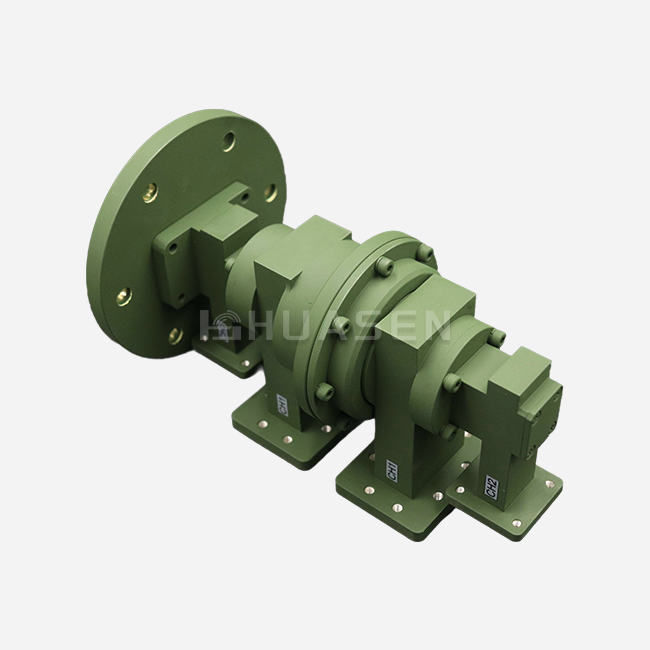
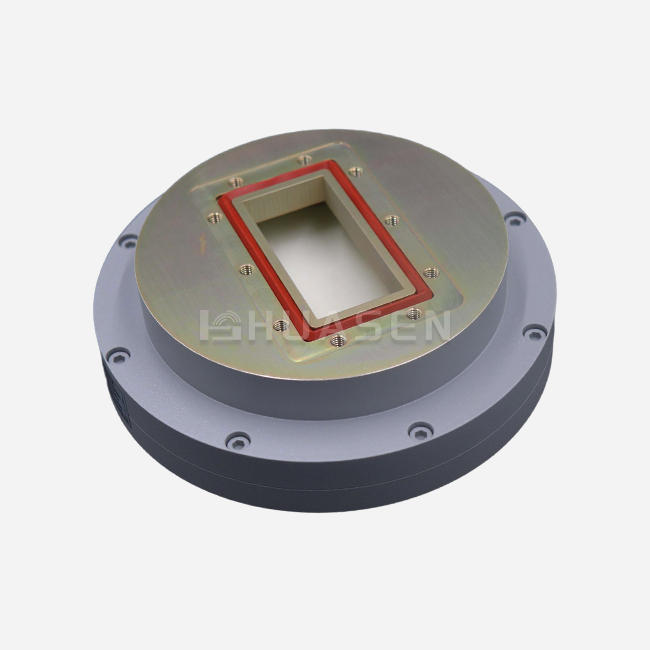
Huasen Microwave Technology has been making precision-engineered RF combiner networks since its start in 1993. These networks are backed by 30 years of electromagnetic knowledge. Our range of products includes waveguide and coaxial RF combiners that are designed to work best in harsh test settings, such as anechoic chambers, where port isolation and insertion loss must be very high. As a well-known company that makes RF combiners, we offer full design help, from electromagnetic simulation to installation instructions, to make sure that your plan works at its best. Our engineering team works directly with test sites around the world, using tried-and-true methods that lower the risk of integration and speed up validation plans. Our solutions meet strict MIL-STD and ISO compliance standards, so they can be used to characterize 5G base station parts, validate radar feed networks, or qualify satellite communication systems. Email our applications tech team at sales@huasenmicrowave.com to talk about the problems you're having with the way your room is set up. We provide example evaluation programs and in-depth technical documentation that makes it easier to make purchasing choices and leads to measurable gains in test accuracy and operating efficiency.
References
1. Balanis, C. A. (2016). Antenna Theory: Analysis and Design (4th ed.). John Wiley & Sons.
2. IEEE Standard 149-2021. IEEE Standard for Antenna Measurements. Institute of Electrical and Electronics Engineers.
3. Hemming, L. H. (2002). Electromagnetic Anechoic Chambers: A Fundamental Design and Specification Guide. Wiley-IEEE Press.
4. Pozar, D. M. (2012). Microwave Engineering (4th ed.). John Wiley & Sons.
5. Collin, R. E. (2001). Foundations for Microwave Engineering (2nd ed.). Wiley-IEEE Press.
6. ANSI C63.26-2015. American National Standard for Electromagnetic Compatibility – Requirements for Anechoic Chambers. American National Standards Institute.
Send Inquiry