Millimeter Wave Directional Coupler Performance Testing Methods






2026-05-12 23:23:18
To get accurate signal sampling, millimeter-wave directional couplers separate a small amount of electromagnetic power moving along transmission lines. They do this while keeping the forward and reflected waves very well separated. In the range from 30 GHz to over 110 GHz, these tools are essential for RF testing, system tracking, and making sure that impedance matching is correct. Important specs like directivity, coupling accuracy, and insertion loss are checked thoroughly during performance testing. These are the kinds of specs that have a direct impact on measurement accuracy in 5G base stations, satellite ground terminals, and aircraft radar systems.
Understanding Millimeter Wave Directional Couplers and Their Performance Parameters
Incoming signals are split into paired and through ports by millimeter-wave directional couplers based on the direction of transmission. Power dividers split signals evenly, but these devices take out a small sample for tracking reasons, which is usually 10 to 30 dB below the main signal. This feature is very important for feedback loops that control the output levels of transmitters or for reflected power analysis that finds antenna mismatches.
Core Performance Specifications
Directivity is a way to measure how well a coupler separates forward and backward data. Values higher than 40 dB at millimeter-wave frequencies need very close manufacturing tolerances and often involve connection structures with more than one piece. When there isn't enough directivity, measurements aren't accurate. For example, a coupler with 20 dB directivity lets -20 dB of forward signal leak into the reverse port, hiding the real mirrored power from the device being tested.
Insertion Loss and VSWR Verification
Separate from the intended coupled power, insertion loss is the amount of power that is lost in the main transmission line. Premium waveguide-based couplers have insertion losses of less than 0.3 dB at the Ka-band because they are made of oxygen-free copper that has been silver-plated. Coaxial versions with PTFE dielectrics usually have a range of 0.8 to 1.5 dB. As the frequency goes up, performance goes down because of skin effect losses and dielectric absorption.
Coupling Factor and Flatness
The coupling factor tells us how much input power to use for each linked port output. A 20 dB coupler sends 1% of the power that comes in to the paired port. Coupling flatness, which is usually given as ±0.8 dB across the working band, decides how consistent measurements are across frequency ranges. Tight flatness is needed to properly describe wideband emissions in applications like spectrum tracking in electronic intelligence systems.
Isolation between output and coupled ports
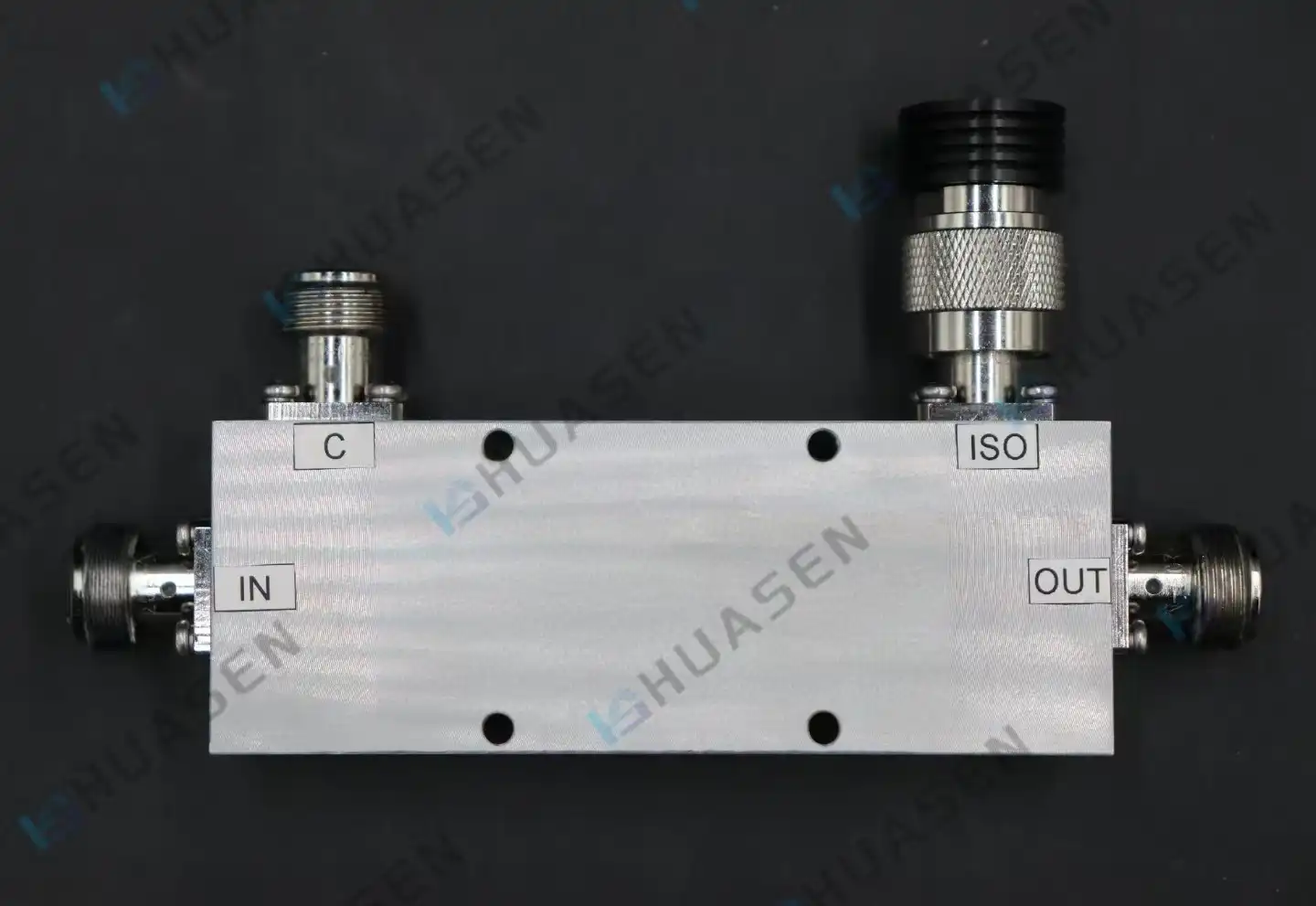
Signal loss that lowers measurement dynamic range can be stopped by ahybrid coupler by isolating the output and link ports. Good millimeter-wave directional couplers keep separation above 45 dB by carefully covering electromagnetic fields and optimizing the distance between ports. To test isolation, you need special tools that stop common-mode coupling from happening through ground loops or connector echoes.
Physical Configurations and Connector Interfaces
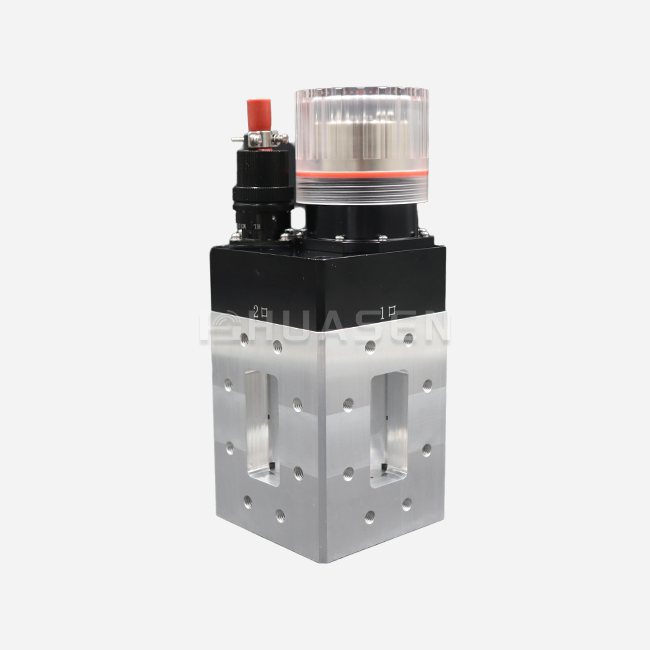
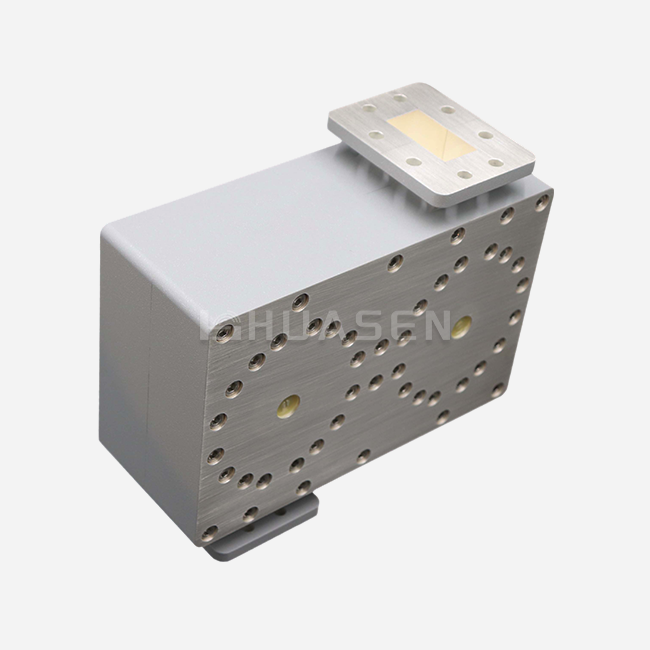
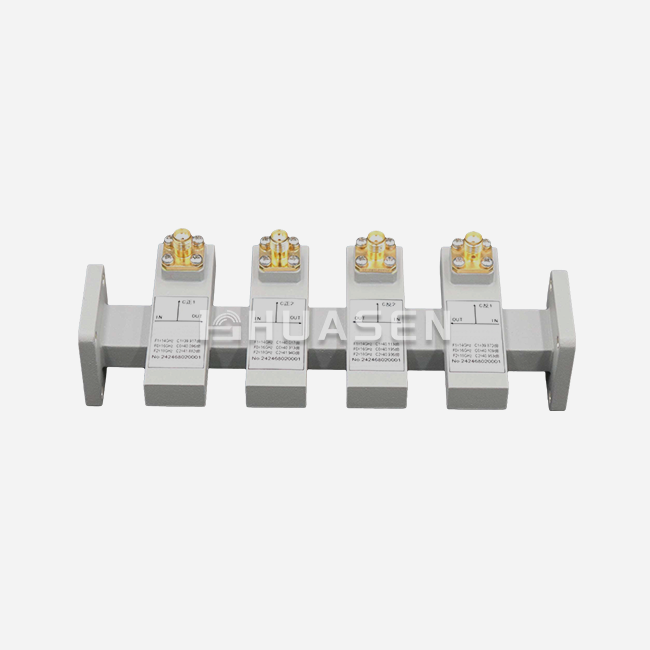
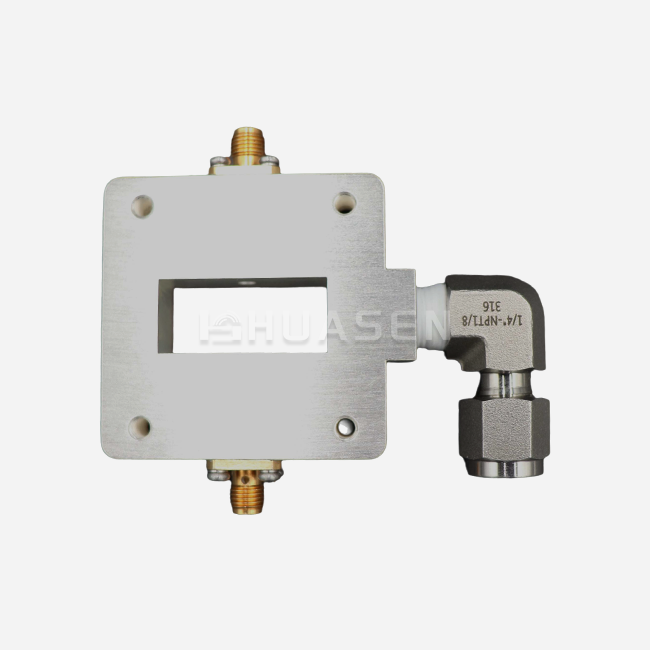
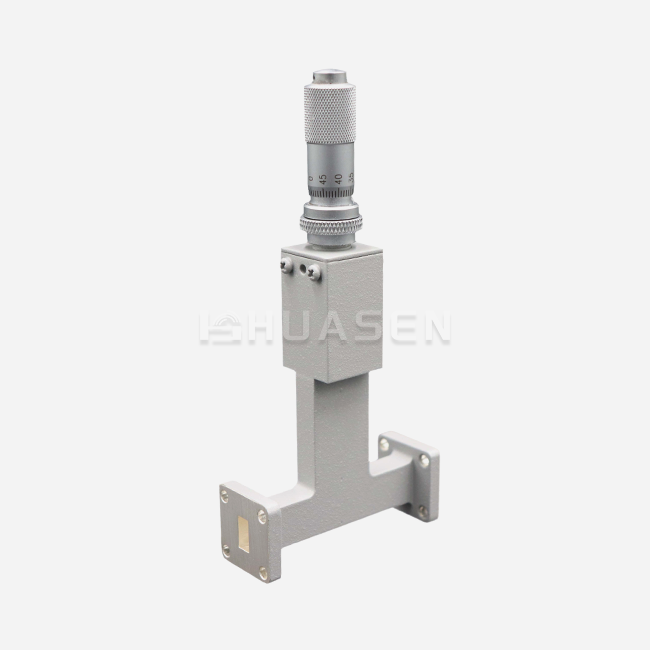
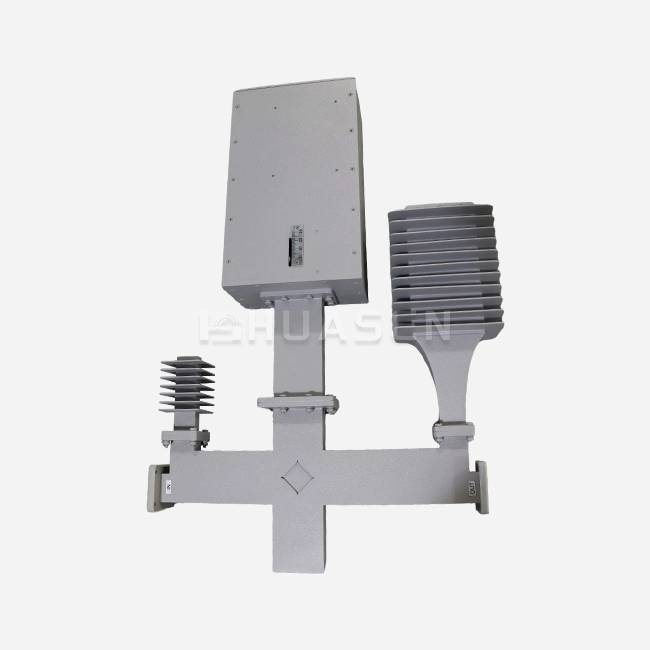
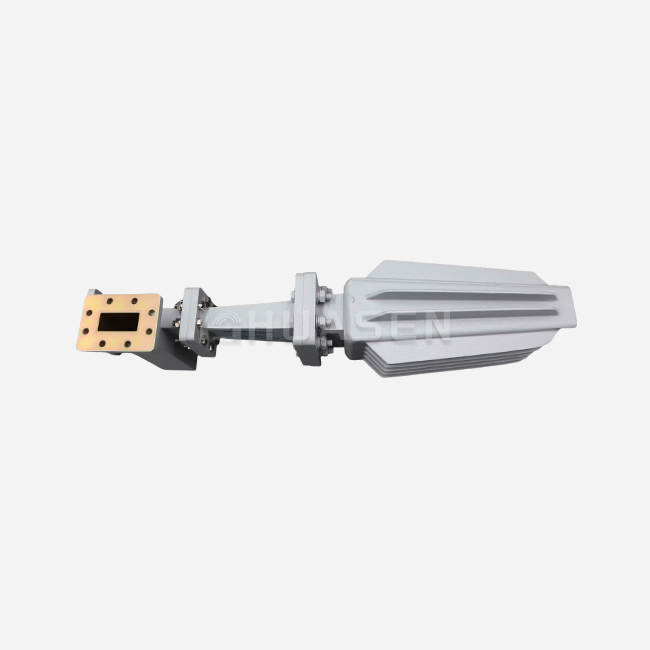
Waveguide couplers are most common in high-power situations above 40 GHz. They use broadwall or sidewall coupling openings that are made into rectangular waveguide sections. With low insertion loss, these systems can handle high powers of more than 10 kW. Coaxial designs with precisely machined airline structures or flat microstrip topologies work well for low-power test equipment needs, small areas that can work with 2.92mm, 2.4mm, or 1.85mm connections. Hybrid couplers are fundamentally different because they provide quadrature phase relationships between outputs, which are used in mixer and antenna feed networks instead of measurement tasks. Circulators send and receive messages by using magnetic fields instead of directional coupling. They do two completely different jobs in transmit/receive switching. Specification mismatches can be avoided during buying by understanding these differences.
Performance Testing Methods for Millimeter Wave Directional Coupler
To test millimeter-wave directional couplers, you need tools that can take exact readings at frequencies where wavelengths get close to plug sizes. Scalar power meters don't give you the phase information you need to figure out directivity, so you need a vector network analyzer (VNA) setup that can do all of the S-parameters up to the device's highest frequency limit.
Vector Network Analyzer Configuration
Calibration sets up measurement reference planes right at the device ports, getting rid of the systematic mistakes that test cords and adapters cause. At W-band frequencies, short-open-load-thru (SOLT) testing kits with standards that can be tracked give accuracy to within ±0.3 dB magnitude and ±3° phase. Modern methods of calibration, such as through-reflect-line (TRL), can be used with waveguide connections where normal methods aren't useful. Procurement teams should make sure that providers give them S-parameter files that have been tested and include calibration data. These datasets allow system-level models to guess how well couplers will work in whole RF chains before they are physically put together. The files should include extreme temperatures that are similar to the locations where they will be used. This will show performance drift that tests at room temperature alone can't show.
Directivity Measurement Procedure
Directivity testing checks the difference between the output of a linked port when the input port is driven and when the output port is driven. For reliable results, the source match must be better than -30 dB, and the load terminations must have a return loss of more than 40 dB. Multiple reflections must be kept to a minimum between device ports and terminations, which means that test setups often need precise waveguide ends with flatness requirements of less than 0.0005 inches. Recording linked port power with the input port driven and all other ports closed is part of the measurement process. Next, the setup is turned around to drive the output port. The ratio of these two measures, given in decibels, is equal to directivity. Values less than 30 dB at millimeter-wave frequencies usually mean that there were problems during production, such as uneven coupling openings or contaminated dielectric layers.
Insertion Loss and VSWR Verification
In insertion loss tests, the output power from a coupled port is measured by ahybrid couplercompared to the input power while the coupled port is closed. Measurement error grows due to VNA noise floor, connection repeatability, and temperature drift during test runs that last several hours. Temperature-controlled test rooms keep the device's temperature stable to within 0.5°C, which lowers phase changes caused by temperature that mess up readings. By measuring VSWR at all ports, you can find impedance gaps that are causing signals to bounce. Most millimeter-wave directional couplers say that their VSWR is less than 1.3:1 across their working band. High VSWR at the edges of the band shows that the design made some trade-offs between coupling smoothness and impedance matching. The requirements for the purchase should set accepted VSWR limits that are linked to budgets for system-level performance.
Environmental Stress Testing
As part of the MIL-STD-202 qualification testing process, couplers are exposed to temperature changes, vibrations, and high humidity. When you measure performance before and after stress patterns, you can see the reliability gaps. A millimeter-wave directional coupler that loses 0.5 dB of insertion loss after 500 temperature cycles from -40°C to +85°C has bad solder joints or materials that don't work well together and needs to be redesigned. Testing at high altitudes in vacuum rooms shows that air-filled coaxial designs keep their insulating strength even when the atmospheric pressure drops. Multipactor breakdown, in which electrons cascade between wires, makes it hard for satellite apps to handle a lot of power. Designs meant to be used on spaceships are proven to work by testing them at pressures that are similar to those at 100,000 feet.
Choosing the Right Directional Coupler for Millimeter Wave Applications
Before choosing the right couplers, you need to know what frequency range you need. A 5G base station that watches the transfer bands from 24.25 GHz to 29.5 GHz needs couplers that have flatness of less than 0.5 dB across that range. It's not worth it to overspecify bandwidth; a coupler that works with frequencies from 18 to 40 GHz costs a lot more than one that works best with frequencies from 24 to 30 GHz using resonance coupling.
Application-Specific Considerations
Radar systems need couplers that can handle high powers of more than 1 kW during send pulses and keep the directionality during low-power receive intervals. Multipactor effects and passive intermodulation distortion can't happen with waveguide designs that are brazed together and use high-purity dielectrics. A lot of the time, these devices have water-cooling jackets that keep lossy parts cool during long transmission cycles. Satellite ground stations balancing uplink and downlink lines through a single antenna need couplers with high levels of isolation to keep transmitter leaks from getting into sensitive receivers. Coupling values around 30 dB let you watch the power being sent without overloading the receiver front ends. Physical packaging must be able to survive being outside, with IP67-rated casings that keep out water and UV damage.
Comparing Supplier Offerings
At millimeter-wave frequencies, where electrical performance is determined by limits of a few microns, there is a strong link between a brand's image and how consistently it is made. Established sellers use statistical process control to keep the difference in coupling levels between batches to less than 0.3 dB. While newer providers may have lower prices, they don't have long-term reliability data that shows stable performance over five to ten-year usage periods. The warranty terms show how confident the source is in the product's dependability. Coverage that lasts longer than the usual one year, three years, or more indicates that the manufacturing process is stable and has a low failure rate in the field. Longer guarantees lower the total cost of ownership by getting rid of unexpected repair costs and downtime caused by swapping out parts.
Customization and Lead Times
Standard stock couplers work for about 70% of uses. Custom designs are made for specific needs, like non-standard coupling values, ruggedized joints, or bias tees that are built in. Customization takes eight to fourteen weeks on average, from approval of the plan to delivery of the goods. When planning when to buy something, you need to include four to six weeks extra for prototype approval rounds. Development times are cut short by suppliers who offer fast testing through CNC machining and 3D metal printing. These features are very important when pressing changes to the system mean that the coupler standards need to be changed in the middle of a project. When a seller is being qualified, looking at their development infrastructure lowers the risk of missing a deadline for a project.
Ensuring Quality and Reliability Through Testing and Metrics
Quality assurance includes more than just the originaldirectional coupler acceptance test. It also includes regular checks throughout the duration of a product. Costly field failures can be avoided by putting in place receiving inspection processes that find manufacturing flaws before they are installed. Automated test units that measure key factors in seconds allow for a full inspection without any delays in production.
Pre-Installation Testing Checklists
Visual checking finds flaws that are easy to see, like bent connecting pins, machining burrs, or plating darkening, which means rust. Dimensional checks show that the flange is flat within 0.002 inches and that the force specs for the connection are in line with industry standards. These easy checks keep installation problems from hurting components that fit together or slowing down the whole system. Electrical verification measures insertion loss and return loss at spot frequencies across the operating band. Deviations that are bigger than the tolerances in the datasheet cause thorough S-parameter readings that show the exact failure modes. When couplers suddenly lose insertion loss around certain frequencies, it means that there are internal resonances caused by problems in the assembly, such as loosely bonded wires or substrates that have come apart.
Interpreting Test Results
Changes in the coupling factor across frequencies show where multi-section matching networks' designs fell short. If a coupler shows ±1.5 dB flatness instead of the stated ±0.8 dB, it may still work fine as long as the system calibration routines account for normal differences. Understanding application-specific tolerance budgets keeps you from throwing away useful parts and helps you find the ones that are really broken. Directivity loss is usually caused by reflections at the connecting contact rather than problems with the design of the coupler itself. Cleaning the surfaces between connectors and using the right torque steps can often fix problems with apparent directivity. For problems that won't go away, you have to go back to the provider and use special test setups to make sure there is no confusion between coupler performance and test system artifacts.
Supplier Quality Management Integration
Setting up partnerships with suppliers that use the same quality standards aligns motivation to keep getting better. Getting providers to show capability studies that show they can control the six-sigma process lowers the number of defects that come in. Long-term deals that promise a certain amount of goods can be delivered allow sellers to buy more advanced manufacturing equipment that boosts quality and consistency. Supplier sites are checked on a regular basis to make sure they follow quality management systems that are approved under ISO 9001 or AS9100 for aerospace uses. Audits should look at how to track measurements, how to keep the surroundings safe while putting things together, and how to handle things so that electrostatic discharge doesn't damage them. Strong supplier relationships based on openness stop quality problems before they happen and encourage working together to solve problems when they do happen.
Conclusion
Testing the performance of a millimeter-wave directional coupler needs strict methods that combine precise instruments with well-defined steps. Knowing basic factors like directivity, insertion loss, and coupling flatness helps procurement teams evaluate supplier offers objectively and guess how parts will behave in systems that they have already installed. Statistical quality controls and external stress sequences that are part of testing methods lower the risk of failure in the field while also maximizing lifetime costs. New test technologies, like portable VNAs and analytics driven by AI, make it easier to check things in the field and plan for future maintenance. Long-term, strategic supplier partnerships that focus on quality, openness, and working together to solve problems are more valuable than transactional buying relationships. Putting money into thorough testing tools and experts pays off by making systems more reliable and giving you an edge in markets that change quickly.
FAQ
1. How do directional couplers differ from hybrid couplers in millimeter wave systems?
Directional couplers separate signals that are traveling in one direction from those that are traveling in the opposite direction. This makes them perfect for measuring and tracking tasks. Hybrid couplers split signals with known phase relationships, usually 90° or 180°. They can be used as balancing mixers or as aerial feeds. When splitting incident and reflected waves, procurement decisions should include directional couplers. Hybrids are better for power division with phase control needs.
2. Why does directivity become more critical at millimeter wave frequencies?
At millimeter-wave frequencies, shortening the wavelength makes the effect of production flaws on coupling symmetry stronger. A difference in size of 50 microns, which isn't noticeable at UHF, makes directivity much worse above 40 GHz. Higher directivity couplers make it possible to measure small mirrored signals accurately when there is a lot of forward power. This is necessary for finding small impedance gaps in high-performance systems.
3. Can millimeter wave directional couplers be tested on-site after installation?
Field study of insertion loss and return loss is possible with portable VNAs that have frequency extenders. To measure directivity, you need precise terminations and controlled test setups that aren't always available in the field. In the field, practical testing is mostly about making sure that the fixed performance is within the acceptable ranges set during lab approval. More in-depth characterisation should only be done in a controlled laboratory setting.
Partner with Huasen Microwave for Your Millimeter Wave Directional Coupler Requirements
Huasen Microwave has been designing directional couplersand making RF parts for more than 30 years, and can handle difficult millimeter-wave uses. Our range of directional couplers covers frequencies from 18 GHz to 110 GHz, and they have an insertion loss of less than 0.5 dB and a directivity of more than 40 dB. As a well-known directional coupler supplier, we offer full test data that can be traced back to national standards, the ability to customize to meet the specific needs of your system, and quick expert help throughout the entire lifecycle of your project. Email our tech team at sales@huasenmicrowave.com to talk about your unique performance requirements and get test units to look over.
References
1. Pozar, David M. Microwave Engineering, 4th Edition. Wiley, 2011.
2. Institute of Electrical and Electronics Engineers. IEEE Standard for Precision Coaxial Connectors at RF, Microwave, and Millimeter-wave Frequencies. IEEE Std 287-2007.
3. Bryant, G. H. Principles of Microwave Measurements. Institution of Engineering and Technology, 1993.
4. Engen, Glenn F. "Calibration and Verification of the Dual Six-Port." IEEE Transactions on Microwave Theory and Techniques, vol. MTT-30, no. 12, December 1982.
5. U.S. Department of Defense. Test Method Standard for Environmental Engineering Considerations and Laboratory Tests. MIL-STD-810H, 2019.
6. Sobol, Herbert. "Applications of Integrated Circuit Technology to Microwave Frequencies." Proceedings of the IEEE, vol. 59, no. 8, August 1971.
Send Inquiry