How to Optimize Circularly Polarized Microstrip Antenna Bandwidth






2026-06-09 21:52:23
In order to increase the axial ratio bandwidth while keeping impedance matching, a circularly polarized microstrip antenna's bandwidth can be optimized by making smart changes to the patch shape, substrate choice, and feeding methods. Engineers can make operating frequency ranges bigger by using dual-feed networks, stacked patch setups, parasitic elements, and high-tech substrates. These improvements solve problems that often happen in RFID systems, GNSS receivers, and satellite links, where the resistance and axial ratio bandwidths need to match for circular polarization to work reliably.
Understanding Circular Polarization and Bandwidth Challenges in Microstrip Antennas
As the wave's frequency goes up and down, circular polarization creates a complex transmission mode in which the electric field vector spins constantly, creating either right-hand (RHCP) or left-hand (LHCP) patterns. This rotating field is better than linear polarization in many ways, especially when the emitter and receiver angles change without warning. To make the main device work, you need to create two electric field components that are not parallel to each other and have equal strengths and a perfect 90-degree phase difference.
The Critical Role of Axial Ratio in Signal Quality
The axial ratio tells you how close an antenna is to having ideal circular polarization. Values below 3 dB mean the performance is good, but values closer to 0 dB are more common in business settings. When the axial ratio goes above what is considered normal, the polarization changes to circular or linear states. This makes the signal weaker and more likely to be affected by multipath interference. In GNSS tracking systems, this measure is very important because reflected signals naturally change polarization, which lets the receiver antenna reject ground-bounce interference by polarization discrimination.
Inherent Bandwidth Limitations in Conventional Designs
Traditional microstrip patch antennas are high-Q resonance designs, which means that their bandwidth is naturally limited. Sharp resonance properties are made by the resonant chamber that forms between the emitting patch and the ground plane. These frequency limits are set by the thickness of the substrate, the dielectric constant, and the wire losses. Thinner substrates lower the antenna profile, but they also make the operating frequency smaller. Materials with a high dielectric constant have smaller physical dimensions but a higher resonance quality factor, which limits bandwidth even more. The axial ratio bandwidth usually covers a smaller range of frequencies than the impedance bandwidth. This makes the overlap requirement for circular polarization behavior difficult to meet in real life.
Radiation Pattern Considerations for Application Versatility
Antennas can be used for different tasks based on how stable their radiation patterns are across their working span. From low elevation angles to the zenith, satellite transmission devices need gain and polarization purity that don't change. A circularly polarized microstrip antenna can be used in such scenarios. RFID readers can read more tags at once because their beamwidths are wider, but radar systems need fine pattern control to keep sidelobe disturbance to a minimum. Knowing these pattern standards helps buying teams choose the right antenna features when they are looking for them.
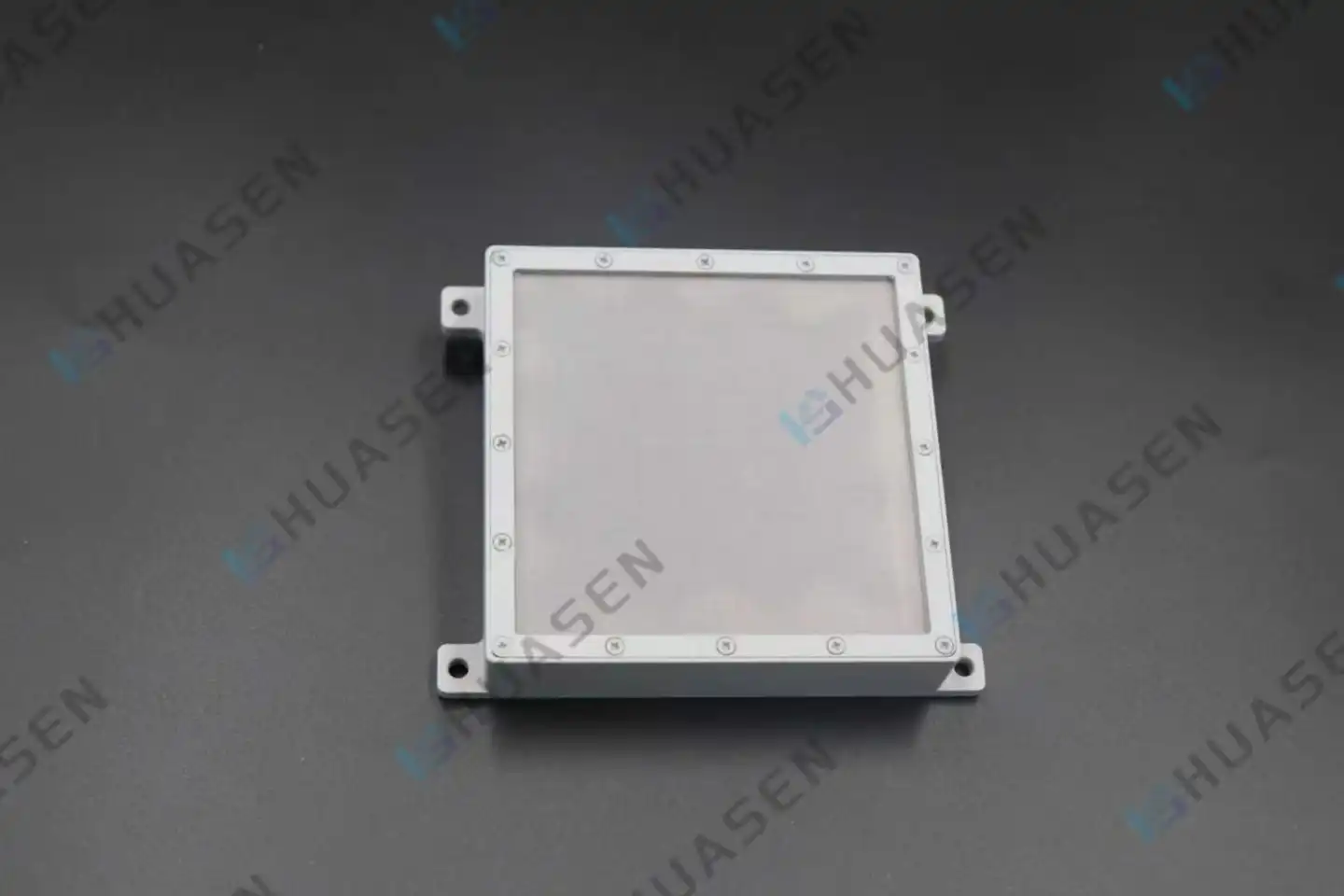
Key Principles for Optimizing Bandwidth in Circularly Polarized Microstrip Antenna Design
Strategies for increasing bandwidth try to improve both impedance matching and axial ratio performance over a wider range of frequencies. Several tried-and-true methods that change electromagnetic border conditions and energy coupling processes work together to solve these problems.
Patch Geometry Modifications for Enhanced Performance
Corner truncation is a basic way for perturbation that adds imbalance to make orthogonal modes with phase quadrature for a circularly polarized microstrip antenna. Designers make two degenerate resonant modes with slightly different frequencies by cutting exact holes in the patch or removing material from diagonal corners. The size of the geometry change determines how strongly the modes are coupled and how they relate to each other in terms of phase. When you use diagonal slot setups, you have more design options because you can control the resonance frequencies separately by changing the length and position of the slots. These changes allow for single-feed circular polarization while keeping the small sizes needed for placements with limited room.
Substrate Engineering and Material Selection
Both resistance and axial ratio bandwidths are greatly affected by the qualities of the substrate. Materials with a lower dielectric constant have less electrical thickness, which increases the resistance span but makes the material less compact. The dielectric stability of Rogers RO4003C and similar materials is very good, even when the temperature changes, so they keep working well even when they are used outside. It is true that thicker substrates lower the resonance Q-factor and increase the impedance bandwidth, but too much thickness can cause unwanted surface wave modes that hurt the beauty of the pattern. The substrate loss tangent changes how well radiation works. This is especially important in millimeter-wave uses, where circuit and dielectric losses add up to a lot.
Advanced Feeding Techniques and Network Topologies
Aperture-coupled feeding separates the radiating patch from the feed network by a ground plane hole. This cuts down on unwanted radiation and lets the impedance matching and radiation features be optimized separately. This setup lets you use two-layer designs: the feed network is on a lower-permittivity base to keep feed line losses to a minimum, and the spreading patch is on a higher-permittivity material to make it smaller. Similar benefits of separation are achieved by proximity coupling, which uses electromagnetic coupling between the feed and patch layers without any physical touch. This increases bandwidth by adding more resonance through the coupling gap.
Dual-feed networks using quadrature hybrids or branch-line couplers drive orthogonal patch edges with an exact 90-degree phase shift. This creates circular polarization that is there by nature. Most of the time, these setups give you bigger axial ratio bandwidths than single-feed perturbation methods, but they are more complicated and take up more space. Sequential rotation feeding sets up several spreading elements with increasing angular rotation and feed phase progression. This stops the axial ratio from dropping by average over space. This method works especially well in arrays where the performance of the pattern as a whole is better than the performance of any single piece.
Stacked Patch and Parasitic Element Integration
In stacked designs, multiple resonant patches are stacked at different heights above the ground plane. These patches connect energy through proximity effects. Each layer echoes at a slightly different frequency, which makes a lot of resonances that work together to make broadband operation possible. The space (air gap or foam spacing) between layers is an important design factor that affects how well they couple and how far apart they resonate. Parasitic elements placed close to the driven patch add more resonances without needing different feed networks. This increases bandwidth with minimal feed complexity. These methods, including the use of a microstrip antenna, work for systems that need small increases in speed and don't need complex multi-port feeding networks.
Huasen Microwave uses these advanced design ideas to make hybrid waveguide-microstrip transmission networks that keep their very thin shapes and get high radiation efficiency. Our engineers have improved stacked patch methods for the L to Ku bands, which lets us give each customer exactly what they want in terms of polarization and beamwidth control.
Comparative Insights: Circularly Polarized vs. Linearly Polarized Microstrip Antennas in Bandwidth and Application
Understanding the basic performance trade-offs between polarization methods is often a key part of making procurement choices. Circular polarization makes designs more complicated, but it has practical benefits in situations where there is doubt about the direction or where multiple paths are propagated.
Bandwidth and Efficiency Trade-offs
With simple design techniques, linearly polarized patches can usually reach resistance bandwidths covering 2 to 5 percent of the center frequency. The single resonance mode makes matching the impedance easier, which leads to reliable return loss features. When designs are circularly polarized, they allow for dual-mode operation, which means that both the resistance and axial ratio bandwidths need to be optimized at the same time. The axial ratio bandwidth is often the limiting factor, and for single-feed disturbance designs, it can be anywhere from 1% to 3%. With dual-feed and stacked setups, the axial ratio bandwidth can be increased to 5–10% or even higher, which is close to or greater than the bandwidth capabilities of linearly polarized devices.
Radiation efficiency stays the same for all polarization types as long as the designs use the same base materials and manufacturing quality. In dual-feed systems, circular polarization causes small losses due to the complexity of the feed network. However, these losses can be kept to a minimum through careful design for most purposes.
Application-Specific Suitability Analysis
UHF RFID systems make the value argument of circular polarization very clear. As goods move through automatic handling systems, tags on inventory items move around randomly. When the tag direction gets close to being orthogonal to the reader's polarization plane, linear antennas have a very bad polarization mismatch. Circular polarization gets rid of orientation dependence, so read ranges stay the same even when tags are rotated. This directly leads to better stocking accuracy and efficiency.
Satellite communications always use circular polarization to keep link budgets the same, even if the spacecraft's attitude changes. During certain parts of their missions, low Earth orbit satellites tumble or spin in a controlled way. Ground sites with circularly polarized antennas can still receive signals even when the satellite's attitude changes. Linearly polarized systems, on the other hand, would experience periodic nulls during each spin cycle. The Faraday rotation effect in the spread of ions in the ionosphere makes linear polarization worse, while circular polarization naturally fights it.
Linear polarization is often preferred for point-to-point wireless links between fixed sites because it is easier to set up and costs a little less, particularly when using a microstrip antenna. When both ends stay in the same place, and there is a clear line of sight, linear polarization works well enough without the extra complexity that comes with circular polarization. However, circular polarization's ability to block interference is helpful for mobile relay nodes or places with a lot of multipath echoes.
Conclusion
To get the best bandwidth out of circularly polarized microstrip antennas, you have to balance a lot of different factors that depend on each other. You can do this by making smart design decisions and choosing a seller carefully. To increase both the impedance and axial ratio bandwidths at the same time, successful applications use changes to the patch shape, advanced feeding methods, and smart substrate engineering. By knowing the unique needs of an application, you can make smart choices about how to balance traffic, size, complexity, and cost. Case studies show that dual-feed networks, stacked setups, and array methods can improve performance in a way that can be measured. To build relationships that will help a project succeed in the long term, procurement workers should look at a supplier's technical skills, ability to adapt to specific needs, and quality control methods.
FAQ
1. What defines acceptable axial ratio bandwidth for practical applications?
The usual acceptance criterion for circular polarization is an axial ratio that stays below 3 dB across the operating frequency range. Tougher limits, like 1-2 dB, are often needed for precise GNSS tracking or satellite communications to make sure the highest level of polarization uniformity is achieved. When the return loss is more than 10 dB, the axial ratio bandwidth and impedance bandwidth must overlap. The working spectrum that can be used is determined by this overlap area.
2. How do substrate thickness changes affect bandwidth and antenna size?
Although thicker substrates lower the resonant quality factor and increase the impedance bandwidth, they also make the total antenna shape bigger. Microstrip designs usually use surfaces that are between 0.508mm and 3.175mm thick, based on the frequency and bandwidth needs. If you double the thickness of the base, you can increase the resistance bandwidth by 40 to 60% while also making the antenna taller by the same amount. Applications that have strict profile limits will often accept smaller bandwidths to keep their low-profile shapes.
3. Can circular polarization antennas operate with linearly polarized systems?
Yes, but there would be a 3 dB loss due to polarization differences. When an antenna with circular polarization receives a signal with linear polarization, it only picks up the part that is parallel to one axis of the circular field. This loss is expected and can be accepted in situations where the ability to change direction is greater than the efficiency loss. If the polarization senses of an RHCP emitter and an LHCP receiver are not matched, the signal will be lost by more than 20 dB, so the system needs to be carefully coordinated.
4. What testing verifies circular polarization performance in production?
In order to fully qualify, measures of the axial ratio versus frequency must be taken in an anechoic chamber at appropriate elevation and azimuth angles. For production testing, spinning linear reference antennas or dual-polarization test devices that measure orthogonal field components are often used. Axial ratio quality is based on how well the phase and amplitude of the different parts are balanced. Field proof includes turning the antenna all the way around while keeping an eye on the received signal strength. Changes of more than 3 dB mean that the circularity has been lost.
Partner with Huasen Microwave for Optimized Antenna Solutions
Circularly Polarized Microstrip Antennas need both advanced technical knowledge and precise manufacturing to achieve high bandwidth performance. Huasen Microwave has been specializing in RF components for 30 years, so they can meet your most difficult antenna needs. Our hybrid waveguide-microstrip designs offer better gain features of up to 23 dB while keeping very thin, light shapes that are good for use in aerospace, defense, and telecommunications infrastructure.
As a reliable company that makes circularly polarized microstrip antennas, we offer full customization for frequency bands from L to Ku, with support for single linear, dual circular, and custom monopulse setups. Our engineering team works directly with your technical staff to improve performance factors like impedance matching, radiation pattern shaping, and axial ratio bandwidth. Different gain and beamwidth needs can be met by arrays that can be set up in a variety of ways, from single patches to 8x8 units. Quality verification methods that are in line with ISO and MIL-STD standards make sure that performance stays the same no matter how much is made.
Get in touch with our applications engineering team at sales@huasenmicrowave.com to talk about your unique problems with optimizing bandwidth. We'd love the chance to look over your technical needs and come up with custom solutions backed by measured performance data and full design support.
References
1. Garg, R., Bhartia, P., Bahl, I., & Ittipiboon, A. (2001). Microstrip Antenna Design Handbook. Artech House Publishers.
2. Kumar, G., & Ray, K. P. (2003). Broadband Microstrip Antennas. Artech House Antennas and Propagation Library.
3. Wong, K. L. (2002). Compact and Broadband Microstrip Antennas. John Wiley & Sons.
4. Bancroft, R. (2009). Microstrip and Printed Antenna Design (2nd Edition). SciTech Publishing.
5. Huang, J., & Densmore, A. C. (1991). Microstrip Yagi Array Antenna for Mobile Satellite Vehicle Application. IEEE Transactions on Antennas and Propagation, 39(7), 1024-1030.
6. Chen, W. S., Wu, C. K., & Wong, K. L. (2001). Novel Compact Circularly Polarized Square Microstrip Antenna. IEEE Transactions on Antennas and Propagation, 49(3), 340-342.
Send Inquiry