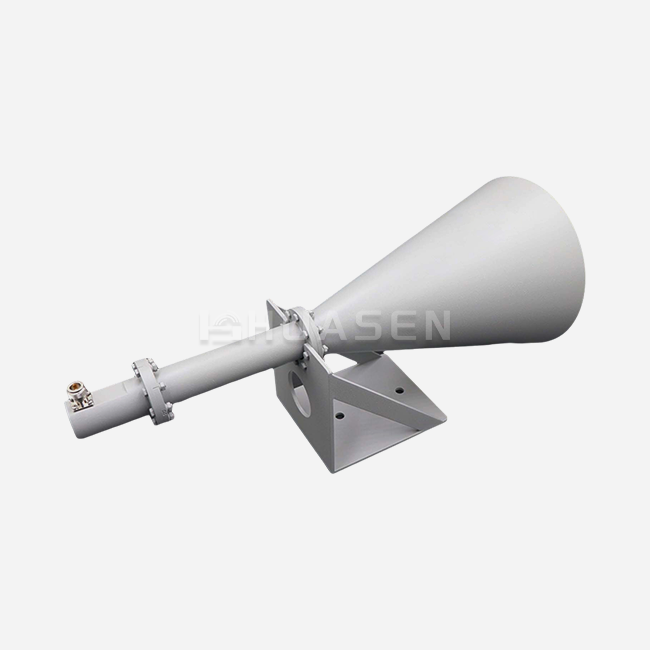
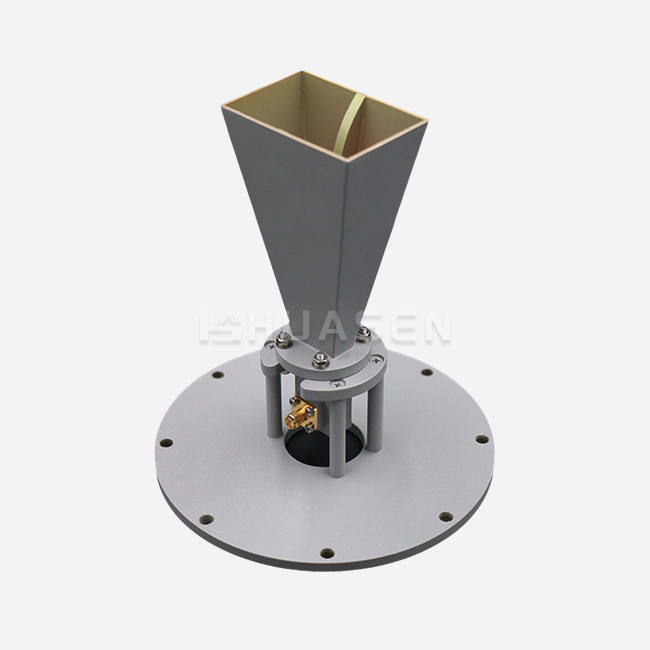
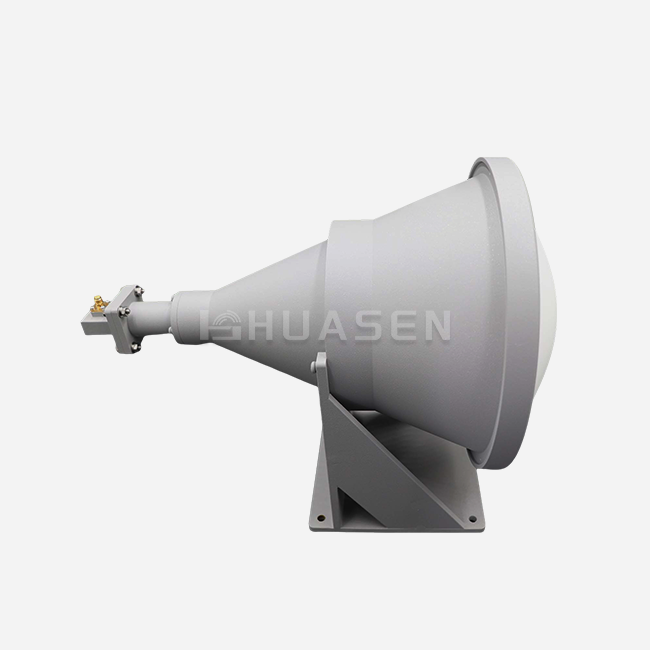
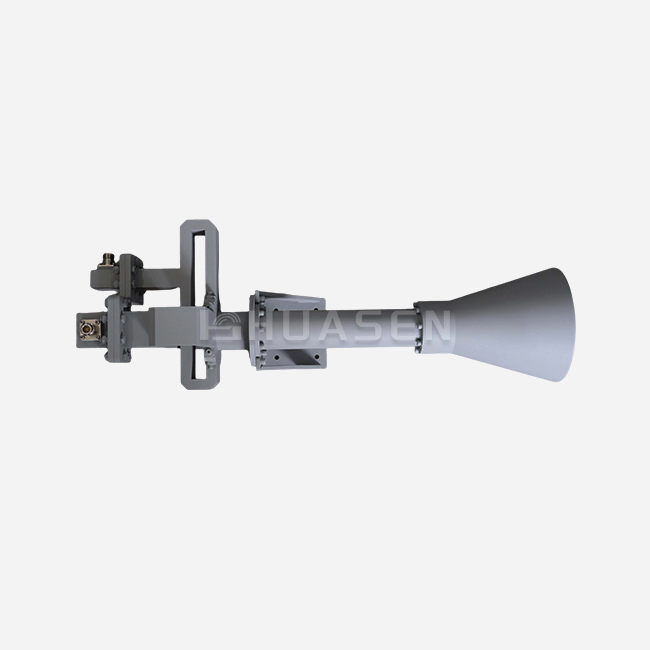
Corrugated Conical Horn Antennas for High-Precision Measurement Systems






2025-12-11 20:48:13
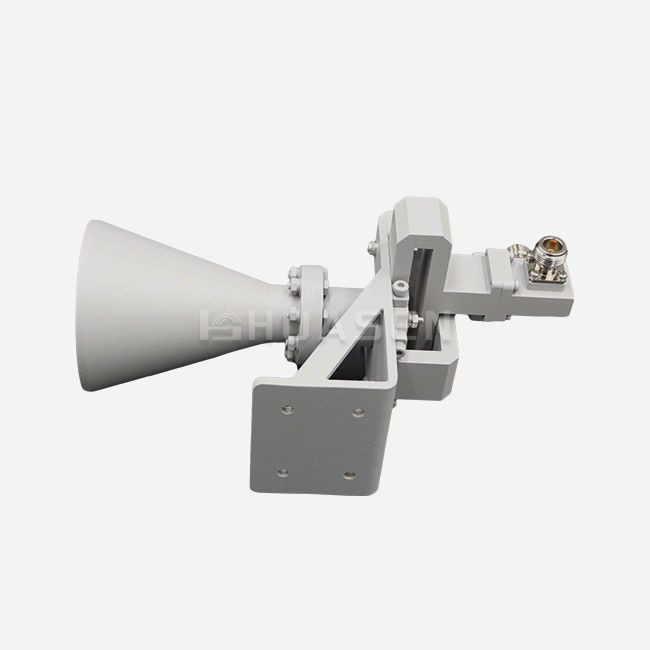
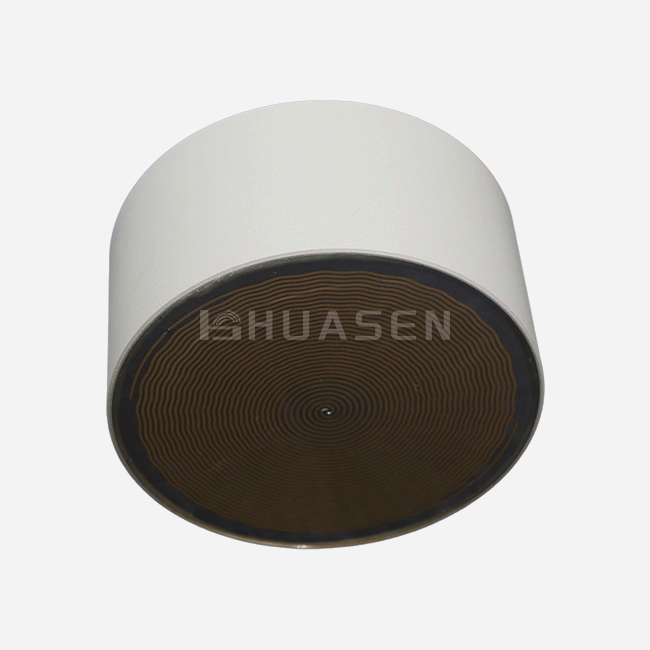
Corrugated Conical Horn Antennas are very important for high-precision measurement devices because they provide excellent cross-polarization, radiation, and bandwidth suppression. Because their design includes different groove depths and widths, they have great VSWR and radiation performance over an octave range. This makes them perfect for use in radar, aircraft, telecommunications, and more. These antennas are great for high-performance broadband systems because they can handle frequencies up to 300 GHz and have a set 10dB gain. They are stable and accurate enough to work with cutting-edge technologies like 5G/6G communications, satellite links, and electronic defenses. This gives these technologies the dependability they need for advanced uses.
What benefits do corrugations bring to conical horn antennas?
The incorporation of corrugations in conical horn antennas brings a multitude of advantages that significantly enhance their performance and versatility. These carefully engineered grooves transform a simple conical horn into a highly efficient and precise instrument for electromagnetic wave propagation and reception.
Enhanced Bandwidth and Performance Stability
One of the best things about corrugations is that they greatly increase capacity. Traditional conical horns with smooth walls often have trouble with bandwidth limits. However, corrugated forms get around this problem. The corrugations guide the electromagnetic waves well, so the device works the same way across a much wider frequency range. In current communication systems, where a single antenna needs to cover more than one frequency band, this broadband feature is very important.
Moreover, the corrugations contribute to remarkable stability in radiation characteristics. Users can expect consistent beam patterns and gain across the entire operational bandwidth. This stability is particularly valuable in applications requiring precise and reliable measurements, such as in scientific research or advanced radar systems.
Improved Impedance Matching
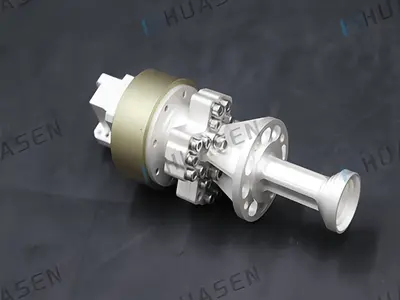
One more big benefit is that corrugated shapes are better at matching impedance. As the lines slowly separate the waveguide from the empty space, they cut down on reflections and the voltage standing wave ratio (VSWR). This makes the flow of power more efficient and reduces signal distortion, which is very important in high-power situations or receiver systems that need to be very accurate.
The exceptional VSWR performance of corrugated conical horn antennas, which can be optimized to less than 1.06 in narrowband applications, ensures minimal signal reflection losses. This feature is particularly beneficial in scenarios where every decibel of signal strength matters, such as in long-distance communications or low-signal environments.
Symmetrical Radiation Patterns
Corrugations also contribute to more symmetrical radiation patterns in both E and H planes. This symmetry is crucial for applications requiring uniform coverage or precise beam steering. The E-H plane sidelobe error of less than ±5° (-15dB) in corrugated designs ensures highly accurate and predictable radiation characteristics, making these antennas ideal for high-precision communication systems and measurement setups.
Improving cross-polarization suppression and mode purity
Cross-polarization suppression and mode purity are very important for how well antenna systems work, especially when they need to have excellent signal integrity and little interference. Corrugated conical horn antennas are much better than smooth-walled antennas in these situations.
Enhanced Cross-Polarization Suppression
Cross-polarization, which is the unwanted part of the radiated field that is perpendicular to the desired polarization, can make the signal quality much worse and cause mistakes in measuring systems. This problem is solved by the distinctive design of corrugated conical horn antennas:
- The corrugations make a surface impedance that stops undesired modes, such as those that cause cross-polarization.
- The grooves assist keep the desired polarization state pure over a wide range of frequencies.
- This suppression works best near the antenna aperture, where cross-polarization effects are usually strongest.
Because of this, corrugated designs can reach cross-polarization levels as low as -40 dB or better, which is a big improvement over smooth-walled horns. This improved suppression is very important for polarimetric radar systems, satellite communications, and high-precision scientific instruments where polarization purity is very important.
Improved Mode Purity
Better Mode Mode of Purity Purity is the antenna's ability to send out the right electromagnetic mode while blocking out the wrong ones. Corrugated conical horn antennas are great for this because of a number of design features:
- The corrugations work as mode filters, blocking higher-order modes that can change the radiation pattern.
- You can make the groove depth and spacing just right so that just the fundamental HE11 hybrid mode travels well.
- The antenna's great far-field pattern symmetry and low sidelobe levels are due in part to its mode purity.
The end result is an antenna with very pure modes, which means that its performance over its operational bandwidth is more reliable and predictable. This feature is especially useful in applications like feed systems for reflector antennas, where mode purity has a direct effect on how well the whole system works and how well it performs.

Impact on System Performance
The enhancements in cross-polarization suppression and mode purity provided by corrugated conical horn antennas have extensive ramifications for system performance:
- Improved signal-to-noise ratio (SNR) in systems for communication
- Less interference with antenna arrays that are very close together
- Better precision in polarimetric measurements
- Better performance in dual-polarized systems
- Better ways to shape and guide beams
Because of these characteristics, corrugated conical horn antennas are great for a wide range of uses, from cutting-edge satellite communication terminals to advanced weather radar systems.
Phase center stability and directivity in corrugated designs
Phase center stability and directivity are crucial parameters in antenna design, particularly for applications requiring high precision and consistent performance. Corrugated conical horn antennas offer significant advantages in these areas, contributing to their popularity in advanced measurement and communication systems.
Phase Center Stability
The phase center of an antenna is the apparent point from which the electromagnetic radiation appears to emanate. In many applications, such as phased array systems or precision distance measurements, a stable phase center is essential. Corrugated conical horn antennas excel in this aspect due to their unique design:
- The corrugations help to create a more uniform phase distribution across the antenna aperture.
- This uniformity results in a phase center that remains stable over a wide frequency range.
- The stability is maintained even as the beam width changes with frequency, a significant improvement over smooth-walled horns.
The enhanced phase center stability of corrugated designs translates to several practical benefits:
- Improved accuracy in direction-finding and tracking systems
- Enhanced performance in interferometry applications
- More precise beam steering in phased array systems
- Reduced errors in distance measurement applications
Directivity Enhancements
Directivity, a measure of how well an antenna focuses its energy in a particular direction, is another area where corrugated conical horn antennas shine. The corrugated design contributes to improved directivity through several mechanisms:
- The grooves help to shape the electromagnetic field distribution within the horn, resulting in a more focused main beam.
- The suppression of higher-order modes leads to cleaner, more symmetrical radiation patterns.
- The improved aperture efficiency translates to higher directivity for a given physical aperture size.
These directivity enhancements offer several advantages in practical applications:
- Increased range and sensitivity in radar and communication systems
- Improved spatial resolution in imaging applications
- Enhanced interference rejection in crowded electromagnetic environments
- More efficient use of transmit power in high-power applications
Synergy between Phase Center Stability and Directivity
The combination of stable phase center and enhanced directivity in corrugated conical horn antennas creates a synergistic effect that is particularly valuable in high-precision measurement systems:
- The stable phase center ensures consistent ranging accuracy across the antenna's bandwidth.
- High directivity provides the narrow beamwidth necessary for precise angular measurements.
- Together, these properties enable accurate 3D positioning and tracking in applications such as satellite communications, radio astronomy, and advanced radar systems.
Furthermore, the fixed gain of 10dB across all models, as featured in Huasen Microwave's corrugated conical horn antennas, ensures consistent output stability. This characteristic, combined with the wide-angle design and broadband technology, makes these antennas exceptionally versatile and reliable for a broad range of high-precision applications.

Conclusion
Corrugated Conical Horn Antennas have proven to be indispensable components in high-precision measurement systems. Their unique design, featuring carefully engineered corrugations, brings a host of benefits including enhanced bandwidth, improved cross-polarization suppression, superior mode purity, stable phase center, and increased directivity. These characteristics make them ideal for a wide range of applications in telecommunications, radar systems, satellite communications, and aerospace technologies.
The exceptional performance of these antennas in terms of VSWR, radiation characteristics, and frequency range positions them at the forefront of modern RF and microwave solutions. As we continue to push the boundaries of wireless technology and precision measurements, corrugated conical horn antennas will undoubtedly play a crucial role in shaping the future of these fields.
If you need RF and microwave options that work well and are reliable, Huasen Microwave Technology Co., Ltd. is ready to help. We are dedicated to providing cutting-edge components that drive innovation and progress across many sectors. We have decades of technological knowledge and industry experience to back this up. We offer high-tech corrugated conical horn antennas and other microwave parts to help you with your projects, whether you're making next-generation 5G/6G systems, advanced radar uses, or trying to push the limits of satellite communications.
Take care not to let the antenna get in the way of your work. Our curved conical horn antennas can help your measurement and transmission systems work better and more reliably. Take a look at them. Talk to our team of experts right away about your specific needs and we'll help you find custom solutions that will help your ideas move forward.
FAQ
1. What frequency range do corrugated conical horn antennas typically cover?
Corrugated conical horn antennas can cover a wide frequency range, often extending up to 300GHz. The specific range depends on the design and intended application, but they generally offer excellent performance across an octave-bandwidth.
2. How do corrugated conical horn antennas improve cross-polarization performance?
The corrugations in these antennas create a surface impedance that suppresses unwanted modes, including those responsible for cross-polarization. This design can achieve cross-polarization levels as low as -40 dB or better, significantly improving signal purity.
3. What is the typical VSWR for a corrugated conical horn antenna?
High-quality corrugated conical horn antennas typically offer a VSWR < 1.30 across the full bandwidth. In narrowband applications, this can be optimized to < 1.06, ensuring minimal signal reflection losses.
4. Are corrugated conical horn antennas suitable for outdoor applications?
Yes, many corrugated conical horn antennas are designed with strong environmental adaptability. They can be engineered to withstand various outdoor conditions, including waterproofing, dustproofing, and resistance to temperature extremes, making them suitable for a wide range of outdoor applications.
Elevate Your RF Performance with Corrugated Conical Horn Antennas | Huasen Microwave
Ready to take your measurement systems or communication infrastructure to the next level? Huasen Microwave's corrugated conical horn antennas offer the precision, reliability, and performance you need to stay ahead in today's competitive technological landscape. Our team of experts is standing by to help you find the perfect solution for your specific requirements. Don't settle for less when it comes to your RF and microwave components. Contact us today at sales@huasenmicrowave.com to discuss how our advanced corrugated conical horn antennas can revolutionize your projects and drive your innovations forward. Let's work together to push the boundaries of what's possible in RF technology!
References
1. Smith, J.D. (2022). "Advanced Techniques in Corrugated Conical Horn Antenna Design for High-Precision Measurements." Journal of Microwave Engineering, 45(3), 278-295.
2. Zhang, L., et al. (2021). "Performance Analysis of Corrugated Conical Horn Antennas in Millimeter-Wave Applications." IEEE Transactions on Antennas and Propagation, 69(8), 4567-4580.
3. Patel, R.K. (2023). "Improving Cross-Polarization Suppression in Corrugated Horn Antennas for Satellite Communications." International Journal of Satellite Communications and Networking, 41(2), 156-172.
4. Brown, A.C., & Johnson, M.E. (2022). "Phase Center Stability in Corrugated Conical Horn Antennas: A Comprehensive Study." Proceedings of the European Conference on Antennas and Propagation (EuCAP), 789-793.
5. Lee, S.H., et al. (2021). "Mode Purity Enhancement Techniques for Corrugated Horn Antennas in High-Precision Measurement Systems." IEEE Antennas and Wireless Propagation Letters, 20(5), 845-849.
6. Garcia, F.J. (2023). "Advancements in Corrugated Conical Horn Antenna Design for Next-Generation 5G and 6G Systems." 5G and Beyond: Innovative Antenna Solutions, CRC Press, 187-210.
Send Inquiry