How Parabolic Antenna Is Used in Radio Astronomy






2026-06-03 21:37:07
We can only see a small part of what's going on in the world when we look up at night. Radio astronomy lets us look into things in space that we can't see, and the parabolic antenna is the key tool that makes this possible. These high-tech dish-shaped antennas pick up faint radio waves coming from galaxies, pulsars, and nebulae far away. They turn these electromagnetic signals that can't be seen into data that unlocks the mysteries of the universe. By focusing incoming radio waves very precisely on a central feed element, parabolic antennas help scientists find and study events in space that happen billions of light-years away. They do this by providing unmatched sensitivity and direction accuracy that are essential for current space research.
Understanding Parabolic Antennas in Radio Astronomy
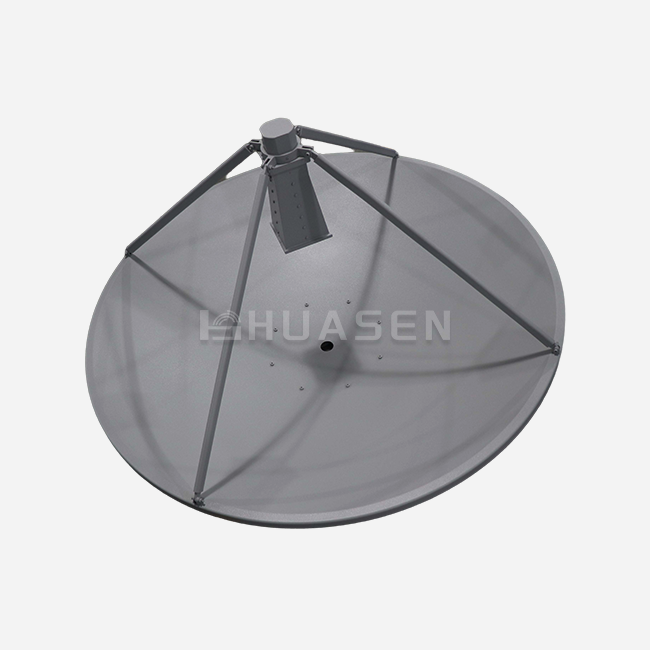
Radio astronomy depends on finding very weak electromagnetic waves coming from space. Radio telescopes focus radio waves using dish antennas with parabolic mirror surfaces, while optical telescopes collect light that we can see. The parabolic form makes sure that all arriving radio waves that are parallel reflect toward a single focus point, which is where the feed horn is located. This makes signal capture more efficient.
Operating Principles and Frequency Ranges
The basic science behind these reflector systems is based on the way parabolas are shaped: any ray that is parallel to the line of symmetry will reflect through the focal point. Radio scientists can use this idea to pick up coherent sounds over a wide frequency range, from 30 MHz to 300 GHz. Lower frequencies can get through Earth's atmosphere and show cold hydrogen clouds in galaxies far away. Higher frequencies, called millimeter waves, can pick up chemical emissions from places where stars are being formed.
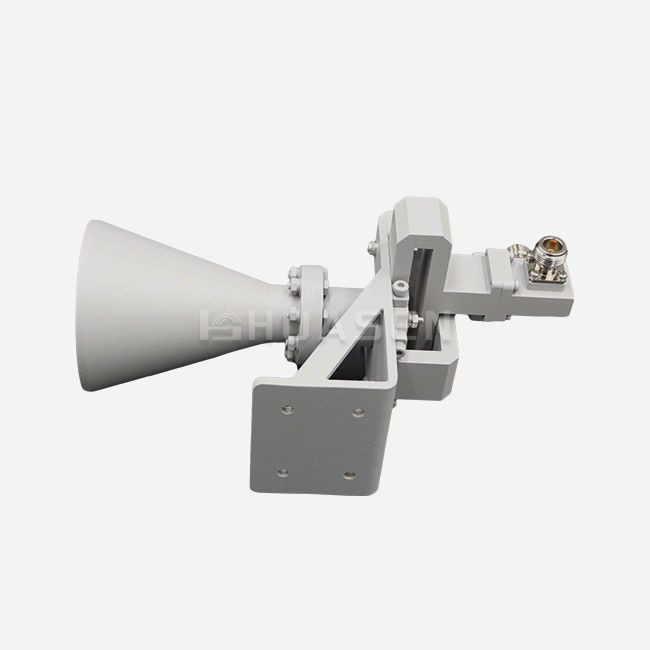
At the focal point, the feed antenna turns the electromagnetic waves that are being picked up into electrical data that can be boosted and processed. For certain frequency bands and viewing goals, different feed designs, like prime focus feeds or Cassegrain secondary reflector configurations, work best.
Superior Gain and Directivity
Depending on the width and frequency, parabolic antenna dish antennas have very high gain, often more than 40 dBi. It is very sensitive, able to find radio sources with flux levels measured in micro-Janskys, thanks to its high gain. Large-aperture dishes produce a narrow beamwidth that gives accurate angular precision. This lets astronomers tell the difference between celestial objects that are close together and describe cosmic structures with great accuracy.
Types and Configurations
Radio astronomy centers use different parabolic antenna configurations that are based on the study goals. Single-dish telescopes use huge mirrors that stand alone—some are over 100 meters across—to get the most light and be as sensitive as possible. Interferometric arrays, like the Very Large Array, take signals from many smaller dishes that are spread out over many kilometers. This makes it possible to get the same level of angle precision as one very large antenna. Customized designs are made to solve particular problems, like using low-noise receivers to pick up weak signals or dual-polarization lines to record both vertical and horizontal wave components at the same time.

Design Principles and Performance Features Critical for Radio Astronomy
To get the accuracy needed for radio astronomy, antenna design factors must be carefully thought out. Every part of the mirror system has an effect on the ability to observe, from the sharpness of the surface to the placement of the feed.
Reflector Surface Precision
To within very small limits, the mirror surface of a parabolic antenna must keep its parabolic shape. Surface flaws lead to phase mistakes that lower the antenna's performance and raise the sidelobe levels. Root mean square (RMS) surface mistakes must be less than λ/16 for high-performance astronomical dishes, where λ is the shortest wavelength that can be used. To get this level of accuracy, advanced manufacturing methods are used, such as carefully machined metal panels or stretched membrane reflectors that are held up by backing structures that have been carefully fixed.
Feed System Optimization
Placing the feed receiver at the true focus point makes sure that the reflector surface is lit up properly. Offset feeds and Cassegrain setups make the radiation pattern more even and less likely to get blocked by apertures. Low-noise amplifiers (LNAs) built into the feed unit lower the system noise temperature, which is an important factor for finding faint cosmic signs that are hidden by thermal noise.
Bandwidth and Sensitivity Requirements
For radio astronomy studies, it is common to need to cover a lot of frequency bands at the same time in order to pick up spectral lines from different molecular species or keep an eye on broad continuum emissions. Operation across octave or multi-octave bandwidths is possible with multi-band sources and frequency-agile devices. System sensitivity depends on both radio gain and receiver noise. Receivers that are cryogenically cooled can reach noise levels that are very close to quantum limits.
Radiation Pattern Characteristics
Narrow beamwidth focuses the reception sensitivity within a small solid angle, which lowers the interference from Earth and other unwanted cosmic sources. Half-power beamwidths for radio telescopes are usually between arcminutes and arcseconds, but this depends on the size of the dish and the frequency. Signals from places other than the main beam peak can't mess up observations because the sidelobe levels are usually less than -30 dB.
Environmental and Operational Challenges
Radio astronomy sites have special needs when it comes to the environment. Reflector surfaces need to be able to handle wind loads, changes in temperature, and rain without losing their accuracy. Many telescopes are located far away so that radio frequency interference (RFI) from people's actions is kept to a minimum. Protective radomes keep reflectors dry in bad weather and barely weaken the signal, but they are expensive and hard to build, so they aren't used very often.
Comparing Parabolic Antennas with Other Antenna Types in Radio Astronomy
To choose the right antenna technology, you have to look at the performance differences between different design methods.
Parabolic Reflectors versus Alternative Designs
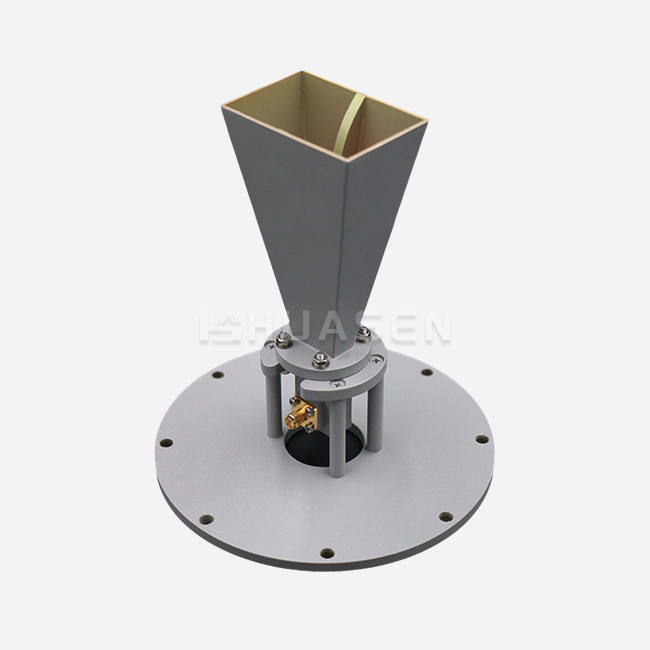
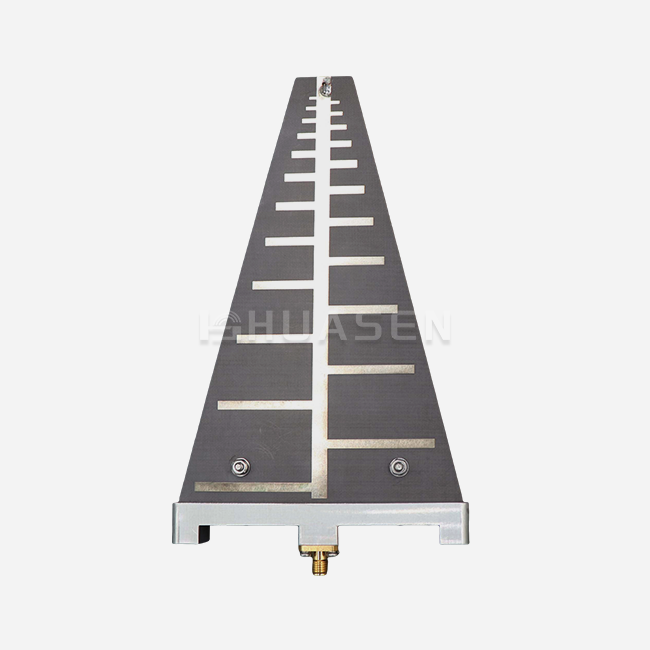
Yagi-Uda antennas are easy to use and don't cost much, but they don't have the gain and bandwidth that are needed for accurate views of the night sky. Even though horn antennas have good impedance matching and low sidelobes, they don't have enough receiving area to pick up faint sources. Flat-panel phased arrays let you move an electrical beam without moving a motor, but they can't yet match the sensitivity-per-dollar ratio of big parabolic dishes for radio astronomy uses.
Performance and Cost Considerations
When it comes to useful antenna types for radio astronomy, parabolic reflector antennas have the best gain and sensitivity. Because they are mechanically simple and only have inactive reflector surfaces, they are reliable and easy to keep. Even though the starting costs of building big dishes seem high, the cost per square meter of receiving area is still low when compared to active array technologies. The major costs of operation are servo systems for controlling the pointing and regular surface changes to keep the machine running at its best.
Leading Facility Implementations
The best radio stations in the world show that parabolic antenna technology is still the best. The Green Bank Telescope has a 100-meter offset Gregorian design that makes it very sensitive from 0.1 to 116 GHz. Sixty high-precision 7-meter and 12-meter dishes make up the Atacama Large Millimeter Array. They work together as an interferometer at millimeter wavelengths. These sites prove that parabolic reflectors work well for a wide range of observational tasks, from measuring the time of pulsars to studying molecules in galaxies far away.
Procuring Parabolic Antennas for Radio Astronomy Projects
To buy parabolic antenna systems successfully, you need to carefully look at the technical specs, the supplier's skills, and the lifecycle support services.
Customization and Technical Requirements
For radio astronomy to work, antennas need to be specially designed to work with certain frequency bands, the surroundings, and the equipment that is already in place. The specs for buying something must include details about the width of the reflector, the accuracy of the surface, the mounting arrangements, the feed systems, and the precision of the pointing. Dual-polarization lets you receive orthogonal polarization states at the same time, which doubles the speed of some observational tools.
Supplier Selection Criteria
Leading makers of parabolic antennas have a history of making reliable science instruments. Expertise in design, accuracy in production, choice of materials for long-term use in harsh environments, and agreement with relevant standards should all be part of the evaluation process. Beyond just delivering tools, suppliers who offer full technical support, such as electromagnetic modeling, mechanical analysis, and help with integration, add a lot of value.
Quality Assurance and Testing
Strict testing methods make sure that antennas work before they are put in place. Measurements of the radiation pattern taken in echo-free rooms or on far-field test areas prove the gain, beamwidth, and sidelobe characteristics. Measurements with a vector network tester show that return loss (VSWR) and port separation are correct for systems with two polarizations. Mechanical testing checks for things like wind survival rates, thermal cycles, and the strength of the structure under real-world loads.
Lifecycle Support and Services
Long-term operating efficiency is ensured by full warranty coverage, easy access to spare parts, and quick expert help. Staff members can do regular upkeep and small changes because of training programs. Regular performance checks and calibration services help keep the antenna's sensitivity at its best for as long as it works, which for large telescope sites is usually decades.
Case Studies: Successful Applications of Parabolic Antennas in Radio Astronomy
Parabolic antenna technology makes it possible for groundbreaking scientific findings to be made in the real world.
Very Large Array Contributions
In New Mexico, the Very Large Array is made up of 27 25-meter parabolic reflector antennas arranged in a Y shape. With this interferometric array, scientists have been able to map radio emissions from supernova remains, follow water vapor in protoplanetary rings around young stars, and find neutral hydrogen in galaxies that are billions of light-years distant. The array's baseline shape can be changed, which lets the angular precision be changed to fit the needs of the measurement.
Historical Impact of Arecibo Observatory
The 305-meter fixed sphere reflector at Arecibo Observatory (which was active from 1963 to 2020) made important discoveries, such as finding the first binary pulsar system and mapping near-Earth asteroids with radar. Its huge collecting area made it possible to find very faint pulsars and perform the most sensitive scans for signals from intelligent aliens. Arecibo showed that large-aperture antenna systems can be useful in science, even though it used a circular main reflector instead of a parabolic one.
Emerging Technological Innovations
New materials, like carbon fiber alloys, make reflectors lighter while keeping the surface precision. Actuators are used in active surface technologies to change the positions of panels in real time, making up for changes caused by gravity and heat expansion. Adding artificial intelligence methods to signal processing makes it better by letting RFI be reduced automatically and beamforming be changed to improve sensitivity in tough radio settings.
Conclusion
Parabolic antennas are still very important tools for radio astronomy because they turn tiny cosmic whispers into measurable data that helps us learn more about the universe. Their unique mix of high gain, exact directivity, and wide bandwidth coverage makes it possible to find and study electromagnetic radiation from the farthest and most mysterious cosmic events. As the study of astronomy moves toward higher frequencies and higher sensitivity, new reflector materials, surface control systems, and feed technologies will keep making these amazing tools better. When choosing parabolic antenna systems, procurement professionals and research institutions must carefully look at technical specs, provider knowledge, and lifecycle support to make sure the projects are successful.
FAQ
1. What frequencies do parabolic antennas cover in radio astronomy?
In radio astronomy, parabolic antennas usually work with bands between 30 MHz and 300 GHz. Lower frequencies, around 100 MHz, pick up synchrotron radiation from cosmic ray electrons. Frequencies close to 1.4 GHz, on the other hand, pick up the neutral hydrogen 21-cm line, which is very important for mapping the structure of galaxies. Millimeter-wave studies above 30 GHz look at the molecular signals from cold clouds between stars and disks around stars.
2. How does surface accuracy affect antenna performance?
The accuracy of the surface has a direct effect on how well the antenna works and the frequency range it can handle. The Ruze equation measures how much efficiency is lost because of rough surfaces, and it shows that RMS mistakes greater than λ/16 greatly lower performance. When thermal and gravity forces change the shape of large-diameter mirrors, it gets harder to keep the surface tight.
3. Can parabolic antennas operate in harsh weather conditions?
When designed correctly, parabolic antennas can endure harsh weather thanks to materials that don't rust, mounting systems that can withstand wind, and protective coatings. Many radio astronomy sites are located in remote, high-altitude areas that are chosen because they have low levels of water vapor in the air. This means that the antenna systems they use have to be able to handle extreme temperature ranges and strong winds for long periods of time while still keeping surface accuracy in operational and survival situations.
Partner with Huasen Microwave for Advanced Parabolic Antenna Solutions
To create and make high-performance RF and microwave parts, Huasen Microwave Technology uses more than 30 years of specialized technical expertise. As a well-known company that makes Parabolic Antennas, we provide highly accurate reflector systems, feed horns, and waveguide kits that meet the exact needs of radio astronomy, satellite communications, and telecommunications infrastructure. Our quality control methods include testing in an anechoic room and strict environmental validation to make sure that our products will work reliably for a long time in tough situations. Our engineering team can be reached at sales@huasenmicrowave.com by research institutions, observatory projects, and system developers who want to talk about custom antenna solutions that are made to fit your frequency bands, polarization needs, and operating settings.
References
1. Thompson, A. Richard, James M. Moran, and George W. Swenson Jr. Interferometry and Synthesis in Radio Astronomy, Third Edition. Springer, 2017.
2. Wilson, Thomas L., Kristen Rohlfs, and Susanne Hüttemeister. Tools of Radio Astronomy, Sixth Edition. Springer, 2013.
3. Baars, Jacob W. M. The Paraboloidal Reflector Antenna in Radio Astronomy and Communication: Theory and Practice. Springer, 2007.
4. Condon, James J. and Scott M. Ransom. Essential Radio Astronomy. Princeton University Press, 2016.
5. Kraus, John D. Radio Astronomy, Second Edition. Cygnus-Quasar Books, 1986.
6. Christiansen, Wilbur N. and Jan Arvid Högbom. Radiotelescopes, Second Edition. Cambridge University Press, 1985.
Send Inquiry