How Does a Power Amplifier Improve RF System Performance?






2026-06-17 21:24:51
A Power Amplifier improves the performance of an RF system by increasing the signal strength to levels needed for long-distance transfer, making up for path loss, and making sure that receiver sensitivity standards are met. This part raises the signal's amplitude while keeping linearity and efficiency at a good level. This has a direct effect on the covering area, data flow, and stability of communication. Power Amplifiers help systems deal with noise and interference by providing enough output power with little distortion. This improves link budgets and signal-to-noise ratios, which are important for 5G base stations, satellite uplinks, radar platforms, and wireless backhaul networks where strong signal integrity is crucial to operational success.
Understanding the Role of Power Amplifiers in RF Systems
RF transmission chains end with power amplifiers. They convert low-power modulated signals into high-power antenna-driving outputs. In mobile communications, satellite connections, and radar, power amplifiers deliver plenty of watts to combat propagation losses, whereas preamplifiers amplify weak received signals with minimum noise.
Distinguishing Power Amplifiers from Preamplifiers
These parts differ mostly in signal line placement and function. Preamplifiers boost receiving signals after antennas to increase sensor sensitivity. Power amplifiers convert milliwatt-level data into watts or kilowatts at the gearbox output, depending on the application. This is crucial because preamplifiers emphasise low noise (typically below 2 dB), whereas Power Amplifiers balance output capabilities, uniformity, and heat management.
Common Amplifier Classes in RF Applications
Varied amplifier designs suit varied performance demands. Always-conducting transistors provide Class A devices with high uniformity but only 25–30% efficiency. They are suitable for communications testing and lab equipment due to their minimal distortion. Class AB amplifiers are industrial powerhouses. Because they let transistors run for around half the signal cycle, they are stable and efficient (45–65%). They are the most common choice for base station infrastructure and communications in space, where signal quality and thermal efficiency are critical due to this tradeoff. Class D switching amplifiers switch transistors fast, resulting in over 85% efficiency. Class D was formerly only effective at lower frequencies, but GaN technology developments have made it viable in microwave bands for UAV transceivers.
Key Performance Metrics Affecting Signal Integrity
Many aspects determine an amplifier's suitability for RF systems. The output power number indicates the strongest signal. From milliwatts for handheld devices to kilowatts for broadcasters. Gain is measured in decibels and indicates amplification. RF Power Amplifiers typically gain 30–50 dB. Efficiency is how effectively DC power becomes RF output. It directly affects thermal design and operating costs. Total harmonic distortion and intermodulation products assess nonlinear behaviour that causes undesirable spectrum emissions. When using several frequencies, this is crucial. Response frequency indicates functioning bandwidth. Broadband designs that encompass octaves or decades simplify multi-band system architecture compared to narrowband systems that require specialised amplifiers for each frequency range.
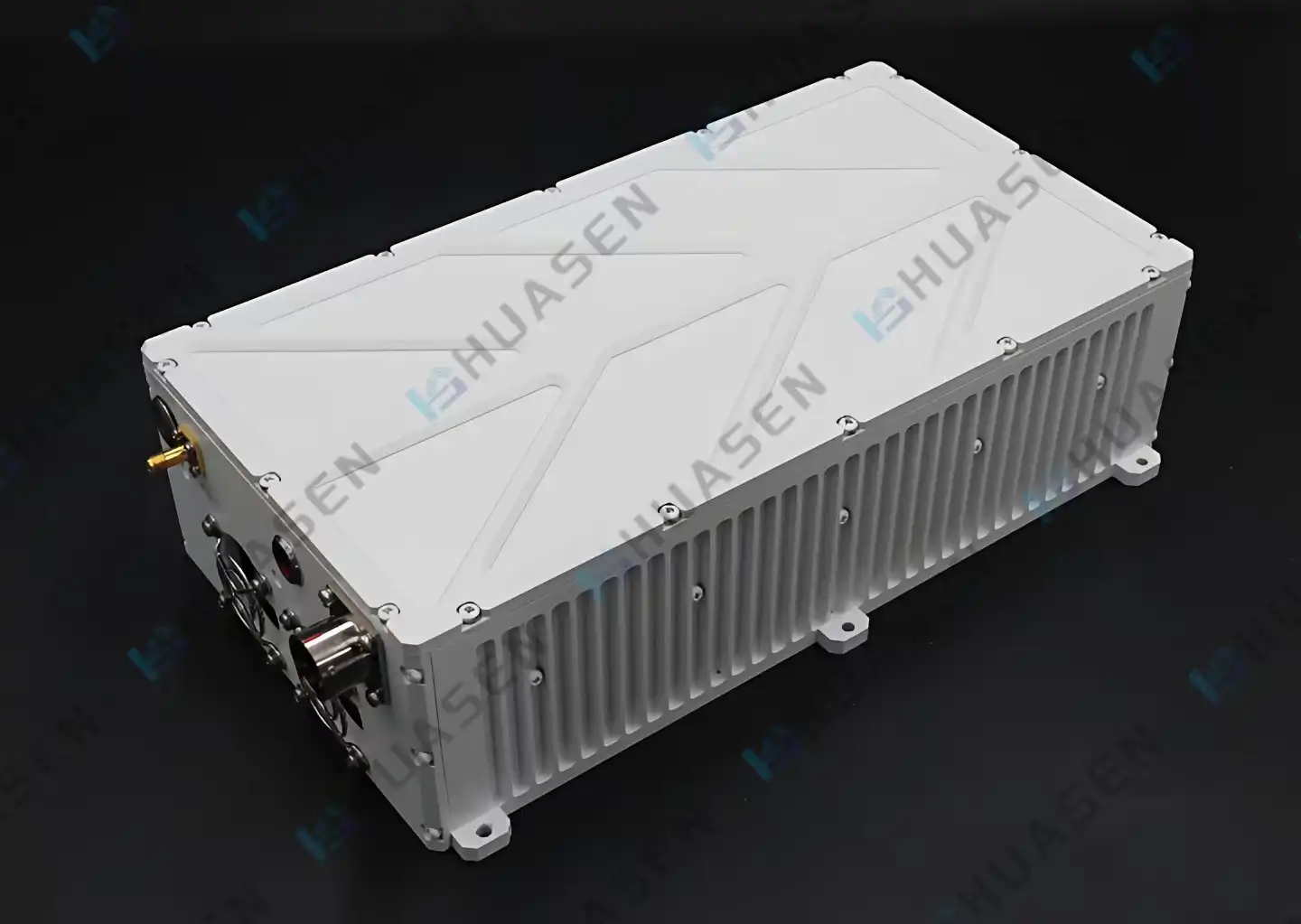
Common Performance Challenges in RF Systems & How Power Amplifiers Solve Them
RF transmission methods run into a number of problems that lower the quality of contact and the area they can cover. Signal loss gets worse with distance and frequency, and it's made worse by things like terrain barriers, air absorption, and equipment losses. The minimum detectable signal threshold goes up because of noise from natural sources and computer interference. This makes the useful dynamic range smaller.
Addressing Signal Loss Through Adequate Gain
For a 10 GHz satellite uplink across 35,000 km, the route loss is above 200 dB; hence, the emitter must be strong to maintain carrier-to-noise ratios at far terminals. Synthesiser outputs of +10 dBm are converted to broadcast levels of +50 dBm or greater by Power Amplifiers, which give the required gain. Signals stay above receiver noise levels even with transmission losses, with this increase. This improves link margin and coverage area, preventing fading and interference.
Optimising Linearity to Reduce Distortion
Non-linear amplification produces harmonics and intermodulation. These goods generate channel confusion and regulation violations. Power Amplifiers today employ predistortion and negative feedback to maintain clarity near saturation. Real-time digital predistortion can address amplifier non-linearities, allowing them to function closer to their most efficient areas without harming spectrum purity. This increase is especially important for 5G systems that employ complex modulation schemes like 256-QAM, where signal constellation stability directly affects transmission speeds.
Managing Noise to Enhance Signal Clarity
Power Amplifiers contribute noise, but appropriate system design positions them where signal levels are already high, minimising their contribution. Early-stage amplifier noise accounts for most system noise, according to the Friis formula. This is why noise figures focus on preamplifiers. Power Amplifiers prioritise the communication chain signal quality over noise performance. When minimal insertion loss is accomplished across the RF chain, including connections, cables, and matching networks, the signal-to-noise ratio from previous phases remains.
This methodical approach to signal amplification gets rid of bottlenecks that would otherwise make it hard to communicate and send large amounts of data in base station front-ends, marine communications, and electronic warfare systems.
Types of Power Amplifiers and Their Suitability for RF Applications
To choose the right Power Amplifier technology, you have to make sure that the device's features meet its operational needs, such as its frequency range, power level, efficiency goals, and the surroundings.
Solid-State Versus Tube Amplifiers
Modern RF systems employ transistor-based solid-state amplifiers. These amplifiers are compact, instantaneous, and highly durable—often over 100,000 hours. Base station applications up to 3.8 GHz benefit from silicon laterally-diffused MOSFETs (LDMOS) for great power density. However, gallium nitride (GaN) devices improve solid-state performance into millimetre-wave frequencies and increase efficiency and bandwidth. Klystrons and travelling-wave tubes can produce megawatt-level outputs that semiconductor technology can't, making them valuable in high-power radar and broadcasting. Tube systems require expert technicians and higher voltage supplies to maintain, whereas solid-state components may be replaced in minutes.
Class AB Dominance in Professional RF Systems
Class AB topology is prevalent in telecoms because it meets several demands. Two transistors conduct alternately during slightly overlapping signal cycles in these amplifiers. This decreases crossover distortion in Class B systems and makes them more efficient than Class A devices. Practical base station Class AB implementations. While achieving regulatory spectrum masks and maintaining neighbouring channel leakage ratios below -45 dBc, power amplifiers attain drain efficiencies of 50 to 60%. The architecture can handle watts to kilowatts by parallel device merging. This allows it to be utilised in portable radios and broadcast emitters.
Emerging Class D and Class E Technologies
Microwave bands now employ switching amplifier designs that were previously used for music and lower RF frequencies due to semiconductor technology advances. Class D amplifiers swiftly switch transistors on and off and have theoretical efficiency close to 100% and real-world usage around 80%. GaN technology switches speeds quickly enough for X-band frequencies. It is ideal for battery-powered drones and portable communication systems that need to stay cool and function for long periods. Class E amplifiers maximise switching changes to decrease high voltage and current. It makes them more efficient in particular impedance circumstances. Newer approaches yield less homogeneity than Class AB designs, making them preferable for constant-envelope modulation or linearisation systems.
System administrators must consider efficiency vs linearity, frequency coverage versus device availability, starting expenses versus lifecycle expenditures like cooling infrastructure and replacement intervals when making acquisitions.
Procurement Considerations for B2B Clients: Selecting the Right Power Amplifier
When people buy RF power amplification equipment, they have to think about more than just the specs on the box. They also have to think about how reliable the provider is, how well the equipment meets regulations, and how much it will cost them in the long run, over many years or decades.
Essential Technical Evaluation Criteria
OFDM modulation systems must manage average and peak power demands for high peak-to-average ratio transmissions. An amplifier built for 100W may need 400W of peak power to avoid signal compression and distortion at peaks. Efficiency standards affect cooling demands and costs. A 50% efficient 1kW amplifier will waste 1kW of power as heat, requiring a lot of thermal management equipment. A power-efficient 80% design will only waste 250W. For multi-carrier base stations, the third-order intercept point assesses linearity and should be above +40 dBm to withstand intermodulation distortion.
The voltage standing wave ratio (VSWR) indicates a resistance match. Low values below 1.5:1 ensure power flow and reflector protection of output stages. Signal quality depends on frequency response flatness throughout operational bands. Equalising differences beyond ±1 dB may be necessary. The temperature range indicates its operational environment. Military regulations require equipment to function between -55°C and +85°C, whereas corporate equipment works between -20°C and +60°C.
Certifications and Supplier Credibility
Verifying regulatory compliance prevents delays and lawsuits. Military usage requires MIL-STD-810 weather clearance and MIL-STD-461 electromagnetic compatibility. Commercial telecommunications equipment must be FCC or CE-marked for safety and emission regulations. RoHS compliance ensures overseas markets respect dangerous substance laws. ISO 9001 and AS9100 certifications indicate quality management systems and aviation standards, respectively.
You should evaluate a provider based on their manufacturing history, customer references, and professional advice. Famous firms frequently provide S-parameter data, thermal models, and interface guidelines to speed up system development. The company's one- to five-year warranties demonstrate its product stability. Some carriers charge more for longer coverage.
Strategic Purchasing Approaches
Bulk purchases allow you to negotiate cheaper rates, customised goods, and faster delivery. Large orders frequently allow custom frequency response, plug types (N-type, SMA, and 2.92mm), or chassis-specific mounting arrangements. Long-term supply partnerships safeguard pricing from market fluctuations and ensure parts availability when production rises. You may test in actual systems with sample assessment programs before making major commitments. This identifies interaction issues early. Distributors can assist in finding coaxial adapters, attenuators, and filters. This may simplify things and earn you a bundle of bargains.
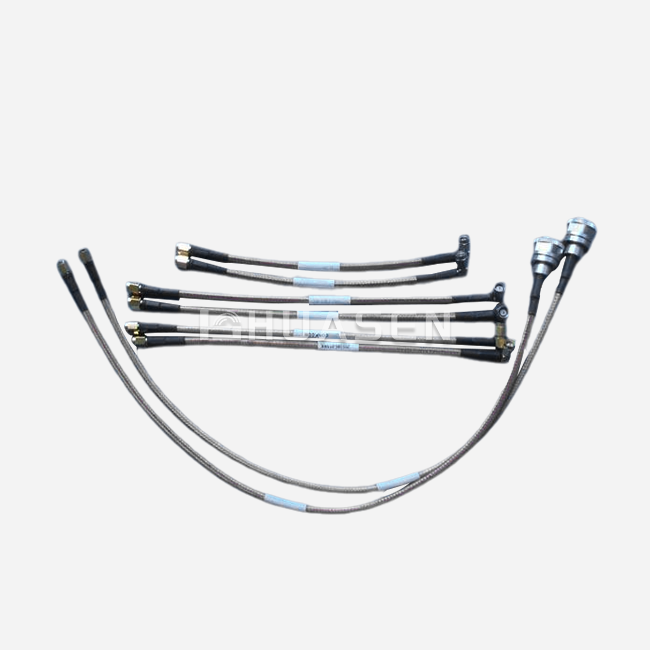
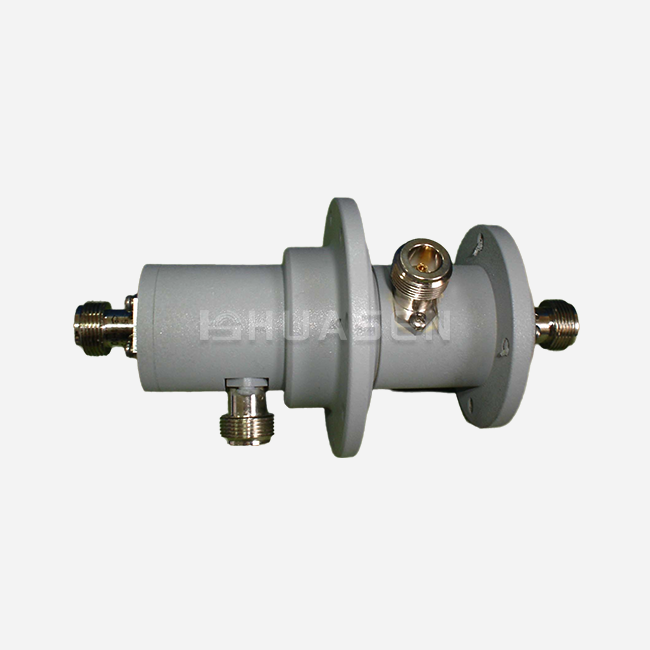
Huasen Microwave's RF cable adapters make Power Amplifier integration easier by connecting devices with different socket standards. These adapters operate with N-type, SMA, and 2.92mm interfaces and have a wide frequency range, low insertion loss, and good VSWR. This compatibility overcomes a procurement issue: amplifiers, antennas, and test instruments require various connections. No additional cable arrangements are needed, and port signal loss is reduced.
Suppliers frequently stand out more for after-sales technical support. Speedy engineering addresses starting issues, enhances matching networks, and interprets performance measurements. Application notes, reference designs, and software tools speed up integration, reducing the time to launch new systems.
Future Trends and Innovation: Power Amplifiers Enhancing RF System Performance
RF enhancement powers are always changing because people want higher frequencies, better efficiency, and the ability to work with digital control systems.
Efficiency Improvements and Miniaturisation
GaN transistor technology boosts performance in several ways. These wide-bandgap devices operate at greater voltages than silicon or gallium arsenide. This increases their power density (watts per cubic centimetre), making amplifiers smaller. A compact 100 cm³ GaN Power Amplifier may replace 500 cm³ silicon LDMOS devices with the same output. Compact devices like tactical radios and light aeroplanes need this. Passive heat sinks can replace forced air or liquid cooling in some cases due to the microwave drain efficiency of 70% or higher. This efficiency extends battery life in portable systems and lowers energy expenses in kilowatt-processing installations.
Integration of Digital Control and Monitoring
Modern amplifiers contain microprocessors and connection interfaces for remote setup and monitoring. Inbuilt sensors detect junction temperature, output power, mirrored power, and current draw. Sensors deliver data using SPI, I²C, or Ethernet protocols. This data helps maintenance workers predict performance issues before they occur. This reduces unwanted downtime. The bias may be changed digitally to maximise efficiency throughout output power levels. Amplifiers may switch between high-efficiency and maximum uniformity modes depending on need. Software-defined radio designs leverage these characteristics to adjust amplifier settings for different waveforms and modulation formats without changing hardware.
Advanced Linearization and Adaptive Techniques
Digital predistortion approaches have evolved from basic lookup tables to flexible systems that employ machine learning to improve linearisation when amplifier parameters change with temperature and time. These systems calculate inverse distortion functions for input signals to account for amplifier non-linearities to assess output signal quality in real time. From pricey individual hardware to integrated solutions in field-programmable gate arrays, costs dropped, and performance increased. Third-generation digital predistortion lowers neighbouring channel leakage rates below -55 dBc, bringing channels closer and optimising band utilisation. In 5G huge MIMO systems, hundreds of amplifiers must be synchronised and linear, making this technique beneficial.
Knowing these changes beforehand helps procurement teams set criteria for future improvements. Standardised control interfaces, software updates, and modular architecture may safeguard your amplifier investments from becoming obsolete as technology develops, making them compatible with new system designs.
Conclusion
By providing the signal strength required to beat propagation losses and create dependable communications links, Power Amplifiers fundamentally improve the performance of RF systems. When making the right choice, you have to weigh the output power, economy, linearity, and weather toughness against the size and cost limits that are unique to each application. Procurement workers can make smart choices that improve system performance while keeping total ownership costs low by learning about amplifier classes, evaluation criteria, and new technologies. As radio frequency (RF) systems get more complicated, use higher frequencies, and are more tightly integrated, amplifier technology keeps getting better thanks to better semiconductors, digital control, and more advanced linearization methods. Strategic relationships with suppliers that offer full technical support, proven dependability, and passive parts that work well together, such as precision adapters, make integration easier and lower the risk of the project.
FAQ
Q1: How does amplifier efficiency impact overall RF system performance?
Efficiency tells you how much of the DC input power is turned into RF output and how much is lost as heat. Higher efficiency cuts down on the need for cooling, lowers running costs, and increases the life of parts by lowering heat stress. When using batteries, the length of time a machine can run is directly related to how efficiently it works. A 10W amplifier that is 50% efficient needs 20W of input power and gives off 10W of heat. On the other hand, an 80% efficient design only needs 12.5W of input power and gives off 2.5W of heat. This difference has a huge impact on how hard it is to control heat and how much energy big installations use.
Q2: What design considerations matter most for RF amplifier selection?
The frequency range needs to include all working bands with enough room to spare. For a fade cushion, the output power should be 3 to 6 dB higher than what the link budget calls for. Specifications for linearity must meet the needs of the modulation format. More linearity is needed for complex modulations than for simple schemes. The environmental scores should meet the conditions of placement, such as high or low temperatures, high or low humidity, vibration, and altitude. Physical limitations like size, weight, mounting choices, and connection types can make merging impossible.
Q3: Why do warranties and certifications matter in amplifier procurement?
Warranties protect you financially if something breaks down too soon, and longer coverage shows that the maker trusts the reliability of the product. Compliance with regulations is confirmed by certifications, which avoid implementation delays and legal problems. MIL-STD certifications show that something is tough enough for use in defence applications, and industry certifications show that it follows quality control systems. These qualifications lower the risk of buying things by letting an impartial third party check the claims of performance and the production processes. This is especially helpful when looking at suppliers you haven't worked with before.
Partner with Huasen Microwave for Superior RF Amplification Solutions
Since its start in 1993, Huasen Microwave Technology has provided complete RF and microwave solutions. These solutions are backed by more than 30 years of engineering experience. In addition to Power Amplifiers, we also offer precision coaxial adapters that allow systems to be seamlessly integrated across N-type, SMA, and 2.92mm connection standards. These parts cover a wide range of frequencies, have low insertion loss, and have great VSWR properties. They solve important coupling problems in complicated RF systems. We understand the strict needs of defence applications, flight platforms, and telecommunications infrastructure that can't skimp on speed or dependability. During the whole procurement process, from the original study of the specifications to integration support and long-term service, our expert team gives application-specific advice. Email our experts at sales@huasenmicrowave.com to talk about your needs with a Power Amplifier seller who is dedicated to finding solutions to the problems in your specific system. We offer affordable volume discounts, the ability to make changes, and quick technical help to make sure your projects stay on plan and on budget.
References
1. Cripps, S.C. (2006). RF Power Amplifiers for Wireless Communications (2nd ed.). Artech House Publishers.
2. Grebennikov, A., Sokal, N.O., & Franco, M.J. (2012). Switchmode RF and Microwave Power Amplifiers (2nd ed.). Academic Press.
3. Kenington, P.B. (2000). High-Linearity RF Amplifier Design. Artech House Publishers.
4. Razavi, B. (2012). RF Microelectronics (2nd ed.). Prentice Hall.
5. Colantonio, P., Giannini, F., & Limiti, E. (2009). High Efficiency RF and Microwave Solid State Power Amplifiers. John Wiley & Sons.
6. Pengelly, R.S. (2011). Microwave Field-Effect Transistors: Theory, Design, and Applications (3rd ed.). SciTech Publishing.
Send Inquiry