How Corrugated Conical Horn Antenna Improves Beam Symmetry & Polarization?






2026-01-17 23:35:56
When precision radiation patterns and polarization purity matter most in satellite communications, radar systems, and radio astronomy applications, engineers face a critical challenge achieving equal E-plane and H-plane beamwidths while minimizing cross-polarization losses. The Corrugated Conical Horn Antenna solves this persistent problem through its innovative hybrid mode excitation, delivering beam symmetry and polarization performance that conventional smooth-wall horns simply cannot match across broadband frequency ranges.
Understanding the Fundamental Principles of Corrugated Conical Horn Antenna Beam Equalization
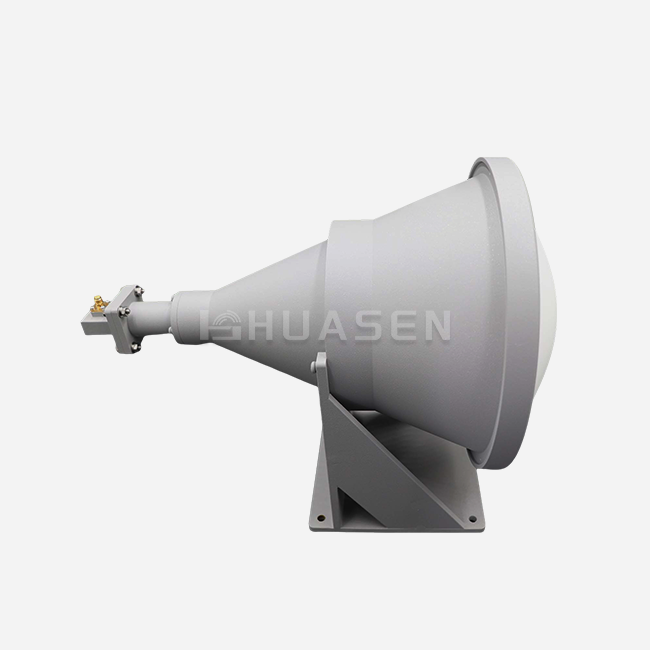
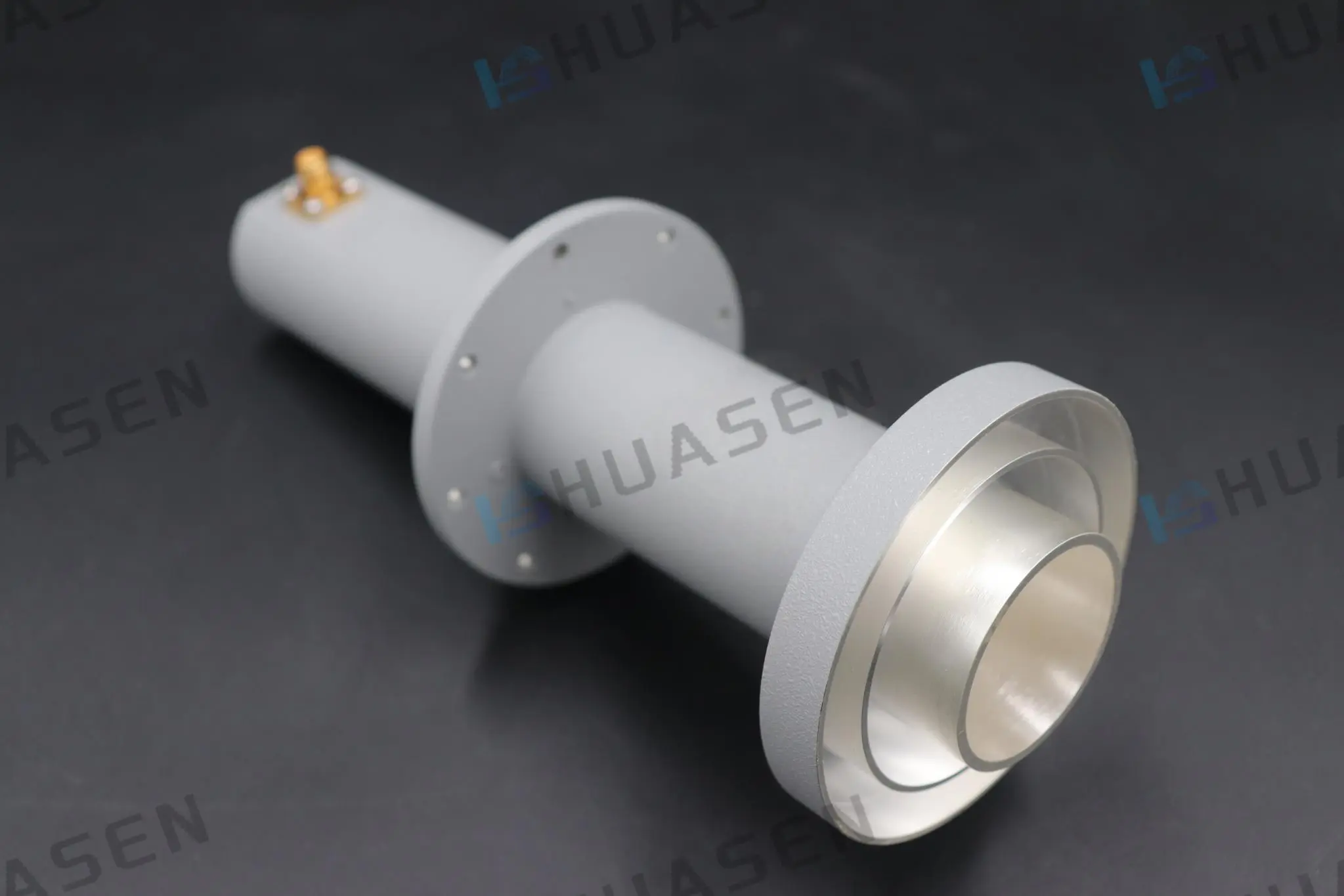
The revolutionary performance of the Corrugated Conical Horn Antenna stems from its ability to excite and propagate the HE11 hybrid mode, which fundamentally transforms how electromagnetic energy radiates from the antenna aperture. Unlike conventional conical horns that rely solely on the TE11 mode, the corrugated structure introduces a precisely engineered combination of transverse electric and transverse magnetic field components that work together to create an aperture field distribution that remains nearly identical across all azimuthal planes. This unique field configuration emerges from the interaction between electromagnetic waves and the periodic corrugated surface machined into the horn's interior walls, where each corrugation acts as a reactive impedance element that carefully controls the phase velocity of different mode components.
The HE11 hybrid mode represents an optimal balance consisting of approximately eighty-five percent TE11 mode energy combined with fifteen percent TM11 mode energy, with these components maintaining a precise relative phase relationship throughout the horn's length. This balanced mode mixture produces an electric field pattern at the antenna aperture that exhibits rotational symmetry, meaning the field strength and phase distribution remain constant as you move circumferentially around the aperture's axis. For applications demanding high-performance feed systems in offset reflector antennas or Cassegrain configurations, this rotational symmetry directly translates into reduced spillover losses, minimized cross-polarization, and improved aperture efficiency that can reach values exceeding eighty-four percent across octave bandwidths.
The Role of Corrugation Geometry in Mode Conversion and Impedance Matching
The physical dimensions and spacing of corrugations machined into the Corrugated Conical Horn Antenna represent critical design parameters that determine the antenna's electromagnetic performance across its operational bandwidth. Each corrugation typically features a depth of approximately one-quarter wavelength at the design frequency, creating a high-impedance surface condition that supports hybrid mode propagation while suppressing higher-order modes that would otherwise degrade radiation pattern quality. The corrugation width, slot depth variation, and pitch spacing work together as a distributed impedance matching network that gradually transforms the pure TE11 mode entering from the circular waveguide feed into the desired HE11 hybrid mode configuration by the time waves reach the radiating aperture.
Modern manufacturing techniques employed in precision Corrugated Conical Horn Antenna production utilize computer numerical control machining, electrical discharge machining, and specialized waveguide fabrication processes to achieve corrugation tolerances within micrometers. These tight manufacturing tolerances prove essential because even small deviations in corrugation depth or spacing can significantly impact the phase relationship between TE and TM mode components, potentially degrading beam symmetry and increasing cross-polarization levels. Advanced designs incorporate variable corrugation geometry along the horn's axial length, where corrugation dimensions gradually transition to optimize mode conversion efficiency while maintaining excellent voltage standing wave ratio performance, typically achieving VSWR values below 1.30 across full bandwidth operation and below 1.06 for narrowband applications.
Achieving Superior Beam Symmetry Through Hybrid Mode Excitation in Corrugated Conical Horn Antenna Designs
The exceptional beam symmetry characteristic of Corrugated Conical Horn Antenna systems manifests as equal half-power beamwidths in both principal planes, a performance metric that proves difficult or impossible to achieve with smooth-walled conical horn configurations. When electromagnetic waves propagate through a conventional smooth-wall conical horn, the TE11 mode produces inherently asymmetric radiation patterns where the E-plane beamwidth differs substantially from the H-plane beamwidth, creating elliptical beam cross-sections that reduce system performance in applications requiring circular coverage patterns or symmetric illumination of reflector surfaces.
The HE11 hybrid mode supported by the corrugated structure eliminates this asymmetry through its balanced field composition, where the TM11 component's radiation characteristics precisely complement those of the TE11 component to produce a combined far-field pattern exhibiting circular symmetry. Measurement data from precision antenna test ranges demonstrates that properly designed Corrugated Conical Horn Antenna implementations achieve beam equalization errors less than plus or minus five degrees within the negative fifteen decibel contour, meaning the beam maintains nearly perfect circular symmetry throughout its main lobe and near-in sidelobe region. This level of symmetry performance enables applications in radio astronomy where accurate beam mapping requires predictable, consistent patterns, as well as satellite earth station antennas where symmetric illumination maximizes reflector efficiency and minimizes pattern distortion.
Frequency-Independent Radiation Characteristics and Broadband Operation
One of the most valuable performance attributes of the Corrugated Conical Horn Antenna architecture involves its ability to maintain consistent radiation characteristics across extremely wide frequency ranges, often spanning ratios of two-point-five-to-one or greater between upper and lower band edges. This broadband capability stems from the fundamental physics of hybrid mode propagation, where the HE11 mode's field configuration remains relatively insensitive to frequency variations compared to higher-order modes that exhibit strong frequency-dependent behavior. The corrugation dimensions scale proportionally with wavelength, allowing the impedance matching and mode conversion functions to track frequency changes and preserve performance metrics including gain, beamwidth, sidelobe levels, and cross-polarization across the entire operational bandwidth.
Professional-grade Corrugated Conical Horn Antenna products designed for telecommunications, aerospace, and defense applications typically cover frequency ranges from 1.76 gigahertz extending upward to 300 gigahertz, with individual antenna models offering octave or multi-octave bandwidth coverage. Within these broad operating ranges, the antenna maintains stable gain characteristics where variation typically remains within 0.4 decibels, and beamwidth changes stay within plus or minus eight degrees of the nominal value. This frequency-stable performance eliminates the need for multiple antenna systems when applications require operation across wide frequency bands, reducing system complexity, installation costs, and potential failure points while improving overall reliability in mission-critical applications where antenna performance directly impacts communication link quality or measurement accuracy.
Polarization Purity Enhancement Mechanisms in Corrugated Conical Horn Antenna Structures
Cross-polarization performance represents a critical specification for Corrugated Conical Horn Antenna systems deployed in applications requiring dual-polarization operation, frequency reuse, or high signal-to-interference ratios. The term cross-polarization describes energy radiated in a polarization state orthogonal to the intended polarization, effectively appearing as an interference signal that degrades communication channel isolation or measurement accuracy. Conventional smooth-wall conical horns typically exhibit cross-polarization levels in the range of negative twenty to negative twenty-five decibels relative to the co-polarized component, a performance level insufficient for many modern communication systems and radio astronomy applications where channel isolation requirements may exceed negative forty decibels.
The Corrugated Conical Horn Antenna architecture achieves dramatically improved cross-polarization suppression through the rotationally symmetric field distribution produced by HE11 hybrid mode propagation. When the aperture field exhibits true circular symmetry, the mathematical decomposition of this field into orthogonal polarization components reveals that the cross-polarized energy approaches theoretical minimum levels dictated only by diffraction effects at the aperture boundary. Measurement results from calibrated antenna test facilities demonstrate that precision-manufactured Corrugated Conical Horn Antenna systems routinely achieve cross-polarization levels below negative thirty-five decibels across the central portion of the main beam, with some advanced designs reaching negative forty decibels or better through optimized corrugation profiles and careful attention to manufacturing tolerances.
Dual-Polarization and Circular Polarization Implementation Strategies
Modern communication systems increasingly demand antennas capable of simultaneous dual-linear polarization or circular polarization operation to maximize spectral efficiency and enable advanced modulation techniques. The Corrugated Conical Horn Antenna provides an ideal foundation for these multi-polarization architectures because its circular aperture and rotationally symmetric field distribution naturally support any polarization state without introducing additional asymmetries or performance degradation. Engineers implement dual-polarization capability through integration with orthomode transducers that separate orthogonal linear polarization components at the antenna's waveguide interface, allowing independent signal channels to share the same radiating aperture while maintaining high isolation between polarizations that can exceed forty decibels across operational bandwidths.
Circular polarization implementations typically incorporate dielectric plate polarizers or septum polarizer structures positioned within the circular waveguide feed section of the Corrugated Conical Horn Antenna. These polarizer elements introduce a controlled differential phase shift between orthogonal linear field components, converting linearly polarized input signals into right-hand or left-hand circular polarization with axial ratio performance that can reach values below 0.5 decibels across bandwidths exceeding sixty percent. The combination of corrugated horn hybrid mode propagation with advanced polarizer designs enables broadband circularly polarized antenna systems achieving simultaneous impedance bandwidth exceeding sixty-one percent and axial ratio bandwidth of approximately sixty percent, making these antennas ideal for satellite communication links, radio astronomy observations, and radar applications where circular polarization provides advantages in signal reception quality or target discrimination capabilities.
Technical Specifications and Performance Parameters of Professional Corrugated Conical Horn Antenna Systems
High-performance Corrugated Conical Horn Antenna products manufactured for demanding applications incorporate precisely controlled design parameters that determine electromagnetic performance across multiple dimensions. Frequency coverage typically spans from microwave frequencies beginning around 1.76 gigahertz extending through millimeter-wave bands to 300 gigahertz, with standard waveguide interfaces ranging from 2.388 millimeters diameter for high-frequency applications up to 114.58 millimeters for lower frequency bands. The voltage standing wave ratio specification serves as a key indicator of impedance matching quality, with professional-grade antennas achieving VSWR values less than 1.30 across full bandwidth operation and exceptional VSWR below 1.06 for optimized narrowband designs, ensuring maximum power transfer efficiency and minimal signal reflection losses.
Radiation characteristic specifications quantify the antenna's far-field performance in terms of beam symmetry, sidelobe suppression, and polarization purity. The E-plane and H-plane beam equalization error represents a critical metric for applications requiring symmetric coverage, with high-quality Corrugated Conical Horn Antenna designs maintaining equalization errors within plus or minus five degrees throughout the negative fifteen decibel beam contour. Sidelobe levels typically remain below negative twenty-five decibels relative to the main beam peak across operational frequencies, reducing unwanted signal reception from off-axis directions and improving system signal-to-noise performance. The structural design combines a large-angle horn configuration with precision corrugated slot structures machined to exacting tolerances, creating the impedance conditions necessary for optimal hybrid mode excitation and propagation.

Manufacturing Excellence and Quality Assurance in Corrugated Conical Horn Antenna Production
Professional manufacturing of Corrugated Conical Horn Antenna systems requires sophisticated machining capabilities, precision assembly techniques, and comprehensive quality control processes to ensure consistent performance across production quantities. Advanced machining workshops equipped with computer numerical control lathes, CNC milling machines, electrical discharge machining systems, and wire cutting equipment provide the capability to fabricate complex corrugated structures with dimensional accuracies measured in micrometers. Specialized fitting workshops perform critical joining operations including silver brazing, aluminum brazing, vacuum furnace brazing, and TIG welding that create hermetic seals and electrical continuity throughout the antenna assembly while maintaining tight tolerances on corrugation geometry and overall dimensional specifications.
Quality assurance processes incorporate multiple verification stages including dimensional inspection using coordinate measuring machines and image measuring instruments, electrical testing in calibrated microwave anechoic chambers, and environmental qualification through temperature shock testing, humidity cycling, and vibration testing. Anechoic chamber facilities ranging from five-meter compact ranges to twenty-one-meter far-field test systems enable comprehensive measurement of radiation patterns, gain, beamwidth, cross-polarization, and other critical performance parameters across frequency ranges extending from 500 megahertz to 220 gigahertz. Vector network analyzers, spectrum analyzers, signal generators, and specialized millimeter-wave test equipment support detailed characterization of impedance matching, insertion loss, and frequency response characteristics, ensuring every Corrugated Conical Horn Antenna meets or exceeds specified performance requirements before delivery to customers.
Applications Driving Corrugated Conical Horn Antenna Technology Advancement
The unique combination of beam symmetry, low cross-polarization, and broadband performance offered by Corrugated Conical Horn Antenna technology makes these antennas indispensable in numerous high-performance applications spanning telecommunications infrastructure, aerospace systems, scientific instrumentation, and defense technologies. Satellite communication earth stations rely on corrugated horn feeds to efficiently illuminate parabolic reflector antennas, where the symmetric radiation pattern maximizes aperture efficiency and the low cross-polarization enables frequency reuse and dual-polarization operation that doubles channel capacity. Radio astronomy observatories employ precision Corrugated Conical Horn Antenna systems as feed horns for large reflector telescopes, where the exceptional beam symmetry and low sidelobe levels minimize stray signal reception from terrestrial interference sources while the broadband capability allows simultaneous observation across wide frequency ranges for multi-wavelength astronomical studies.
Radar systems benefit from the frequency-stable radiation characteristics and polarization purity of Corrugated Conical Horn Antenna designs, enabling accurate target detection and tracking across diverse operational scenarios. The symmetric beam patterns produce consistent illumination of surveillance volumes, while the low cross-polarization supports polarimetric radar techniques that extract additional target information from polarization signature analysis. Modern fifth-generation and sixth-generation wireless communication systems leverage corrugated horn antenna technology for base station testing, antenna calibration, and over-the-air performance validation, where the predictable and stable radiation characteristics provide reliable reference standards for characterizing complex phased array and massive MIMO antenna systems. Defense applications including electronic warfare, missile guidance, and countermeasure systems utilize Corrugated Conical Horn Antenna components for their reliability, environmental ruggedness, and consistent performance across wide temperature ranges and challenging deployment conditions.
Conclusion
The Corrugated Conical Horn Antenna represents a fundamental advancement in antenna engineering, delivering unmatched beam symmetry through HE11 hybrid mode excitation while achieving superior polarization purity that conventional designs cannot match. With frequency coverage extending from 1.76 to 300 gigahertz, exceptional VSWR performance, and E-H plane beam equalization errors below five degrees, these antennas serve as essential components in telecommunications, aerospace, radio astronomy, and defense applications where precision radiation control determines system success.
Cooperate with Huasen Microwave Technology Co., Ltd.
Founded in 1993, Huasen Microwave Technology Co., Ltd. stands as your trusted China Corrugated Conical Horn Antenna manufacturer, supplier, and factory with three decades of expertise in high-frequency microwave and millimeter-wave components. Our High Quality Corrugated Conical Horn Antenna products serve telecommunications, radar, aerospace, and defense industries worldwide. With a 3,000-square-meter facility housing advanced CNC machining, precision assembly capabilities, and three calibrated microwave anechoic chambers (21m, 9m, and 5m) covering 500 MHz to 220 GHz, we deliver China Corrugated Conical Horn Antenna wholesale solutions at competitive Corrugated Conical Horn Antenna prices. Our ISO-certified manufacturing processes, comprehensive testing including 40 vector network analyzers and 110 GHz measurement systems, and experienced engineering team ensure every Corrugated Conical Horn Antenna for sale meets the highest performance standards. Contact our technical specialists today at sales@huasenmicrowave.com to discuss your specific requirements and discover how our custom-designed antennas can optimize your system performance.
References
1. Clarricoats, P.J.B. and Olver, A.D., "Corrugated Horns for Microwave Antennas," IEE Electromagnetic Waves Series, Peter Peregrinus Ltd.
2. Thomas, B.M., James, G.L., and Greene, K.J., "Design of High-Performance Wideband Corrugated Horns for Cassegrain Antennas," IEEE Transactions on Antennas and Propagation.
3. Olver, A.D., Clarricoats, P.J.B., Kishk, A.A., and Shafai, L., "Microwave Horns and Feeds," IEE Electromagnetic Waves Series, IEEE Press.
4. Teniente, J., Gonzalo, R., and Del-Río, C., "Ultra-Wide Band Corrugated Gaussian Profiled Horn Antenna Design," IEEE Microwave and Wireless Components Letters.
5. Abbas-Azimi, M., Mazlumi, F., and Behnia, F., "Design of Broadband Constant-Beamwidth Conical Corrugated-Horn Antennas," IEEE Antennas and Propagation Magazine.
Send Inquiry