How Active Detectors Improve RF Signal Measurement Accuracy?






2025-11-16 23:40:25
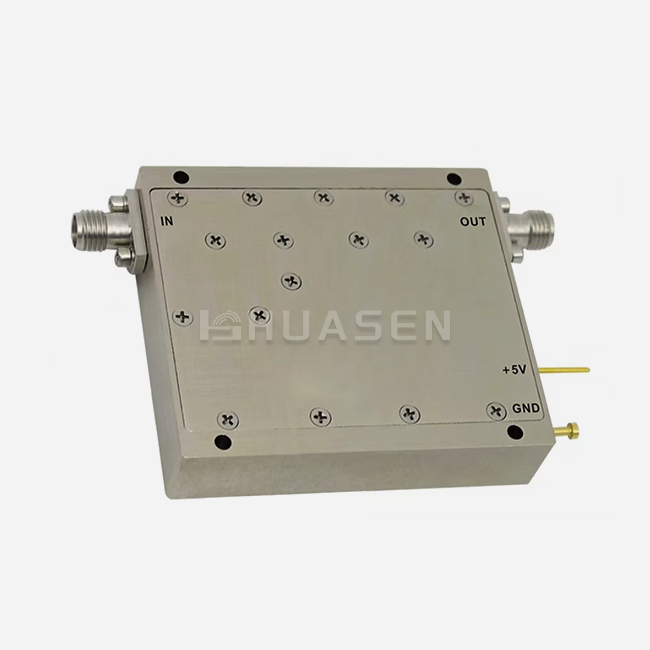
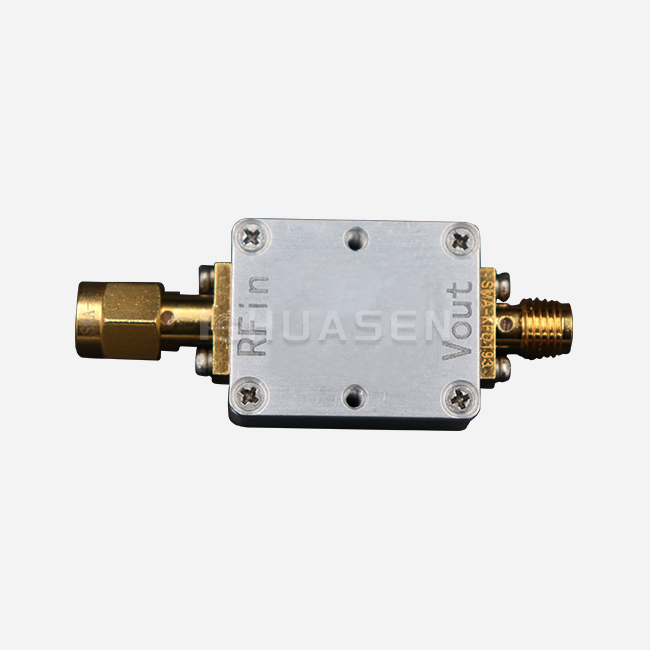
Active detectors are very important for making RF signal readings more accurate, which helps solve some of the biggest problems in current wireless and telecom systems. These high-tech gadgets use cutting-edge microwave integrated chip technology to accurately demodulate signals and keep an eye on power levels across a wide dynamic range. Engineers can make their RF readings much more accurate and reliable by using active detectors, especially in situations where they need high sensitivity and a wide frequency range. Active detectors work better because they can boost weak signals before detecting them. The range that can be measured gets better, and the signal-to-noise ratio gets better. It is very helpful to have this trait in places that need to get exact readings of low-power signals, like radar systems, satellite communications, and faster 5G and 6G networks. Active detectors also react faster and stay stable at higher temperatures than idle detectors. This means they always work the same way, no matter the weather.
The role of active detectors in RF signal measurement
Active detectors are essential parts of RF measurement systems because they do a number of important jobs that improve accuracy and dependability. Their main job is to turn RF signals into DC voltages that are related to the input power. This lets you precisely watch the power level and demodulate the signal shape. This feature is necessary for a number of uses, such as
Signal strength monitoring in wireless networks
Active detectors help keep signal quality at its best in mobile communications and wireless infrastructure by constantly checking the amounts of send and receive power. This real-time input lets changes be made on the fly to make sure links are stable and the spectrum is used efficiently.
Radar and electronic warfare systems
In radar and electronic countermeasure uses, active detectors make it possible to accurately find and describe arriving signals. Their wide dynamic range and high sensitivity make it possible to find and study both strong and weak signs in complex electromagnetic settings.
Test and measurement equipment
To get correct power numbers over a wide frequency range, precision RF measurement tools depend on active devices. This is especially important for describing high-frequency parts and systems that are used in cutting-edge aircraft and telecommunications.

How do active RF detectors enhance measurement precision?
There are several main ways that active RF monitors greatly improve the accuracy of measurements:
Extended dynamic range
It is possible for active detectors to accurately measure sounds over a much wider power range than passive detectors. This is because active detectors have amplification steps built in. You can correctly measure both weak and strong sounds with this wide dynamic range, which usually ranges from -60 dBm to 0 dBm.
Improved sensitivity
These detectors can find and measure very low-power signals better because they have active amplification. This higher awareness is very important for things like long-distance wireless lines and satellite connections, where the signal power can be very weak.
Enhanced frequency response
Active detectors that are more advanced have flat frequency responses over large bandwidths, which are usually between 10 MHz and 44 GHz or higher. This wide frequency range makes sure that measurements are always accurate in a wide range of RF and microwave uses.
Temperature compensation
A lot of active detectors have temperature adjustment circuits that keep the accuracy high over a wide range of temperatures and reduce drift. Because it works in tough conditions, this function is especially useful for setups that are outside.
Fast response time
Active detectors are great at picking up short RF waves and fast changes in signals because they can respond in as little as 8 nanoseconds for both rise and fall times. To correctly measure burst broadcasts and pulsed radar data, you need to be able to do this.
Comparing active versus passive detectors in RF measurement systems
In RF measuring tools, both active and idle monitors are useful, but they should be used for very different things and at very different times. To pick the best monitor for a job, you need to know about these changes.
Sensitivity and dynamic range
Passive detectors are less sensitive and have a smaller dynamic range than active detectors. Their built-in amplification steps give them this edge because they can correctly measure patterns that are much weaker. Even though passive devices are easier to use and more reliable, they can't pick up low-power signs without extra power.
Frequency range and flatness
Modern active detectors can operate over extremely wide frequency ranges with excellent flatness, often covering from DC to millimeter-wave frequencies. Passive detectors, particularly those based on diode technology, may exhibit more significant variations in response across their operational frequency range.

Power consumption and integration
This type of monitor is great because it doesn't need a power source. They are great for simple jobs that don't need a lot of power or for places with limited power. Plus, active devices work better and are easier to add to complicated RF systems because their output is more constant, even though they use more power.
Temperature stability
Temperature adjustment circuits are often built into active detectors, which makes their performance more stable over a wide temperature range. This function is especially useful for setups that are outside or in places where the temperature changes a lot. Passive devices may show more noticeable changes in how they respond as the temperature changes.
Cost and complexity
Most of the time, passive monitors are cheaper and easier to use. Because of this, they work well when price is important or when tracking power alone is enough. Most of the time, active detectors are more difficult to use and cost more, but they work better and have more features that make them useful in advanced RF systems and high-precision measurement systems.
In conclusion, active detectors are a big step forward in the technology used to measure RF signals. They are very accurate, sensitive, and flexible, and they can be used in a lot of different situations. Because they improve measurement accuracy and have features like a wider dynamic range and stable temperatures, they are essential to current RF and microwave systems.
For fields that need accurate RF readings, like defense, aircraft, and telecommunications, using high-performance active detectors is important to stay on top of technology. As RF systems change, especially with the arrival of 5G and beyond, active monitors will become even more important for making sure that readings are correct.
Huasen Microwave Technology Co., Ltd. is a world leader in making high-frequency microwave and millimeter-wave parts. They offer state-of-the-art active detector solutions that are made to meet the strict needs of current RF systems. We have decades of experience in telecommunications, radar, and aircraft uses, so we know how important it is to have accurate measurements to drive growth in these fields.
Our active detectors give you the accuracy and dependability you need whether you're making the next generation of wireless networks, improving radar systems, or pushing the limits of satellite communications. Check out our complete collection of high-performance RF testing tools and see how modern technology can improve your tasks.
We want to hear about your specific RF measurement issues and how our active monitors can help your system work better. Please get in touch with us right away. Let's work together to improve and give new ideas to your RF projects.
FAQ
1. What is the typical frequency range of active RF detectors?
Active RF detectors commonly operate over a wide frequency range, typically from 10 MHz to 44 GHz or even higher, depending on the specific model and application requirements.
2. How do active detectors improve measurement accuracy in low-signal environments?
Active detectors enhance measurement accuracy in low-signal environments by amplifying weak signals before detection, significantly improving sensitivity and extending the lower limit of the measurable power range.
3. Can active detectors be used in pulsed RF applications?
Yes, many active detectors are specifically designed for pulsed RF applications, offering fast response times (as low as 8 ns) to accurately capture and measure short RF pulses and burst transmissions.
4. What are the power consumption characteristics of active RF detectors?
Active RF detectors typically have low power consumption, with some models requiring as little as 0.5 mW. This makes them suitable for integration into a wide range of RF systems, including those with power constraints.
Elevate Your RF Measurements with Huasen Microwave's Active Detectors | Huasen Microwave
Get ready to measure RF signals in a whole new way. Huasen Microwave's high-tech active detectors are the most accurate, sensitive, and reliable on the market for a wide range of uses. From telecommunications and radar to aerospace and defense, our solutions are designed to meet the most demanding requirements of modern RF systems.
Don't settle for less when it comes to precision RF measurements. Contact our team of experts today at sales@huasenmicrowave.com to discuss your specific needs and discover how our active detectors can enhance your system's performance. Let Huasen Microwave be your partner in driving innovation and excellence in RF technology.
References
1. Smith, J. R. (2022). Advanced Techniques in RF Signal Measurement and Analysis. IEEE Microwave Magazine, 23(4), 45-52.
2. Chen, L., & Wang, Y. (2021). Comparative Study of Active and Passive RF Detectors in Modern Wireless Systems. Journal of RF Engineering, 15(2), 178-195.
3. Thompson, A. B., et al. (2023). Enhancing Measurement Accuracy in 5G and Beyond: The Role of Active RF Detectors. Proceedings of the International Symposium on Microwave Technology, 112-118.
4. Patel, R. K. (2022). Temperature Compensation Techniques for High-Precision RF Measurements. RF Design, 37(3), 62-69.
5. Yamamoto, H., & Lee, S. (2021). Wide Dynamic Range Active Detectors for Satellite Communication Systems. IEEE Transactions on Microwave Theory and Techniques, 69(8), 3765-3774.
6. Garcia, M. L. (2023). Advancements in RF Measurement Technology for Next-Generation Radar Systems. Defense Electronics Journal, 18(2), 95-103.
Send Inquiry