Coplanar Waveguide Advantages in RF PCB Design






2026-03-12 21:53:43
As high-frequency communications and RF systems change quickly, coplanar waveguide (CPW) technology stands out as a better transmission line option that solves important design problems that engineers and procurement specialists face. Coplanar waveguides are different from regular microstrip configurations because the central signal conductor and ground planes are on the same substrate surface. This gives better impedance control, less electromagnetic interference, and easier manufacturing processes. This new way of doing things is becoming more and more important for uses like 5G infrastructure, satellite communications, radar systems, and millimeter-wave devices that need to keep the signal's purity and work reliably.
Understanding Coplanar Waveguide Technology
As a major step forward in RF PCB design, coplanar waveguide technology has a unique transmission line structure with ground planes placed on similar substrate surfaces and a central conductor that works with them. Compared to standard microstrip and stripline setups, this one is very different. It has better electrical properties, such as better control of impedance and better signal propagation.
Fundamental Principles and Structure
A CPW structure is made up of three main parts: a dielectric substrate, lateral ground planes separated by small gaps, and a center signal conductor. There are special features to the way electromagnetic fields are spread out in coplanar waveguides. Field lines are mostly concentrated between the signal wire and the ground planes next to it. The way this is set up makes a quasi-TEM mode of transmission that stays stable over a wide frequency range. This makes it very useful for broadband uses in radar and telecommunications systems. When engineers work on designing the front ends of 5G base stations, they've found that CPW shapes offer very good phase stability and low dispersion. By carefully adjusting the conductor width and gap spacing, the geometry gives designers very precise control over the characteristic impedance. This lets them reach goal impedance values with great accuracy. When working with high-frequency signals, this level of accuracy is very important because even small differences in resistance can cause the signal to weaken significantly.
Applications Across Industries
Coplanar waveguide technology is used in many modern RF applications, such as mobile communications infrastructure, satellite links, and aerospace systems. In 5G and soon-to-be-released 6G networks, CPW structures work very well in millimeter-wave uses where regular transmission lines often have trouble with high losses and making them. The technology works especially well in antenna feed networks because it has low loss and great isolation, which improves the total performance of the system. The CPW's ability to handle high-power signals while keeping signal integrity is very useful for radar and electronic defences. The structure is naturally stable and less affected by changes in the environment, which makes it perfect for mission-critical defence uses. Companies that make communications testing tools have started to use CPW technology in their precision measurement systems. For these systems to give accurate test results, the signals must be sent accurately and with little distortion.
Advantages of Coplanar Waveguides in RF PCB Design
Coplanar waveguide technology is being used more and more in RF PCBs because it has many technical benefits that directly solve problems in the industry that have to do with signal integrity, manufacturing efficiency,and electromagnetic compatibility. Businesses that need reliable high-frequency solutions can see real improvements in system efficiency and cost-effectiveness thanks to these benefits.
Superior Signal Integrity Performance
The best thing about coplanar waveguides in high-frequency settings is that they keep their impedance steady and have very little dispersion. This is because they lose very little radiation. CPW structures have a symmetric field distribution that stops unwanted mode coupling and makes sure that signals travel consistently even at millimeter-wave frequencies. In broad applications, where keeping the signal's integrity over wide frequency ranges is very important, this trait is very helpful. When CPW structures are tested in the lab, they always show return loss performance exceeding 20 dB across operating bandwidths, and VSWR values are usually kept below 1.2. These performance measures have a direct effect on how well the system works and how good the signals are. They meet the needs of procurement teams that want low insertion loss and the best return loss characteristics. Because the impedance stays stable, in acoplanar waveguide design,you don't need as many complicated matching networks. This makes the system design simpler and more reliable.
Manufacturing and Testing Advantages
For large-scale production, the fact that coplanar waveguides can be used with normal PCB manufacturing methods is a big plus. CPW structures can be made using standard etching methods on single or double-layer substrates, unlike stripline configurations that need multilayer fabrication and exact via placement. This makes manufacturing easier, which lowers production costs and shortens lead times. This eases procurement worries about keeping costs down and meeting delivery dates. Both signal and ground wires are easy to reach on the substrate surface, which makes testing and characterising CPW circuits easier. This setup makes straight probing for RF measurements easier, since you don't need any special test fixtures or complicated transitions. Standard coplanar probes let engineering teams take accurate measures of S-parameters, which speeds up development cycles and lowers the cost of validation. The ease of testing is especially helpful for study institutions and equipment makers that need to be able to fully evaluate components.
Design Flexibility and Integration Benefits
Modern RF system designs need to be flexible to deal with different resistance needs and problems integrating parts. Coplanar waveguides give designers a lot of freedom because they let them precisely control geometric factors like conductor width, gap spacing, and substrate properties. This gives designers the freedom to find the best impedance matching for each application while still keeping the small form factors that are needed for installations with limited room. When surface-mounted parts are combined with CPW designs, they offer clear benefits over other gearbox line technologies. It's possible to mount parts directly on the coplanar frame without having to switch between different types of gearbox lines. This cuts down on insertion losses and makes assembly easier. This feature is especially useful for complicated RF front-end designs that need to fit a lot of parts into a small space. It meets the needs of the industry for small mechanical specs.
Comparing Coplanar Waveguide with Other Transmission Lines
Knowing the pros and cons of coplanar waveguides compared to microstrip lines, striplines, coplanar waveguide design, and coaxial configurations helps buying teams and design engineers make smart choices. Different transmission line technologies have different features that affect how well they work, how much they cost, and how they are made in different situations.
Performance Comparison with Microstrip Lines
Microstrip transmission lines are commonly used in radio frequency (RF) applications, but they have some problems that coplanar waveguides can solve. Because they have an open field, microstrip shapes lose more radiation at millimeter-wave frequencies. CPW designs, on the other hand, keep the field more contained through the lateral ground planes. This better confinement means that interference between transmission lines next to each other is lessened, and separation is improved in dense circuit layouts. Another place where coplanar waveguides are better than microstrip configurations is in dispersion characteristics. In CPW structures, the quasi-TEM mode transmission stays mostly the same in phase velocity across a wide range of frequency bands. In contrast, higher frequencies cause microstrip lines to become more dispersed because they are in a mixed dielectric environment. This spreading behaviour is especially bad for wideband applications, where signal distortion can really hurt the system's performance. The highly sensitive fabrication tolerance of microstrip lines makes it hard to make a lot of them, since changes in substrate thickness have a direct effect on the characteristic impedance. Because their impedance changes depending on geometry, coplanar waveguides can handle differences in substrates better, making performance more stable across production lots. This production robustness meets the needs of procurement for a reliable supply chain and quality control.
Advantages Over Stripline Configurations
Even though stripline gearbox lines are great at isolating and shielding, they need layered PCB construction, which makes them harder to make and costs more. Because the conductors are buried, they need to be precisely placed, and the impedance must be controlled as it flows through multiple substrate layers. This creates possible failure points and makes the assembly process more difficult. Similar isolation performance is achieved by coplanar waveguides, which also keep the surface accessible for testing and fixing components. Because they are surface-mounted, CPW structures can often handle more power than similar stripline designs. This is because they are better at getting rid of heat. This thermal advantage is helpful for high-power uses in radar and base station systems because it makes it easier to handle the heat that builds up in the conductors using the right thermal design methods. This feature directly meets the needs of the industry for reliable high-power operation in tough environmental situations.
Decision Criteria for CPW Implementation
If you want to use coplanar waveguide technology instead of other transmission line methods, you need to carefully think about the needs of your application, such as the frequency range, power levels, weather conditions, and manufacturing limitations. CPW implementations work especially well for millimeter-wave uses above 30 GHz, where the better loss characteristics and lower dispersion make a real difference in performance. When making a budget, you need to think about both the original costs of development and the long-term costs of manufacturing. Even though CPW designs might need specialised design knowledge at first, they usually have a lower total cost of ownership for large-scale production because they are easier to make and test. To make sure there is enough technical help throughout the lifecycle of a product, procurement teams should look at what their suppliers can do for CPW fabrication and testing.
Design Guidelines and Best Practices for Coplanar Waveguides
Achieving optimal performance from coplanar waveguide implementations requires adherence to established design principles and careful attention to critical parameters that influence electrical characteristics. These guidelines enable engineering teams to maximize the benefits of CPW technology while avoiding common pitfalls that can compromise system performance.
Critical Design Parameters and Impedance Control
The characteristic impedance of coplanar waveguides depends primarily on the ratio of signal conductor width to gap spacing, along with substrate dielectric properties and thickness. Maintaining precise impedance control requires careful attention to manufacturing tolerances and material selection criteria. Target impedance values can be achieved through iterative optimization using electromagnetic simulation tools, with typical design goals ranging from 50 ohms for general-purpose applications to specialized values for specific system requirements. Conductor dimensions must account for skin effect losses that become increasingly significant at higher frequencies. The surface roughness of conductors also impacts insertion loss performance, particularly above 10 GHz, where roughness-induced losses can dominate overall loss budgets. Specifying appropriate copper foil types and surface treatments during PCB fabrication ensures optimal electrical performance while maintaining manufacturing feasibility.
Simulation Tools and Optimization Techniques
Professional electromagnetic simulation software, including HFSS, CST Microwave Studio, coplanar waveguide design,and Keysight Advanced Design System (ADS) provide essential capabilities for CPW design optimization. These tools enable accurate prediction of electrical performance, including S-parameters, current density distributions, and field patterns that guide design refinements. Simulation-driven design approaches reduce development time and minimize the need for costly prototype iterations. The simulation process should encompass both individual CPW segments and complete circuit configurations to identify potential interaction effects and optimization opportunities. Parametric studies enable designers to understand sensitivity to manufacturing variations and establish appropriate tolerance specifications. These analyses prove particularly valuable for high-volume applications where consistent performance across production lots becomes critical for supply chain reliability.
Substrate Material Selection and Properties
Substrate material properties significantly influence CPW performance characteristics, with dielectric constant, loss tangent, and thickness serving as primary selection criteria. Low-loss materials such as PTFE-based composites or specialized ceramic substrates enable optimal performance for demanding applications, while standard FR-4 materials may suffice for cost-sensitive designs with relaxed performance requirements. The thermal properties of substrate materials become increasingly important for high-power applications where heat dissipation affects both electrical performance and long-term reliability. Materials with high thermal conductivity and low coefficient of thermal expansion help maintain stable performance across operating temperature ranges while reducing mechanical stress on conductor patterns. Procurement teams should verify supplier material certifications and property specifications to ensure consistency with design requirements. Environmental considerations,s including moisture absorption, temperature cycling, and chemical resistance, influence material selection for harsh operating environments. Materials meeting military specifications, such as MIL-DTL standards,s provide enhanced reliability for defense and aerospace applications, while commercial-grade materials may adequately serve telecommunications and consumer applications. The selection process should balance performance requirements with cost considerations and supplier availability to optimize total value.
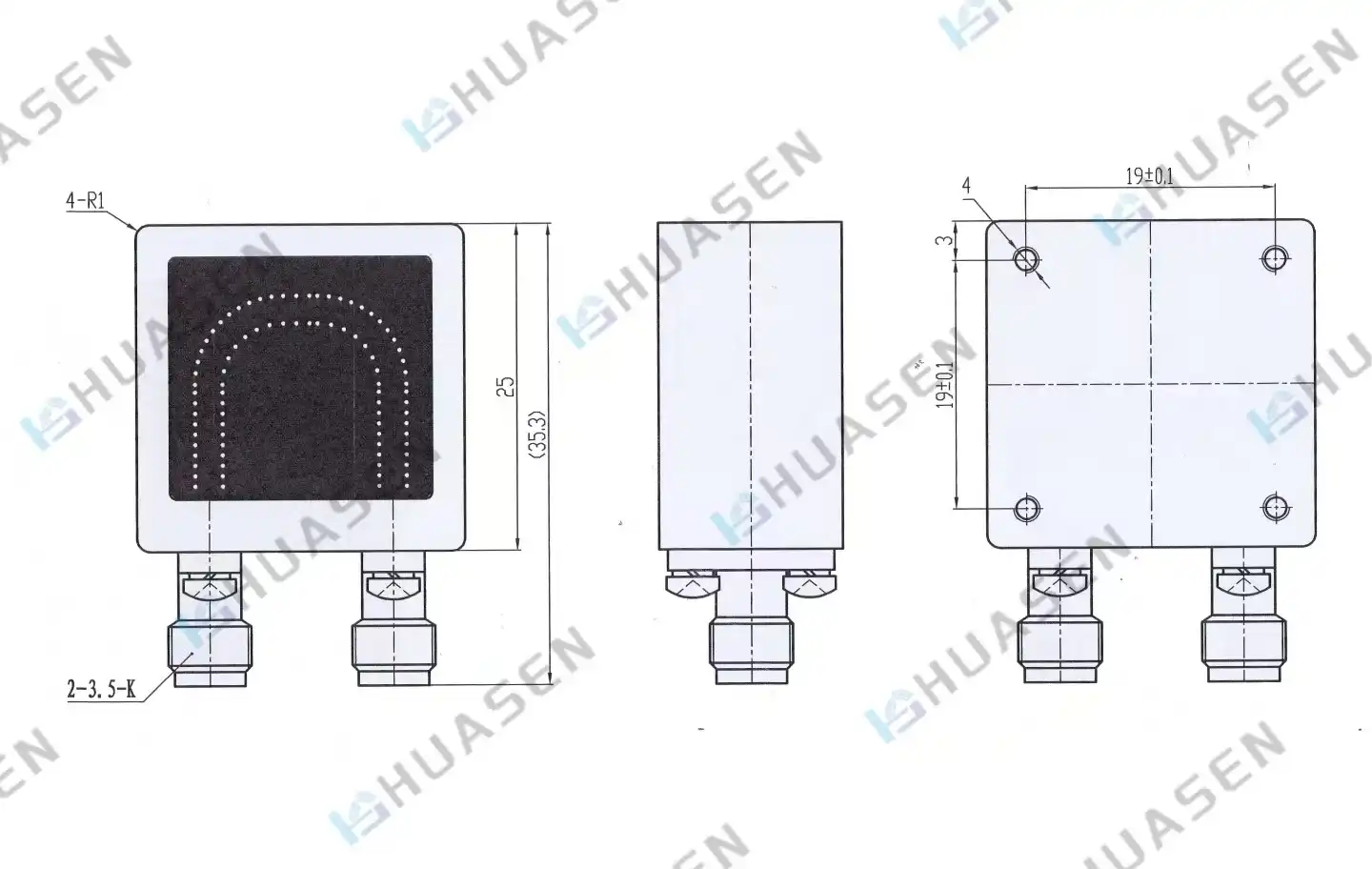
Procurement Considerations for Coplanar Waveguide Components and Services
Successful implementation of coplanar waveguide technology requires strategic procurement approaches that ensure reliable supplier partnerships, consistent quality, and cost-effective solutions tailored to specific application requirements. Understanding key evaluation criteria and market dynamics enables procurement teams to make informed decisions that support both immediate project needs and long-term business objectives.
Supplier Evaluation and Selection Criteria
Identifying qualified suppliers for CPW PCB fabrication demandsa comprehensive assessment of technical capabilities, quality systems, and manufacturing capacity. Suppliers should demonstrate proven experience with high-frequency PCB technologies and possess appropriate testing equipment for RF characterization. ISO 9001 certification provides baseline quality assurance, while specialized certifications such as AS9100 for aerospace applications or IATF 16949 for automotive systems may be required for specific market sectors. The supplier's design support capabilities play a crucial role in successful CPW implementation, particularly for organizations transitioning from alternative transmission line technologies. Technical support services should include design rule checking, electromagnetic simulation validation, and manufacturing feasibility assessments. Suppliers offering prototype services with rapid turnaround times enable accelerated development cycles and reduced time-to-market for new product introductions. Production capacity and scalability represent critical factors for high-volume applications where demand fluctuations and growth projections must be accommodated. Suppliers should demonstrate adequate manufacturing capacity with appropriate backup capabilities to ensure continuous supply chain operation. Geographic considerations may influence supplier selection, particularly for applications requiring close collaboration during development phases or stringent delivery schedule requirements.
Cost Factors and Value Optimization
The cost structure for CPW PCBs encompasses multiple elements, including substrate materials, processing complexity, testing requirements, and volume considerations. Premium substrate materials command higher prices but may enable superior electrical performance that justifies the additional investment for demanding applications. Standard materials often provide adequate performance for cost-sensitive applications while maintaining acceptable electrical characteristics. Layer count and feature size requirements significantly impact manufacturing costs, with single-layer CPW implementations offering cost advantages over multilayer alternatives. However, system-level considerations may favor multilayer approaches where integration density and functionality requirements outweigh cost premiums. Procurement teams should evaluate total system cost,s including assembly, testing, and qualification expenses, rather than focusing solely on PCB unit prices. Volume commitments and contract terms can substantially influence pricing structures, with suppliers typically offering preferential pricing for guaranteed volumes and long-term agreements. Flexible contract arrangements that accommodate demand variations while maintaining competitive pricing require careful negotiation and clear performance metrics. Payment terms and currency considerations may also impactthe total cost of ownership, particularly for international supplier relationships.
Custom Fabrication and Testing Services
Standard products can't always meet the needs of many uses that need CPW solutions that are specifically made for their frequency bands, power levels, or mechanical limitations. Full-service suppliers that offer custom manufacturing are very helpful for meeting specific needs while still meeting quality standards and delivery promises. To make sure that the finished goods work as planned, the customization process should include careful reviews of the specifications, validation of the design, and testing of prototypes. Testing and validation services are important parts of the procurement deal, especially for applications that need to meet strict performance standards or legal requirements. Suppliers should be able to do all kinds of RF tests, such as measuring S-parameters, making sure the power handling is correct, and testing the environment if needed. Documentation and tracking of test data help customers get qualified, and regulators make decisions, and it also gives people confidence in how well the product works. Quality assurance protocols must match application needs and industry standards, and the right testing and inspection methods must be used throughout the manufacturing process. Statistical process control and efforts to make things better all the time help keep quality levels stable and find ways to make things better. Regular performance reviews and quality audits of suppliers make sure that they continue to meet specifications and contractual responsibilities.
Conclusion
Coplanar waveguidetechnology is a great option for current RF PCB uses because it provides better signal integrity, makes manufacturing easier, and gives designers more design options, all of which are important issues that the industry faces. These special features of CPW structures, like their ability to control impedance well, block electromagnetic interference, and work with common fabrication methods, make them very useful for high-frequency uses in radar, aircraft, and telecommunications systems. Strategic methods to buying things that focus on suppliers' technical skills, quality control, and full support services make implementation go smoothly while maximising the trade-offs between cost and performance. Coplanar waveguides are a tried-and-true technology base that supports innovation and competitive edge across a wide range of market applications as RF systems continue to evolve toward higher frequencies and higher integration densities.
FAQ
1. What makes coplanar waveguides superior to microstrip lines for high-frequency applications?
Coplanar waveguides offer several advantages over microstrip lines, particularly at high frequencies. The CPW structure provides better field confinement through lateral ground planes, resulting in reduced radiation losses and improved isolation between adjacent transmission lines. Additionally, the quasi-TEM mode propagation in CPW maintains more consistent phase velocity across wide frequency bands compared to microstrip's increasing dispersion at higher frequencies.
2. How do substrate material properties affect coplanar waveguide performance?
Substrate material properties directly impact CPW electrical characteristics through dielectric constant, loss tangent, and thickness parameters. Lower loss tangent materials reduce signal attenuation, while appropriate dielectric constant selection enables target impedance achievement. Substrate thickness affects field distribution and characteristic impedance, requiring careful selection based on application frequency ranges and performance requirements.
3. What design tools are recommended for coplanar waveguide optimization?
Professional electromagnetic simulation software, including HFSS, CST Microwave Studio, and Keysight ADS provide essential capabilities for CPW design optimization. These tools enable accurate S-parameter prediction, field distribution analysis, and parametric studies that guide design refinements while minimizing prototype iterations and development costs.
Ready to Implement Coplanar Waveguide Solutions in Your RF Design?
Huasen Microwave Technology brings three decades of expertise in high-frequency component development, making us your trusted coplanar waveguide manufacturer for demanding RF applications. Our comprehensive engineering capabilities encompass design optimization, custom fabrication, and rigorous testing protocols that ensure superior performance across telecommunications, radar, and aerospace platforms. With proven experience in 5G infrastructure, millimeter-wave systems, Coplanar waveguide,and precision measurement applications, our team delivers coplanar waveguide solutions that meet the most stringent technical specifications while maintaining cost-effectiveness for volume production. Contact our technical specialists at sales@huasenmicrowave.com to discuss your specific requirements and discover how our advanced CPW technologies can enhance your next-generation RF systems.
References
1. Gupta, K.C., Ramesh Garg, Inder Bahl, and Prakash Bhartia. "Microstrip Lines and Slotlines, Second Edition." Artech House, 1996.
2. Simons, Rainee N. "Coplanar Waveguide Circuits, Components, and Systems." John Wiley & Sons, 2001.
3. Edwards, Terry C. and Michael B. Steer. "Foundations of Interconnect and Microstrip Design." John Wiley & Sons, 2000.
4. Wadell, Brian C. "Transmission Line Design Handbook." Artech House, 1991.
5. Pozar, David M. "Microwave Engineering, Fourth Edition." John Wiley & Sons, 2011.
6. Vendelin, George D., Anthony M. Pavio, and Ulrich L. Rohde. "Microwave Circuit Design Using Linear and Nonlinear Techniques, Second Edition." John Wiley & Sons, 2005.
Send Inquiry