Cooling Methods for High Power Phase Shift Circulators






2026-04-28 21:30:34
Engineers who work on radar, telecommunications, and industrial microwave systems still have to deal with a lot of heat in high-power RF parts. Thermal management that works well is a must for high-power waveguide differential phase shift circulators that deal with kilowatts or even megawatts of continuous power. Power loss in ferrite materials and waveguide structures causes these specialized four-port devices to produce a lot of heat when they are in use. Without the right cooling strategies, thermal accumulation hurts performance, shortens the life of parts, and can even cause catastrophic system failures in mission-critical situations.
Understanding the Cooling Challenges in High-Power Phase-Shift Circulators
High-power circulators work in tough conditions where heat stress has a direct effect on their dependability and performance. High-power waveguide differential phase shift circulators have a special structure with ferrite-loaded waveguide sections and hybrid couplers that spread power more evenly than junction circulators. However, controlling temperature is still very important.
Primary Heat Sources and Thermal Stress Points
There are several places in these devices where heat comes from. Through magnetic hysteresis losses, ferrite materials take in RF energy and turn some of it into thermal energy. Even with insertion losses as low as 0.15 dB, the inside of a circulator that handles 50 kW of average power loses about 350 watts. When the device is always working, the waveguide walls, ferrite assemblies, and dielectric interfaces all get hot. When the magnetic flux density is highest near the ferrite elements, hotspots form. These create localized thermal stress that can weaken phase stability.
Impact of Insufficient Cooling on Performance
Poor thermal management starts a chain reaction that makes performance worse. When the temperature of a ferrite gets close to its Curie point, which is usually between 180°C and 250°C, depending on its make-up, the magnetic properties weaken. This makes isolation go down, and insertion loss go up. We've observed field failures where circulators that weren't cooled enough had phase drift of more than 5 degrees, which isn't acceptable in phased-array radar applications that need sub-degree phase accuracy. Thermal expansion also puts stress on brazed joints and adhesive bonds, which could cause the structure to break.
Critical Design Parameters Affecting Thermal Management
Several design factors affect how much cooling is needed. The amount of heat that needs to be removed is directly related to the power rating. For example, a 100 kW CW circulator needs a lot more powerful cooling than a 10 kW unit. The frequency band is also important. Waveguides with higher frequencies tend to be smaller and have less surface area for heat transfer. The choice of material is very important. For example, ferrite compositions that are designed for high saturation magnetization may not conduct heat as well, so they need to be cooled more quickly. In pulsed applications, duty cycle changes the average power, but peak power handling still limits the design choices that can be made.
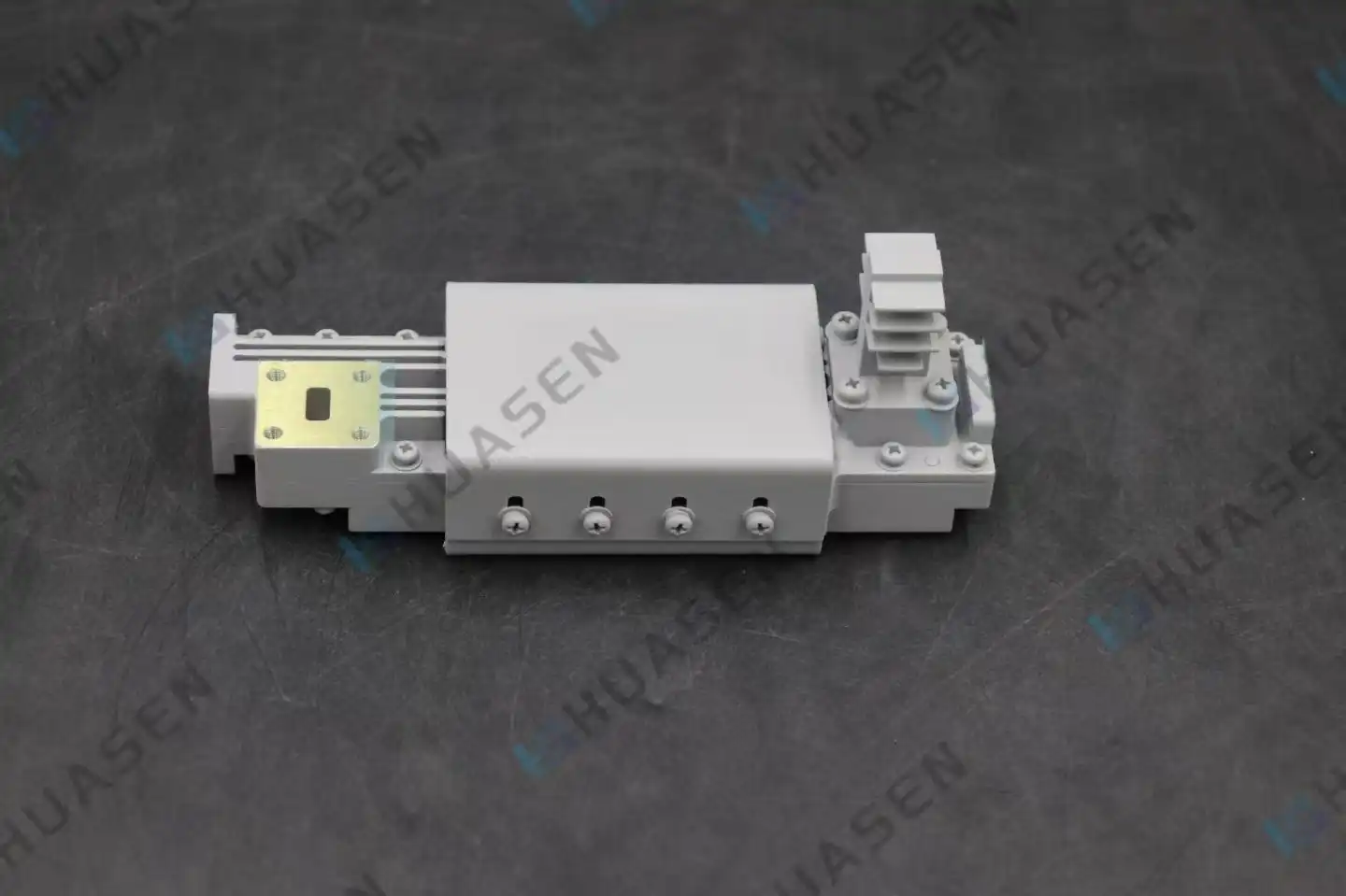
Overview of Cooling Methods for High-Power Waveguides: Differential Phase Shift Circulators
There is a wide range of thermal management strategies for high-power waveguide differential phase shift circulators, from simple passive methods to complex active systems. The right method is chosen based on the application's power needs, environmental restrictions, and reliability requirements.
Passive Cooling Techniques
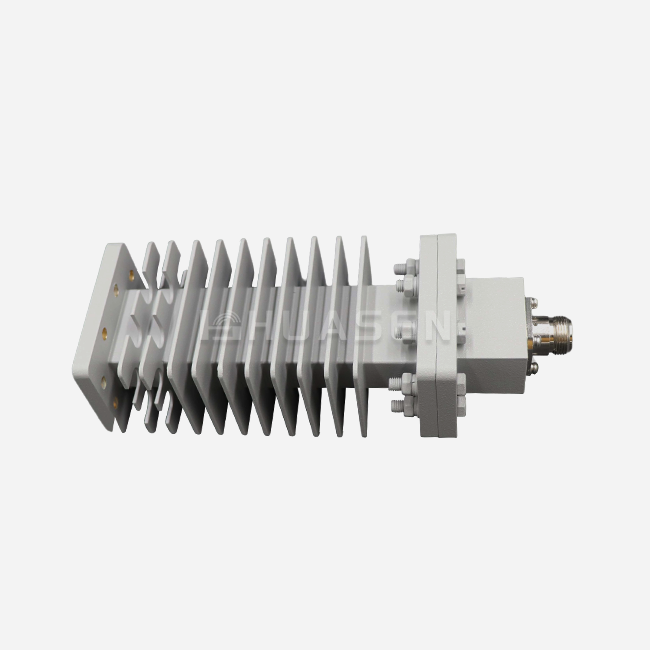
Passive methods depend on natural heat loss and don't need any extra energy. For conduction cooling, heat sinks made of materials that conduct heat well, like aluminum or copper, are attached directly to the waveguide surfaces. When heat moves from surfaces with fins into the air around them, this is called natural convection. These methods work well for moderate power levels below 5 kW average power in situations where the temperature outside stays the same. We see passive cooling used a lot in lab test equipment and benchtop systems where ease of use and no maintenance are more important than performance. It moves heat away from the ferrite assembly and toward the mounting flanges and outside surfaces thanks to the waveguide structure itself. The thermal interface materials between the circulator and the mounting structure lower the contact resistance, which makes it easier for heat to move.
Active Forced Air Cooling Systems
Fans or blowers are used in forced air cooling to speed up the convective heat transfer process. This way of cooling is much more effective than natural convection—often by three to five times—and doesn't involve the complexity of liquid systems. Most air cooling systems move the air across finned heat sinks that are attached to the housing of the circulator. In controlled settings, these setups can handle average power levels of up to 20 kW. The main benefit is that it is simple: there are no pumps, no fluid management, and very little maintenance. Problems include noise from fans, buildup of dust on heat exchange surfaces, and altitude derating in aviation applications, where less dense air makes cooling less effective.
Liquid Cooling Solutions for Maximum Power Handling
Liquid cooling is the best way to cool high-power circulators that use more than 20 kW of average power. Water or a mix of water and glycol moves through channels machined directly into waveguide flanges or cooling jackets that are built right in around the ferrite assemblies. Because liquids can hold more heat and conduct heat better than air, they can remove heat at rates that aren't possible with air cooling. We've worked with systems that can handle 100 kW of power all the time while keeping ferrite temperatures below 80°C, which is well within the safe operating range. Liquid cooling needs supporting infrastructure like pumps, heat exchangers, flow sensors, and temperature monitoring. This makes things more complicated but gives the best thermal performance. Flow rates are usually between 2 and 8 liters per minute, depending on the power level. For best performance, keep the inlet temperatures between 15°C and 25°C.
Comparative Analysis of Cooling Solutions: Selecting the Best Method for Your Application
To pick the best cooling method for a high-power waveguide circulator, you have to weigh technical performance against practical factors like cost, dependability, and the amount of maintenance that needs to be done. To find the best solutions for their specific operational needs, decision-makers have to look at a lot of different factors for their high-power waveguide differential phase shift circulator requirements.
Performance Measures and Thoughts on Efficiency
Several metrics can be used to measure how well a cooling system works. Thermal resistance, which is given in degrees Celsius per watt, shows how much heat rises for every watt of power that is lost. When thermal resistance is low, cooling works better. We test thermal resistance paths from the junction to the ambient environment, aiming for values below 0.1°C/W for high-power uses. Cooling capacity, which is usually given in kilowatts, tells you how much heat can be removed continuously. Parasitic power consumption is a part of system efficiency. For example, liquid cooling pumps may use 100–200 watts of power, which lowers system efficiency slightly but allows operation at power levels that would not be possible otherwise.
Needs for Dependability and Maintenance
Different ways of cooling have different levels of dependability. Since passive systems don't have any moving parts, they are naturally reliable and don't need much maintenance. Active air cooling makes fan failures the main concern when it comes to reliability. Good fans usually have a mean time between failures (MTBF) of more than 50,000 hours at rated conditions. Liquid cooling systems need to have their fluid levels checked, filters replaced, and pumps serviced on a regular basis, usually once a year. Corrosion risks are kept to a minimum by using sealed liquid systems with distilled water or special coolants. In critical applications, redundant pump configurations keep the system running even if a part fails.
Cost Analysis: Starting Up Costs vs. Running Costs
More than just the purchase price is involved when thinking about money. Passive cooling systems are the cheapest to set up (heat sinks and mounting hardware may cost $500 to $2,000), but they may not be able to do as much. The cost of fans, ducting, and controls for forced air systems ranges from $1,000 to $5,000. The infrastructure for liquid cooling can cost a lot of money—up to $50,000 for pumps, heat exchangers, and distribution systems in industrial settings. Active systems use electricity and need to be maintained on a regular basis, while passive systems don't cost anything on a regular basis. When operating at high power levels, a lifecycle cost analysis over 10 to 15 years often justifies a higher initial investment in liquid cooling.
Integration of Cooling Solutions with High-Power Waveguide Differential Phase Shift Circulators
For cooling to work, the mechanical and electromagnetic designs of the high-power waveguide differential phase shift circulator and high-power waveguide circulator must be carefully integrated. When integration is done right, RF performance is kept up, and thermal management works well.
Tips for Designing Things That Work Together Mechanically
Adding a cooling system starts with the early stages of design. Waveguide flanges need to be able to fit coolant passages without making it harder to handle pressure or making ways for electromagnetic waves to leak out. We usually cut cooling channels into standard WR-style flanges, making sure the walls are thick enough (at least 6 mm for pressurized water systems) to keep the structure strong. Threaded ports can connect to standard industrial coolant systems with quick-disconnect fittings. Putting thermal interface materials between cooled surfaces and ferrite assemblies lowers the thermal resistance. We suggest silicone-based compounds that have a thermal conductivity of more than 3 W/m·K. The mounting hardware needs to keep good thermal contact while letting the aluminum housings and steel waveguide components expand and contract at different rates.
Improvements to the thermal interface
How well cooling works is greatly affected by the quality of the thermal interfaces. Because air doesn't conduct electricity well, even tiny gaps in the insulation create a lot of thermal resistance. For close contact, the surface must be properly prepared so that it is machined flat within 0.025 mm and has a roughness level below 1.6 microns Ra. Thermal interface materials fill in tiny holes and cracks, making smooth paths for heat to move. When applying a compound, the thickness is important. Too thick a compound increases thermal resistance, while not thick enough coverage leaves air gaps. For best performance, we aim for interface material thicknesses of between 0.05 mm and 0.15 mm.
How to Fix Common Thermal Problems?
There are certain signs that thermal problems show up. Gradual degradation of the isolation over hours of operation suggests that there isn't enough cooling capacity or that the flow of coolant is being slowed down. When things break down all of a sudden, it's usually because of thermal shock from sudden changes in temperature or mechanical stress from a mismatch in thermal expansion. Temperature monitoring at several locations, including the ferrite assembly, the waveguide walls, and the coolant inlet and outlet, helps with diagnosis. Flow sensors find clogs in the coolant before they cause damage. Infrared thermal imaging taken during operation shows hotspots that mean there isn't enough cooling or a problem with the thermal interface.
Future Trends and Innovations in Cooling Technologies for High-Power Circulators
New technologies look like they will make it easier to handle heat, which will lead to better-performing and more reliable next-generation High Power Waveguide Differential Phase Shift Circulator systems.
Thermal Materials with Nanoparticles
The study of thermal interface materials that are improved with nanomaterials is showing encouraging results. Carbon nanotube composites have a thermal conductivity of more than 400 W/m·K, which is more than twice as high as regular materials. This means that the junction-to-case thermal resistance could be cut by 40%. Graphene-based thermal pads have the same benefits, but they are more flexible mechanically. Even though these materials are still pricey, costs are going down because manufacturing methods are getting better. As prices get closer to those of traditional materials, we expect a lot of people to use them within three to five years.
Liquid Cooling Through Microchannels
Small passages, usually 100 to 500 microns wide, are machined or etched directly into waveguide structures next to ferrite assemblies in microchannel cooling architectures. Compared to regular coolant channels, the hugely higher ratio of surface area to volume makes heat transfer coefficients five to ten times better. Cooling 150 kW circulator assemblies with coolant flow rates below 1 liter per minute has been shown to work in prototypes. Some problems that come up during manufacturing are keeping the flow even across parallel microchannels and avoiding clogs. However, additive manufacturing techniques are making these designs more and more useful.
Systems for Phase-Change Cooling
During the change from liquid to vapor, phase-change cooling uses the latent heat of vaporization to transfer heat very quickly. Embedded heat pipes with working fluids like ammonia or special refrigerants move heat passively from ferrite regions to condensers outside the system, such as in a high-power waveguide differential phase shift circulator. Actively moving refrigerants through built-in evaporators, two-phase pumped cooling systems combine the benefits of phase change with active thermal management. These technologies are being looked into by military aviation programs for use in airborne radar systems, where the extra weight of using liquid cooling would be too much to handle.
Conclusion
Reliable High-Power Waveguide Differential Phase Shift Circulator implementations can be told apart from early failures by how well they handle heat. Passive, active air, liquid, or hybrid cooling methods can be used depending on the amount of power, the environment, the need for reliability, and the budget. Passive systems work best for low-power tasks that want to keep things simple, while liquid cooling lets them work at very high power levels of over 100 kW continuous. Integration that works well, with well-thought-out mechanical design and improved thermal interfaces, keeps RF performance high while providing the needed cooling. New technologies like nano-enhanced materials and microchannel architectures promise even more improvements, making it possible for next-generation systems to handle more power than ever before. Procurement strategies that work well balance short-term performance needs with long-term technological trends and partnerships with suppliers.
FAQ
1. How does proper cooling extend circulator lifespan?
Keeping ferrite temperatures within certain ranges—usually below 100°C—keeps magnetic properties from losing their strength and keeps bonded assemblies from being stressed mechanically in a high-power waveguide differential phase shift circulator. When you cool things down the right way, you lower the severity of thermal cycling. This keeps brazed joints from wearing out and stops adhesive failures. Temperature-stable operation means that the electrical performance of the part stays the same over its lifetime.
2. What maintenance do active cooling systems require?
Check the coolant level every three months, replace the filter once a year, and flush the system every two years to get rid of deposits. Testing the pH of the coolant keeps mixed-metal systems from rusting. For forced air systems, the heat exchanger surfaces need to be cleaned every month, and the fan bearings need to be oiled once a year. Monitoring the temperature during operation lets you know early on when problems are starting to show up.
3. Can custom cooling solutions be integrated without compromising performance?
When designed correctly, custom cooling implementations keep the full RF performance. Coolant passages must stay away from electromagnetic breaks that cause reflections or mode changes. Optimizing the thermal interface makes sure that heat moves efficiently without putting too much stress on the ferrite assemblies. Performance problems can be avoided when thermal and RF engineers work together during the design phase.
Partner with Huasen Microwave for Advanced High Power Circulator Solutions
Huasen Microwave Technology has been designing and making high-performance RF components with built-in thermal management solutions for 30 years. Our High Power Waveguide Differential Phase Shift Circulator product line has advanced cooling systems, such as passive heat sinks and built-in liquid cooling systems, that are designed to keep working at their best in demanding radar, telecommunications, and industrial settings. We offer full technical support, which includes thermal modeling, custom cooling design, and full datasheets that list both electrical and thermal parameters. Our engineering team works with system integrators to find the best configurations, whether you need standard catalog parts or solutions that are made just for your needs. We have been a supplier of high-power waveguide differential phase shift circulators for a long time. We follow strict quality standards, such as MIL-STD compliance, and offer stable supply chains at low volume prices. Email our technical sales team at sales@huasenmicrowave.com to talk about your specific needs and get detailed suggestions that are based on the power levels, frequency bands, and environment of your application.
References
1. Helszajn, J. (2008). Ferrite Circulators and Isolators: Theory, Design, and Practice. Research Studies Press Ltd.
2. Linkhart, D. K. (1989). Microwave Circulator Design. Artech House Microwave Library.
3. Baden Fuller, A. J. (1987). Ferrites at Microwave Frequencies. IET Electromagnetic Waves Series.
4. Fay, C. E., & Comstock, R. L. (1965). "Operation of the Ferrite Junction Circulator." IEEE Transactions on Microwave Theory and Techniques, MTT-13(1), 15-27.
5. Schloemann, E. F. (2000). "Advances in Ferrite Microwave Materials and Devices." Journal of Magnetism and Magnetic Materials, 209(1-3), 15-20.
6. Bosma, H. (1964). "On Stripline Y-Circulation at UHF." IEEE Transactions on Microwave Theory and Techniques, MTT-12(1), 61-72.
Send Inquiry