Coaxial Power Combiner Applications in Radar Power Amplification






2026-07-09 23:40:02
Coaxial power combiners are important inactive parts in radar power amplification because they combine the outputs of several solid-state amplifiers into a single, high-power signal. These devices help radar systems get the transmit power levels they need for longer detecting ranges and better target precision by quickly adding up RF energy while keeping phase coherence and reducing signal degradation. The coaxial structure naturally shields, keeps temperatures stable, and handles power well, all of which are important for mission-critical radar operations.
Understanding Coaxial Power Combiners in Radar Systems
How Does Power Combining Enhance Radar Performance?
More and more, modern radar emitters use solid-state amplifier structures instead of older vacuum tube designs. Individual solid-state amplifiers only produce small amounts of power, usually between 10 and 500 watts. However, system builders can make kilowatts of coherent RF power by combining many units. By joining these separate outputs, without losing signal quality, the combining process makes it possible for radar systems to find objects more than 200 nautical miles away.
There are clear benefits to using coaxial power combiner designs instead of flat microstrip combiners. The enclosed wire design protects messages from electromagnetic interference and gives better ways for heat to escape. This structure design directly handles the problems of thermal runaway that come up with high-density RF assemblies, especially in pulse radar applications, where peak powers can hit megawatt levels for a short time.
Critical Technical Parameters for Radar Applications
When procurement professionals look at power combining options, they need to pay close attention to a number of performance measures that have a direct effect on how well the radar system works. Insertion loss is the signal's natural weakening as it goes through the combiner. Values below 0.3 dB are good because they make sure that the amplifier output is wasted as little as possible. Measurements of return loss and VSWR show how well the device matches impedances across working frequencies. Return loss standards better than 20 dB (corresponding to 1.22:1 VSWR) keep reflected power from hurting amplifiers upstream.
Each amplifier module is safe from cross-coupling and load changes because the input ports are isolated from each other. If one amplifier in a multi-module array fails or has an impedance mismatch, the fault doesn't spread to the rest of the system because there is enough separation, which is usually more than 20 dB. Both phase and amplitude balance specs are important; deviations of more than ±5 degrees in phase error or ±0.5 dB in amplitude imbalance make merging less effective and affect the accuracy of beam-forming in phased array radar systems.
Power handling potential tells you how much constant and peak power the combiner can handle before it stops working properly or breaks. Defense radar systems often need parts that can handle 10 kW of steady wave power and more than 100 kW of high pulse power. These scores are directly affected by the choice of material, the specs of the connectors, and how the heat is managed.
Frequency Coverage and Bandwidth Considerations
Radar systems use a range of frequencies, from VHF (30–300 MHz) for long-range detection to Ka-band (26.5–40 GHz) for high-resolution tracking and fire control. Broadband power combiners that work the same way across octave or multi-octave bandwidths make system design easier and lower the number of parts that need to be kept on hand. The Coaxial Power Combiners from Huasen Microwave can work from DC to 40 GHz, which means they can handle almost all radar frequency sets for both land and airborne systems.
In modern designs, radial line combiner technology is used to make the high-frequency stability even better by reducing changes in the length of the transmission lines between the input ports and the shared output joint. This geometry symmetry keeps the phase balance tight even at millimeter-wave frequencies, where small physical differences would normally cause a big electrical imbalance.
Applications of Coaxial Power Combiners in Radar Power Amplification
Ground-Based Air Surveillance Radar
To find small radar cross-section targets more than 400 kilometers away, long-range air defense radar sites need transmitter strengths of about 50 kW. To make these transmitters from solid-state amplifier pallets, where each one contributes 500 watts, you have to combine designs that add up to 100 or more separate units. Multistage combining networks with coaxial power combiners at each level of the hierarchy make this possible while still having the fault tolerance needed for continuous operating uptime.
The coaxial power combiner design is strong enough to handle the mechanical vibrations and temperature changes that are common in outdoor setups. When the right surface treatments are applied to aluminum housings, they don't rust in marine settings where salt spray and humidity would quickly break down exposed electronics. Operating temperatures between -40°C and +85°C make sure that the system works the same way in both arctic and tropical placement sites.
Airborne Fire Control and Weather Radar
Aircraft-mounted radar systems have to work within strict limits of size, weight, and power (SWaP), and they also have to be very reliable. Compact transmitter designs are made possible by coaxial power combiners, which effectively pack multiple amplifier units into small equipment bay spaces. Power splitting ratios of 1:2, 1:3, 1:4, 1:8, and 1:10 can be used with these setups. This gives system builders a lot of options for building scalable transmitter layouts.
The wide immediate bandwidth that these devices offer is useful for installing weather radar on both civilian and military airplanes. Doppler weather radars use the 9.3–9.5 GHz (X-band) range to measure how heavy the rain is and how the wind is blowing. Quality combiners keep the signal-to-noise ratio that is needed to pick up weak signals from weather events over long distances by having low insertion loss and a flat frequency response.
Missile Guidance and Electronic Warfare Systems
Active radar seekers in guided missiles need small, tough RF parts that can handle launch accelerations of more than 100g and keep working even when they are being violently moved. With their solid center conductors and strong outer shells, coaxial power combiners have the mechanical stability that these uses need. Standard connector interfaces, such as SMA-K, 2.92-K, and 5339K, make sure that the device works with current seeker designs and make building and testing go more quickly during production.
High-power jamming emitters are used in electronic countermeasure systems to stop adversary tracking and communications. To make narrowband or wideband interference signals, these systems join the outputs of solid-state modules or traveling wave tube amplifiers. Well-designed combiners have great isolation properties that stop intermodulation distortion that would cause unwanted emissions outside of targeted jamming bands. This keeps the electromagnetic spectrum safe and legal and ensures operating security.
Comparing Coaxial Power Combiners with Alternative Solutions
Coaxial vs. Waveguide Power Combining
Above 18 GHz, waveguide combiners are the most common type of device used because they have low loss and can handle a lot of power. The hollow metal structure stops dielectric losses and spreads heat loads over a lot of surface area. Because of these factors, radar systems that work at Ka-band or higher frequencies often choose waveguide parts.
Coaxial power combiner systems are very useful at lower frequencies and in situations where small size is important. Coaxial power combiners are easier to fit into platforms with limited space because they take up much less space and weigh less. For cost reasons, coaxial power combiner construction is also preferred. This is because precision waveguide machining and keeping key internal measurements require a lot more work, which drives up the price of the component. Coaxial power combiner solutions are often chosen by system designers working on commercial radar projects or retrofit installations where budget limits affect design choices.
Hybrid Couplers and Wilkinson Dividers
There is an equal power split and natural isolation between output ports in hybrid couplers, which makes them useful for balanced amplifier designs. Their set 3 dB coupling ratio makes them less flexible than combiners that let you choose from different splitting ratios. The most popular way to set up a coaxial power combiner is with the Wilkinson topology. This uses quarter-wave transmission line sections and isolation resistors to get low insertion loss and good port isolation across modest bandwidths.
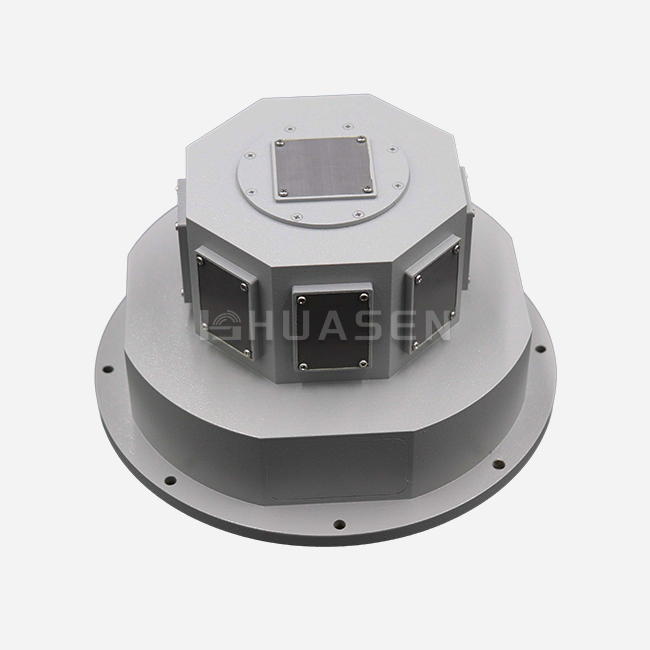
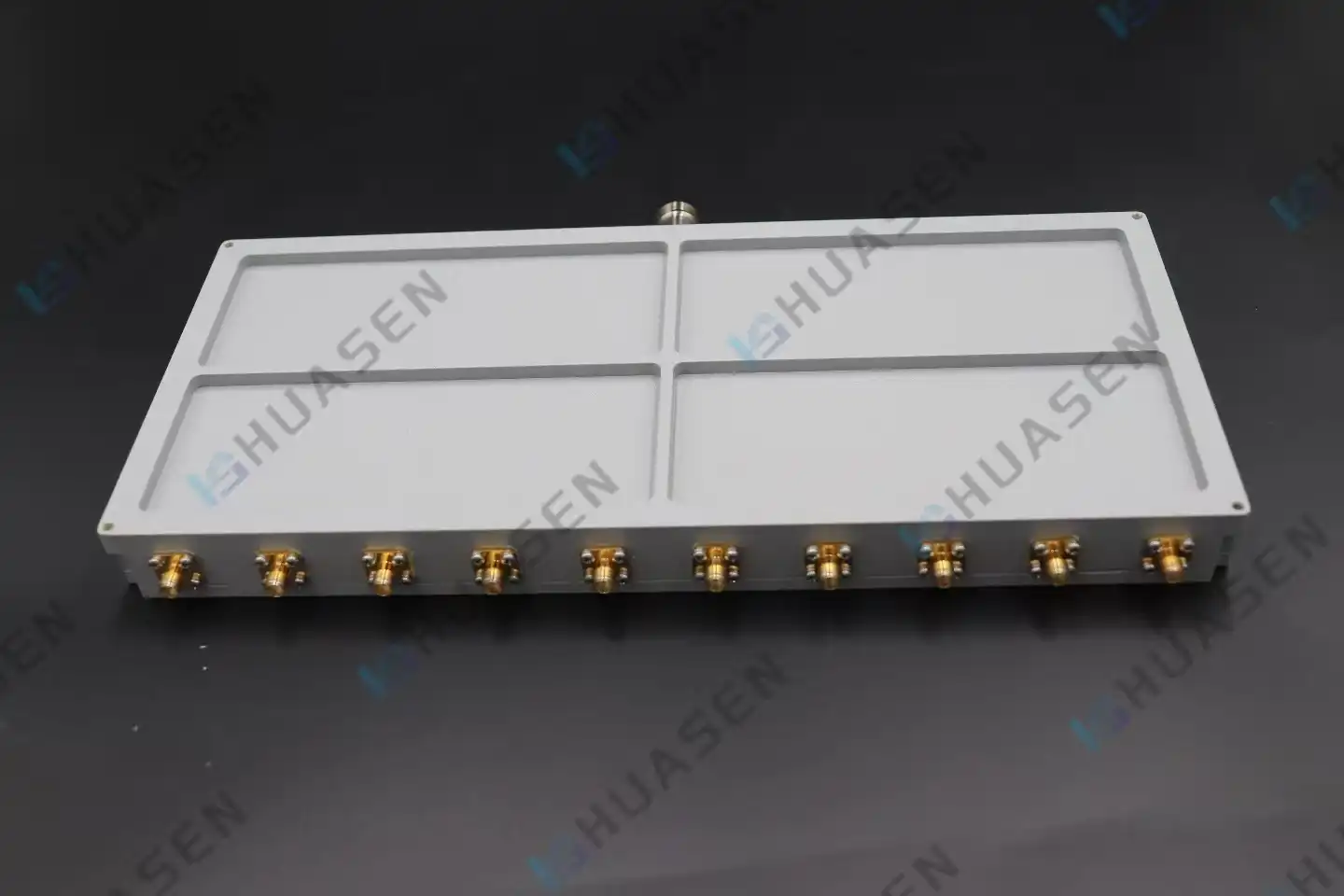
Radial Wilkinson structures, coaxial power combiners, take the basic idea and apply it to structures with more ports, putting together eight, ten, or more inputs in a single, small unit. This design solves the space problems that come up with binary tree layouts, where cascaded two-way combiners take up a lot of circuit board space and cause insertion losses to add up over time. The symmetric radial shape also improves thermal management by spreading the heat absorption of the isolation resistors around the device's edges instead of putting all the heat loads at the joints in the middle.
Procurement Considerations for B2B Buyers
Evaluating Manufacturers and Technical Capabilities
When choosing a coaxial power combiner provider, you need to look at both the specs of the parts and the organization's ability to do the job. Manufacturers that have been around for a long time and have a lot of experience with RF engineering show that they understand the minor design choices that affect performance in the real world better. Huasen Microwave Technology Co., Ltd. has been developing high-frequency microwave and millimeter-wave parts for over 30 years. The company was formed in 1993. Because of this institutional knowledge, goods consistently meet stated specifications across production lots and wide ranges of environmental conditions.
Customization is what sets real engineering partners apart from commodity sellers. Integrators of radar systems often need to make changes to standard goods, like changing the frequency bands, power levels, connector types, or mechanical mounting requirements. When a manufacturer offers full design help, quick prototyping, and flexible minimum order amounts, it speeds up the development process and lowers the technical risk during the system integration phases.
Quality Assurance and Testing Protocols
Tough testing procedures make sure that the supplied parts meet the strict requirements of the radar system. The measurements from a vector network analyzer show that the S-parameters meet the requirements across the entire working bandwidth. The measurements also show insertion loss, return loss, and port-to-port separation. High-power burn-in testing, which involves running the coaxial power combiner at full peak power for long periods of time, finds hidden problems and confirms that the heat management system works well before it is sent to the field.
As radar systems use designs that let them send and receive signals at the same time, passive intermodulation testing has become more important. When exposed to high RF power levels, even passive parts can make unwanted mixing products that could mess up sensitive receiving channels. Specifications that require PIM performance to be better than -150 dBc make sure that combiners don't add much confusion to the noise floors of the whole system.
Environmental and durability standards, such as MIL-STD-202 for mechanical shock and vibration protection, must be met for military and aerospace uses. Documentation of RoHS compliance covers rules about environmental safety and the safety of materials. These certifications should be made clear in procurement contracts, and makers should be required to keep quality control systems that are certified to ISO 9001 or AS9100 standards.
Lead Times, Pricing, and Supply Chain Stability
Usually, standard catalog items from well-known brands ship within two to four weeks. Depending on how complicated the design is, custom or changed designs can push back delivery dates to eight to twelve weeks. System integrators that are making new radar platforms should start working with providers early on in the design process. This will give them enough time to make changes to prototypes and test them for quality before they commit to placing production orders.
Pricing schemes are based on how complicated the parts are, how well they work, and how many of them are ordered. A simple two-way coaxial power combiner with a narrow bandwidth might cost a few hundred dollars. More advanced multi-port systems with octave bandwidths and high power levels can cost several thousand dollars per unit. If you commit to making more than 100 units, you can often get savings of up to 30 percent through tiered prices.
After recent world problems, supply chain stability has become the most important thing to think about. Suppliers who keep a variety of parts on hand, including coaxial power combiners; enough production capacity in the United States, and enough inventory gaps offer greater delivery certainty. Technical support infrastructure, such as quick technical help and detailed documents, lowers the risk of integration and speeds up troubleshooting when problems happen in the field.
Conclusion
Coaxial power combiners are important parts of current radar transmission designs because they let solid-state amplifier technologies reach output power levels that were once only possible with vacuum tube designs. Their small size, wide frequency range, great electrical performance, and ability to withstand harsh environments make them perfect for a wide range of uses, from ground-based observation radar to fire control in the air and missile guiding. Professionals in procurement who fully comprehend important requirements, assess providers based on their technical skills and organizational stability, and put in place the right testing procedures set their radar programs up for long-term success.
FAQ
1. What advantages do coaxial combiners provide over microstrip designs in radar applications?
Coaxial power combiner structures are better at blocking electromagnetic waves than microstrip ones because they don't lose as much energy and are less likely to interact. For sealed gearbox lines, it is possible to handle a lot more power—often ten times more than similar microstrip designs—and the heat can move through them more efficiently. This mix of electrical and thermal performance is very important in radar emitters because keeping the signal integrity during high-power operation is a direct link to how reliable the system is and how well it can identify things.
2. How does the number of combining ports affect overall system efficiency?
Each step of combining adds to the total insertion loss, which makes the system less efficient. A two-way coaxial power combiner with 0.2 dB loss should be able to send 95.5 percent of the power, but adding three steps (2x2x2 for eight-way combining) causes 0.6 dB loss, which lowers the efficiency to 87 percent. These losses are kept to a minimum by radial combiner designs that combine several sources into a single step. When designing a practical radar system, the number of amplifier modules is balanced against the efficiency of the system as a whole. When all losses are taken into account, the total transmission efficiency is usually kept between 60 and 75%.
3. Can standard coaxial combiners operate in pulse radar applications?
When quality coaxial power combiners are made for continuous wave operation, they can usually handle pulse duty cycles as long as the peak power rates are followed. Isolation resistor power loss is the most important thing to think about. Average power determines thermal stress, and peak power must stay below voltage breakdown limits. Pulse radar systems with 10% duty cycles and 10 kW peak power have thermal loads that are the same as 1 kW constant operation but need to handle more than 10 kW of peak power. Always make sure that the ongoing and peak specs meet the needs of your application.
Partner with a Trusted Coaxial Power Combiner Manufacturer
Huasen Microwave offers tried-and-true power-combining options that were made to work with difficult radar systems. Our Coaxial Power Combiners work from DC to 40 GHz and come in different styles that can handle breaking ratios of 1:2, 1:3, 1:4, 1:8, and 1:10, so they can be used with a variety of system designs. Radial line combiner technology provides excellent phase balance and high-frequency stability, and common connector types, such as N-K, SMA-K, 2.92-K, and 5339K, make it easy to connect to a wide range of current equipment. Email our engineering team at sales@huasenmicrowave.com to talk about your unique needs and find out how our 30 years of experience with microwave components can help your radar system work better.
References
1. Pozar, David M. "Microwave Engineering, 4th Edition." John Wiley & Sons, 2011. Chapter 7: Power Dividers and Directional Couplers.
2. Skolnik, Merrill I. "Radar Handbook, 3rd Edition." McGraw-Hill Education, 2008. Chapter 6: Transmitters.
3. Russell, Kevin J. "Microwave Power Combining Techniques for Solid-State High Power Amplifiers." IEEE Transactions on Microwave Theory and Techniques, Vol. 68, No. 7, 2020, pp. 2635-2648.
4. Colantonio, Paolo, et al. "High Efficiency RF and Microwave Solid State Power Amplifiers." John Wiley & Sons, 2009. Chapter 8: Power Combining Techniques.
5. Bahl, Inder J. "Fundamentals of RF and Microwave Transistor Amplifiers." John Wiley & Sons, 2009. Chapter 11: Power Combining and Impedance Transformation Networks.
6. Kumar, Anil, and Singh, Rajveer. "Advances in Radar Signal Processing for Modern Defense Systems." Defense Science Journal, Vol. 71, No. 3, 2021, pp. 298-312.
Send Inquiry