Choosing Waveguide Straight Section for Low Loss






2026-06-04 21:30:58
To pick the best waveguide straight section for low loss, you need to carefully consider the quality of the material, the accuracy of the measurements, and the frequency bands that it works with. A waveguide straight section is an important passive microwave transmission part that is usually made from high-conductivity materials like copper or aluminum that have been plated in special ways. These stiff, hollow metal tubes guide electromagnetic waves with little loss because they don't have the dielectric losses that are common in coaxial lines, especially at frequencies higher than 2 GHz. In serious situations like radar systems and satellite uplinks, the right choice has a direct effect on insertion loss, VSWR performance, and the general efficiency of the system.
Understanding Waveguide Straight Sections and Their Impact on Signal Loss
Waveguide straight sections are very important parts of RF and microwave communication systems because they direct electromagnetic energy very precisely and with little loss. Instead of using center wires surrounded by dielectric insulation like in coaxial cables, these parts send signals through hollow metal tubes using specific transverse electric (TE) or transverse magnetic (TM) modes. This basic difference in design gets rid of the dielectric absorption losses that happen in cable-based systems when the frequency goes up.
Operational Principles Governing Signal Attenuation
The cutoff frequency of a waveguide is set by its internal structure. This is the lowest frequency at which electromagnetic waves can travel smoothly. Below this level, signs get weaker and weaker at an exponential rate. Standard names like WR90 and WR75 refer to specific internal measurements that are best for certain frequency bands. This makes sure that there is minimal reflection and maximum energy flow. Manufacturing errors have a direct effect on performance; differences of as little as 0.001 inches can cause impedance mismatches that raise VSWR and insertion loss.
The quality of the surface finish has a big effect on circuit losses. Due to the skin effect, when high-frequency sounds move through waveguides, the current builds up near the inside surface. Surfaces that are rough or oxidized make resistance higher, which turns signal energy into heat. With today's production methods, the surface roughness is less than 63 microinches RMS, and the electrical qualities stay the same across the working bandwidth.
Material Selection and Conductivity Considerations
Because they carry electricity so well, copper alloys, especially oxygen-free high-conductivity (OFHC) copper, work better than other metals in electrical applications. But aluminum alternatives are often needed for aircraft and satellite uses because they are lighter. Compared to copper versions, aluminum 6061-T6 is more structurally rigid and has about 70% less mass. Silver or gold plating, which is usually 0.0002 to 0.0005 inches thick, is used to make up for the fact that aluminum isn't naturally very conductive. This concentrates current flow in the highly conductive surface layer.
How materials are processed affects how reliable they are in the long run. Aluminum rusting processes make protected layers on the surface that don't rust in marine and outdoor settings. Copper parts that are going to be used in high-power applications go through special coating steps that stop the surface from moving when heated up. This keeps the electrical properties stable over long operating cycles.
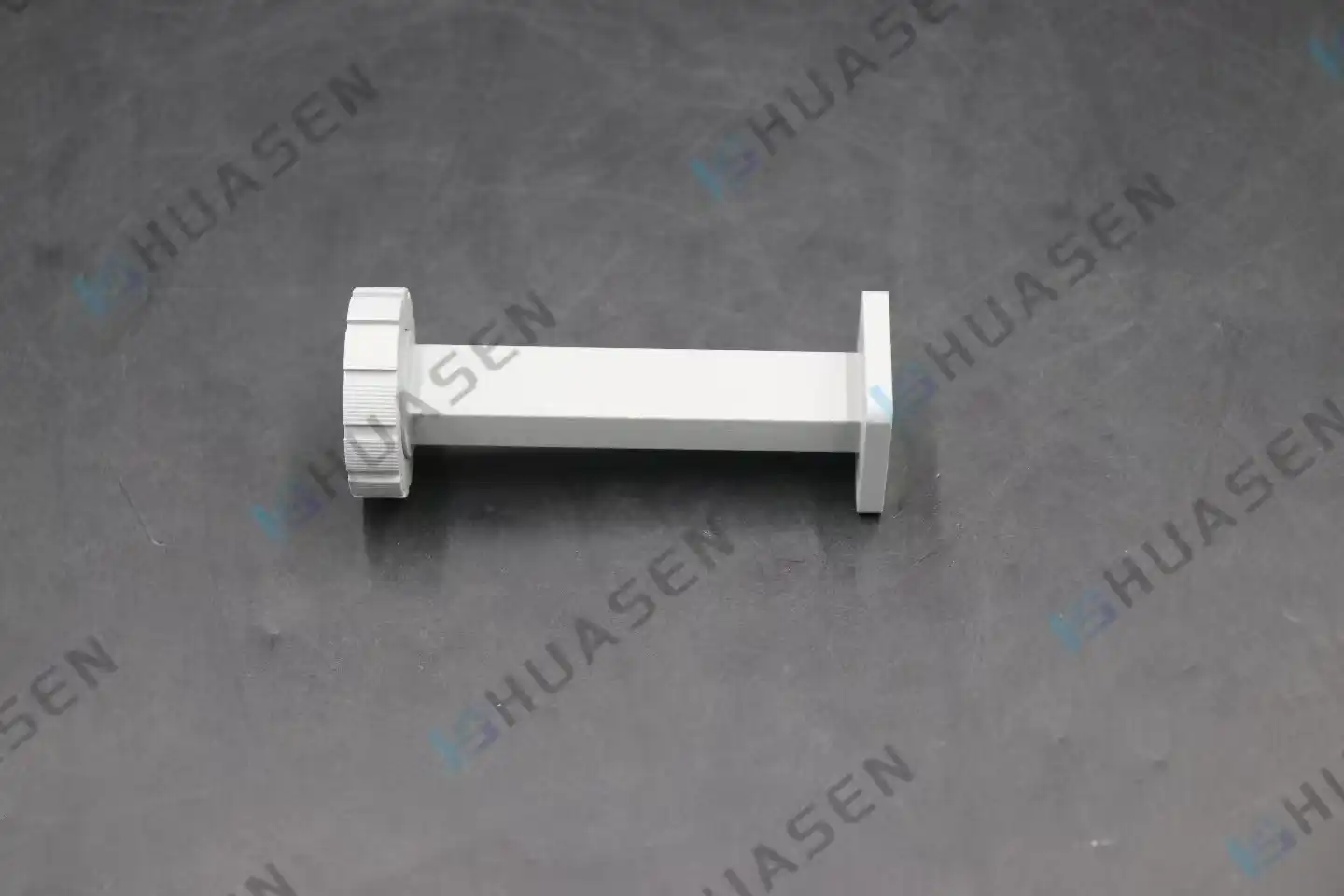
Comparing Waveguide Straight Sections to Alternative Solutions for Low Loss
To choose the best gearbox parts, you need to know how the performance of different methods compares. Waveguide Straight Sections work best in certain situations where their special features match the needs of the system. Other options are available for situations with different working limitations.
Straight Versus Bent Waveguide Configurations
By keeping the same cross-sectional shape along their length, straight waveguide sections have the lowest insertion loss that can be achieved. Mode change and reflection effects are slowed down by this regularity. When physical plans require changes in direction, bent or curved parts are needed. However, each bend adds more loss. At the same radius, E-plane bends (which curve in the direction of the electric field) usually have less insertion loss than H-plane bends. When deciding what bend angles and amounts are suitable, procurement teams have to weigh performance needs against space limitations.
Coaxial Cable Alternatives and Frequency Limitations
In many situations, coaxial lines are easier to install and cost less up front. Their mechanical flexibility makes it easier to route through complicated structures, and standard links make it easy to put them together quickly. But insulating materials used in coaxial buildings cause tangent loss that gets worse as the frequency goes up. This loss often goes over 1 dB per meter at X-band (8–12 GHz) and higher frequencies, which is not good enough for precise uses. Waveguides keep insertion loss below 0.1 dB per meter over a wide range of frequencies, and they can handle high power levels that would break down the dielectric in coaxial options.
Flexible and Tapered Waveguide Considerations
Flexible waveguide systems are made with a curved design that lets them bend while still keeping the electromagnetic flow going. In order to be more mechanically flexible, this design gives up some insertion loss performance, usually 0.2 to 0.5 dB more than rigid versions. Tapered sections connect waveguides to other types of parts or go from one waveguide size to another. Tapers are necessary for matching impedance, but they add reflection factors that lower the total VSWR of the system. These effects can be lessened with careful impedance transformation design, but there will still be some loss of speed.
Selecting the Best Waveguide Straight Section for Low Loss: Criteria and Procurement Insights
The best way to choose a component is to match technical requirements with realistic purchasing issues. Knowing the factors for evaluation helps you make buying choices that meet short-term performance needs and long-term operational goals.
Material and Manufacturing Quality Assessment
Low-loss efficiency is built on materials that carry electricity well. OFHC copper has conductivity values close to 100% IACS (International Annealed Copper Standard), but pure copper is soft and needs to be handled carefully. Silver treatment raises the surface conductivity to about 105% IACS and makes it more resistant to tarnishing. Gold plating is better at stopping rust in harsh settings, but it costs more to do. Silver finishing makes aluminum parts more conductive, which makes up for the base metal's 61% IACS grade.
Dimensional correctness and surface quality are based on how precisely the parts are manufactured. With CNC cutting, the margins for internal dimensions are kept to within ±0.001 inches, which is very important for meeting cutoff frequency requirements. Electroforming processes make constructions that are seamless and have very smooth surfaces. This makes them great for millimeter-wave uses where even small flaws cause big losses. Welded or brazed seam construction needs to be carefully checked to make sure there is no loss of RF continuity and that the seam is strong enough to withstand pressure.
Frequency Range and VSWR Performance Parameters
Waveguide straight sections made by specialized companies, such as Straight Waveguide, can handle very wide frequency ranges, from 0.32 GHz to 220 GHz. By dropping the cutoff frequencies while keeping the cross-sections small, dual-ridge designs make the useful bandwidth bigger than single-mode rectangular configurations. This design is especially useful for broadband devices that need to cover more than one octave. Standard rectangular waveguides work with bandwidth ratios of about 1.5:1, so they need to be made in more than one size to cover all frequencies.
VSWR standards measure how well impedance matching works. Premium parts have VSWR values of ≤1.15 across normal frequency bands. These values get even tighter to ≤1.2 at millimeter-wave frequencies, where manufacturing limits are harder to meet. Return loss is directly related to these specs. For example, VSWR of 1.15 means that about -26 dB of power is lost, which means that less than 0.5% of the power that hits the device goes back to the source.
Customization Capabilities and Supplier Evaluation
Customizing the length meets a range of fitting needs. The dimensions can be changed from 0.1 mm to 2000 mm, which allows for an exact fit inside equipment enclosures and gets rid of the need for extra adapters that add loss and possible failure points. Custom flange specs, such as cover/gasket (CPR) and choke flange types, make sure that the new system works with the old one and meets the needs for closing in the environment.
When judging a supplier, you should look at their technical skills, quality certifications, and how stable their supply chain is. Established makers show that they follow strict size and material requirements by complying with military standards such as MIL-DTL-85. Systematic quality management is shown by ISO 9001 certification, and legal compliance is shown by environmental certifications like RoHS compliance. Quick technical support teams offer design help, modeling data, and calibration certificates that shorten the time it takes to integrate systems.
Installation and Maintenance Best Practices to Preserve Low Loss Performance
Following the right steps for installation and regular upkeep will ensure that the design works well for as long as it is used. By paying attention to the details of a mechanical assembly, you can stop damage that could affect the purity of signals and the trustworthiness of the system.
Precision Alignment and Torque Specifications
To make full electrical contact and stop RF leaking, flange mating surfaces need to be perfectly flat—usually within 0.001 inches across the sitting surface. Microscopic gaps are made when dust or machining waste gets into the system. These gaps cause echoes and increase insertion loss. Cleaning the surface before installation with rubbing alcohol and lint-free cloths gets rid of dirt and dust without hurting the metal finishes.
Bolt force requirements combine the risk of damage with the need for mechanical security. Under-torqued screws let the flange separate when they are vibrating or changing temperatures, which causes varying impedance that shows up as changes in VSWR. When you over-torque, the flange surfaces become deformed, especially on metal parts. This causes lasting changes in the dimensions. Manufacturers usually suggest applying torque in star shapes, ranging from 20 to 40 inch-pounds, based on the size and material of the flange. This makes sure that the pressure is spread evenly.
Environmental Protection and Contamination Prevention
For placements outside, weather sealing is needed to keep water out and prevent condensation from forming. Using dry nitrogen or filtered dry air to pressurize something keeps the internal pressure at a positive level, keeping out the wetness in the air that can cause rust and dielectric breakdown. Pressure monitoring devices let workers know when a seal fails so that they can fix it before it causes a lot of contamination. Specialized seal technologies are used in inflatable waveguide systems to keep them flexible at high and low temperatures while keeping their airtight integrity.
Visual checks done on a regular basis find early signs of damage. An internal endoscopic scan shows surface rust, particle buildup, or mechanical damage that can't be seen from the outside. Cleaning on a regular basis gets rid of electrical dust that raises surface resistance, which is especially important in industrial settings where metal bits build up. Non-abrasive cleaning methods keep the purity of the plating and restore the electrical qualities at the same time.
Performance Monitoring and Troubleshooting Protocols
Vector network analyzer (VNA) data show how well something works in a measurable way. When you sweep an S-parameter across different operational bandwidths, you can see patterns of insertion loss, return loss, and surprising resonances that show internal flaws. Taking baseline measurements during the original installation creates a set of reference data that can be used for comparisons during routine tests. If the insertion loss or return loss changes by more than 0.2 dB or 3 dB, a full study is needed to find out why.
Misaligned flanges that cause impedance discontinuities, internal contamination that raises circuit losses, and mechanical movement that changes internal dimensions, along with straight waveguides, are all common ways for things to fail. Systematic fixing finds the troublesome parts by comparing measurements of individual parts to measurements of whole systems. Temperature cycling tests show when different types of materials don't expand or contract at the same rate, which causes mechanical stress. Power handling testing makes sure that the peak and average power rates stay within the design parameters. This keeps the system from breaking down over time because of too much current density.
Conclusion
When choosing Waveguide Straight Sections for low-loss performance, you have to weigh technical requirements against practical buying factors. The choice of material, the accuracy of the production process, and the accuracy of the dimensions all have a direct effect on the insertion loss and VSWR characteristics that decide how well the system works. By learning about organizational principles, the pros and cons of different technologies, and the unique needs of an application, you can make smart choices that improve both short-term performance and long-term value. When you put something correctly and follow the maintenance steps, the design features will stay the same over long periods of time. This protects your investment and makes sure that it works reliably in all situations.
FAQ
1. How does material choice impact long-term waveguide performance?
The choice of material affects both the original electrical properties and the steadiness over time. Copper is the best conductor, but it needs to be protected with a covering to keep the surface from oxidizing, which raises the resistance over time. When properly silver-plated to improve transmission, aluminum is lighter than other metals. Gold plating is the most corrosion-resistant option in tough settings, but it costs more. When choosing a material, you should think about how it will be used, how much power it will need to handle, your budget, and how much it will cost to maintain over its lifetime.
2. What customization options accommodate unique installation requirements?
Modern makers let you make a lot of changes, like changing the length from 0.1 mm to 2000 mm, choosing from different flange designs, and choosing from different plating choices. Custom designs come with mounting holes, air release valves, and features for closing against the environment. Custom orders usually have lead times of 4 to 8 weeks, but this depends on how complicated they are. Prototypes can be made to check the design before production promises are made. Collaborative engineering support turns system needs into the best specs for components.
3. Why do VSWR specifications vary with frequency range?
As the frequency goes up, manufacturing margins become more important because they show changes in set dimensions. A 0.001-inch difference in dimensions is equal to 0.02% of the frequency at 10 GHz but 0.2% at 100 GHz, which means that impedance mismatches are proportionally bigger. At millimeter-wave frequencies, acceptable VSWR is kept by tighter mechanical tolerances and more advanced manufacturing processes. However, specifications usually loosen from ≤1.15 to ≤1.2 above 100 GHz to account for actual manufacturing limits.
Partner with a Trusted Waveguide Straight Section Manufacturer
Huasen Microwave can help you with your most difficult signal transfer problems because they have been skilled in RF and microwave engineering for 30 years. Precision waveguide parts that are used in military, aircraft, and telecommunications systems around the world have been made by us since 1993. We can make Waveguide Straight Sections that are rectangular, dual-ridge, and flexible, and they can cover frequencies from 0.32 to 220 GHz with VSWR performance of 1.15 or less. Modern methods of oxidizing aluminum and coating it with copper give it great conductivity and long-lasting toughness in harsh environments. Customization services can handle lengths ranging from 0.1 mm to 2000 mm, unique flange designs, and material treatments that are best for a certain purpose. Our engineering team can help you with all aspects of design, including simulations and paperwork for testing, which speeds up the time it takes to integrate your systems. Get in touch with our technical experts at sales@huasenmicrowave.com to talk about your project needs and find out how working with an experienced Waveguide Straight Section source can improve system performance while making buying easier.
References
1. Collin, R.E. (2001). Foundations for Microwave Engineering, Second Edition. IEEE Press, New York.
2. Matthaei, G.L., Young, L., and Jones, E.M.T. (1980). Microwave Filters, Impedance-Matching Networks, and Coupling Structures. Artech House, Norwood, MA.
3. Pozar, D.M. (2011). Microwave Engineering, Fourth Edition. John Wiley & Sons, Hoboken, NJ.
4. Saad, T.S. (1971). Handbook of Microwave Integrated Circuits. Artech House, Dedham, MA.
5. Rizzi, P.A. (1988). Microwave Engineering: Passive Circuits. Prentice Hall, Englewood Cliffs, NJ.
6. IEEE Standard 521-2002. IEEE Standard Letter Designations for Radar-Frequency Bands. Institute of Electrical and Electronics Engineers, New York.
Send Inquiry