Choosing Waveguide Attenuator for Radar and Satcom






2026-05-28 21:32:04
Technical parameters and deployment demands must be balanced when choosing a waveguide attenuator for radar and satellite communication systems. These passive microwave components adjust waveguide transmission line signal amplitude to protect sensitive receivers and ensure measurement accuracy. Whether you're integrating components into AESA radar test benches or calibrating satellite earth station uplink chains, attenuation range, power handling capacity, and frequency compatibility ensure system reliability under demanding conditions. This guide includes key selection criteria to match component capabilities to operational needs.
Introduction
Waveguide attenuators are crucial to radar and Satcom infrastructures, where signal amplitude management affects system performance and component lifespan. These devices handle kilowatts of peak power with negligible insertion loss spanning X-band to Ka-band frequencies, unlike coaxial alternatives. Fixed or changeable configurations affect upfront investment and operating flexibility. Contracting teams must balance technical standards, budgets, delivery times, and long-term reliability. We've organised this guide to solve those problem areas and give engineers and buying managers RF component marketplace information. We want to help you find solutions that avoid receiver saturation, expand dynamic range in test conditions, and function consistently throughout aircraft temperature extremes and mechanical stress.
Understanding Waveguide Attenuators and Their Role in Radar & Satcom Systems
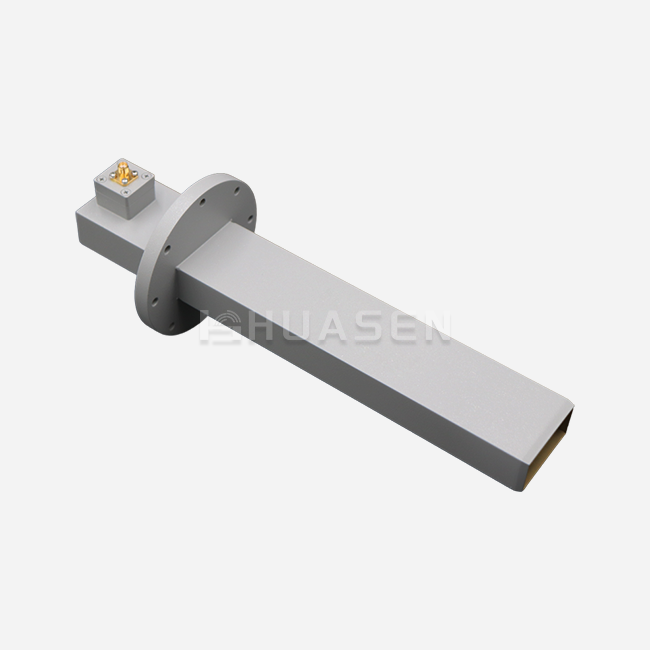
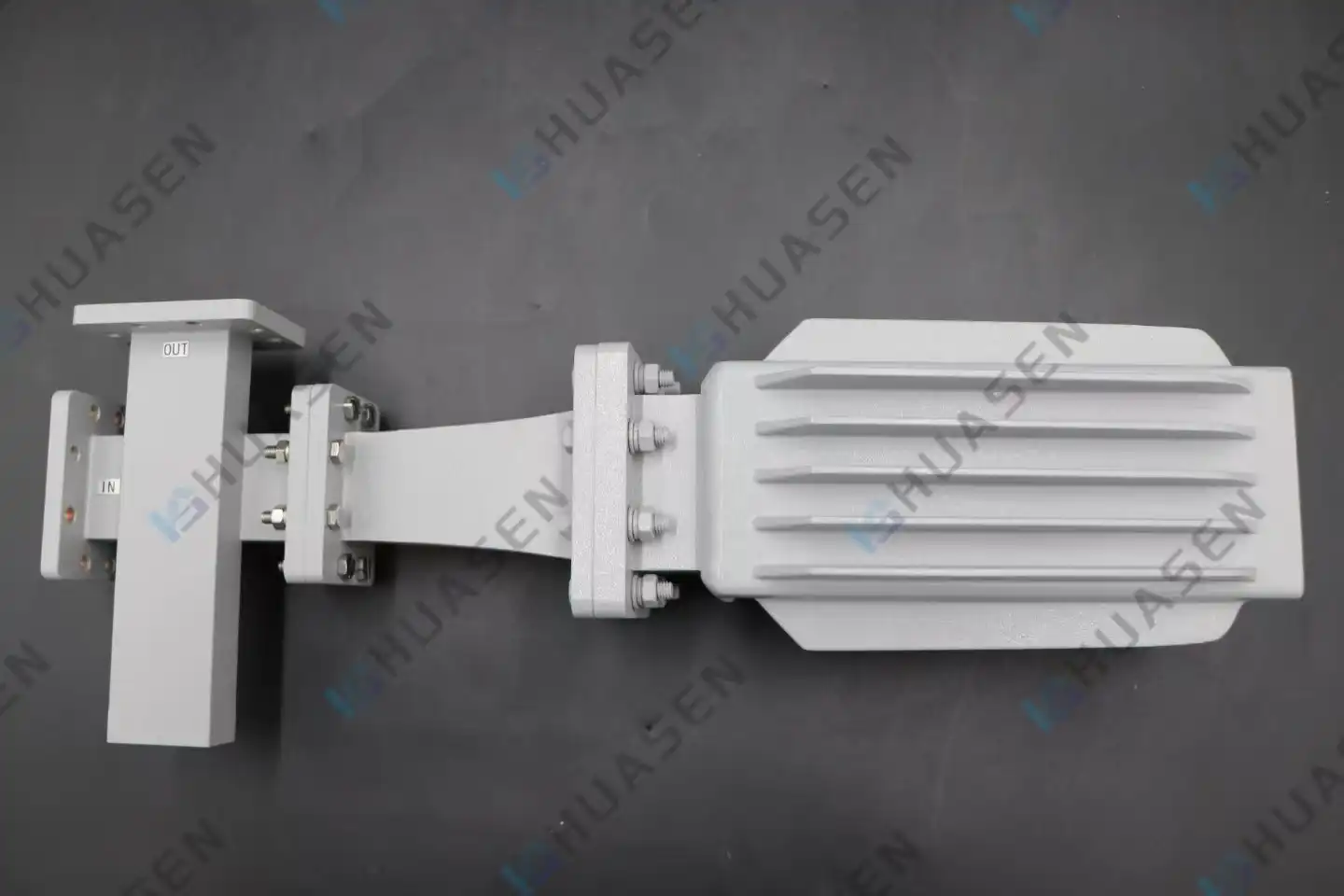
Without affecting phase or signal distortion, these precision devices reduce electromagnetic signal power in rectangular or circular waveguide structures. RF energy is converted into heat by introducing resistive dielectric materials, usually vanes or wedges, into the waveguide's electric field.
Fixed Attenuation for Stable Environments
Waveguide fixed attenuators reduce signals by a constant decibel. Engineers define these components for consistent system gain and power levels. Isolating sources from load impedance mismatches to improve Voltage Standing Wave Ratio (VSWR), preventing LNA saturation in receiver front-ends, and stepping down high-power signals to measurable levels extend the Vector Network Analyser (VNA) dynamic range. Static design removes mechanical adjustment mechanisms, improving dependability in vibration-prone settings like naval radar installations and aerial communication systems.
Variable Control for Dynamic Requirements
Rotating vanes or sliding resistive elements provide continuous or stepwise adjustment from 0 to 30 dB or more in variable waveguide attenuators. When modelling atmospheric signal fading during Satcom link budget testing or evaluating radar receiver sensitivity at different target distances, flexibility is crucial. Research labs enjoy the capacity to fine-tune klystron and magnetron drive power without disrupting experiments. Micrometre-driven adjustments fulfil strict calibration criteria in standards labs and production test facilities with 0.01 dB mechanical accuracy.
Frequency Band Compatibility
Standard waveguide dimensions like WR-90 for X-band (8.2-12.4 GHz) or WR-28 for Ka-band (26.5-40 GHz) determine practical frequency ranges. Choose components that fit your system's spectral allocation to avoid cutoff frequency difficulties and sustain VSWR. Broadband Satcom ground stations benefit from designs that cover extended bandwidths with minimum performance deterioration over the operational range, but multiband radar systems may need different attenuators for each frequency section.
Critical Factors to Consider When Choosing a Waveguide Attenuator
System-level performance and operational safety are determined by several interdependent aspects when matching component specifications to application requirements.
Power Handling Capacity
Before thermal or dielectric breakdown, average and peak power ratings set safe working limits. Megawatt-level radar transmitters require attenuators with high peak power tolerance, whereas continuous-wave Satcom uplink chains favour average power dissipation. Waveguide attenuator technology offers higher power levels than coaxial counterparts because of bigger cross-sectional areas for heat dissipation and no thermally stressed centre conductors. When setting this value, calculate your system's worst-case power situations, including mismatched load-reflected energy.
Insertion Loss and Return Loss
Parasitic insertion loss reduces signal efficiency and adds noise beyond the targeted attenuation. Quality devices have little excess loss—often below 0.5 dB at zero attenuation for various kinds. Most applications accept return loss values above 20 dB, which measure reflected energy from impedance discontinuities. These characteristics affect receiver noise figure budgets and transmitter efficiency estimates, making them important RF path assessment criteria.
Mechanical Integration Requirements
Installation in equipment racks, antenna feed assemblies, or test benches requires certain dimensions. Standard waveguide flanges like the UG series or European EIA ensure infrastructure compatibility. Remote monitoring of variable waveguides and attenuators may need position indicators or digital readouts and additional clearance for adjustment mechanisms. Weight matters in airborne or space-qualified applications, as every gram affects fuel efficiency or launch costs.
Environmental Durability Standards
Outdoor ground stations, maritime installations, and aerial platforms require components that can withstand temperature, humidity, and vibration. The military sets salt fog exposure, shock resistance, and altitude performance standards in MIL-DTL-3933. Lightning strike and electromagnetic interference immunity are specified in DO-160 for commercial aircraft applications. Certifications should be included in procurement requirements to ensure components survive deployment and service life.
Comparison of Waveguide Attenuators and Alternative Attenuator Types
Understanding attenuation technology architectures helps match solutions to application contexts and performance goals.
Waveguide Versus Coaxial Designs
Coaxial attenuators are ideal for laboratory tabletop setups and applications below 18 GHz due to their compact size and test equipment connection compatibility. Their centre conductor shape restricts power handling to hundreds of watts and drastically increases insertion loss at millimetre-wave frequencies. High-power radar transmitters and millimetre-wave communication lines benefit from waveguides. Attenuator implementations have heat control and reduced loss, despite their higher size and weight.
Fixed Versus Adjustable Trade-Offs
Static or variable attenuation depends on operational flexibility, cost, and dependability. For applications where signal levels stay constant throughout the system lifespan, fixed devices offer continuous performance without moving parts to wear or drift. Variable units allow for changing test circumstances, prototype development iterations, and real-time power levelling systems, although they need mechanical complexity and calibration. Budget-conscious projects with consistent needs prefer permanent solutions, whereas research settings and flexible production test systems warrant adaptability.
Brand Ecosystem Considerations
Established manufacturers offer broad product catalogues with performance data, calibration certifications, and warranty support to decrease procurement risk, including for components like Waveguide Fixed Attenuators. When conventional catalogue products don't meet application demands, their technical support teams help with integration and bespoke customisations. Multi-year defence programmes or infrastructure projects that need component availability for maintenance and growth require supply chain stability. Like component specs, manufacturer track records, certification compliance, and service response matter.
Procurement Guide – Buying Waveguide Attenuators for Radar and Satcom
Technical fit, commercial terms, and lifetime support must be assessed to navigate the purchase process.
Specification Development
A comprehensive specification sheet should list your system's frequency bands, power levels, attenuation needs, and environmental conditions. List interface specifics such as flange types, mounting orientations, and vacuum compatibility or hermetic sealing requirements. This documentation guides supplier RFQ answers and ensures all vendors quote against the same specifications for meaningful proposal comparisons.
Supplier Evaluation Criteria
Consider manufacturing capacity, quality management systems, and industry certifications for your application sector when choosing a manufacturer. AS9100 certification shows aerospace-specific controls and traceability, while ISO 9001 certifies fundamental quality standards. For bespoke designs or first-time vendor connections, request sample units for validation testing before ordering production volumes. Check technical response during quotation for post-sale support quality.
Cost Structure Analysis
Attenuation accuracy, power rating, and waveguide band severely affect unit pricing. Due to mechanical complexity, variable waveguide attenuators cost 3-5 times more than fixed versions. Manufacturer pricing policies may allow volume discounts for quantities beyond 10-25 units. When evaluating choices with different initial purchase prices, consider the total cost of ownership, including calibration, service intervals, and replacement components.
Delivery and Documentation
From stock availability for popular catalogue products to 8-12 weeks for unique setups needing specialist materials or testing. Set delivery goals connected to project schedules and incorporate penalties for key route delays. Ask for dimensional drawings, S-parameter data files, national-standard calibration certifications, and handling/storage instructions. This information is crucial for system integration, compliance verification, and maintenance.
Best Practices for Testing, Maintaining, and Optimising Waveguide Attenuators
Preventive maintenance and systematic verification enhance component life and ensure measurement accuracy and system protection.
Acceptance Testing Procedures
Use a calibrated network analyser to check attenuation correctness across the frequency range after reception. Measure VSWR to ensure datasheet requirements, giving special attention to band edges where performance suffers. Test average power handling in thermal chambers that imitate operational temperature extremes for high-power applications. Note baseline measurements for future performance drift or damage comparisons.
Routine Maintenance Activities
Marine and outdoor systems exposed to moisture should have waveguide flanges inspected quarterly for corrosion. Lint-free cloths and isopropyl alcohol clean mating surfaces without scratching precision-machined interfaces. Try varied waveguide attenuator mechanisms, including waveguide fixed attenuators, for smooth operation and recalibrate position indicators to match attenuation settings. Tighten flange hardware to torque levels to avoid leaks and preserve electrical continuity.
Performance Optimisation Strategies
In dynamic systems, match attenuator settings to downstream component operating points to maximise signal-to-noise ratio without compression or saturation. Use closed-loop control techniques to automatically adjust variable attenuators for atmospheric fading or transmitter power fluctuations. When practical, place attenuators closer to sources than receivers to reduce the cumulative noise figure influence. Monitor thermal increase during high-duty-cycle operations to maintain rated heat dissipation.
Conclusion
Waveguide attenuators for radar and Satcom deployments must match technical standards with operational reality and budget. Fixed variations function well in stable conditions, whereas variable models allow study, testing, and adaptive systems. Power handling capability, frequency compatibility, environmental durability, supplier reliability, and lifetime support are key selection factors. Systematic testing ensures component performance before integration, and preventative maintenance maintains accuracy throughout time. Attenuators that meet specifications improve system dependability and protect expensive downstream components.
FAQ
1. What frequency ranges do waveguide attenuators support for radar applications?
Waveguide attenuators support radar frequencies in ranges from L-band (1-2 GHz) to W-band (75-110 GHz). Standard designs encompass these microwave bands, with variants tailored for radar frequencies including X-band (8-12 GHz) and Ka-band (26-40 GHz). Custom designs reach millimetre-wave frequencies exceeding 110 GHz for improved sensing.
2. Can waveguide attenuators be used interchangeably with coaxial types?
They regulate signals similarly but need adapters owing to various mechanical connections. Waveguides' higher power handling and reduced loss trade off with coaxial's compact size and wider connection compatibility.
3. How do I determine required power handling specifications?
Average and max power for continuous and pulsed broadcasts. Add safety margins of 3-6 dB above computed maximums to allow for load mismatch, reflecting energy and component ageing that lowers initial ratings.
Partner with Huasen Microwave for Precision RF Solutions
High-performance Waveguide Attenuators from Huasen Microwave Technology have enabled mission-critical radar and satellite communication systems globally since 1993. We manufacture fixed and variable configurations from X-band to Ka-band frequencies with MIL-STD compliance and thorough quality testing. Our technical team works with you to improve application specs for catalogue components for speedy deployment or bespoke designs for unique system restrictions. We have a large selection for fast delivery, and our calibration lab certifies measurements. Talk to a reputable Waveguide Attenuator manufacturer at sales@huasenmicrowave.com about your project needs. We provide dependable RF solutions that preserve your investment and improve operational performance.
References
1. Balanis, Constantine A. "Advanced Engineering Electromagnetics, 2nd Edition." Wiley, 2012.
2. Pozar, David M. "Microwave Engineering, 4th Edition." Wiley, 2011.
3. IEEE Standard 145-2013. "IEEE Standard for Definitions of Terms for Antennas."
4. Skolnik, Merrill I. "Radar Handbook, 3rd Edition." McGraw-Hill Education, 2008.
5. Maral, Gerard and Bousquet, Michel. "Satellite Communications Systems: Systems, Techniques and Technology, 6th Edition." Wiley, 2020.
6. MIL-DTL-3933. "Military Specification: Attenuators, Fixed and Variable, Radio Frequency."
Send Inquiry