Broadband Horn Antenna Design: Gain, VSWR and Directivity






2026-03-25 21:15:30
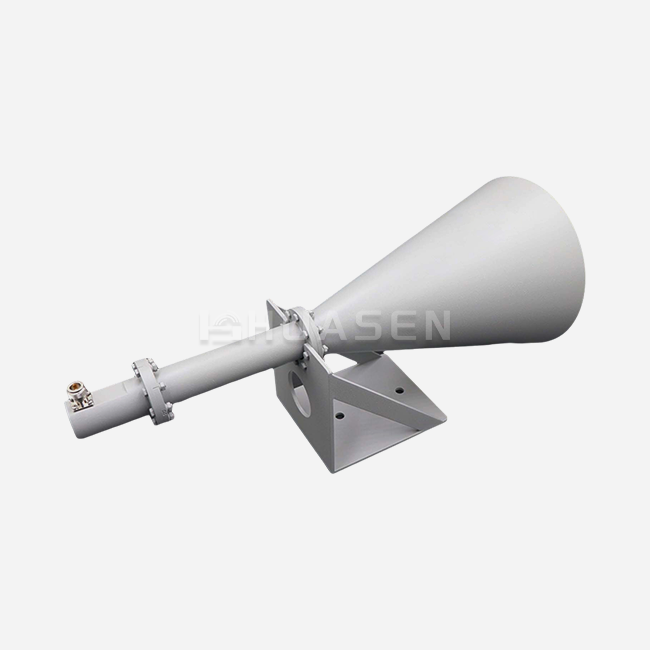
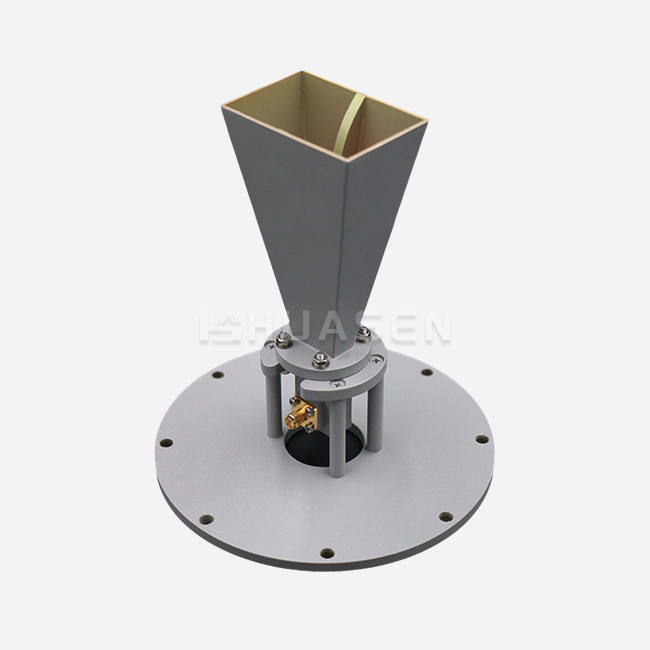
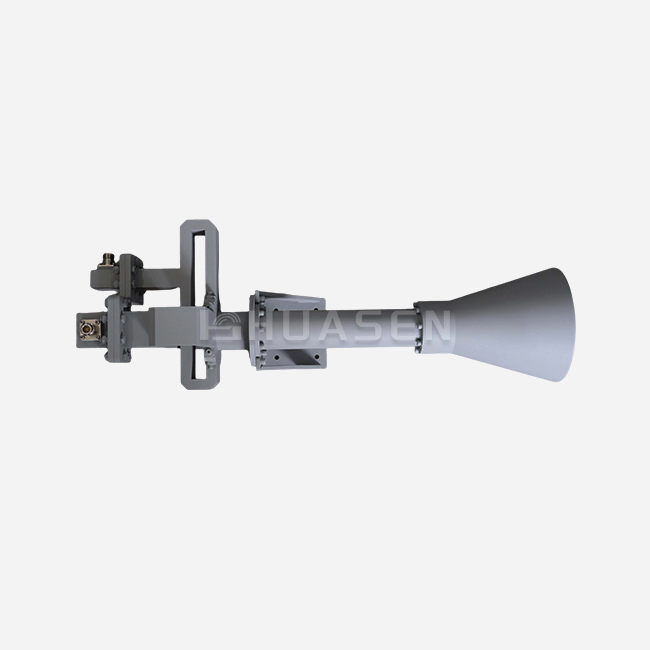
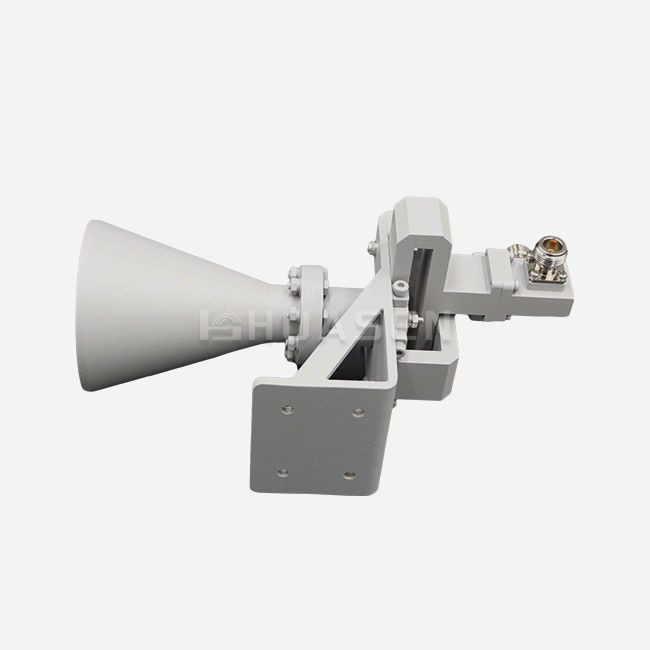
Broadband Horn Antenna design is an advanced engineering approach that takes into account important performance factors needed for modern RF and microwave applications. These antennas are great at providing steady gain, low VSWR, and precise directionality over a wide range of frequencies. The design process is all about getting the best electromagnetic performance by tweaking the horn shape, ridge configurations, and impedance matching networks. Engineering professionals can choose the right antenna solutions that meet strict standards for EMC testing, radar systems, and communication infrastructure if they understand these basic design principles.
Understanding Broadband Horn Antenna Design Fundamentals
Modern RF systems demand antenna solutions that maintain consistent performance across multiple frequency bands. Horn antennas with broadband capabilities serve this critical need by employing advanced design techniques that extend operational bandwidth while preserving essential characteristics.
Operating Mechanisms and Radiation Patterns
Horn antennas behave electromagnetically by slowly switching between guided waves inside the feed structure and free-space transmission. This change makes a controlled opening that affects the electric field that is sent out. It smooths out the difference between the impedance of the feeding waveguide and the 377-ohm impedance of empty space. This is done by the horn design. By adding metal ridges to the horn structure, double-ridged versions improve this basic function. These ridges drop the cutoff frequency by a large amount while keeping the impedance stable over a wide range of frequency range. The shape of the ridges makes a transmission line that is curved and can work from 1 GHz to 18 GHz, or even 18 GHz to 40 GHz in more advanced designs.
Key Performance Metrics Definition
There are three main factors that determine how well a horn antenna works in real life. Compared to an isotropic radiator, gain shows how well the antenna can focus electromagnetic energy in certain areas. This ability to focus in a certain way has a direct effect on the strength and coverage patterns of signals in communication systems.VSWR is a measurement of how well the antenna and its feed system match resistance. When the values are less than 2.0:1 across the working bandwidth, it means that the matching is excellent, signal reflection is minimal, and power transfer efficiency is at its highest. In high-power situations, where reflected energy can damage transmission parts, this parameter is very important. This term, "directivity," describes the antenna's radiation pattern and shows how well the device focuses energy on the main beam. When the directivity number is higher, the beamwidth is smaller, and the sidelobe level is lower. This makes the signal-to-noise ratio better and lowers interference in complex electromagnetic environments.
Common Design Challenges
Finding the right balance between gain and bandwidth is a constant problem for engineers working on horn antennas. For narrowband designs, the best aperture sizes can lead to higher gain values. But for broadband designs, adjustments are needed to keep gain levels reasonable over a wider frequency range. Paying close attention to the ridge geometry and feeding processes is needed to keep VSWR as low as possible across a wide range of frequencies. Tolerances in manufacturing are very important because ridge gaps can change by as little as a micrometre, which can cause impedance discontinuities that cause VSWR jumps that are too high. Managing higher-order mode propagation within the horn structure is needed to keep the directivity stable over the working bandwidth. When the design is right, problems with beam splitting that can happen at higher frequencies are avoided. This keeps the radiation patterns constant, so the system works well.

Critical Dimensions and Design Factors Impacting Performance
Horn antenna performance depends heavily on precise geometric relationships and material selections that influence electromagnetic behaviour across the operational bandwidth. Understanding these dependencies enables optimisation for specific application requirements.
Horn Geometry and Dimensional Relationships
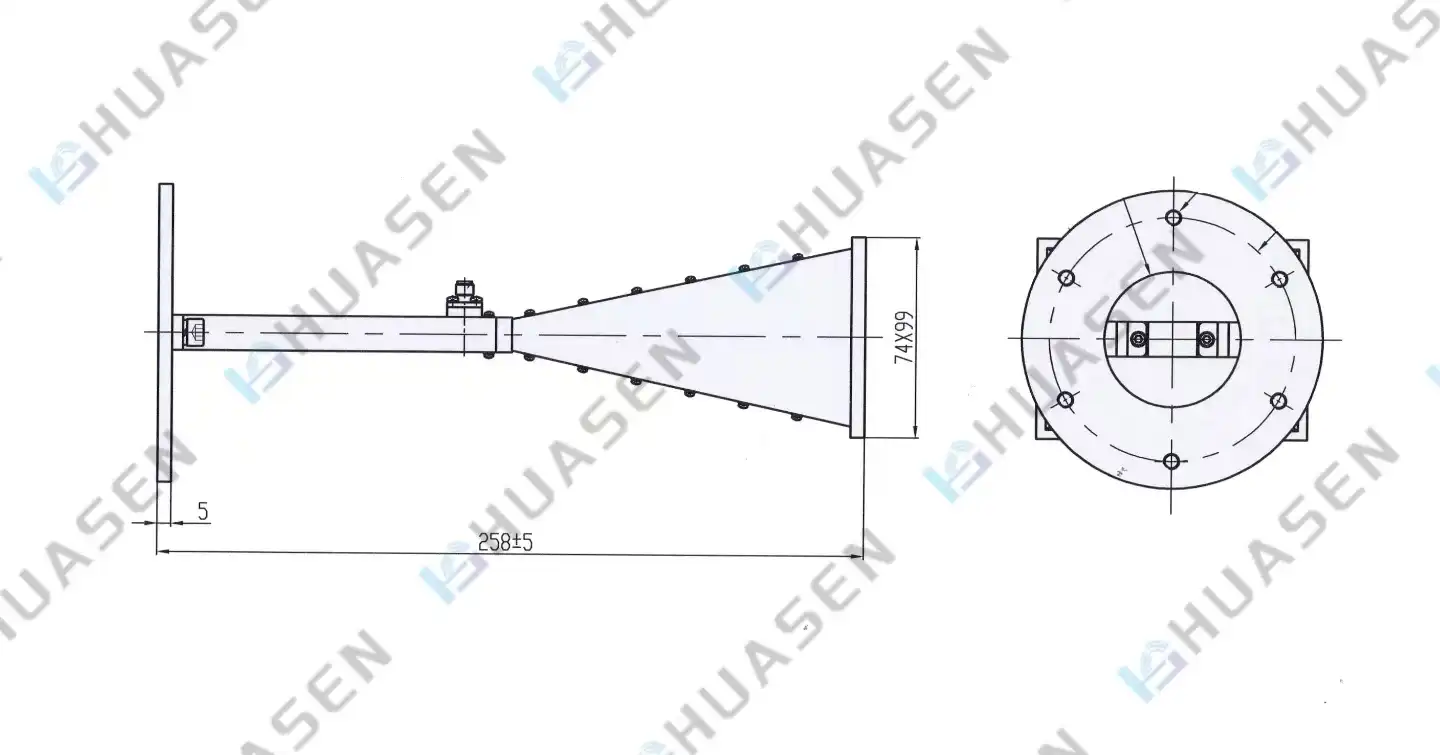
The flare angle has a direct effect on the change from guided to free-space transmission modes. Moderate flare angles make impedance changes that are smooth, which lowers VSWR. On the other hand, aggressive angles can make gaps that hurt performance. The best flare angle strikes a balance between the need for bandwidth and the amount of reflection that is acceptable. Both gain and directivity are controlled by the size of the aperture. It is easier to focus electromagnetic energy when the aperture is bigger, which leads to higher gain values and smaller beamwidths. However, many applications have size limits that mean they need to be carefully optimised to get the best performance in the room they have. The length of the horn changes the phase relationships across the aperture, which changes the quality of the radiation pattern and the amount of sidelobes. Not enough length can lead to aperture phase mistakes that ruin the symmetry of the pattern, while too much length makes the device bigger and heavier without improving its performance in any way.
Material Properties and Manufacturing Considerations
The conductivity of a material affects both how efficiently it works,Double Ridged Horn Antennaand how much power it can handle. Materials with a high conductivity, like copper or aluminium, reduce resistance losses and keep heat under control well enough for high-power uses. At higher frequencies, where skin depth effects become important, the quality of the surface finish has an effect on performance. Manufacturing tolerances have a direct effect on the VSWR characteristics over the whole operating bandwidth. To keep resistance stable, ridge gap sizes need to be accurate to the micrometre level. This is especially true in broadband designs where small changes can cause discontinuities that depend on frequency.
Feeding Methods and Impedance Matching
To keep reflections to a minimum, the impedance matching between the coaxial or waveguide lines and the horn structure needs to be done carefully. Ridge configurations make transmission lines that are tapered, which changes normal 50-ohm impedances to free-space values slowly. Multi-section transformers or special transition shapes that increase matching bandwidth are used in more advanced feeding methods. These methods allow operation across several octaves while keeping VSWR levels good enough for tough uses.
Comparing Broadband Horn Antennas with Other Antenna Types
Selecting optimal antenna solutions requires understanding performance trade-offs between different technologies. Horn antennas offer unique advantages in specific applications, while alternative designs may better serve other requirements.
Standard Horn Versus Broadband Horn Performance
Traditional pyramidal horns excel in narrowband applications where maximum gain and minimal sidelobe levels are priorities. These designs achieve excellent performance within limited frequency ranges but require multiple antennas to cover broad spectrums. Broadband configurations sacrifice some peak performance to achieve extended frequency coverage. The gain variation across the band typically ranges from 6 dBi at lower frequencies to 15 dBi at upper limits, providing useful performance throughout the operational range.
Comparison with Log Periodic and Patch Antennas
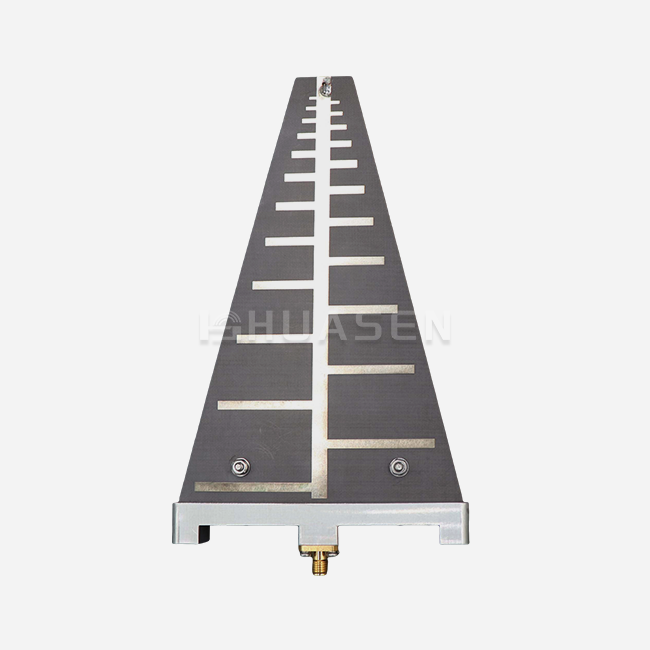
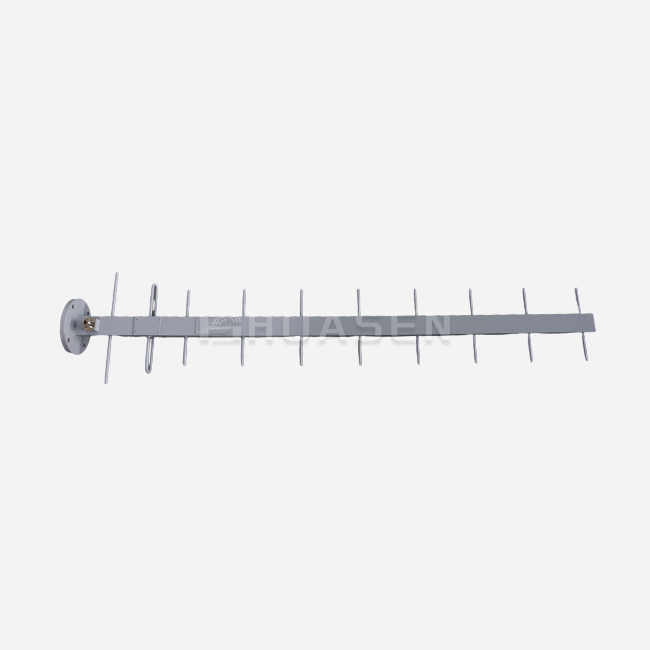
Log periodic antennas offer excellent broadband characteristics with more compact form factors than horn designs. However, they typically exhibit lower gain values and omnidirectional patterns that may not suit applications requiring high directivity. Patch antenna arrays can achieve high gain and precise beam control through electronic steering capabilities. These systems require complex feeding networks and active components that increase cost and complexity compared to passive horn designs.
Application-Specific Selection Criteria
EMC testing applications favour horn antennas for their stable, predictable characteristics and ability to generate uniform field strengths across test volumes. The linear polarisation and known antenna factors simplify measurement procedures and calibration requirements. Radar applications benefit from the high power handling capabilities and excellent cross-polarisation discrimination of horn designs. The ability to handle continuous wave power levels exceeding 300W enables use in jamming systems and high-power surveillance applications.
Practical Applications and Benefits for B2B Procurement
Horn antennas serve critical functions across multiple industries where reliable electromagnetic performance directly impacts operational success. Understanding these applications helps procurement professionals make informed decisions that optimise system capabilities.
EMC Compliance and Testing Applications
EMC testing laboratories rely on horn antennas for both radiated immunity and emissions measurements. The wide bandwidth coverage enables compliance testing according to standards like CISPR 16 and MIL-STD-461 without requiring antenna changes during test sequences. The antennas serve as standard reference sources for immunity testing, providing known field strengths across test volumes. Their calibrated antenna factors enable accurate field strength calculations essential for compliance verification. The linear polarisation and stable radiation patterns ensure repeatable measurements that regulatory Double Ridged Horn Antennabodies accept.
5G Network Development and Testing
The evolution toward 5G and future 6G networks requires antenna solutions that support millimetre-wave frequencies and complex modulation schemes. Broadband horn antennas provide the measurement capabilities needed for characterising base station components and validating system performance. Testing facilities use these antennas to evaluate antenna arrays, characterise propagation channels, and verify beamforming algorithms. The consistent gain and directivity across broad frequency ranges enable accurate measurements of advanced antenna systems operating across multiple bands simultaneously.
Defense and Aerospace Applications
Military radar systems and electronic warfare applications demand antennas capable of operating across extended frequency ranges while maintaining high power handling capabilities. Horn antennas meet these requirements while providing the reliability needed for mission-critical applications. Spectrum monitoring and signals intelligence systems employ these antennas to detect and analyse communications across wide frequency ranges. The ability to handle high power levels enables use in jamming applications where suppressing hostile communications requires substantial transmitted power.
Return on Investment Analysis
Implementing broadband horn antennas reduces equipment requirements compared to multiple narrowband solutions. Test facilities can cover extensive frequency ranges with single antennas, reducing calibration time and improving measurement accuracy. The elimination of antenna swapping during test sequences reduces operational time and minimises opportunities for human error. Automated test systems benefit from the consistent antenna characteristics that enable accurate measurements without manual intervention.
Procurement Guide for Broadband Horn Antennas
Successful procurement requires understanding supplier capabilities, technical specifications, and long-term support requirements. Establishing clear evaluation criteria ensures the selection of solutions that meet both immediate and future needs.
Supplier Evaluation and Technical Specifications
Established manufacturers like Keysight, Rohde & Schwarz, and Anritsu provide horn antennas with comprehensive calibration data and technical support. These suppliers offer NIST-traceable calibrations and maintain quality systems that ensure consistent performance across production quantities. When evaluating suppliers, consider their experience with similar applications and ability to provide customisation services. Technical support capabilities, including design assistance and measurement guidance, can significantly impact implementation success. Huasen Microwave Technology brings three decades of experience in RF and microwave component development to horn antenna design. Our engineering team understands the demanding requirements of EMC testing, radar systems, and telecommunications applications.
Quality Assurance and Testing Requirements
Both mechanical dimensions and electromagnetic performance factors must be checked as part of quality control. Measurements of VSWR over the whole bandwidth show that the impedance matching is good, and measurements of gain give the antenna factors needed for reliable measurements. Testing for cross-polarisation detection makes sure that the antenna correctly rejects orthogonal signal components. When polarisation purity is very important, values above 20 dB discrimination stop measurement mistakes. Quality systems for manufacturing should meet appropriate standards, such as ISO 9001 and, if necessary, military requirements. Individual calibration data and certificates of compliance must be included in documentation files.
Cost-Benefit Analysis and Long-Term Considerations
The costs of buying something must be weighed against the long-term rewards,Broadband Horn Antenna and support needs. While higher-quality antennas may cost more, they are worth the extra money because they work better and last longer. Think about the total cost of ownership, which includes testing services, repairs, and possible replacements. Even if they cost more at first, suppliers who offer full help packages may be a better deal. Long-term prices and availability are affected by warranty terms and repair capabilities. When equipment breaks down, suppliers with in-house repair shops and fast service choices keep downtime to a minimum.
Conclusion
To make a broadband horn antenna that works well for a wide range of frequencies, the gain, VSWR, and directivity factors need to be carefully optimised. The engineering rules that control horn shape, material choice, and feeding methods have a direct effect on how well they work in serious situations like EMC testing, radar systems, and communication infrastructure. When buying, professionals and engineers who understand these basic design principles can choose solutions that improve system performance while keeping costs low. Broadband designs today are able to meet both the needs for wide coverage and reliable electromagnetic performance. This is why they are important parts of modern RF and microwave systems.
FAQ
1. What factors determine the gain variation across a broadband horn antenna's frequency range?
The gain variation results from the relationship between aperture size and operating wavelength. As frequency increases, the electrical size of the aperture grows, naturally increasing directivity and gain. The horn geometry and ridge configuration also influence this relationship, with properly designed antennas maintaining relatively smooth gain transitions across the operational bandwidth.
2. How does VSWR performance impact measurement accuracy in EMC testing applications?
VSWR directly affects the accuracy of field strength calculations in EMC testing. High VSWR values indicate significant signal reflection, which reduces the power actually radiated and creates standing wave patterns that affect field uniformity. Values exceeding 2.0:1 can introduce measurement errors that compromise compliance test validity.
3. What maintenance procedures ensure long-term horn antenna performance stability?
Regular inspection of mechanical connections and feed point integrity prevents performance degradation. The antenna should be protected from moisture ingress and mechanical shock that can disturb internal ridge alignment. Periodic recalibration every 1-2 years verifies that performance remains within specification limits.
4. How do environmental conditions affect broadband horn antenna operation?
Temperature variations can affect material dimensions and electrical properties, potentially shifting frequency response characteristics. Humidity and contamination can alter surface conductivity and introduce dielectric loading effects. Proper environmental protection and material selection minimise these impacts in demanding applications.
5. What customisation options are available for specialised applications?
Manufacturers can modify frequency ranges, connector types, and mechanical interfaces to meet specific requirements. Polarisation characteristics, power handling capabilities, and mounting configurations can be customised. Advanced applications may require specialised coatings or materials to meet environmental or performance specifications.
Partner with Huasen Microwave for Superior Horn Antenna Solutions
Huasen Microwave Technology combines three decades of RF engineering expertise with aBroadband Horn Antennawith advanced manufacturing capabilities to deliver exceptional broadband horn antenna solutions. Our comprehensive product line spans frequencies from 1 GHz to 40 GHz with customisation options that address unique application requirements. Whether you need standard configurations for EMC testing or specialised designs for radar applications, our engineering team provides the technical support and quality assurance that demanding applications require. Contact our sales team at sales@huasenmicrowave.com to discuss your broadband horn antenna supplier needs and discover how our proven solutions can enhance your system performance.
References
1. Balanis, Constantine A. "Antenna Theory: Analysis and Design, Fourth Edition." John Wiley & Sons, 2016.
2. Milligan, Thomas A. "Modern Antenna Design, Second Edition." IEEE Press, 2005.
3. Rudge, Alan W. "The Handbook of Antenna Design, Volume 1." Institution of Engineering and Technology, 1986.
4. Collin, Robert E. "Antennas and Radiowave Propagation." McGraw-Hill Science, 1985.
5. Kumar, Girish and Ray, K.P. "Broadband Microstrip Antennas." Artech House, 2003.
6. Volakis, John L. "Antenna Engineering Handbook, Fourth Edition." McGraw-Hill Education, 2007.
Send Inquiry