Best Directivity Coupler Design Practices for Millimeter Wave Applications






2026-05-28 21:32:05
Designing millimetre wave systems with precise signal separation between forward and reflected waves is difficult. Precision directivity couplers separate these signals with minimum interference, allowing engineers to quantify power and reflection from 30 GHz to 100 GHz. At high frequencies, even modest design defects cause measurement inaccuracies that degrade system performance. These passive components meet 5G infrastructure, satellite communications, and aerospace radar high directivity, low insertion loss, and thermal stability requirements through rigors design techniques, from material selection to topology optimisation.
Understanding the Fundamentals of Directivity Couplers in Millimetre Wave Applications
How do directivity couplers operate in high-frequency environments?
Directivity couplers extract a tiny, proportionate sample of electromagnetic waves in one direction while rejecting signals in the other. RF engineers can measure forward power without reflected energy from impedance mismatches or antenna problems due to this directional selectivity. These couplers preserve the primary transmission line while giving a coupled port for measurement, unlike power dividers that split signals evenly.
Unique Challenges at Millimetre Wave Frequencies
Operating in millimetre-wave bands is physically demanding. Fabrication tolerances are crucial when wavelengths decrease to millimetres. Above 30 GHz, surface roughness that looks inconsequential at lower frequencies produces significant conductor losses. Data quality is reduced by frequency-dependent loss tangents in dielectric materials. Temperature changes substrate characteristics and coupler frequency response. To avoid performance deterioration in deployed systems, we must consider these issues during design.
Critical Performance Metrics Explained
Coupler quality is determined by insertion loss, isolation, and directivity. Insertion loss is typically below 0.5 dB, excluding coupling loss; isolation is usually above 20 dB; and directivity is the difference between isolation and coupling factor. Even with strong load reflections, a high-directivity waveguide coupler may accurately separate incoming and reflected waves with directivity values of 40 dB. These requirements affect the vector network analyser and radar transmitter built-in test equipment measurement uncertainty.
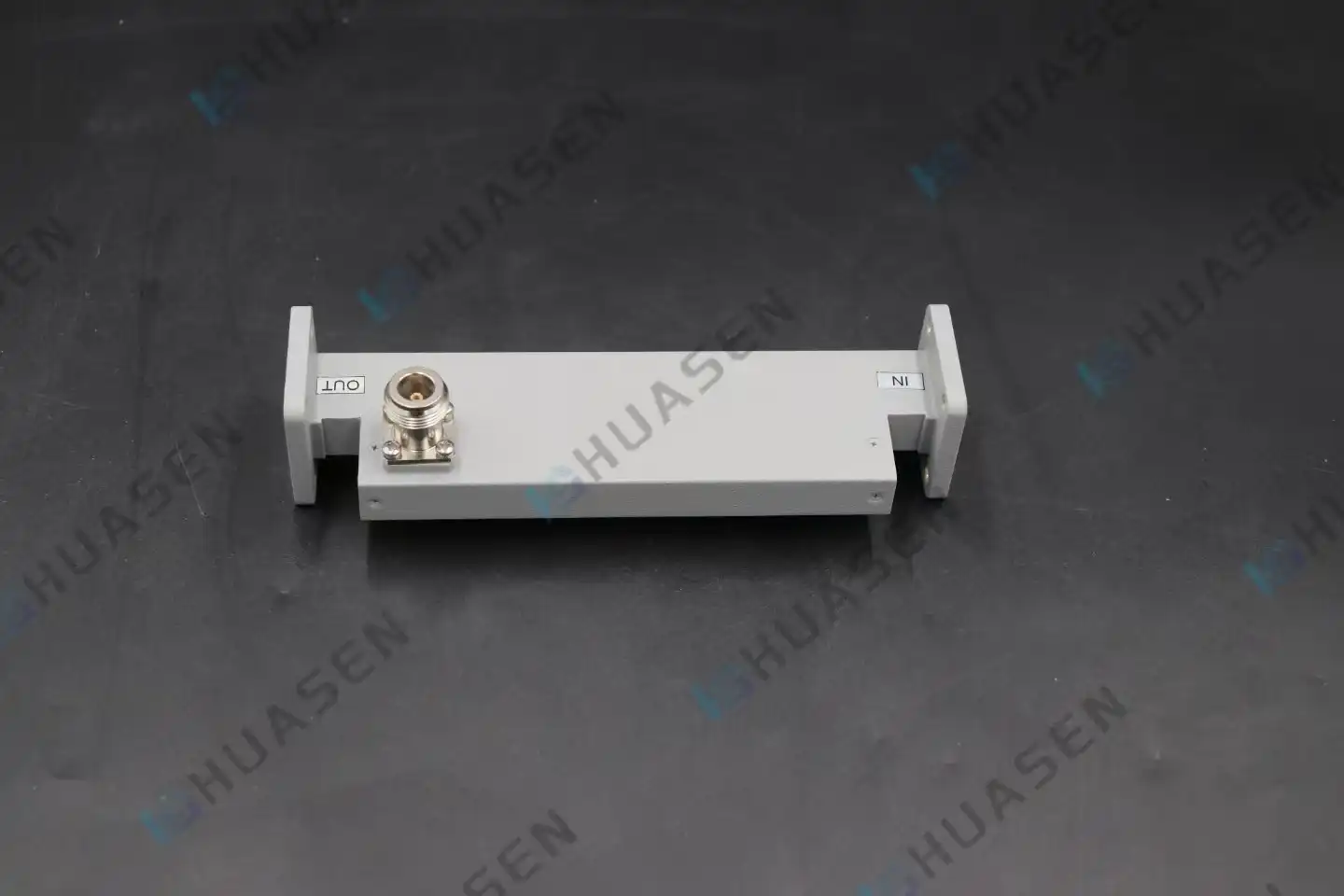
Core Design Principles for High-Performance Millimetre-Wave Directivity Couplers
Material Selection and Substrate Considerations
Materials must be chosen carefully to minimise millimetre wave loss. Rogers RT/duroid and PTFE-based composites have low dielectric constants, reducing electric field concentration and dissipation. Metal conductors need gold or silver plating to reduce skin effect losses because current crowds onto a thin surface layer at these frequencies. To avoid mechanical stress during temperature cycling, which is typical in outdoor base stations and aircraft platforms, substrate and conductor thermal expansion coefficients must match.
Topology Comparison: Strengths and Trade-offs
Different couplings fit different uses. Here are the main mmWave architectures:
- Microstrip couplers are suited for 5G transceiver modules due to their small size and planar circuit integration. However, their unshielded nature makes them susceptible to electromagnetic interference and limits power handling to moderate levels.
- Stripline configurations achieve excellent shielding and symmetric field distribution between ground planes. This architecture is ideal for laboratory instruments that need consistent performance across large temperature ranges, but fabrication complexity raises costs.
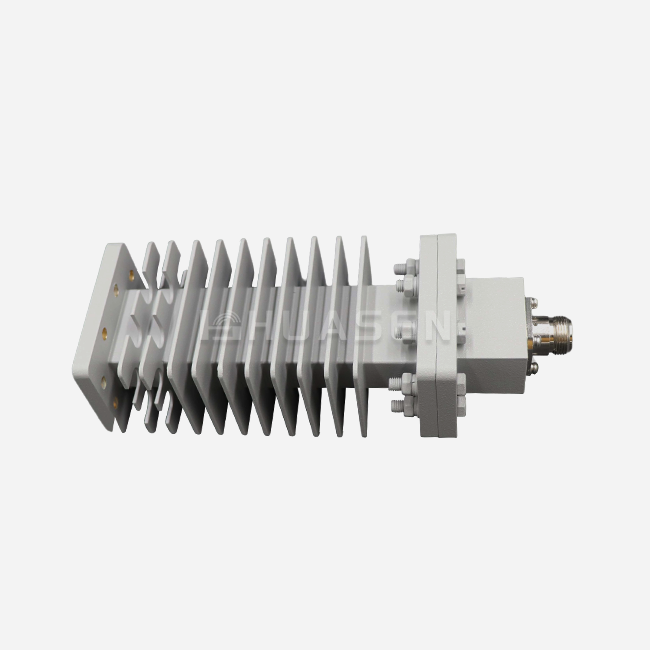
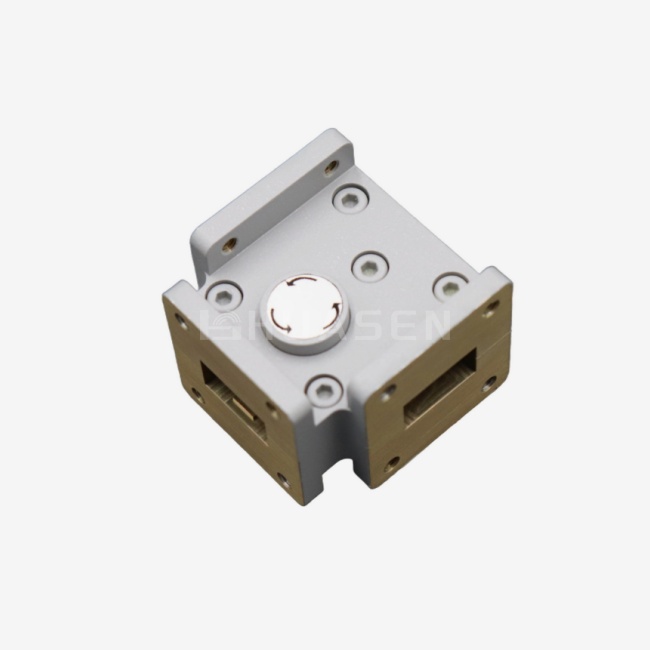
- Waveguide couplers are key in high-power radar and satellite communication systems for thermal control and peak power handling. In systems with suboptimal source matching, Chebyshev distribution multi-hole coupling arrays attain directivity beyond 50 dB for precision reflectometry.
Each architecture has bandwidth, size, and manufacturing complexity trade-offs. Microstrip designs demand careful etching to ensure coupling precision, yet take up little board area. Waveguide implementations provide unparalleled power capacity and low passive intermodulation (PIM) performance for telecom infrastructure with -160 dBc standards, but their mechanical bulk restricts space-constrained applications. A directivity coupler shares these same architecture-dependent trade-offs.
Simulation and Prototyping Validation
The electromagnetic simulation tools HFSS and CST Microwave Studio allow engineers to simulate field distributions and estimate performance before production. These platforms accommodate dispersion, higher-order modes, and parasitic coupling that analytical approaches miss. Parametric sweeps on substrate thickness, conductor width, and coupling gap spacing optimise the design for the target specs. Prototyping shows production tolerances and material differences that affect simulation accuracy. A production-ready design passes strict mmWave standards after simulation and measurement refinement.
Comparing Directivity Couplers: Making the Right Choice for RF Testing and Microwave Systems
Differentiating Coupler Types and Applications
Understanding functional differences helps choose a coupler. For beamforming networks in phased array antennas, hybrid couplers divide input power evenly with a 90-degree phase relationship. Power dividers distribute signals across various pathways without discriminating between forward or reflected energy. Directivity couplers isolate forward and reverse waves, making them essential for reflection coefficient measurements and transmitter monitoring when power level readings must be correct.
High-Directivity Versus Standard Couplers in Test Scenarios
Due to reflected power from unsatisfactory antenna matching, antenna characterisation requires high-directivity couplers. Standard couplers with 20 dB directivity cannot distinguish these reflections from the incident signal, resulting in incorrect VSWR estimations. Even with difficult impedances, components with 40 dB or higher directivity allow exact return loss measurements. Laboratory users performing scalar network analysis rely on this performance level to confidently confirm component specifications.
Supplier Evaluation and Technical Support Considerations
When buying mmWave couplers, procurement teams must consider more than pricing. Comprehensive datasheets from reliable manufacturers provide measured S-parameters over the frequency range, temperature coefficients, and power handling limitations. Technical help is crucial for engineering teams looking to understand requirements or adapt standard goods to unique system topologies. Huasen Microwave, founded in 1993 and specialising in high-frequency components, offers collaborative design services for custom flanges, ruggedised housings for airborne platforms, and extended frequency coverage across multiple communication bands.
Procurement Best Practices for Millimetre Wave Directivity Couplers
Balancing Sourcing Channels and Lead Times
Quality mmWave components require smart supplier connections. Online marketplaces provide catalogue items at transparent prices for prototyping and small-volume buying. Direct manufacturer involvement offers bulk reductions and flexible delivery dates that match production timetables for large installations. Certification requirements—MIL-STD for defence contracts, ISO for quality assurance, and RoHS for environmental regulations—must be validated upfront to minimise qualification testing delays.
Navigating Customisation and RFQ Processes
Many mmWave applications require customised solutions, including non-standard frequency bands for 6G research, smaller UAV payloads, or increased power ratings for electronic warfare systems. Specifying operating frequency with tolerance bands, maximum insertion loss, minimum directivity of a directional coupler, connector types (SMA, K, WR-series waveguide), environmental ratings (temperature range, humidity, vibration), and quantity with delivery schedule is essential for effective quotation requests. Clear RFQ communication reduces misconceptions and speeds sample assessment, allowing integration teams to verify electrical and mechanical compatibility before ordering production.
Cost Optimisation Without Compromising Quality
Even high-performance applications have budget limits. Base station builders are installing thousands of Directivity Couplers throughout cellular networks, saving money by buying in bulk. Negotiating payment periods and blanket purchase orders protects supply chains against component shortages. Prioritising cost alone risks acquiring inferior items with minimal requirements, such as components that satisfy datasheet values only at ambient temperature or break prematurely under thermal stress. Avoid costly field failures and system downtime by working with reputable manufacturers with third-party testing and long-term reliability data.
Optimising Performance and Reliability: Practical Tips for End Users
Installation and Calibration Best Practices
Proper installation reduces losses and maintains coupler performance. Microscopic detritus at mmWave frequencies causes impedance discontinuities that worsen VSWR; therefore, connector mating surfaces must be clean. Check threaded connector torque specifications—overtightening destroys centre conductors, while inadequate torque causes intermittent contacts. Measurement sets are calibrated using established impedance standards to ensure the coupled port appropriately displays forward power levels. Temperature stabilisation prevents thermal drift that affects calibration accuracy during long tests.
Avoiding Common User Mistakes
When the coupler's linked port and measuring equipment don't match, reflection errors contaminate measurements. Terminating unused ports with matching loads minimises isolation-compromising standing waves. Peak power ratings are as important as average power in pulsed radar applications because exceeding coupler ratings destroys internal structures. In marine and industrial contexts, sealed enclosures and conformal coatings improve component lifespan because condensation corrodes connections and degrades dielectric characteristics.
Performance Monitoring and Preventive Maintenance
Scheduled inspections catch deterioration before breakdowns. Visual inspection shows corrosion, mechanical stress on connections, or vibration damage. To ensure coupler performance as systems age, including the directivity of a directional coupler, calibrated test equipment is used for periodic verification. Trending these readings over time shows a steady drift that indicates component end-of-life, allowing proactive replacement during regular maintenance periods rather than emergency repairs. Our focused methodology ensures system dependability and continuous operation in mission-critical communications infrastructure and defence platforms.
Conclusion
Electrical performance, mechanical robustness, and manufacturability must be balanced while designing millimetre-wave directivity couplers. Material selection, topology selection, and rigorous simulation verify designs that fulfil strict standards at high frequencies. Buyers who prioritise supplier experience, customisation, and long-term reliability get project-specific parts. Effective installation, calibration, and maintenance increase operating efficiency. These design and sourcing principles assure directivity couplers provide precise, reliable signal management in demanding applications as mmWave technology grows into 5G backhaul, satellite constellations, and next-generation radar systems.
FAQ
1. What frequency ranges qualify as millimetre waves for coupler design?
Millimetre waves have wavelengths between 10 and 1 millimetre and frequencies between 30 and 300 GHz. Ka-band (26.5–40 GHz), V-band (40–75 GHz), and W-band (75–110 GHz) mmWave bands have different loss mechanisms and manufacturing precision design issues.
2. How does one select between high-directivity and standard couplers for a specific test requirement?
Applications like antenna VSWR analysis and amplifier load monitoring require high-directivity couplers (>40 dB) to measure tiny reflections with high forward power. Standard couplers with 20–30 dB directivity are sufficient for power levelling in transmitters with low reflected power or matching networks.
3. Are custom design services available for specialised millimetre wave applications?
Established manufacturers provide bespoke engineering for frequency band changes, smaller packaging for space-limited installations, ruggedised housings for demanding environments, and changed connection interfaces. Custom system architectures and OEM product integration are accommodated by collaborative design.
Partner with a Proven Directivity Coupler Manufacturer for Your Next Project
Huasen Microwave manufactures Directivity Couplers for demanding millimetre wave applications with over 30 years of high-frequency component production experience. We provide telecommunications infrastructure, aircraft radar, and precision test instruments with waveguide, coaxial, and hybrid products. Our technical staff supports you throughout the procurement cycle, whether you require catalogue components for quick prototyping or completely bespoke solutions to meet system standards. For full datasheets, design help, or a competitive estimate, email sales@huasenmicrowave.com. We deliver reliable performance, stringent quality standards, and fast support to speed project schedules and maximise system results as a trusted directivity coupler supplier.
References
1. Pozar, David M. Microwave Engineering, 4th Edition. Hoboken: John Wiley & Sons, 2012.
2. Collin, Robert E. Foundations for Microwave Engineering, 2nd Edition. New York: McGraw-Hill, 1992.
3. Balanis, Constantine A. Advanced Engineering Electromagnetics, 2nd Edition. Hoboken: John Wiley & Sons, 2012.
4. Gupta, K. C., Garg, Ramesh, Bahl, Inder, and Bhartia, Prakash. Microstrip Lines and Slotlines, 3rd Edition. Boston: Artech House, 2013.
5. Montgomery, C. G., Dicke, Robert H., and Purcell, Edward M. Principles of Microwave Circuits. New York: McGraw-Hill, 1948.
6. Saad, Theodore S. Microwave Engineers' Handbook, Volume 1. Dedham: Artech House, 1971.
Send Inquiry