Application Scenarios for Circularly Polarized Microstrip Antenna






2026-05-26 21:38:48
Circularly Polarized Microstrip Antennas are a type of planar antenna in which the electric field vector spins continuously in either a right-hand or left-hand circular pattern. This feature minimises polarisation mismatch loss, allowing signal reception independent of receiver orientation, which is important for mobile platforms and randomly oriented devices. Since reflected signals reverse polarisation and are rejected by the antenna, the method reduces multipath fading and ghosting in urban and industrial settings. These antennas solve connection dependability and signal integrity issues in complicated operational situations in high-stakes B2B businesses, including satellite communications, RFID logistics, aircraft telemetry, and 5G networks.
Overview of Circularly Polarised Microstrip Antennas
Working Principles and Design Fundamentals
Two orthogonal electromagnetic modes excite the patch element with equal amplitude and a 90-degree phase difference, resulting in circular polarisation. Engineers use corner-truncated square patches, diagonal slots, and dual-feed networks with hybrid couplers. Substrate material selection affects performance. Rogers, Taconic, and ceramic-filled PTFE substrates have different trade-offs. Lower dielectric constants improve radiation efficiency but increase footprint, whereas higher constants reduce physical dimensions but restrict operating bandwidth.
Critical Performance Metrics
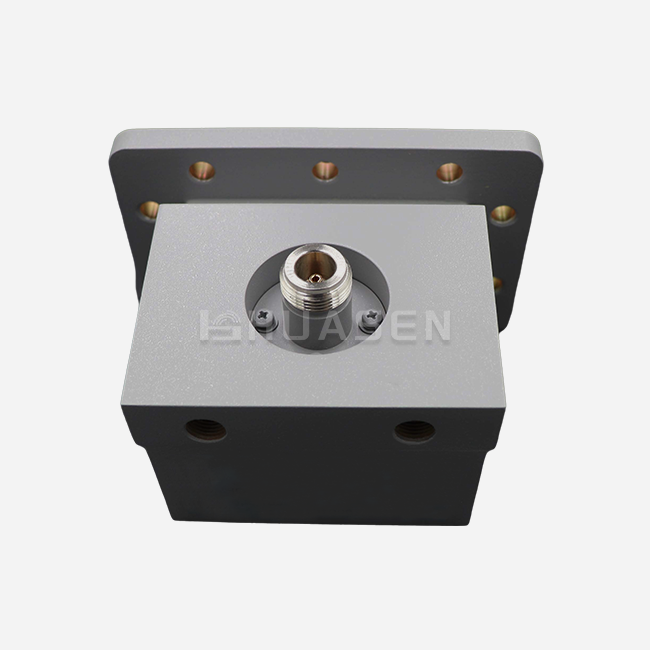
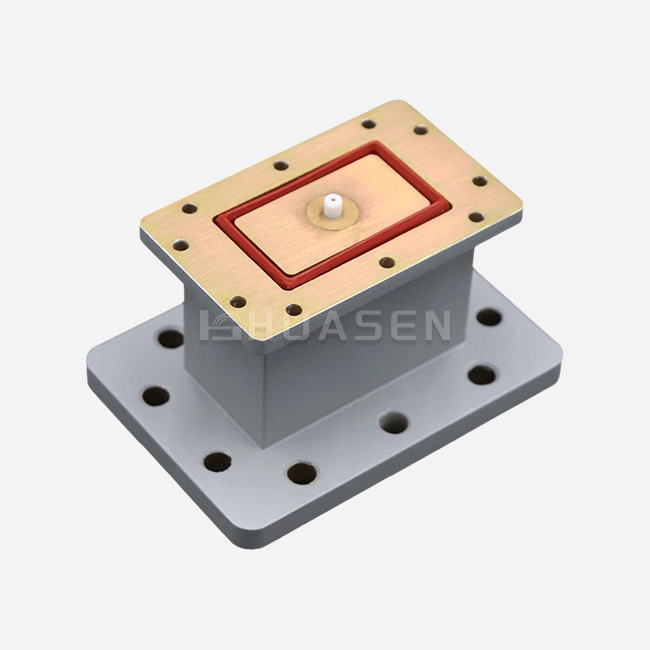
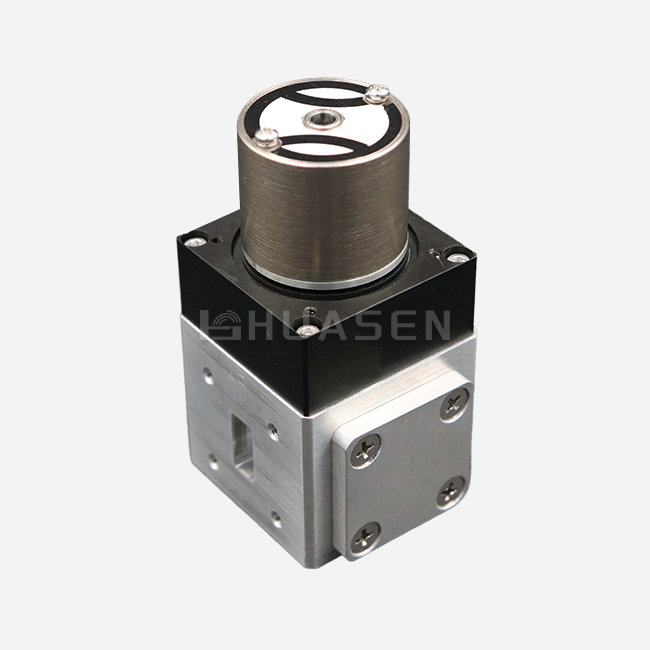
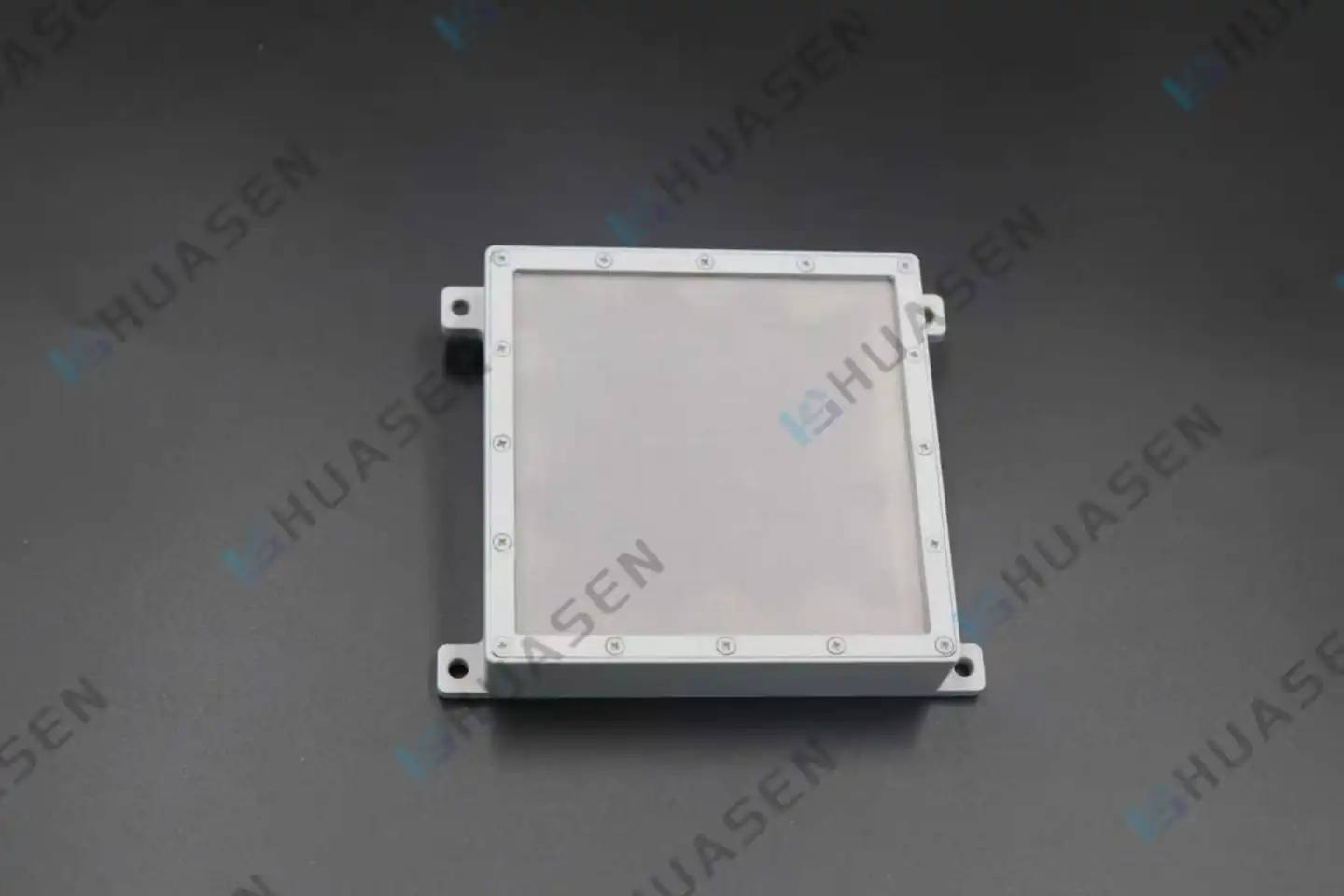
Pure circular polarisation is guaranteed by axial ratio values below 3 dB over the working frequency range. System efficacy depends on impedance bandwidth, gain stability, and radiation pattern consistency. Huasen Microwave's revolutionary designs use hybrid waveguide-microstrip transmission networks to achieve up to 23 dB gain while being ultra-lightweight and thin. Our engineers have optimised array designs from single patch elements to complicated 6x8 and 8x8 arrays, providing polarisation diversity spanning L to Ku frequency bands.
Advantages for Industrial Deployment
Without protruding components, the low-profile conformal design integrates into aerodynamic surfaces of aeroplanes, UAVs, and tiny portable gadgets. Circularly polarised microstrip antennas resist rain and fog better than linearly polarised options, in addition to being more convenient. The technique also resists Faraday rotation effects during ionospheric transmission, ensuring signal integrity across long-distance satellite communications. These traits create cost-effective and dependable solutions for demanding B2B applications where constant performance under changeable conditions defines project success.
Key Application Scenarios for Circularly Polarised Microstrip Antennas
Satellite Communications and GNSS Systems
Global Navigation Satellite Systems need centimetre-level location for driverless cars, precision agriculture, and surveying. Ground-reflected multipath signals flip from right-hand to left-hand polarisation, filtering them with circular polarisation. In tough urban canyons or near reflected lake basins, its intrinsic rejection mechanism provides clear signal reception. With this technology, VSAT terminals and remote sensing platforms may sustain uplink and downlink connections despite terminal orientation changes during installation or environmental changes. Huasen Microwave offers configurable array configurations for GPS, GLONASS, Galileo, and BeiDou constellation reception with environmental hardening for outdoor deployment in adverse temperatures and weather.
RFID and IoT Network Infrastructure
Automated warehouses and logistics hubs struggle with passive RFID tags that randomly cling to parcels on conveyor belts. Linear antennas miss tags orthogonally to their polarisation plane, leading to inadequate inventory tracking and operational inefficiencies. Our circularly polarised microstrip antennas improve supply chain visibility and reduce manual intervention with near 100% read rates regardless of tag orientation. Industrial IoT sensor networks in industrial facilities benefit similarly since device orientation cannot always be regulated during installation or when structures settle. Circular polarisation's powerful multipath rejection ensures data transmission in metal-rich situations where signal reflections would impair linear systems.
Aerospace and Defence Communications
Aerial, drone, spacecraft, and naval vessel military communications and radar systems rotate relative to ground stations or other platforms. Engineering concerns include maintaining communication lines during rapid manoeuvres. Circularly polarised microstrip antennas eliminate the substantial signal dropouts that linearly polarised systems encounter during cross-polarisation. Since tiny spacecraft tumble or spin during orbit, CubeSats and LEO satellite constellations benefit from this technology. Our proprietary monopulse designs provide accurate tracking, and beam-shaping supports tactical communications coverage patterns. The thin, lightweight design meets aircraft weight limitations, where every gramme counts for launch cost and fuel efficiency.
5G and Millimetre-Wave Networks
Urban 5G installations need dense antenna arrays to overcome millimetre-wave air attenuation and building penetration losses. Circularly polarized microstrip antennas decrease interference between closely spaced radiating elements and improve indoor coverage. In multipath-rich urban areas, circular polarisation improves signal-to-noise for base station front-end modules and backhaul links. Huasen Microwave's Ku-band-optimised radiation efficiency designs help 6G research into higher-frequency spectrum allocations. Our flexible customisation lets system integrators define beamwidth, polarisation purity, and gain profiles for unique deployment circumstances and regulatory limitations.
Maritime and Automotive Connectivity
Ship-to-shore communications and vessel tracking systems stay connected while moving through waves and heading changes. Circularly polarised microstrip antennas stabilise connections without costly, heavy, and maintenance-intensive mechanical tracking devices. As automobiles handle bends, hills, and road grades, orientation-independent signal reception benefits vehicle-to-everything communication protocols for connected and autonomous vehicles. For maritime and automotive applications, our ruggedised designs exceed strict waterproofing, salt fog resistance, and vibration tolerance requirements. The tiny size fits into car roof assemblies and vessel superstructures without affecting aerodynamics or aesthetics.
Comparison of Circularly Polarised Microstrip Antennas with Alternative Technologies
Circular Versus Linear Polarisation Performance
Linear polarisation antennas simplify and lower the cost of static, well-aligned transmission. However, polarisation mismatch losses of 20-30 dB occur when transmitter and receiver orientations diverge by 90 degrees. In circularly polarised microstrip antennas, signals from any rotational angle are accepted with low loss. The tradeoff is somewhat more design complexity and lower peak gain than optimal linear systems. Consider the operating environment while purchasing. Mobile platforms, randomly oriented devices, and outdoor installations benefit from circular polarisation's connection stability and lower troubleshooting costs. Controlled inside labs can use linear antennas.
Microstrip Arrays Versus Helical Antennas
Helical antennas provide high circular polarisation purity and wide bandwidth, but are bulky and difficult to deploy. Integration onto flat surfaces or space-constrained assemblies is difficult due to their three-dimensional nature. Circularly Polarised Microstrip Antennas counter with millimetre-thick flat profiles for flush mounting on equipment panels, PCB integration, and conformal application on curved surfaces. Bandwidth characteristics vary greatly. Due to high Q-factor resonance requirements, single-feed microstrip designs generally yield 1-2% axial ratio bandwidth, while helical antennas easily approach 20%. Huasen Microwave uses layered patch designs with aperture-coupled feeding to increase bandwidth to 5-8% while maintaining the low-profile advantage needed for new compact devices.
Feed Network Optimisation Strategies
Probe feed methods are simple to manufacture but can produce reactance that affects axial ratio purity. Aperture coupling by substrate slots isolates the feed network from the radiating element, improving polarisation performance but increasing manufacturing complexity. Inset feed systems match impedance well with modest manufacturing challenges. Selection affects electrical performance, production output, and volume unit costs. Our engineers assess client needs and offer feed techniques that balance polarisation purity, bandwidth, power management, and cost. We pioneered custom hybrid waveguide-microstrip networks that use circularly polarised microstrip antennas to combine waveguide technology's high-power handling with microstrip's tiny form factor to give higher gain performance for demanding applications.
Procurement Considerations for Circularly Polarised Microstrip Antennas
Essential Technical Specifications
Besides frequency range verification, procurement managers should consider various aspects, such as microstrip antennas. Operational systems need overlap between impedance bandwidth and axial ratio bandwidth, which are smaller. Verify that specified axial ratio values below 3 dB cover the desired operating band with manufacturing and environmental constraints. Many designs roll off gain at low elevation angles despite excellent zenith performance; hence, gain requirements should incorporate angular coverage data. Cross-polarisation isolation measures the antenna's capacity to reject opposite-handed circular polarisation, essential for uplink-downlink spectrum sharing. Operating temperatures, humidity, coastal salt fog resistance, and mobility platform vibration tolerance must be specified. System integration difficulty depends on the connectors. SMA, N-type, and K-connectors have frequency, power, and cost trade-offs that should match system architecture.
Supplier Evaluation and Quality Assurance
MIL-STD-810 for environmental testing, IPC-6012 Class 3 for PCB manufacturing dependability, and ISO 9001 for quality management systems are certified by established vendors. RoHS compliance meets major market environmental laws. Use third-party test data to verify performance claims instead of simulations. Anechoic chamber measurements verify radiation patterns, axial ratio performance, and gain parameters, ensuring manufacturing consistency. Huasen Microwave, formed in 1993, delivers 30 years of RF and microwave component manufacturing experience to every project. Our vertically integrated waveguide, millimetre-wave antenna, and coaxial device manufacturing ensures supply chain stability and quality control across component lifecycles. Customers get pattern measurements, VSWR characterisation, and power handling certification from our calibrated test facilities traceable to national standards.
Managing Lead Times and Customisation Processes
Standard catalogue goods ship in 2-4 weeks, while custom designs take 8-16 weeks, depending on intricacy and production. Procurement teams should involve suppliers early in system design to identify modification needs and lock delivery dates around project milestones. Prototype samples allow field testing before mass manufacturing. Customers should request evaluation units with mounting hardware and test setups that simulate final installation. Electrical performance, mechanical integration, and environmental sealing are verified. Above 100 units, volume price improves, with breaks at 500 and 1000 units. Long-term supply agreements offer cost stability and priority allocation amid capacity limitations, benefiting multiyear deployment initiatives using circularly polarised microstrip antennas.
Future Trends and Innovations in Circularly Polarised Microstrip Antennas
Metamaterial Integration and Bandwidth Enhancement
Metamaterial and electromagnetic bandgap substrate research offers high bandwidth in small dimensions. Artificial materials may control electromagnetic wave propagation in ways that normal dielectrics cannot, potentially increasing axial ratio bandwidth. Advanced simulation tools with full-wave electromagnetic solvers and machine learning optimisation methods cut development time to weeks. We work with universities and industry consortia to transform lab-demonstrated innovations into production-ready hardware. Configurable designs employing PIN diode switches or MEMS technology offer dynamic polarisation switching between linear and circular modes or right-hand and left-hand configurations for software-defined radio systems and adaptive communication protocols using circularly polarised microstrip antennas.
Market Growth Drivers and Application Expansion
In LEO satellite constellations for global broadband access, which are growing rapidly, cost-effective, high-performance ground terminals are required, including microstrip antenna solutions. Economies of scale lower per-unit costs and ensure quality across huge production volumes with thousands to millions of user terminals per constellation deployment. Another major industry expansion is automotive vehicle-to-everything communication standards requiring circularly polarised microstrip antennas for multipath dependability. In agricultural IoT applications, monitoring soil conditions, crop health, and autonomous farming equipment operation, orientation-independent sensors work independently of installation angle or weather-induced position changes. Our array topologies meet different needs, from single-patch elements for consumer applications to 16x4 and 8x8 arrays for infrastructure installations requiring precise beam control and maximum gain.
Conclusion
Satellite communications, logistics automation, aeronautical systems, 5G networks, and mobile connectivity applications that need orientation independence and multipath rejection use circularly polarised microstrip antennas. The technology's low-profile design, environmental robustness, and adjustable performance meet system integrators', equipment makers', and research institutes' B2B procurement needs. Understanding technical characteristics like axial ratio bandwidth, gain patterns, and environmental compliance helps buyers balance performance, budget, and delivery deadlines. Metamaterials, reconfigurable designs, and AI-enhanced optimisation are extending application options and lowering volume deployment costs.
FAQ
1. What distinguishes circular polarisation from linear antenna designs?
Electromagnetic waves with spinning electric field vectors from circular polarisation allow signal reception independent of receiver orientation. Linear antennas lose a lot when the transmitter and receiver are orthogonal. Circularly polarised systems resist multipath interference better because reflected signals reverse polarisation.
2. How can I verify antenna polarisation purity in field deployments?
Observe signal strength while rotating the receiving antenna 360 degrees. Correct circular polarisation has signal levels within 3 dB. Further research or replacement is needed for larger variations indicating linear polarisation deterioration.
3. What axial ratio specification should I require for my application?
An axial ratio < 3 dB indicates adequate circular polarisation over the operational frequency spectrum. Critical applications requiring the greatest polarisation purity should use axial ratios < 1 dB. Make sure performance covers your whole bandwidth, not just the centre frequency.
4. Are microstrip antennas capable of high-power transmission?
Thermal management and substrate dielectric breakdown voltage determine power handling. Standard designs handle several watts continuously. Thicker substrates and heat-sinking structures are needed for tens to hundreds of watts applications. To choose the right design, ask manufacturers about power needs early.
Partner with Huasen Microwave for Superior Circularly Polarized Microstrip Antenna Solutions
With over 30 years of microwave component production experience, Huasen Microwave Technology offers industry-leading Circularly Polarized Microstrip Antenna solutions. Our hybrid waveguide-microstrip transmission networks offer up to 23dB gain and ultra-lightweight construction for space-constrained telecommunications, radar, aerospace, and defence applications. Our array designs range from single-patch to sophisticated 8x8 arrays, enabling single linear, single circular, dual linear, and dual circular polarisation modes in L to Ku frequency ranges. Custom monopulse and beam-shaping meet unique needs that catalogue goods cannot. We meet MIL-STD and RoHS quality requirements as a manufacturer, assuring mission-critical dependability. Our engineers help with design, sample trials, and calibration data throughout your project. Contact our technical professionals at sales@huasenmicrowave.com to discuss your unique needs and provide product datasheets showing how our proven antenna technology improves connection dependability, efficiency, and scalability for your communication infrastructure.
References
1. Balanis, C.A. (2016). Antenna Theory: Analysis and Design (4th ed.). John Wiley & Sons, Hoboken, New Jersey.
2. Garg, R., Bhartia, P., Bahl, I., & Ittipiboon, A. (2001). Microstrip Antenna Design Handbook. Artech House Publishers, Boston.
3. Kumar, G., & Ray, K.P. (2003). Broadband Microstrip Antennas. Artech House Antennas and Propagation Library, London.
4. Wong, K.L. (2002). Compact and Broadband Microstrip Antennas. John Wiley & Sons, New York.
5. IEEE Standard 149-2021. IEEE Standard Test Procedures for Antennas. Institute of Electrical and Electronics Engineers, New York.
6. Huang, Y., & Boyle, K. (2008). Antennas: From Theory to Practice. John Wiley & Sons, Chichester, United Kingdom.
Send Inquiry