Advantages of Waveguide Wideband Circulator






2026-04-29 21:01:19
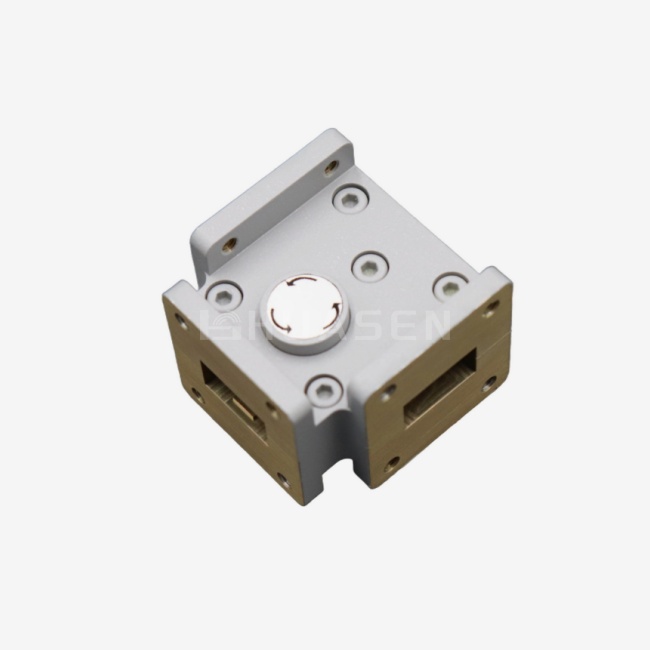
Waveguide wideband circulators are a major step forward in RF and microwave technology. They work very well over a wide range of frequencies and have low insertion loss and high isolation. The ferrite properties of these non-reciprocal devices direct signal flow systematically through ports. This keeps sensitive high-power sources safe from reflected energy that could cause catastrophic failure. Waveguide configurations can handle much higher power levels than their coaxial counterparts, often in the kilowatt range. This makes them essential for radar systems, satellite communications, 5G infrastructure, and defense applications where mission success depends on reliability in harsh conditions.
Understanding Waveguide Wideband Circulators
Waveguide wideband circulators are passive microwave parts that use magnetized ferrite materials to control the direction of signals in transmission lines. Faraday rotation is at the heart of how it works. This is when an internal magnetic bias makes electromagnetic waves move more easily in one direction through a junction.
Core Operating Principles
Non-reciprocal signal routing lets the device work: energy coming in through Port 1 goes out through Port 2, energy coming in through Port 2 goes out through Port 3, and energy coming in through Port 3 goes back to Port 1. The directional behavior is caused by the gyromagnetic properties of the ferrite materials at the waveguide junction. When these materials are properly magnetized, they create different propagation characteristics based on the direction of the signal. This lets ports be more than 20 dB apart across the operating bandwidth.
Critical Technical Specifications
Performance evaluation needs to take into account a number of factors that have a direct effect on how well the system works. The amount of power loss that signals experience going forward is called "insertion loss." For good wideband units, this loss usually falls between 0.3 and 0.8 dB. Isolation measures how weak signals are when they try to travel in the opposite direction, keeping parts safe from reflected power. VSWR, or Voltage Standing Wave Ratio, shows how well the impedance matches. Values below 1.25:1 are considered excellent across the given bandwidth. Power rating tells you how much continuous and peak power the device can handle without breaking down. For waveguide designs, this is usually several kilowatts because they can handle more heat than coaxial structures.
Bandwidth Characteristics
The term "wideband" usually means a fractional bandwidth coverage of 20% or more, but some custom designs can achieve octave or multi-octave performance. This bandwidth feature solves a major problem in the industry: system designers can use a single component to cover multiple communication bands, which makes architecture easier and inventory less complicated. Standard waveguide circulators may only cover narrow bands that are best for certain uses, but wideband versions offer the adaptability needed for platforms with multiple missions and protect against changing frequency allocations in the future.

Key Advantages of Waveguide Wideband Circulators
Because of how they are built and how they work, waveguide wideband circulators offer big advantages that solve important problems that system integrators and equipment manufacturers are facing.
Here are the main benefits these devices bring to RF applications that need them:
- Exceptional Power Handling Capacity: Waveguide construction gets rid of the inner conductor and dielectric supports that are present in coaxial designs. This leaves a hollow metal channel that efficiently gets rid of heat. This design makes it possible to handle power continuously in the kilowatt range and at its peak, tens of kilowatts. The circulator directly helps defense radar systems and industrial microwave heating applications because it keeps expensive transmitters—like traveling wave tubes or solid-state power amplifiers—from getting reflected energy that would break them down right away or over time.
- Minimal Insertion Loss Across Wide Bandwidths: Signals lose less power when they move forward because there are no lossy dielectric materials present. Insertion loss values of 0.4 to 0.6 dB across octave bandwidths keep signal strength, which directly leads to better system efficiency. This low-loss feature can make the difference between reliable connectivity and service that goes down from time to time on satellite communication links, where every decibel counts toward closing the link budget.
- Superior Isolation Performance: High isolation between ports—often more than 20 dB and up to 25 dB in high-end designs—keeps interference from damaging signals. When this isolation is used as a duplexer in radar systems, it lets transmission and reception happen at the same time through shared antenna apertures without the high power of the transmitter overwhelming the sensitive receiver chain. The protection makes the parts last longer and keeps the accuracy of measurements in test equipment used, where signal purity is very important.
- Environmental Robustness and Reliability: Waveguide circulators are made of metal, which naturally makes them resistant to humidity, extreme temperatures, and mechanical vibrations. Military-grade units can work in temperatures ranging from -40°C to +85°C without losing performance, and marine-grade units don't rust when exposed to salt fog. This durability is very important for base station installations outside, radar systems on ships, and aerospace uses, where a broken part could mean expensive downtime or mission failure.
- These benefits take care of the most important things that system designers need to do: make sure that the system works well even in bad conditions, keep signal quality high, and protect expensive parts.
Frequency Coverage Flexibility
Wideband operation makes system architecture a lot easier. Multiple narrowband devices are not needed with a single circulator that covers 8 to 12 GHz. This cuts down on bill-of-materials costs, makes inventory management easier, and lowers the number of failure points. System integrators who work on multi-band communication platforms really like this consolidation because it cuts down on the time needed to integrate systems and makes them more reliable overall by reducing the number of connections.
Thermal Management Advantages
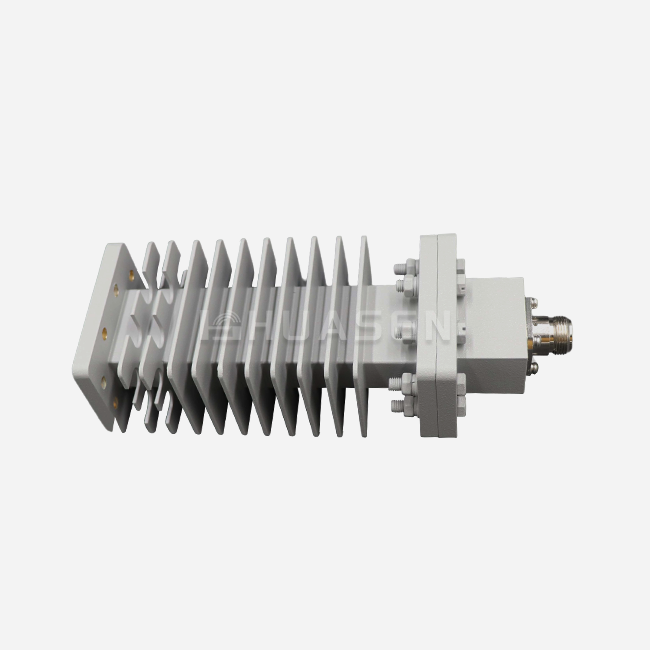
The hollow waveguide structure naturally handles heat better than the coaxial structure. The heavy metal housing lets the heat that is made in the ferrite junction escape, mostly because it absorbs reflected power. A lot of high-power units have cooling fins or water-cooling channels that let them work at average power levels that would damage coaxial circulators. In continuous-duty applications like broadcasting transmitters and particle accelerator RF systems, this thermal advantage is very important.
Practical Applications and Case Studies
Radar and Defense Systems Integration
Circulators are used in active electronically scanned array radar systems at both the transmit/receive module level and in high-power distribution networks. A recent project for a defense contractor needed to protect X-band AES. A radar module that worked at frequencies between 8.5 and 10.5 GHz and had peak powers greater than 5 kW. It was the isolation provided by wideband waveguide circulators that kept hundreds of expensive transmitter modules from being destroyed by antenna mismatch conditions caused by radome icing or battle damage. The project proved that the waveguide circulator parts could be used for more than 50,000 hours without breaking, which proved that they were the right choice for mission-critical applications.
Telecommunications Infrastructure Deployment
As 5G millimeter-wave infrastructure is put in place, it creates a need for parts that can work with new frequency bands while still being compatible with older ones. A company that makes telecom equipment puts wideband circulators in its Ka-band backhaul radio systems, which work at frequencies between 26 and 30 GHz. These circulators make frequency-agile operation possible, which means that network operators can change how spectrum is used as rules change without having to replace hardware. Long-term total cost of ownership goes down a lot when a single component can support both the current 5G bands and the expected 6G frequencies.
Satellite Communication Terminals
Maritime communication systems have to work in very harsh conditions, with constant motion, salt spray, and changes in temperature. A company that makes satellite terminals switched from coaxial to waveguide circulators for its Ku-band ship-to-shore systems because the coaxial ones failed reliability tests. Even though they were tested over 10 years and went through thermal shock cycles between -40°C and +70°C and vibration profiles that matched heavy sea states, the circulators still met the isolation requirements. This dependability meant that maintenance costs went down and the system was available more often for commercial shipping customers.
Test and Measurement Equipment
For accurate calibration, companies that make RF test equipment need parts that work in a stable, predictable way. Wideband circulators allow testing at multiple frequencies without having to switch out parts by hand, which speeds up work in the lab. A company that makes instruments says that adding waveguide circulators to their automated test equipment cut measurement error by 15% compared to switched coaxial paths. It also increased the time between calibrations from six months to two years because the equipment was more mechanically stable.
Selecting the Right Waveguide Wideband Circulator for Your Needs
For procurement to go well, technical needs must be carefully weighed against available options, with both short-term and long-term operational factors taken into account. Waveguide wideband circulators should be selected by evaluating how specific requirements align with hardware capabilities.
Performance Metrics Evaluation
First, set the operational frequency range with enough room for error. To make sure your system works at the edges of the bands, choose a circulator that is rated for at least 8.5 to 11.5 GHz if it needs to work from 9 to 11 GHz. The efficiency of the system is directly affected by insertion loss. For every 0.3 dB change in circulator loss, the transmitter needs about 7% more power. Figure out what kind of loss is acceptable by adding up the effects along your signal chain.
Isolation requirements depend on how sensitive the application is. Radar receivers that want to stop transmitter leakage might need 25 dB or more, while 18 dB might be enough for industrial heating applications. When choosing a power rating, you should think about the worst-case VSWR conditions. For example, if your transmitter sends 2 kW into a possible 2:1 VSWR load, the circulator must continuously handle reflected power approaching 1 kW without downsizing.
Comparing Waveguide Versus Coaxial Designs
There are trade-offs between waveguide and coaxial circulators that go beyond performance. Waveguide units work best at frequencies above 6 GHz and in situations where high power or low loss is needed. However, they take up more space and weigh more than coaxial units of the same size. Coaxial designs are better for sub-6 GHz applications or installations with limited space because they are smaller and easier to connect to standard RF connectors. They can handle less than 500W of power.
Stripline circulators are in the middle. They can handle more power than coaxial and take up less space than waveguides, but their bandwidth is usually smaller. System designers should make a model of the whole RF chain, keeping in mind that a bigger waveguide circulator with 0.5 dB insertion loss might allow a smaller, cheaper amplifier to be used instead of a small coaxial unit with 1.2 dB loss that needs a higher amplifier output.
Supplier Assessment and Procurement Strategy
Established companies that have been making ferrite devices for decades usually make more reliable products with better documentation. Check out suppliers based on their quality management systems. For example, ISO 9001 certification shows basic quality controls, while AS9100 certification shows controls for aerospace-grade manufacturing. Not just standard performance curves, but test data for devices from the exact production lot you'll be getting.
For certain uses, the ability to customize is important. Can the supplier change the types of flanges, the center frequencies, the waveguide circulator, or the cooling features? Lead times for catalog items are usually between 4 and 8 weeks, but 12 to 16 weeks may be needed for custom designs, which include testing a prototype. When buying a lot of things, you should talk about framework agreements that lock in prices and guarantee delivery dates. This will protect you from shortages of parts that could cause product launches to be delayed.
Beyond the unit price, think about the total cost of ownership. A circulator that costs 15% more but has a 10-year MTBF instead of a cheaper one with a 5-year MTBF lowers lifecycle costs by lowering the number of times it needs to be replaced and the amount of time it is down.
Conclusion
Waveguide wideband circulators work better than any other part for tough RF and microwave tasks that need to handle a lot of power, keep signal loss to a minimum, and cover a wide frequency range. They are the best choice for radar systems, telecommunications infrastructure, defense platforms, and test equipment where component failure could have serious effects because they are well-built, isolate well, and have been tested and proven to work in harsh conditions. While procurement requires careful matching of specifications and evaluation of suppliers, the long-term value, which can be seen in more reliable systems, more efficient operations, and lower lifecycle costs, makes the investment worth it. Wideband circulators will continue to be important parts of next-generation communication systems even as they move to higher frequencies and more complex designs.
FAQ
1. What differentiates waveguide wideband circulators from coaxial alternatives?
Waveguide designs don't have the inner conductor and dielectric supports that coaxial circulators do. This means that they have much lower insertion loss (usually 0.4–0.6 dB vs. 0.8–1.5 dB) and can handle a lot more power. Waveguide units can handle continuous power of several kilowatts and peaks of several kilowatts, while coaxial units are usually limited to hundreds of watts. For high-frequency, high-power applications above 6 GHz, where coaxial dielectrics would fail, this means that waveguide wideband circulators are a must.
2. How do you select the appropriate frequency range for your application?
Choose a circulator whose working frequency range covers your whole frequency range plus some extra space. If your system works at 9.5 to 10.5 GHz, choose a unit rated for 9 to 11 GHz to get the best performance at the edges of the band. Narrower-band designs may have slightly better insertion loss and isolation at their optimal frequencies, but wider circulators that cover octave bandwidths are more flexible for multi-band systems and future frequency expansions.
3. Can these devices be customized for unique project requirements?
Well-known companies like Huasen Microwave let you change things like the frequency range, the type of flange (UG, CPR, or custom patterns), the cooling features that are built in, and the mounting arrangements that are best for your installation. Custom designs usually take 12 to 16 weeks, which includes testing the prototype. For projects with tight deadlines, it's important to start working with suppliers early on.
Partner with Huasen Microwave for Superior Waveguide Solutions
Huasen Microwave Technology can help you with even the most difficult RF projects because they have been making high-frequency parts for 30 years. Our waveguide wideband circulator product line includes frequencies from X-band to W-band and is designed for uses that need the highest level of performance and reliability. Each unit goes through strict testing at different power levels and temperatures, with a lot of test data and quality processes that are ISO 9001-certified to back them up. As a waveguide wideband circulator manufacturer with a lot of experience, we help procurement teams by providing quick technical support, the ability to customize products to meet specific needs, and competitive pricing on both prototypes and full production runs. Email our engineering team at sales@huasenmicrowave.com to talk about your specific needs, get detailed specifications, or set up sample evaluation units that show how committed we are to quality and customer satisfaction.
References
1. Helszajn, J. (2008). "Ferrite Phase Shifters and Control Devices." McGraw-Hill Professional Engineering Series.
2. Baden Fuller, A.J. (1987). "Ferrites at Microwave Frequencies." Institution of Engineering and Technology Electromagnetic Waves Series.
3. Linkhart, D.K. (2009). "Microwave Circulator Design, Second Edition." Artech House Microwave Library.
4. Pozar, D.M. (2011). "Microwave Engineering, Fourth Edition." John Wiley & Sons, Chapter 9: Microwave Filters and Components.
5. IEEE Transactions on Microwave Theory and Techniques (2019). "Wideband Ferrite Circulators for Millimeter-Wave Applications." Vol. 67, Issue 8, pp. 3247-3259.
6. Microwave Journal (2021). "Advances in High-Power Waveguide Components for 5G Infrastructure." Technical Feature Article, October Issue.
Send Inquiry