Waveguide Isolator vs Circulator: What’s the Difference






2026-04-29 21:01:22
Knowing the main difference between a waveguide isolator and a circulator helps engineers and procurement teams make the right choice. This saves money and system downtime. The waveguide isolator is a passive two-port device that lets signals flow in one direction while absorbing reflected energy. It works as a "microwave diode" to keep sensitive amplifiers safe from impedance mismatches. A circulator, on the other hand, is a device with more than one port—usually three or four ports—that sends signals from one port to the next in a certain order. This lets it do things like duplexing, which means sending and receiving data at the same time. Both use ferrite materials and magnetic fields, but their designs and purposes are very different. Choosing the right device is very important for making radar, satellite, and 5G infrastructure work better.
Introduction
Microwave and RF systems need parts that protect expensive hardware, keep working even when conditions are very bad, and make sure the signals stay intact. Waveguide isolators and circulators are two of the most important passive non-reciprocal devices in this field. However, people often get them wrong when they're trying to buy them, which causes delays in integration and lowers the reliability of the system.
It's getting harder for B2B buyers and design engineers who work on radar installations, satellite ground stations, or next-generation wireless backhaul to meet performance requirements like insertion loss, isolation, and power handling while also meeting budget and delivery deadlines. If you choose the wrong components, the amplifier could fail completely, the signal could become unstable, or you would have to pay a lot to replace them in the field for remote installations.
This guide takes the mystery out of waveguide isolators and circulators by explaining how they work, comparing their technical features, and outlining their roles in fields like defense, telecommunications, and aerospace. This structured comparison will help you decide when to use each device, how to judge the capabilities of suppliers, and which specifications are most important for mission-critical applications, whether you are in charge of purchasing at a tier-one system integrator or RF design for a research lab.

Understanding Waveguide Isolators and Circulators
What Is a Waveguide Isolator?
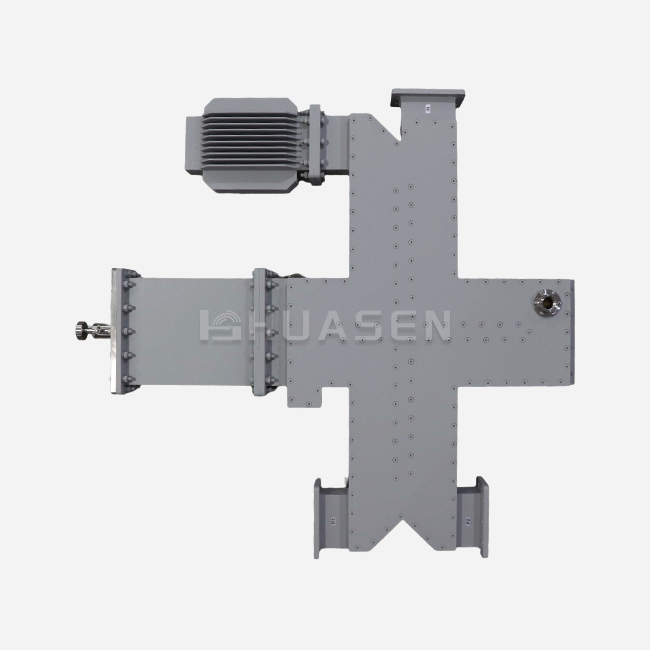
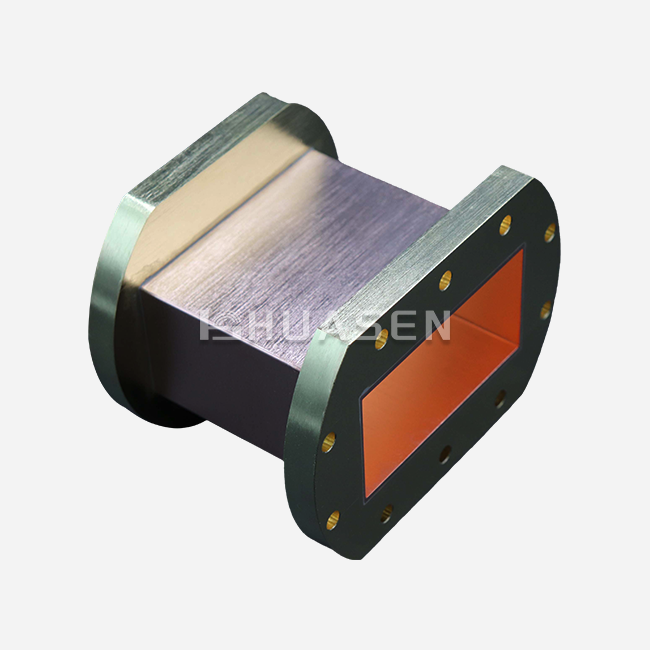
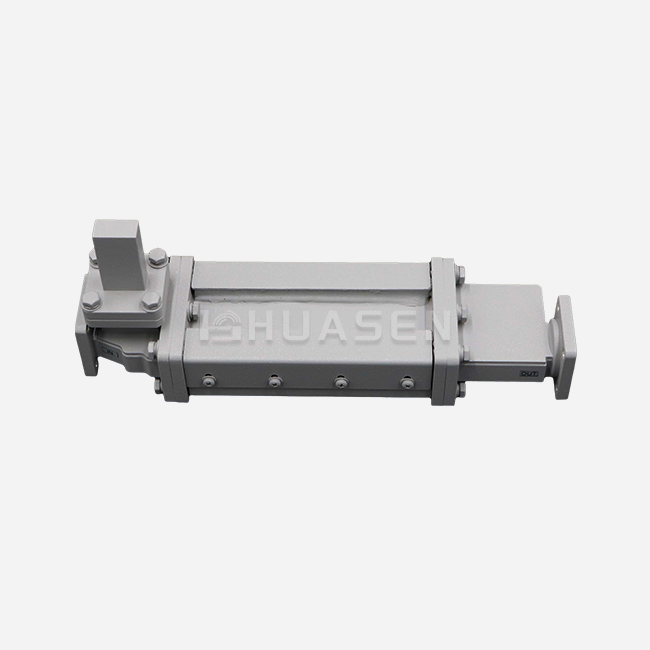
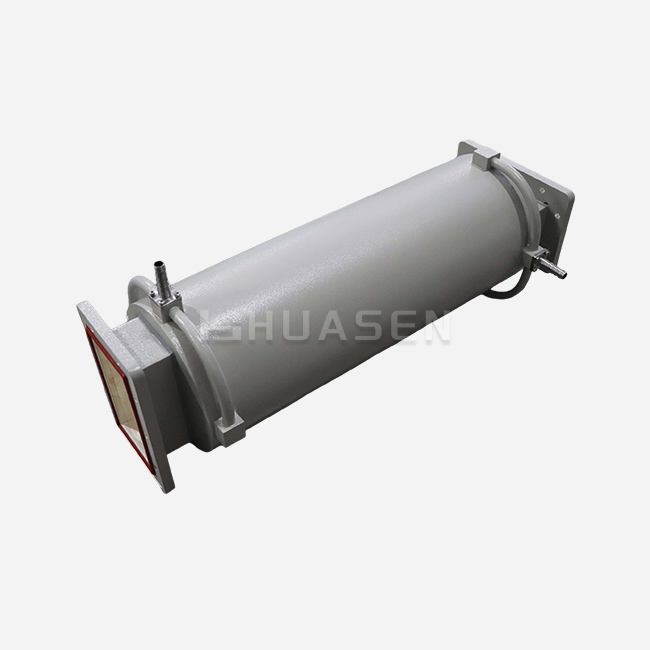
A waveguide isolator works as a one-way signal conduit, letting electromagnetic energy flow freely in one direction while absorbing reflections traveling in the opposite direction into a matched termination load. This "one-way valve" behavior keeps high-power sources like Traveling Wave Tubes (TWTs), Klystrons, and Solid State Power Amplifiers (SSPAs) from losing power because of antenna mismatches or broken parts further down the line.
The device uses the Faraday rotation or field displacement principle in magnetized ferrite materials that are magnetized. When reverse energy comes into the isolator, the magnetic anisotropy of the ferrite turns it into an internal resistive load. This wastes the energy as heat instead of letting it go back to the source. Insertion loss must be less than 0.5 dB, isolation must be greater than 20 dB, and the average power handling must be between 10 watts and kilowatts for compact coaxial designs and waveguide configurations.
Isolators are used in fields where protecting and keeping the source stable is important. Isolators are used right after the output stage in high-power radar transmitters to keep expensive tubes from breaking because of antenna icing or physical damage. Block Upconverters (BUCs) with isolators are built into satellite earth stations to keep uplink signals stable when the weather changes. Medical linear accelerators (LINACs) use waveguide isolators that are cooled by water to handle peak power of more than 10 MW. This keeps the radiotherapy RF energy stable.
What Is a Waveguide Circulator?
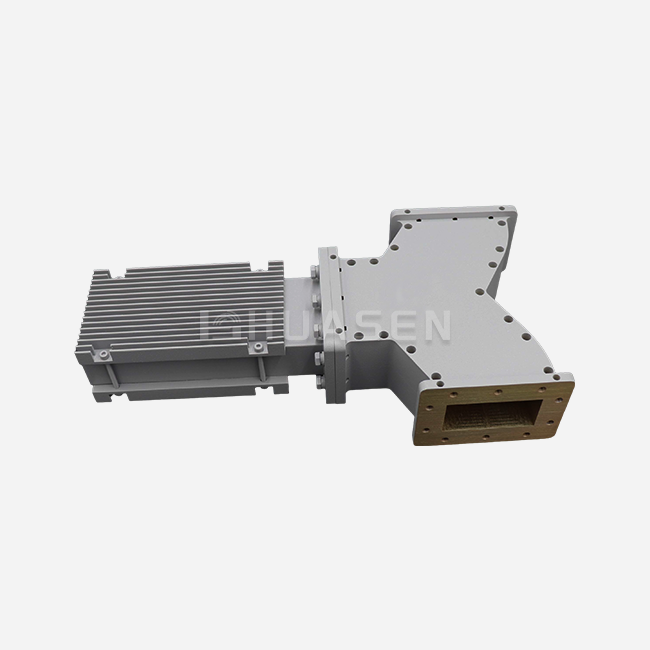
A circulator sends signals through several ports in a set order, from port 1 to port 2, then to port 3, and finally back to port 1. It does this while keeping the distance between ports that are not next to each other very high. This multi-port architecture lets it do things that a waveguide isolator or other isolators couldn't, like duplexing (using the same antenna for both send and receive) or combining and separating signals in phased array radars.
The inside of the circulator places ferrite pucks where two waveguide branches meet. An outside magnetic field pushes on the ferrite to make asymmetric phase shifts. When signals come in through port 1, they go through a phase rotation that sends energy to port 2. When signals come in through port 2, they go through a rotation that sends energy to port 3, and so on. Isolation from port to port is usually higher than 20 dB, and insertion loss between ports that are next to each other stays below 0.3 dB.
In common uses, the circulator links the transmitter (port 1), antenna (port 2), and receiver (port 3), letting all three work at the same time without any feedback. Base stations for telecommunications use circulators to separate the uplink and downlink bands. Test equipment uses circulators to keep the Device Under Test (DUT) separate from measurement tools. This stops source-match errors that damage Vector Network Analyzer (VNA) data.
Key Specifications Across Both Devices
The operational bandwidth is determined by the frequency range. Narrowband designs cover 2% of the bandwidth, while broadband units cover full waveguide bands (e.g., 26.5–40 GHz for WR-28). In long-distance communications, keeping track of link budgets is very important, and insertion loss is a way to measure how weak the forward path signal is. Isolation measures the amount of reverse-direction suppression in isolators or non-adjacent port rejection in circulators. This has a direct effect on the stability of the source and the sensitivity of the receiver.
There are two types of power handling ratings: average and peak. The internal load's ability to remove heat affects the average power, and the waveguide breakdown voltage (arcing threshold) limits the peak power. For applications in space or at high altitude, pressurized waveguides are often needed to raise the limits of what can be broken. The VSWR (Voltage Standing Wave Ratio) at each port shows how well the impedance matches. Values below 1.2:1 are ideal for the least amount of reflection.
Technical Comparison: Waveguide Isolator vs. Circulator
Performance Metrics Side-by-Side
Insertion loss in isolators is usually between 0.4 and 0.6 dB, which is a little higher than in circulators because the resistive load affects forward transmission more. Circulators get 0.2 to 0.4 dB between ports that are next to each other because energy flows through the ferrite without any elements that lose energy along the main path.
When it comes to single-direction protection, isolators perform best, with values reaching 30 dB or higher across narrow bands. Circulators separate ports that are not next to each other by 20 to 25 dB, which is enough for duplexing but not as good at blocking strong reverse reflections. Isolators are still the best choice for applications that need to protect the source as much as possible, like Magnetron-based radar.
How much power a device can handle depends on its size and how it is cooled. It is possible for air-cooled waveguide isolators to handle average powers of up to 500 watts, while liquid-cooled units can handle kilowatts. Circulators have the same thermal limits as other devices, but they have to share power between many junctions, which can lower the capacity of each port. The maximum power that either device can handle depends on the size of the waveguide and the methods used to stop arcing inside it. Pressurized models can handle pulses of megawatts in military radar.
Construction and Magnetic Materials
Waveguide broadband isolators, yttrium-iron-garnet (YIG), or lithium ferrite materials are used in both devices because they have a low loss tangent and a high saturation magnetization. Isolators use a simpler magnetic circuit, usually just one ferrite rod that is magnetized along its length. But circulators need precisely machined ferrite disks to be placed at junction symmetry points, which requires more precise manufacturing.
The way designs handle temperature compensation is different. High-quality broadband isolators have temperature-stabilized magnets (Samarium-Cobalt or Alnico) that keep the center frequency from drifting too much between -40°C and +85°C. This is very important for outdoor communication equipment. Multi-port magnetic interactions make circulators more sensitive to temperature changes. To keep specifications over a wide range of temperatures, thermal modeling is needed during design.
Integration and Maintenance Considerations
As in-line parts, isolators are easy to integrate because they have flanged waveguide interfaces (WR-series) or threaded coaxial connectors (SMA, N-type). When mounting, it's important to be aware of stray magnetic fields. To keep performance from dropping, keep the device at least 1.5 inches away from ferrous materials. Some models have Mu-metal shielding to keep the magnetic flux inside.
Concerns about rotational orientation come up with circulators. Labels on ports must match the direction of signal flow; if they are installed incorrectly, the intended routing is reversed, which breaks the system. The number of ports makes maintenance more difficult; to find out what's wrong with a four-port circulator, you have to test more than one signal path. Load overheating (in isolators) or ferrite demagnetization (in both) are common ways for them to fail. This is usually caused by too much reflected power or mechanical shock.
Advantages and Limitations
Isolators are great at protecting sources because they offer strong protection against unpredictable changes in load without needing matched terminations at ports that aren't being used. Their small size and low cost (only two ports) make them perfect for installations with limited space, like radar on a drone.
Multifunctional architectures are made possible by circulators. In some designs, a single three-port unit can be used instead of separate transmit/receive switches and isolators, which cuts down on the number of parts needed. But they need exact port terminations; ports that aren't terminated cause reflections that hurt isolation and insertion loss. Also, circulators are more expensive because they are harder to make and need to be carefully characterized for all possible port combinations.
Selecting the Right Device for Your Application
Protection vs. Signal Routing
If you want to protect a valuable source from reflected power, you should use an isolator. It can be used to protect TWTs in airborne radar, keep oscillators stable in frequency synthesizers, and separate SSPAs in broadcast transmitters, among other things. If your system schematic only shows one signal path and there is no need to reroute signals from port to port, the isolator is the best choice because it is simple and doesn't cost much.
Select a circulator when signal routing or duplexing determines how the system is built. For instance, radar front-ends that use the same antenna for both sending and receiving, telecommunications base stations that separate uplink and downlink, and test setups that need to measure and stimulate at the same time are some examples. The multi-port feature of the circulator combines functions, making the system simpler overall, even though each unit costs more.
Power Handling and Frequency Compatibility
Check the average power ratings against the levels of continuous operation, making sure to include safety margins for short-term conditions. To account for temperature changes and wear and tear, a 5G backhaul link that sends 50 watts of power continuously needs an isolator that can handle 100 watts of power on average. For pulsed radar, the peak power rating is important. For example, a system that sends out 10 kW pulses needs a device that can handle at least 15 kW peak power, with pressurization if it works above 20,000 feet.
All operational bands plus guard margins must be covered by the frequency range. When used for fixed-frequency tasks, like satellite uplinks at 14.0–14.5 GHz, narrowband devices tuned to center frequencies work well. Broadband isolators that work with all waveguide bands are good for electronic warfare (EW) systems or test gear that needs to be able to switch between octaves without having to retune. Check the specs at the edges of the bands, where insertion loss and VSWR tend to get worse.
Procurement Factors and Supplier Evaluation
Standard catalog items usually have lead times of four to eight weeks. Custom designs, on the other hand, can take twelve to sixteen weeks, depending on how easy it is to get ferrite material and how well the magnetic circuit works. Different manufacturers have different minimum order quantities (MOQs). Established manufacturers only need one unit to make a prototype, while contract manufacturers might need 10 to 50 units for custom configurations.
Customization options let you choose the type of port flange (UG-series, CPR, or grooved), choose mounting brackets for outdoor installations, or add thermal sensors to monitor power. For military uses, products must pass MIL-STD-202 environmental tests, be RoHS compliant, and have proof of their provenance, such as a Waveguide Broadband Isolator. This means that suppliers must have quality systems that are certified by organizations like ISO 9001 and AS9100.
Conclusion
Waveguide isolators and circulators each solve a different problem in microwave systems. Isolators keep valuable sources from being damaged by reflected power by allowing energy to flow in only one direction, and circulators let signals be routed across three or four ports for more than one purpose. Whether your architecture is based on source protection or signal management will affect the devices you choose based on how well they handle insertion loss, isolation, and power. Knowing about technical specs like frequency bandwidth, VSWR, and thermal ratings, along with buying factors like customization options and supplier dependability, helps you make smart choices that improve system performance while keeping costs low. Using the right part in radar, satellite, or telecommunications applications stops amplifier failures, keeps signals pure, and extends the life of equipment, protecting investments in infrastructure and keeping operations running.
FAQ
1. Can a waveguide isolator handle both narrowband and broadband applications?
Narrowband isolators work best at certain center frequencies and have bandwidths below 10%. They can achieve insertion loss below 0.3 dB and isolation above 30 dB within certain ranges. Broadband isolators use advanced ferrite formulations and multi-section designs to cover full waveguide bands, like WR-62 from 12.4 to 18 GHz. However, insertion loss rises to 0.5 to 0.7 dB, and isolation drops to 20 dB. For fixed-frequency applications that need the best performance, choose narrowband. For wideband systems like EW or multi-band test equipment, choose broadband.
2. What customization options matter most for harsh environments?
Temperature-compensated magnets keep the center frequency stable from -55°C to +125°C, which is very important for aerospace or outdoor communications. In maritime or tropical settings, hermetic sealing (MIL-STD-202 Method 112) keeps moisture out. Mounting brackets that don't move (tested to MIL-STD-810 Method 514) keep devices safe in radars that are mounted on planes or cars. Nickel plating or anodizing are corrosion-resistant coatings that make things last longer in salt-spray environments. Most field reliability concerns can be solved by suppliers who offer these choices.
3. How do I choose between a three-port and a four-port circulator?
Three-port circulators work well for dual-mode tasks where one port connects to a shared antenna and the other two ports have their own separate send and receive paths. Four-port designs let you do more. For example, connecting port 4 to a matched load makes it easier for ports 1 and 3 to stay separate, which is useful in sensitive receiver front-ends. The fourth port is used by some systems to keep an eye on the power being sent. The extra port adds 20–30% to the cost, but it gives the designer more options for how to route signals in complex ways.
4. What causes isolation degradation over time?
When ferrite demagnetizes because of mechanical shock or too much peak power, the magnetic bias goes down. This changes the center frequency and makes isolation worse. Internal loads are stressed by thermal cycling, which raises reflected power and insertion loss. Wear on the connectors causes impedance gaps, which raise VSWR. Some ways to stop this from happening are to use shock-mount installations, do thermal imaging on a regular basis to find loads that are getting too hot, and set up maintenance schedules for connectors in high-cycle applications. When you buy high-quality devices from well-known brands, the isolation drops by 3–5 dB over the course of 10 years before it needs to be replaced.
Partner with Huasen Microwave for Precision Waveguide Solutions
If you don't choose the right waveguide isolator or circulator, your radar, satellite, or 5G infrastructure will not work reliably or will have costly downtime. Huasen Microwave has been working as a microwave engineer for 30 years and can help you make difficult purchasing decisions. They offer custom solutions for high-power radar protection, broadband communications, and demanding aerospace applications.
We can make everything: narrowband isolators that work best for fixed-frequency satellite uplinks, broadband circulators that work across octave bandwidths for EW systems, and custom thermal management designs that can handle kilowatts of power. To meet MIL-STD and ISO standards, every device is put through a lot of tests. Before it is shipped, full S-parameter characterization and environmental validation data are given.
Our engineering team works together on frequency optimization, mechanical integration, and certification needs, whether you need a single prototype for testing in the lab or a lot of them on short notice for production. Get in touch with our applications specialists at sales@huasenmicrowave.com to talk about your needs, ask for sample evaluation units, or look into volume pricing for system integrators looking for a dependable waveguide isolator manufacturer. We take complicated technical problems and turn them into delivered solutions that protect your investment and make sure the mission succeeds.
References
1. Pozar, David M. Microwave Engineering, 4th Edition. Hoboken: Wiley, 2011.
2. Baden Fuller, A.J. Ferrites at Microwave Frequencies. London: Peter Peregrinus Ltd., 1987.
3. Linkhart, Douglas K. Microwave Circulator Design, 2nd Edition. Norwood: Artech House, 2014.
4. Collin, Robert E. Foundations for Microwave Engineering, 2nd Edition. New York: McGraw-Hill, 1992.
5. Rizzi, Peter A. Microwave Engineering: Passive Circuits. Englewood Cliffs: Prentice Hall, 1988.
6. Helszajn, Joseph. The Stripline Circulator: Theory and Practice. Hoboken: Wiley-IEEE Press, 2008.
Send Inquiry