Why Waveguide Gasket Performance Matters in RF Systems?






2026-04-11 22:08:03
How well a waveguide seal works directly affects how reliable an RF system is, how well the signals work,and how long it can be used. These precision sealing parts stop electromagnetic interference from leakingand create hermetic walls that keep out moisture, dust, and changes in pressure. When choosing the wrong gasket, it can cause insertion loss, VSWR degradation, and catastrophic system breakdowns in mission-critical areas such as naval radar systems, 5G infrastructure, and satellite communications. By knowing the properties of the material, how it compresses, and how well it works with other materials, sourcing teams can choose gaskets that keep the conductivity between waveguide flanges while also being able to handle high temperatures and chemicals.
Introduction
The unseen connection between waveguide flanges is often what makes or breaks a multimillion-dollar RF system. In addition to keeping electrical continuity across metal surfaces to protect signal integrity, waveguide gaskets also create hermetic barriers against environmental threats. This is something that standard mechanical seals can't do. From 5G base stations in corrosive coastal air to pressurised satellite ground stations working at cryogenic temperatures, the performance of the gasket affects insertion loss, voltage standing wave ratio, and the average time between failures. We've worked with system integrators who found microscopic air gaps at flange interfaces—gaps less than a human hair width but big enough to leak RF energy and lower antenna gain. More and more, procurement managers have to find a balance between performance requirements, cost limits, delivery dates, and the stability of the supply chain. The technical factors and sourcing strategies that separate successful RF deployments from expensive field failures are covered in this guide. It gives engineers looking at materials useful information and buying teams talking with suppliers.
Understanding Waveguide Gaskets in RF Systems
Dual-Function Sealing Technology
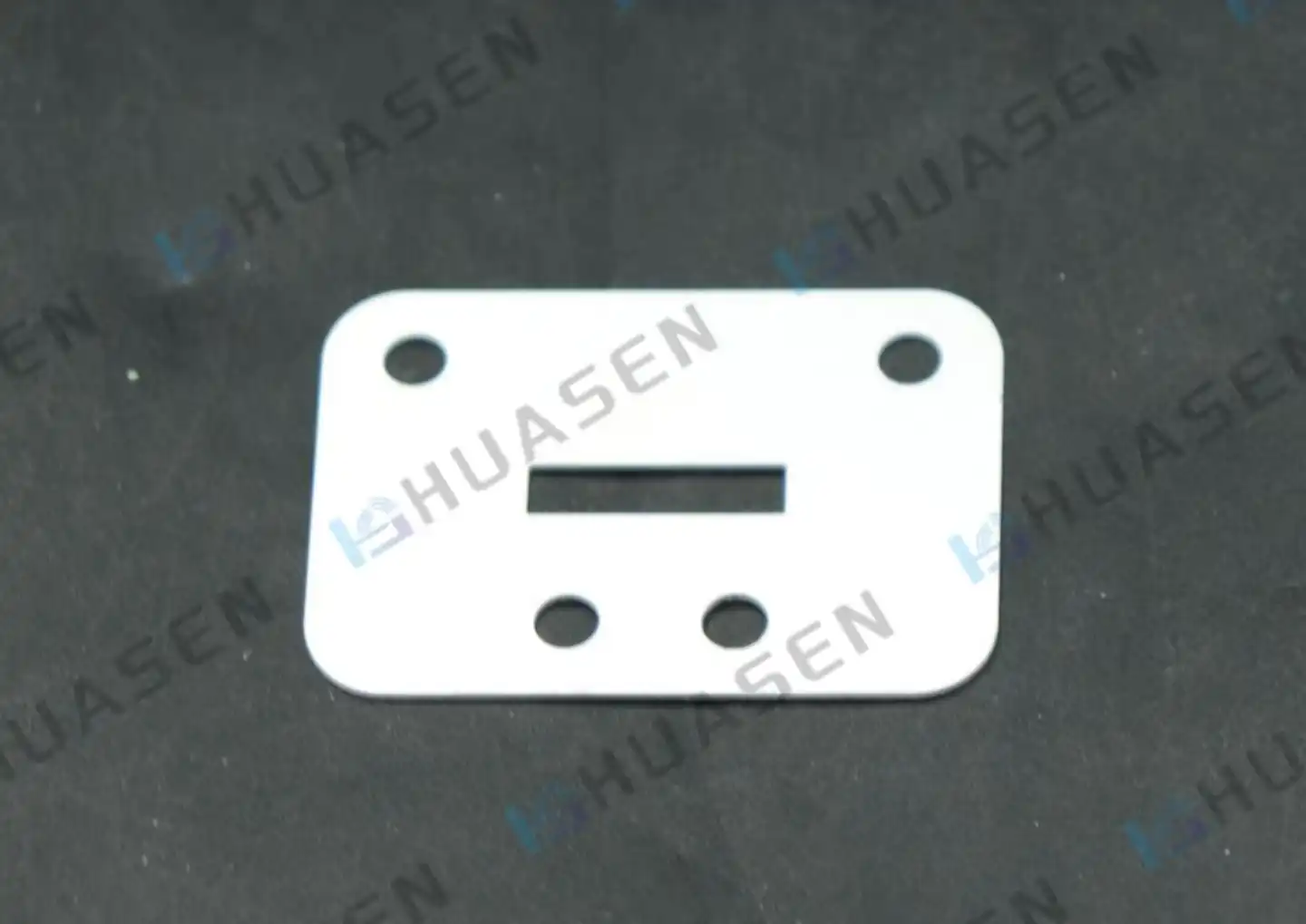
Waveguide flange gaskets differ fundamentally from pipe or pressure vessel seals. While industrial gaskets focus exclusively on fluid containment, RF gaskets must simultaneously achieve low-resistance electrical bonding and environmental isolation. The metallurgical interface between the gasket and flange surface acts as a continuation of the waveguide's conductive path. Any oxidation layer, surface contamination, or compression irregularity introduces impedance discontinuities that manifest as reflected power and insertion loss. Pressurization inside waveguide assemblies prevents voltage breakdown in high-power applications. When transmission systems exceed 10 kilowatts, air molecules ionize under intense electromagnetic fields, causing arcing that damages waveguide interiors. Gaskets maintain dry nitrogen or conditioned air pressure, eliminating moisture and particulates that accelerate dielectric failure. This dual-purpose design explains why material selection extends beyond mechanical resilience to include electromagnetic compatibility.
Material Classification and Thermal Performance
Metallic gaskets—fabricated from soft copper, aluminum, or silver-plated beryllium copper—provide superior electrical conductivity and compression recovery. Copper gaskets excel in moderate-temperature applications up to 200°C, offering excellent surface conformability that compensates for flange flatness variations. Their plastic deformation under bolt torque creates gas-tight seals while maintaining milliohm-level contact resistance. Silver plating prevents oxidation that would otherwise degrade electrical performance over thermal cycling. Non-metallic alternatives address specialized requirements where metallic gaskets prove inadequate. Expanded PTFE gaskets withstand aggressive chemicals and operate across temperature ranges from -240°C to 260°C, making them suitable for space-qualified hardware and cryogenic systems. Silicone formulations offer flexibility that accommodates differential thermal expansion in composite structures, though their higher electrical resistance limits use to lower-frequency bands. Conductive elastomers incorporate metallic particles within rubber matrices, balancing mechanical compliance with adequate shielding effectiveness.Flange Gasket for applications below 18 GHz.
Distinguishing Seals from Shielding Interfaces
RF engineers distinguish between environmental seals and electromagnetic shielding gaskets based on primary function. Standard O-rings and flat rubber washers may prevent water ingress but lack the conductivity required to suppress slot antenna radiation at flange junctions. Conversely, pure EMI gaskets without environmental sealing capability permit moisture infiltration that corrodes internal surfaces. Premium waveguide gaskets integrate both functionalities through composite construction—conductive outer layers contact flange surfaces while resilient cores maintain compression across bolt patterns. Understanding this distinction prevents procurement errors where mechanical engineers specify industrial seals for RF applications, only to discover unacceptable signal leakage during system integration testing.
Key Factors Affecting Waveguide Gasket Performance
Material Compatibility and Environmental Resilience
Selecting gasket materials requires matching chemical resistance profiles to operational environments. Maritime radar systems encounter salt fog containing chloride ions that rapidly corrode copper and aluminum alloys. Stainless steel or Monel gaskets provide corrosion immunity but demand higher bolt torques to achieve equivalent sealing pressure. Aviation applications prioritize weight reduction, favoring aluminum gaskets despite their lower hardness and greater susceptibility to permanent deformation. Temperature cycling induces fatigue in gasket materials through repeated expansion and contraction. A satellite earth station's outdoor equipment experiences daily temperature swings exceeding 60°C, cycling gaskets through thousands of thermal loads annually. Copper anneals at elevated temperatures, losing springback properties that maintain compression as bolts relax. Nickel-iron alloys offer superior creep resistance for high-temperature radar systems operating continuously above 150°C.
Compression Characteristics and Leakage Prevention
Gasket thickness determines the compression range available to accommodate flange surface irregularities and bolt relaxation. Thicker gaskets provide greater conformability but require proportionally higher bolt loads to achieve target sealing pressures. Waveguide flanges typically specify torque values calibrated to compress gaskets between 30% and 50% of original thickness—insufficient compression leaves leak paths while excessive compression causes material extrusion beyond sealing surfaces. Surface finish on flange faces critically influences sealing effectiveness. Machined surfaces with arithmetic average roughness exceeding 1.6 micrometers contain peaks and valleys that gaskets must fill through plastic flow. Soft materials like indium conform to rough surfaces but offer limited reusability. Harder gaskets demand precision-machined flanges with flatness tolerances below 0.05 millimeters across bolt circles.
Installation Quality and Bolt Pattern Management
Improper tightening sequences introduce asymmetric loading that warps flanges and creates preferential leak paths. Standard practice involves star-pattern tightening in multiple passes, gradually increasing torque to the final specification. We've investigated field failures traced to technicians tightening bolts sequentially around flange perimeters, causing gasket material to flow away from undertightened zones. Bolt relaxation over time reduces compression loads as gasket materials experience creep and flanges settle into equilibrium positions. Retorquing procedures maintain sealing effectiveness, though excessive retightening damages gaskets beyond recovery. Procurement specifications should require suppliers to document recommended retorque intervals and maximum permissible retightening cycles.
Procurement Guide for Waveguide Gaskets in RF Systems
Supplier Evaluation Criteria
Identifying qualified manufacturers demands scrutiny of theFlange Gasket beyond catalog specifications. We assess suppliers based on quality management certifications relevant to aerospace and defense sectors—AS9100 accreditation indicates process controls appropriate for flight-critical hardware. ISO 9001 certification represents baseline quality assurance, though it lacks the design validation and traceability rigor required for high-reliability applications. Material traceability documentation proves particularly critical when procuring gaskets for systems requiring compliance with restricted substance directives or military specifications. Reputable suppliers provide mill test reports confirming alloy compositions, mechanical properties, and heat treatment parameters. This documentation becomes essential during failure investigations when root cause analysis requires metallurgical verification of material properties.
Customization Capabilities and Engineering Support
Standard catalog gaskets rarely match specialized waveguide interfaces in radar and satellite systems. Manufacturers offering custom design services collaborate with system engineers to optimize gasket geometry, material selection, and surface treatments. Huasen Microwave's engineering team works directly with procurement managers to develop gaskets matching unique flange configurations, whether adapting commercial WR-series dimensions or creating proprietary interfaces for classified military programs. Sample evaluation programs reduce procurement risk by validating gasket performance before production commitments. Progressive suppliers provide pre-production samples with comprehensive test data—compression-deflection curves, conductivity measurements, and environmental exposure results. This data enables engineering teams to verify compatibility with assembly procedures and long-term reliability projections.
Cost Optimization Through Strategic Sourcing
Bulk purchase agreements leverage volume commitments for favorable pricing while securing supply chain priority during allocation shortages. Negotiating framework contracts with tiered pricing structures rewards larger order quantities without requiring immediate inventory investment. Quarterly forecasts allow suppliers to optimize production scheduling, reducing lead times and minimizing expedite charges that inflate unit costs. Lead time management becomes crucial when gaskets represent long-lead items within complex assemblies. Establishing consignment inventory programs positions gasket stock at manufacturing facilities without transferring ownership until consumption. This arrangement improves production flexibility while deferring payment obligations, enhancing cash flow for large system integrators managing multiple concurrent projects.
Case Studies Demonstrating Waveguide Gasket Performance Impact
Signal Integrity Recovery Through Material Optimization
A telecommunications carrier installing millimeter-wave backhaul links experienced an insertion loss 0.8 dB higher than link budget allocations across their initial deployments. Field testing isolated excessive loss to waveguide flange interfaces where standard aluminum gaskets exhibited poor conductivity under operational bolt torques. Surface analysis revealed oxidation layers preventing intimate metal-to-metal contact. Substituting silver-plated beryllium copper gaskets restored conductivity while providing superior springback that maintained compression despite thermal cycling. Post-modification measurements confirmed insertion loss reduction to specification limits, recovering link margin sufficient to eliminate planned amplifier upgrades. The gasket material change cost $47 per interface compared to $3,200 per additional amplifier, delivering 98% cost avoidance across 240 installation sites.
Preventing Downtime in Harsh Marine Environments
A naval vessel's X-band radar system Gasketsuffered recurring failures during Atlantic operations, requiring unscheduled maintenance that degraded mission readiness. Investigation revealed moisture ingress through degraded waveguide gaskets exposed to salt spray and temperature extremes between -15°C and 45°C. Standard neoprene gaskets hardened and cracked after 18 months, permitting condensation inside pressurized waveguide runs. Transitioning to PTFE-based gaskets with stainless steel mesh reinforcement eliminated moisture infiltration while maintaining EMI shielding effectiveness. The upgraded gaskets demonstrated no degradation after 36 months of operational service, extending maintenance intervals from 18 months to 60 months. Reduction in unscheduled maintenance events improved system availability from 87% to 96%, enhancing operational capability during critical mission phases.
Best Practices and Future Trends in Waveguide Gasket Technology
Installation and Maintenance Protocols
Establishing documented procedures for gasket installation prevents field failures attributable to assembly errors. Work instructions should specify cleaning solvents appropriate for removing residual lubricants without leaving conductive films. Isopropyl alcohol effectively removes organic contamination while evaporating completely, unlike petroleum-based cleaners that deposit residues compromising electrical contact. Torque wrench calibration verification ensures bolt loading accuracy within ±5% of specification values. Digital torque adapters with data logging capability provide traceability documentation proving assembly compliance—particularly valuable for aerospace applications requiring complete manufacturing records. Inspection protocols should include visual verification of uniform gasket compression around flange perimeters, identifying undertightened zones before system energization.
Emerging Materials and Design Innovations
Advanced composite gaskets incorporating graphene-enhanced polymers promise improved thermal conductivity and mechanical strength compared to conventional materials. Graphene's exceptional electrical properties enable thinner gasket profiles that reduce flange height while maintaining EMI shielding effectiveness. Research programs are evaluating graphene composites for millimeter-wave applications where dimensional precision becomes increasingly critical at higher frequencies. Additive manufacturing techniques enable complex gasket geometries impossible through conventional stamping or molding processes. Three-dimensional printing of conductive elastomers allows integrated features like captive alignment pins and compression indicators that simplify installation while reducing assembly errors. We anticipate these technologies transitioning from laboratory development to production availability within 24 months, offering procurement teams additional sourcing options for specialized applications.
Conclusion
Waveguide gasket efficiency is a key factor in determining the reliability of RF systems in defence sites, aerospace platforms, and telecommunications infrastructure. To choose materials that are good for electrical conductivity, durability in harsh environments, and mechanical compliance, engineers need to do research and come up with methods for getting qualified suppliers. The case studies show that informed gasket specification can lead to real operational gains, such as higher system availability, higher signal margins, and longer maintenance intervals. When procurement pros work with technically skilled manufacturers, they can get customisation services, engineering support, and high-quality documentation that are necessary for mission-critical applications where failures in the field could mean the end of the mission.
FAQ
1. What distinguishes waveguide gaskets from standard mechanical seals?
Waveguide gaskets provide dual functionality—electromagnetic shielding through conductive surfaces and environmental sealing against moisture ingress. Standard mechanical seals lack the conductivity required to prevent RF leakage at flange junctions, making them unsuitable for microwave applications despite adequate pressure containment capability.
2. How does gasket thickness affect compression and leakage prevention?
Thicker gaskets accommodate greater flange surface irregularities through increased compression range but require proportionally higher bolt torques. Optimal thickness balances conformability with the mechanical strength needed to resist extrusion under compression. Typical specifications compress gaskets 30-50% of their original thickness to achieve reliable sealing.
3. What factors should procurement teams prioritize during bulk gasket purchases?
Evaluate suppliers based on quality certifications, material traceability documentation, and customization capabilities. Negotiate framework agreements with tiered pricing structures, rewarding volume commitments. Verify lead time reliability and sample availability supporting pre-production validation. Assess technical support responsiveness and engineering collaboration capacity for application-specific optimization.
Partner with Huasen Microwave for Premium Waveguide Sealing Solutions
Huasen Microwave delivers engineered waveguide gasket solutions tailored to your RF system's performance requirements. Since 1993, our team has specialized in high-frequency microwave components serving telecommunications, radar, aerospace, and defense sectors. We offer comprehensive customization capabilities spanning material selection, dimensional optimization, gasket,and surface treatment specification. Our gasket supplier expertise ensures compatibility with WR-series waveguides and proprietary flange designs, backed by rigorous testing protocols validating electrical and environmental performance. Contact our technical sales team at sales@huasenmicrowave.com to discuss your application requirements and request evaluation samples. Decades of manufacturing experience position us to support demanding projects with reliable delivery schedules and responsive engineering collaboration that accelerates your system integration timeline.
References
1. Balanis, C. A. (2016). Advanced Engineering Electromagnetics (2nd ed.). Wiley.
2. Pozar, D. M. (2012). Microwave Engineering (4th ed.). John Wiley & Sons.
3. Saad, T. S. (Ed.). (1971). Microwave Engineers' Handbook (Vol. 1). Artech House.
4. Boll, R., & Overshott, K. J. (Eds.). (1989). Sensors: A Comprehensive Survey (Vol. 5). VCH Publishers.
5. Harrington, R. F. (2001). Time-Harmonic Electromagnetic Fields (2nd ed.). Wiley-IEEE Press.
6. Rizzi, P. A. (1988). Microwave Engineering: Passive Circuits. Prentice Hall.
Send Inquiry