Advantages of Using a Waveguide Differential Phase Shift Circulator






2026-02-03 21:28:52
In high-power radar systems and satellite communications, signal reflections can catastrophically damage expensive transmitter equipment within milliseconds, costing operations hundreds of thousands in repairs and downtime. The Waveguide Differential Phase Shift Circulator addresses this critical vulnerability by providing superior isolation and power handling capabilities that protect your investment while maintaining signal integrity under the most demanding conditions.
Superior Power Handling Capability in High-Demand Applications
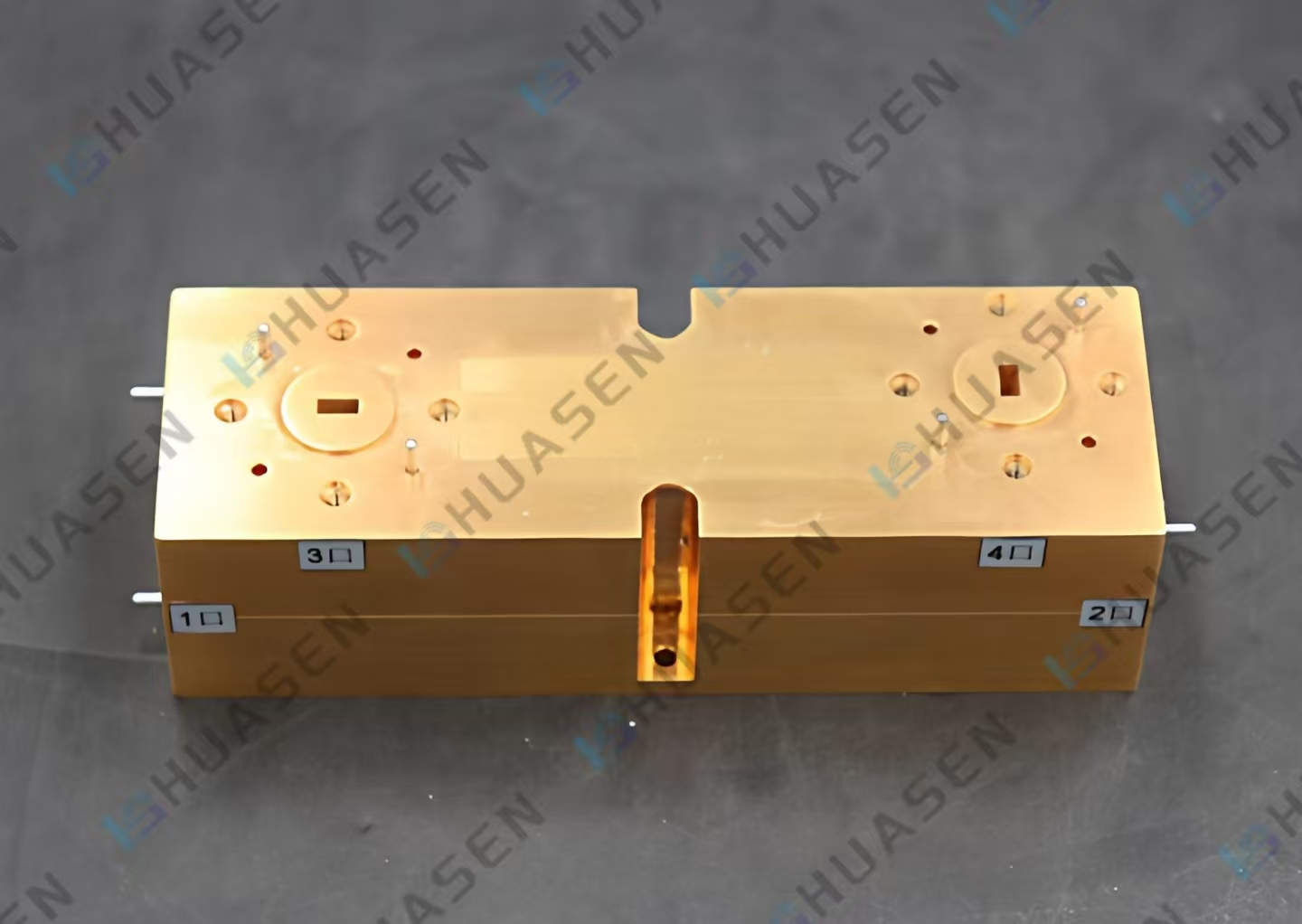
When operating high-power radar systems, satellite ground stations, or industrial heating equipment, conventional junction circulators often fail to meet the thermal and electrical demands of sustained high-power transmission. The Waveguide Differential Phase Shift Circulator fundamentally changes this limitation through its unique four-port architecture and ferrite-loaded waveguide design. Unlike traditional three-port junction circulators that rely on standing wave patterns within ferrite resonators, the differential phase shift design distributes electromagnetic energy across larger ferrite volumes and waveguide cross-sections, enabling power handling from 200 watts to an impressive 20 kilowatts average power. High Power WG Differential Phase Shift Circulators manufactured by industry leaders utilize precision-engineered rectangular waveguide structures with carefully calculated dimensions that reduce energy density at any single point, thereby minimizing hotspot formation and thermal stress on ferrite materials.
Enhanced Thermal Management Through Distributed Ferrite Loading
The symmetrical ferrite loading configuration employed in Waveguide Differential Phase Shift Circulators creates even electromagnetic field distribution throughout the device structure. This design principle enables superior heat dissipation compared to junction-type circulators where field concentration at the ferrite junction creates thermal management challenges. Operating frequencies ranging from 1.13 GHz to 42.5 GHz benefit from this distributed approach, as the ferrite slabs positioned on the broad walls of the waveguide allow for efficient cooling through either air convection or liquid cooling systems. For applications demanding ultra-high power levels, manufacturers can extend the differential phase shift section length while maintaining thinner ferrite elements, providing design flexibility that accommodates specific thermal requirements without compromising electrical performance. The ability to customize waveguide flanges including FDP, FBP, and FUGP types ensures seamless integration with existing cooling infrastructure in military radar installations, satellite communication ground stations, and industrial microwave heating systems.
Exceptional Isolation Performance for Signal Integrity Protection
Maintaining signal purity in complex RF systems requires not only efficient power transmission but also effective suppression of reverse-traveling interference signals. The Waveguide Differential Phase Shift Circulator delivers isolation performance of at least 20 dB across most operating bandwidths, with high-frequency models maintaining minimum 18 dB isolation even at challenging millimeter-wave frequencies. This isolation level proves critical in dense satellite network environments where multiple communication channels operate simultaneously, and any cross-channel interference degrades overall system performance. The four-port configuration inherently provides isolation characteristics equivalent to double-junction circulators while maintaining insertion losses comparable to single-junction designs, representing a significant performance advantage. For satellite communication applications involving both GEO and LEO constellations, this means your High Power WG Differential Phase Shift Circulator effectively blocks reverse signal interference that could otherwise disrupt uplink and downlink channels, ensuring reliable data transmission even during peak traffic periods.
Low VSWR for Maximum Power Transfer Efficiency
Voltage Standing Wave Ratio directly impacts how much transmitted power reaches its intended destination versus being reflected back toward the source. The Waveguide Differential Phase Shift Circulator achieves VSWR values ranging from 1.2 to 1.3 across its operating bandwidth, indicating excellent impedance matching and minimal reflections at all ports. This low VSWR translates directly to operational efficiency, as more transmitted power propagates through the system rather than being wasted as reflected energy that generates heat and potentially damages amplifier stages. When operating bandwidth specifications call for narrow bands of 5% or 7%, or even wideband implementations up to 10% for high-frequency models, maintaining consistent low VSWR ensures stable performance across the entire frequency range. Applications in aerospace communication equipment and defense electronic warfare systems particularly benefit from this characteristic, as mission-critical operations cannot tolerate signal degradation or power loss that might compromise communication reliability or radar detection capabilities.

Design Flexibility and Customization for Specific Applications
Modern RF system architects face increasingly complex requirements involving unique frequency bands, unconventional power levels, and specialized mounting configurations. The Waveguide Differential Phase Shift Circulator addresses these challenges through extensive customization capabilities that allow engineers to specify exact operating parameters for their particular application. Whether your system requires operation in L-band for satellite navigation, X-band for weather radar, Ka-band for high-resolution imaging radar, or even W-band for millimeter-wave applications, manufacturers can optimize ferrite composition, magnetic bias field strength, waveguide dimensions, and differential phase shift section length to meet precise specifications. This customization extends beyond frequency and power parameters to include waveguide flange types, cooling system integration points, and overall form factor considerations. For LEO satellite constellation manufacturers working under strict size and weight constraints, compact and lightweight circulator designs minimize payload mass while maintaining full electrical performance, directly impacting launch costs and satellite operational lifetime.
Space-Grade Reliability for Mission-Critical Operations
Applications in satellite communications demand components that withstand extreme thermal cycling, intense radiation exposure, and complete vacuum conditions for operational lifetimes spanning decades. Space-qualified Waveguide Differential Phase Shift Circulators undergo rigorous design validation and testing protocols aligned with MIL-STD-883 and ESA ECSS-Q-ST-60 certification requirements, ensuring reliability in the harshest operational environments. Hermetically sealed construction protects internal components from outgassing and contamination in space vacuum, while precision-engineered ferrite cores maintain stable electromagnetic performance across temperature ranges from cryogenic to elevated levels. The advanced thermal management inherent in differential phase shift designs becomes particularly valuable in space applications where heat dissipation relies solely on radiative cooling to the cold void of space. Low Passive Intermodulation design achieving levels below -140 dBc ensures that the circulator itself does not generate spurious signals that might interfere with sensitive receiving systems, critical for maintaining communication link quality in satellite transponders and deep-space network ground stations.
Operational Advantages in Accelerator and Industrial Systems
Superconducting Radio Frequency accelerator installations present unique operational challenges characterized by instantaneous power level changes and nearly complete power reflection from SCRF cavities during normal operation. Traditional three-port junction circulators struggle in these environments, requiring expensive external compensation networks to maintain stable operation under continuously varying load conditions. The four-port Waveguide Differential Phase Shift Circulator demonstrates comparative invulnerability to these high reflected power conditions, managing reflections internally without requiring complex external tuning systems. This operational robustness stems from the fundamental operating principle where differential phase shift depends on total ferrite volume rather than precise standing wave patterns within resonant structures. Industrial microwave heating applications involving magnetrons, traveling wave tubes, and klystron sources similarly benefit from this reflected-power tolerance, as impedance variations in heated loads create dynamic mismatch conditions that the circulator must accommodate without performance degradation or component damage.
Above-Resonance Operation for Reduced Nonlinear Loss
Operating ferrite circulators in above-resonance mode, where the bias magnetic field strength exceeds the ferrimagnetic resonance frequency, eliminates nonlinear loss mechanisms that become problematic at very high power levels. In below-resonance operation, high microwave field strengths combined with elevated temperatures from absorbed power can drive the ferrite material into nonlinear response regions where insertion loss increases dramatically and performance becomes unpredictable. Above-resonance designs avoid this regime entirely, maintaining low, stable insertion loss even under sustained high-power conditions. While this operational mode requires stronger permanent magnets to achieve the necessary bias field and produces somewhat reduced differential phase shift compared to below-resonance designs, the elimination of nonlinear effects proves essential for applications such as air traffic control surveillance radars operating at peak powers of hundreds of kilowatts. The choice between air cooling and liquid cooling becomes a design parameter based on specific power levels and output mismatch conditions, with water-cooled implementations supporting average power levels into the hundreds of kilowatts while maintaining compact overall dimensions.
Manufacturing Quality and Testing Superiority
Achieving the demanding performance specifications of Waveguide Differential Phase Shift Circulators requires sophisticated manufacturing capabilities supported by comprehensive testing infrastructure. Leading manufacturers maintain production facilities equipped with advanced CNC machining centers, precision milling equipment, and specialized waveguide assembly techniques developed through decades of experience. The waveguide components undergo rigorous dimensional verification using coordinate measuring machines to ensure that critical parameters such as waveguide cross-section dimensions, ferrite positioning, and flange alignment meet tolerances measured in microns. Electromagnetic performance validation occurs in calibrated microwave anechoic chambers spanning frequency ranges from hundreds of megahertz to hundreds of gigahertz, with far-field and near-field antenna measurement systems providing detailed characterization of radiation patterns and power handling capabilities. Vector network analyzers, spectrum analyzers, and specialized high-power test equipment verify insertion loss, isolation, VSWR, and power-handling specifications across the entire operating bandwidth before shipment to customers.
Certification and Compliance for Global Markets
Modern RF and microwave component procurement increasingly emphasizes environmental compliance, quality management, and occupational safety certifications. Waveguide Differential Phase Shift Circulator manufacturers maintain ISO9001 quality management system certification ensuring consistent manufacturing processes and documented traceability for all production batches. RoHS compliance guarantees that products meet restrictions on hazardous substances, critical for equipment destined for European markets and environmentally conscious organizations worldwide. REACH certification addresses chemical substance regulations, while occupational health and safety management system certification demonstrates commitment to worker welfare throughout the manufacturing process. These certifications provide procurement managers and system integrators confidence that supplied circulators meet international standards beyond mere electrical performance specifications, addressing long-term sustainability, supply chain transparency, and corporate responsibility objectives that increasingly influence purchasing decisions in aerospace, defense, and telecommunications sectors.

Conclusion
The Waveguide Differential Phase Shift Circulator delivers unmatched power handling, superior isolation, and exceptional reliability for demanding RF applications across satellite communications, radar systems, and industrial installations requiring robust performance under extreme conditions.
Cooperate with Huasen Microwave Technology Co., Ltd.
As a leading China Waveguide Differential Phase Shift Circulator manufacturer, China Waveguide Differential Phase Shift Circulator supplier, and China Waveguide Differential Phase Shift Circulator factory established in 1993, Huasen Microwave Technology Co., Ltd. brings over 30 years of specialized expertise in high-frequency microwave and millimeter-wave component development. Our comprehensive 3,000-square-meter R&D and production center houses advanced manufacturing capabilities including CNC machining workshops, specialized waveguide fitting teams with over 40 experienced technicians, and professional composite materials production facilities. We offer China Waveguide Differential Phase Shift Circulator wholesale solutions and competitive Waveguide Differential Phase Shift Circulator price options with customizable frequency bands, power specifications, and flange configurations tailored to your exact requirements. Our High Quality Waveguide Differential Phase Shift Circulator products undergo rigorous testing in our three calibrated microwave anechoic chambers (21m, 9m, and 5m) with measurement capabilities spanning 0.5 GHz to 220 GHz, supported by over 60 advanced testing instruments including vector network analyzers and spectrum analyzers. As a National High-Tech Enterprise certified with ISO three-system standards and honored with Xi'an and Shaanxi Famous Trademark recognition, we provide Waveguide Differential Phase Shift Circulator for sale backed by comprehensive technical support and quality assurance. Contact our engineering team at sales@huasenmicrowave.com today to discuss your specific application requirements and receive detailed technical specifications for our complete range of waveguide circulators, isolators, and microwave components serving aviation, aerospace, satellite communications, defense, and 5G infrastructure projects worldwide.
References
1. Şahin, C., & Şimşek, S. (2025). A comprehensive design and fabrication of rectangular waveguide differential phase shift circulator. Journal of Microwave Power and Electromagnetic Energy.
2. Davies, S. J., & Helszajn, J. (2003). Analysis of a high power ferrite differential phase shift circulator operating above ferrimagnetic resonance. IEEE Transactions on Magnetics, 39(5).
3. Bosma, H. (1964). On stripline Y-circulation at UHF. IEEE Transactions on Microwave Theory and Techniques, 12(1), 61-72.
4. Linkhart, D. K. (1989). Microwave Circulator Design. Artech House Publishers.
5. Helszajn, J. (2008). The Stripline Circulator: Theory and Practice. IEEE Press Series on Electromagnetic Wave Theory.
Send Inquiry