Waveguide Calibration Kit for Millimeter-Wave Testing: What to Choose?






2026-01-15 21:54:54
When your vector network analyzer delivers inconsistent measurements at millimeter-wave frequencies, the problem often lies not with your equipment but with inadequate calibration. Choosing the right Waveguide Calibration Kit can mean the difference between reliable, traceable measurements and costly errors that compromise product development, regulatory compliance, and system performance. This comprehensive guide helps engineers and technicians navigate the critical selection criteria for waveguide calibration kits, ensuring measurement accuracy in demanding applications from 5G infrastructure to aerospace radar systems.
Understanding Waveguide Calibration Kit Fundamentals
Waveguide calibration kits serve as the cornerstone of precision measurement in high-frequency testing environments. Unlike coaxial calibration systems, waveguide calibration requires specialized components designed to address the unique propagation characteristics of electromagnetic waves within rectangular waveguide structures. A Waveguide Calibration Kit typically includes precision-machined short circuits, matched loads, and offset short standards that enable vector network analyzers to characterize and remove systematic errors from measurements. These systematic errors include directivity, source match, reflection tracking, load match, transmission tracking, and isolation, all of which degrade measurement accuracy if left uncorrected.
The calibration process involves measuring known standards and comparing the VNA's response to expected values, allowing the instrument to calculate correction factors that are then applied to subsequent device-under-test measurements. In waveguide systems operating at millimeter-wave frequencies, the absence of a true open standard represents a fundamental challenge. When a waveguide is left open, it functions as an antenna, radiating energy rather than reflecting it predictably. This characteristic makes open-ended waveguides unsuitable as calibration references. Engineers compensate for this limitation by employing offset short standards, where precision spacers of specific electrical lengths are combined with flush short plates to create the phase diversity necessary for robust calibration algorithms.
Modern waveguide calibration kits support multiple calibration methods, including Short-Short-Load (SSL), Thru-Reflect-Line (TRL), and Line-Reflect-Match (LRM) techniques. The selection of calibration method depends on the specific application requirements, available standards, and desired measurement accuracy. For instance, TRL calibration offers exceptional accuracy but requires precisely characterized transmission line standards, while SSL calibration provides convenience with moderate accuracy suitable for many production environments.
Critical Selection Criteria for Millimeter-Wave Applications
Selecting an appropriate Waveguide Calibration Kit for millimeter-wave testing demands careful evaluation of multiple technical and practical factors. The frequency range represents the primary consideration, as each waveguide size supports a specific frequency band with defined cutoff frequencies and recommended operating ranges. Common waveguide designations include WR-90 for X-band applications, WR-42 for K-band systems, WR-28 for Ka-band equipment, WR-15 for V-band testing, WR-10 for W-band measurements, and WR-05 for G-band applications extending beyond 140 GHz. Engineers must ensure their selected calibration kit covers the entire operational frequency range of their test requirements with appropriate margins.
Mechanical precision stands as another critical factor affecting calibration quality and measurement repeatability. The dimensional tolerances of waveguide components directly impact connection consistency and signal integrity. Premium calibration kits feature sub-micron machining tolerances on critical surfaces, ensuring that waveguide flanges mate precisely without gaps or misalignment. Surface finish quality affects both electrical performance and mechanical repeatability. Advanced manufacturing processes including precision CNC machining, electrical discharge machining, and specialized polishing techniques produce waveguide surfaces with roughness measurements below 0.4 micrometers Ra, minimizing insertion loss and improving reflection coefficient accuracy.
The stability and characterization quality of calibration standards determine the ultimate measurement accuracy achievable with any Waveguide Calibration Kit. Fixed short circuits should exhibit return loss values exceeding 60 dB to provide near-perfect reflection with minimal uncertainty. Matched loads must demonstrate VSWR specifications of 1.03 or better across the full waveguide band, ensuring minimal reflected energy that could introduce errors in transmission measurements. Offset short standards require precise electrical length definition, typically specified at quarter-wavelength, eighth-wavelength, and three-eighths-wavelength intervals. The accuracy of these offset dimensions directly affects the mathematical conditioning of the calibration algorithm and the resulting measurement uncertainty.
Material selection influences both electrical performance and long-term stability. Aluminum alloy represents the standard choice for waveguide components due to its excellent machinability, low weight, and adequate conductivity when properly plated. Gold plating provides superior conductivity, oxidation resistance, and wear resistance compared to alternative finishes. Premium calibration kits incorporate gold-plated contact surfaces with carefully controlled plating thickness to optimize both electrical and mechanical performance. The plating process must achieve uniform coverage without excessive buildup that could affect dimensional tolerances.
Compatibility with existing test equipment represents a practical consideration that often receives insufficient attention during selection. The Waveguide Calibration Kit must integrate seamlessly with the vector network analyzer and any frequency extension modules or waveguide test heads in use. This integration encompasses both mechanical interface compatibility and proper definition of calibration coefficients within the VNA software. Leading VNA manufacturers maintain databases of common calibration kit specifications, allowing users to select predefined kit definitions rather than manually entering complex coefficient data. However, custom or specialized calibration kits may require manual entry of cutoff frequencies, offset lengths, and other parameters derived from manufacturer specifications.
Component Configuration and Standard Sets
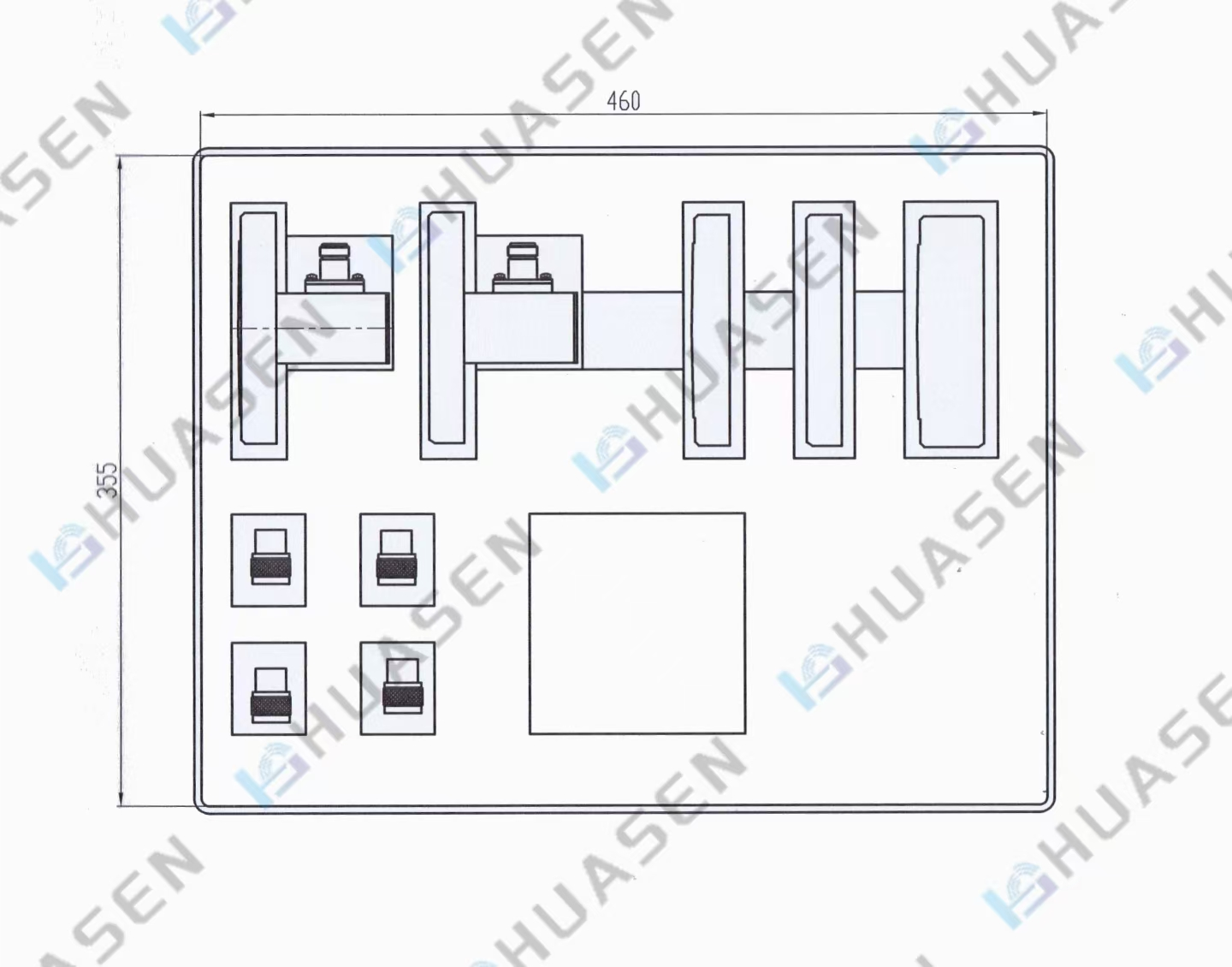
A comprehensive Waveguide Calibration Kit contains multiple precision components designed to enable various calibration algorithms and support different measurement scenarios. The standard component set typically includes waveguide-to-coaxial adapters that provide the critical transition between the VNA's coaxial test ports and the waveguide calibration standards. These adapters must be available in both J-type and K-type connector configurations to accommodate different VNA models and test setups. The electrical performance of these transitions significantly affects overall measurement accuracy, making adapter quality a non-negotiable consideration.
The waveguide matched load serves as the reference for low-reflection calibration and represents one of the most challenging components to manufacture with consistent performance. Premium matched loads achieve VSWR specifications of 1.03 or better through sophisticated internal absorber design and precision dimensional control. The absorber material must exhibit broadband performance across the full waveguide frequency range while maintaining stable characteristics under varying temperature and humidity conditions. Advanced matched loads incorporate carbonyl iron or ferrite-based absorber materials custom-formulated to provide optimal performance within specific frequency bands. The physical configuration of the absorber within the waveguide structure requires careful optimization to minimize reflections at the absorber interface while maximizing energy dissipation.
Fixed waveguide short plates provide the near-perfect reflection standard essential for calibration algorithms. These components consist of precision-flat metallic surfaces positioned perpendicular to the waveguide axis, creating an electrical discontinuity that reflects incident electromagnetic waves with minimal loss. The flatness specification of short plates directly affects return loss performance, with premium components exhibiting surface flatness better than lambda over 20 at the highest operating frequency. The mounting mechanism must ensure consistent positioning without introducing gaps or tilts that would degrade electrical performance. High-quality short plates incorporate alignment features such as precision-ground reference surfaces or dowel pin interfaces that guarantee repeatable positioning during connection and disconnection cycles.
Precision waveguide sections at specific electrical lengths constitute the heart of offset short calibration methods. Standard configurations include quarter-wavelength, eighth-wavelength, and three-eighths-wavelength sections carefully machined to provide accurate phase shifts at the calibration frequency. The electrical length of these sections must account for the dispersive nature of waveguide propagation, where phase velocity varies with frequency according to the waveguide dimensions and cutoff frequency. Manufacturers specify offset section lengths with tight tolerances, typically within a few micrometers, to ensure accurate phase relationships across the full operating band. These precision sections undergo individual verification using reference measurement systems traceable to national metrology standards, providing users with documented uncertainty budgets for their calibration processes.
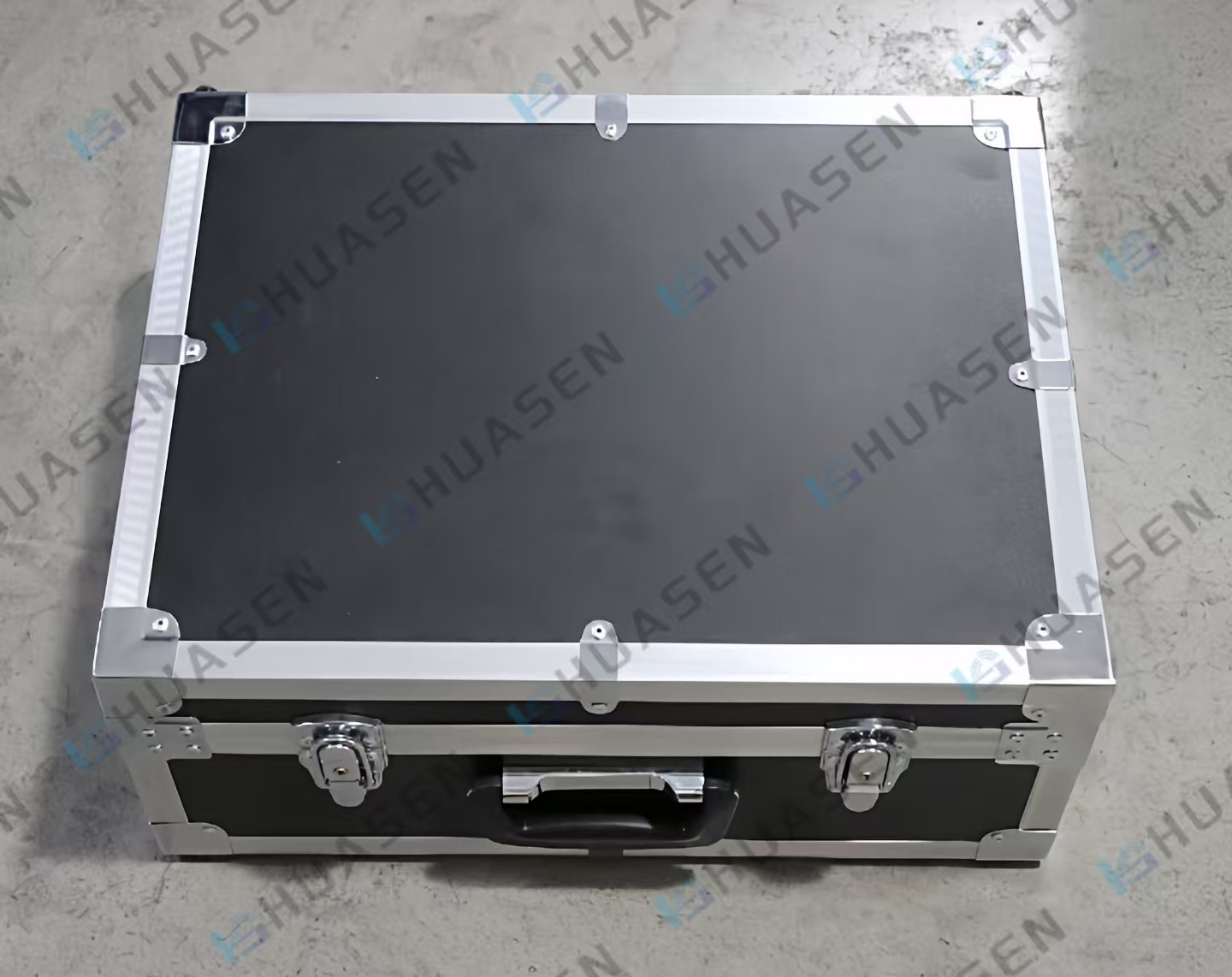
Supporting components including alignment dowel pins, precision waveguide screws, waveguide Quick Connect hardware, and protective storage cases complete the comprehensive Waveguide Calibration Kit. Quick Connect systems represent a significant usability improvement over traditional screw-based waveguide connections, providing uniform contact pressure distribution and reduced connection time while improving measurement repeatability. The standardized torque application eliminates operator variability and reduces the risk of flange damage from over-tightening. Protective cases with custom foam inserts prevent component damage during storage and transport while organizing the calibration standards for quick access during testing procedures.
Industry-Specific Requirements and Application Scenarios
Different industries impose unique requirements on Waveguide Calibration Kit selection based on their specific measurement needs, regulatory environments, and operational constraints. Telecommunications equipment manufacturers developing 5G and emerging 6G infrastructure components require calibration capabilities spanning multiple frequency bands with emphasis on phase accuracy and group delay characterization. The millimeter-wave spectrum allocations for 5G new radio include frequency ranges around 28 GHz, 39 GHz, and extending into W-band at 71-86 GHz, necessitating calibration kits covering Ka-band through W-band waveguide sizes. These applications demand low measurement uncertainty to verify compliance with strict 3GPP specifications for beam forming accuracy, channel bandwidth, and power spectral density.
Aerospace and defense applications present the most stringent calibration requirements, driven by mission-critical performance expectations and comprehensive qualification standards. Radar system development and verification require calibration kits with exceptional dynamic range capability and phase stability to accurately characterize antenna arrays, transmit-receive modules, and signal processing components. Military specifications often mandate NIST-traceable calibration with documented uncertainty budgets and periodic reverification intervals. Defense contractors must maintain calibration kit performance through rigorous handling protocols, environmental control, and scheduled recalibration by accredited metrology laboratories. The Waveguide Calibration Kit selection for defense applications prioritizes long-term stability, comprehensive documentation, and support for advanced calibration techniques including multiline TRL methods that deliver superior accuracy for broadband measurements.
Research institutions and university laboratories conducting fundamental investigations into millimeter-wave and terahertz phenomena require flexible calibration solutions supporting custom waveguide sizes and experimental configurations. These environments benefit from calibration kits offering modular designs that accommodate non-standard waveguide dimensions or specialized measurement scenarios. The ability to define custom calibration coefficients and integrate user-characterized standards provides researchers with maximum flexibility for novel measurement techniques. Academic applications often emphasize cost-effectiveness balanced against adequate measurement performance for proof-of-concept demonstrations and theoretical validation rather than production-grade characterization.
Industrial applications including automotive radar, material characterization, and process monitoring systems present distinct calibration challenges related to field deployment and operational reliability. Automotive radar systems operating in the 76-81 GHz W-band frequency range require production-compatible calibration approaches that support high-throughput testing while maintaining sufficient accuracy to verify regulatory compliance and performance specifications. The Waveguide Calibration Kit for these applications must withstand frequent connection cycles without performance degradation and integrate efficiently into automated test systems. Material characterization laboratories utilizing millimeter-wave permittivity and loss tangent measurements depend on calibration accuracy to generate reliable dielectric property data for advanced composites, absorber materials, and electromagnetic shielding applications.
Quality Assurance and Verification Procedures
Maintaining calibration kit performance over its operational lifetime requires systematic quality assurance practices and periodic verification procedures. Initial acceptance testing upon receiving a new Waveguide Calibration Kit should include comprehensive electrical verification of all standards against manufacturer specifications. This verification process involves measuring the return loss and VSWR of matched loads, confirming the reflection coefficient magnitude of short circuits, and validating the electrical length accuracy of offset sections using a calibrated reference VNA or comparison against laboratory standards. Documentation of these initial measurements establishes baseline performance data enabling detection of subsequent degradation or damage.
Routine visual inspection before each calibration session helps identify mechanical damage, contamination, or wear that could compromise measurement accuracy. Waveguide flanges require particular attention, as damage to sealing surfaces from cross-threading, dropped components, or improper storage manifests as increased insertion loss and degraded return loss in calibration measurements. Flange surfaces should remain free from scratches, burrs, or deformation, with alignment pin holes maintaining dimensional accuracy. The presence of dust, fingerprints, or oxidation on contact surfaces necessitates cleaning using appropriate solvents and lint-free materials to restore optimal electrical contact.
Periodic recalibration and reverification by accredited metrology laboratories ensures traceability to national standards and quantifies measurement uncertainty contributions from the calibration kit. The recommended recalibration interval depends on usage frequency, handling conditions, and application requirements, typically ranging from 12 to 36 months for professional-grade calibration kits. Some industries mandate more frequent verification cycles based on regulatory requirements or quality management system specifications. The recalibration process includes comprehensive electrical characterization of all standards, dimensional verification of critical features, and generation of updated calibration coefficients reflecting any changes in component performance. Calibration certificates provided by accredited laboratories document the measurement uncertainty, traceability chain, and specific test conditions, fulfilling requirements for ISO 17025 compliant quality systems.
Environmental storage conditions significantly influence Waveguide Calibration Kit longevity and performance stability. Components should be stored in controlled environments with temperature between 15-30 degrees Celsius and relative humidity below 60 percent to minimize oxidation and dimensional changes from thermal expansion. The protective case provided with premium calibration kits offers basic environmental protection, but critical applications may warrant climate-controlled storage cabinets. Desiccant packs placed within storage cases help control moisture levels, particularly important for gold-plated components in humid environments. Proper storage also includes securing components in their designated foam cutouts to prevent physical damage from impact or vibration during transport.
Conclusion
Selecting the optimal Waveguide Calibration Kit requires balancing technical specifications, application requirements, and budget constraints while prioritizing measurement accuracy and long-term reliability. Understanding fundamental calibration principles, evaluating critical selection criteria, and implementing proper quality assurance practices ensures maximum return on investment and confident measurement results across the millimeter-wave spectrum.
Cooperate with Huasen Microwave Technology Co., Ltd.
As a China Waveguide Calibration Kit manufacturer and China Waveguide Calibration Kit supplier with over 30 years of industry experience, Huasen Microwave Technology Co., Ltd. offers High Quality Waveguide Calibration Kit solutions for precision RF testing applications. Our China Waveguide Calibration Kit factory produces metrology-grade standards with sub-micron tolerances, gold-plated contacts for superior conductivity, and NIST-traceable calibration certificates. Founded in 1993 as a National High-Tech Enterprise, we maintain ISO 9001 certified manufacturing processes across our 3,000-square-meter production facility equipped with advanced CNC machining, precision waveguide processing capabilities, and comprehensive testing infrastructure including three microwave anechoic chambers spanning 5m to 21m. Our Waveguide Calibration Kit for sale includes complete component sets with waveguide-to-coaxial adapters, matched loads achieving VSWR ≤ 1.03, precision offset sections, and protective storage cases, all backed by dedicated technical support and competitive Waveguide Calibration Kit price offerings. Whether you need standard configurations covering WR-15 to WR-230 waveguide bands or customized solutions for specialized testing requirements, our expert team delivers reliable products for telecommunications, aerospace, defense, and research applications. Contact us at sales@huasenmicrowave.com to discuss your calibration needs and experience the quality that comes from three decades of microwave component excellence. Save this page for easy reference whenever you need trusted China Waveguide Calibration Kit wholesale solutions.
References
1. Heuermann, H., "Calibration of Vector Network Analyzers by Offset Short Standards," IEEE Transactions on Instrumentation and Measurement, 2008.
2. Williams, D. F., Wang, C. M., Arz, U., "An Optimal Vector-Network-Analyzer Calibration Algorithm," IEEE Transactions on Microwave Theory and Techniques, 2003.
3. Marks, R. B., "A Multiline Method of Network Analyzer Calibration," IEEE Transactions on Microwave Theory and Techniques, 1991.
4. National Institute of Standards and Technology, "Waveguide Calibration Standards and Verification Artifacts," NIST Technical Note, 2015.
5. Somlo, P. I., Hunter, J. D., "Microwave Impedance Measurement," IEE Electrical Measurement Series, Peter Peregrinus Ltd., 1985.
Send Inquiry