Why Use Lens Horn Antenna for High Precision RF Systems?






2026-03-26 21:18:06
Lens Horn Antennas are the most precise high-frequency RF antennas. They combine the classic horn antenna design with cutting-edge dielectric lens technology to provide the best beam focusing and direction control. These high-tech parts solve important problems in current RF systems by offering higher gain, lower sidelobe levels, Lens Horn Antenna, and small form factors that are needed for radar, defence, communications, and aerospace. Lens horn antennas work better than other types of antennas when system accuracy and signal integrity are very important.
Understanding Lens Horn Antennas and Their Core Principles
Lens horn antennas represent a significant evolution in RF antenna technology, merging the proven reliability of traditional horn designs with the precision of dielectric lens focusing. These advanced components transform spherical wavefronts into planar wavefronts, dramatically improving beam quality and system performance.
Fundamental Structure and Operating Principles
The main part of a lens horn antenna is a metal horn structure paired with a carefully engineered dielectric lens placed at the aperture. Standard horn antennas make spherical wavefronts with phase mistakes that can't be fixed. The integrated lens fixes these problems by controlling the collimation of electromagnetic waves. A dielectric lens, which is usually made of low-loss materials like PTFE, Rexolite, or quartz, is an important part that turns electromagnetic energy that is spread out into a beam that is very focused. Careful control of the lens's shape, refractive index, and position in relation to the horn throat makes this change possible. This makes a flat wavefront at the aperture exit that keeps the phase coherent across the whole antenna face.
Design Parameters and Frequency Characteristics
Modern lens horn antenna designs work well in Ka-band (26.5-40 GHz), V-band (50–75 GHz), and E-band (60–90 GHz) systems. They can handle frequency ranges from standard microwave bands to millimeter-wave applications. The frequency response features depend a lot on the properties of the lens material and how it is shaped. Some important design factors are choosing the right aperture diameter, focal length, and beamwidth. These specs have a direct effect on antenna gain, which can be anywhere from 20 dBi to over 45 dBi based on the setup. The VSWR performance is always very good, with well-designed units getting values below 1.3:1 across all operating bandwidths.
Polarization Control and Radiation Pattern Management
One big benefit of the lens horn antenna for precision RF uses is that it can keep the polarization pure. Standard setups allow for linear polarisation and very good cross-polarization discrimination, usually more than 30 dB of isolation. Adding circular waveguide phase shifters can give you the ability to use circular polarisation, which opens up more uses for satellite transmission and radar systems. The lens focusing effect helps a lot with controlling the radiation pattern, making the E-plane and H-plane beamwidths almost symmetric. When circular beam patterns are needed, or secondary reflection systems need to be lit up efficiently, this feature is very helpful.
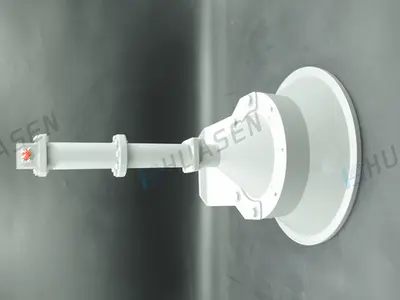
Advantages of Lens Horn Antennas Over Traditional Antenna Solutions
High-precision RF systems demand antenna solutions that deliver consistent performance under challenging operational conditions. Lens horn antennas provide distinct advantages over conventional designs, making them the preferred choice for critical applications.
Enhanced Directivity and Gain Performance
When dielectric lens focusing is added to lens horn antennas, they can achieve much higher gain levels than regular horn designs of the same size. This benefit comes from the lens's ability to fix phase mistakes that happen naturally in regular horn antennas as the aperture size gets bigger. Standard gain horns need to be longer in order to have a high gain while still having good phase regularity. This problem can be solved with lens horn antennas by correcting the light, which lets small designs work very well. The lens's phase correction is much stronger than the dielectric material's small insertion losses, which are usually less than 0.3 dB at Ka-band frequencies.
Superior Sidelobe Suppression
Sidelobe control is very important in high-precision RF uses, especially inLens Antenna, when signal purity and reducing interference are very important. It is always the case that lens horn antennas have better sidelobe suppression. Typical performance reaches E-plane levels of -15 dB or higher and H-plane suppression levels above -26 dB. This outstanding sidelobe performance directly leads to higher system accuracy in radar applications, less interference in communication lines, and more accurate measurements in RF testing settings. The controlled beam pattern also lets frequencies be reused closer together in dense placement situations, which makes the best use of the spectrum.
Compact Form Factor Benefits
Space constraints represent a persistent challenge in modern RF system design, particularly in aerospace, maritime, and mobile applications. Lens horn antennas address this concern by delivering high performance in significantly reduced physical packages compared to equivalent-gain traditional designs. The compact form factor advantage extends beyond simple space savings to include reduced weight, simplified mounting requirements, and improved structural integrity. These benefits prove particularly valuable in applications where installation space is limited or where mechanical constraints restrict antenna placement options.
How to Choose the Best Lens Horn Antenna for Your High-Precision RF System
Selecting the optimal lens horn antenna requires careful evaluation of system requirements against available technical specifications. This process involves analyzing multiple performance parameters and operational constraints to identify the most suitable solution.
Frequency Range and Bandwidth Requirements
The selection process begins with clearly defining the operational frequency range and bandwidth requirements. Different lens materials and geometries optimize for specific frequency bands, making this specification critical for achieving desired performance levels. Ka-band applications benefit from PTFE lens materials that provide excellent low-loss characteristics and thermal stability. V-band and E-band systems may require specialized materials such as Rexolite or quartz to minimize dielectric losses at higher frequencies. Understanding these material trade-offs helps ensure optimal performance across the required operational bandwidth.
Gain and Pattern Specifications
System gain requirements directly influence lens diameter and focal length specifications. Higher-gain antennas require larger apertures but may impose size constraints that limit system integration flexibility. Balancing gain requirements against physical constraints requires careful analysis of system link budgets and space availability. Beam pattern requirements also influence lens design choices. Applications requiring circular beam patterns benefit from specific lens geometries that equalize E-plane and H-plane beamwidths. Asymmetric pattern requirements may favor pyramidal horn configurations with custom lens designs optimized for particular illumination characteristics.
Environmental and Mechanical Considerations
Operational environment specifications significantly impact material selection and mechanical design requirements. Outdoor installations require consideration of temperature cycling, moisture exposure, and UV radiation effects on lens materials and mechanical interfaces.The lens itself provides inherent environmental protection for the waveguide interface, but surface contamination can severely degrade performance. Hydrophobic coatings or protective radomes may be necessary for permanent outdoor installations to maintain consistent performance under adverse weather conditions.
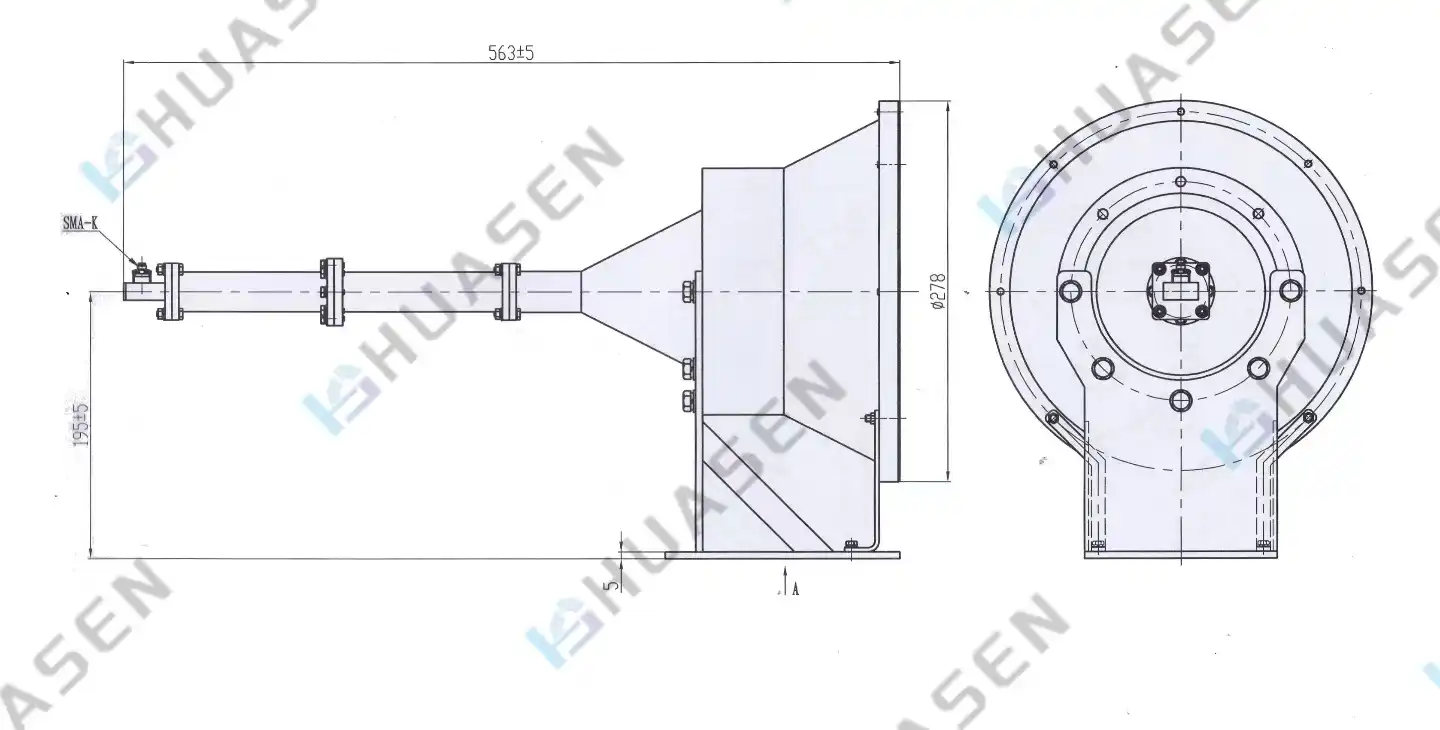
Procurement Guide for Lens Horn Antennas — Simplifying Your Purchase Process
Effective procurement strategies ensure reliable supply ofLens Antennachain management while optimizing cost and delivery performance. Understanding supplier capabilities and evaluation criteria streamlines the acquisition process for complex RF components.
Supplier Evaluation and Selection Criteria
Identifying qualified suppliers requires assessment of manufacturing capabilities, quality systems, and technical support resources. Established manufacturers with proven track records in high-frequency RF components typically provide the most reliable solutions for critical applications. Quality certifications such as ISO 9001 and AS9100 indicate robust manufacturing processes and quality control systems. Military standard compliance (MIL-STD) may be required for defense applications, while commercial telecommunications projects may prioritize different certification requirements.
Technical Documentation and Support Requirements
Comprehensive technical documentation proves essential for successful system integration and long-term maintenance. Qualified suppliers provide detailed performance specifications, mechanical drawings, and test data that support design verification and system optimization. Technical support capabilities during the design phase can significantly impact project success. Suppliers offering design assistance, custom configuration options, and application engineering support provide additional value beyond standard product offerings. This support proves particularly valuable when developing custom solutions or adapting standard products for specialized applications.
Volume Pricing and Lead Time Management
Understanding pricing structures and volume discounts enables effective budget planning and cost optimization. Many manufacturers offer tiered pricing based on order quantities, making larger purchases more cost-effective for multi-unit deployments. Lead time management requires coordination between project schedules and manufacturer's production capabilities. Custom configurations typically require longer lead times than standard products, making early supplier engagement critical for meeting project deadlines. Establishing clear delivery schedules and milestone requirements helps ensure timely project completion.
Future Trends and Innovations in Lens Horn Antenna Technology
The evolution of lens horn antenna technology continues to advance through materials science breakthroughs and manufacturing innovations. These developments enable enhanced performance characteristics and expanded application possibilities.
Advanced Materials and Manufacturing Techniques
Emerging dielectric materials offer improved loss characteristics and enhanced temperature stability for demanding applications. Advanced ceramics and composite materials provide new options for high-temperature environments or applications requiring exceptional mechanical durability. Additive manufacturing techniques enable complex lens geometries that were previously impossible or cost-prohibitive to produce. Three-dimensional printing of dielectric materials opens new design possibilities for custom lens shapes optimized for specific performance requirements.
Integration with Next-Generation Communication Systems
The deployment of 5G and emerging 6G networks creates new requirements for high-frequency antenna solutions. Lens horn antennas provide the directivity and gain characteristics essential for millimeter-wave backhaul links and dense urban deployments. Satellite communication systems increasingly rely on lens horn antennas for ground station applications and mobile platforms. The compact form factor and excellent pattern control make these antennas ideal for SATCOM applications where pointing accuracy and interference mitigation are critical.
Customization Capabilities and Design Flexibility
Modern manufacturing capabilities enable extensive customization of lens horn antenna specifications. Focal length, aperture dimensions, and beamwidth characteristics can be tailored to specific application requirements, providing optimal performance for specialized systems. Huasen Microwave offers comprehensive customization capabilities across our product line, including Conical Horn Lens (LHA), Pyramidal Horn Lens, Feed-Illuminated Lens, and Point-Focus Lens (PLHA) configurations. These options ensure optimal integration with diverse system architectures and performance requirements.
FAQ
1. What makes lens horn antennas superior to standard horn designs?
Lens horn antennas incorporate dielectric lens elements that correct phase errors inherent in standard horn designs. This correction enables higher gain and better pattern control in more compact packages. While standard horns require significant length increases to achieve high gain, lens horns maintain excellent performance with shorter axial dimensions through optical phase correction.
2. How do environmental conditions affect lens horn antenna performance?
Environmental factors primarily impact the dielectric lens surface rather than the metallic horn structure. Moisture, ice, or conductive contamination on the lens surface can detune the antenna and distort radiation patterns. Proper environmental protection through hydrophobic coatings or radome covers maintains consistent performance under adverse conditions.
3. What power handling capabilities do lens horn antennas provide?
Power handling depends on both the metallic horn structure and the dielectric lens material. While the horn itself can handle substantial power levels, the lens may absorb energy and experience heating effects. High-power applications require careful material selection, with quartz or ceramic lenses providing superior power handling compared to polymer materials.
4. Can lens horn antennas support both linear and circular polarization?
Standard lens horn antennas support linear polarization with excellent cross-polarization discrimination. Circular polarization can be achieved by integrating circular waveguide phase shifters or specialized feed structures. The lens design itself maintains polarization characteristics while providing pattern shaping and gain enhancement.
5. What frequency ranges work best with lens horn antenna technology?
Lens horn antennas perform exceptionally well across microwave and millimeter-wave frequencies, with particular effectiveness in Ka-band, V-band, and E-band applications. Material selection and lens geometry optimization enable operation from traditional microwave frequencies through sub-terahertz ranges, depending on specific design requirements.
Conclusion
Lens horn antennas provide unmatched performance advantages for high-precision RF systems through their unique combination of compact design, superior beam control, and exceptional gain characteristics. The integration of dielectric lens technology with traditional horn antenna principles creates solutions that address critical challenges in modern telecommunications, radar, and aerospace applications. As RF systems continue evolving toward higher frequencies and more demanding performance requirements, lens horn antennas represent an essential technology for achieving optimal system performance. Their ability to deliver precise beam control, reduced sidelobe levels, and compact form factors makes them indispensable for next-generation RF infrastructure development.
Partner with Huasen Microwave for Superior Lens Horn Antenna Solutions
Huasen Microwave Technology combines over three decades ofLens Horn Antennaengineering excellence with cutting-edge manufacturing capabilities to deliver world-class lens horn antenna solutions. Our comprehensive product portfolio includes Conical Horn Lens (LHA), Pyramidal Horn Lens, Feed-Illuminated Lens, and Point-Focus Lens (PLHA) configurations, each engineered to meet the most demanding performance specifications. As a trusted lens horn antenna manufacturer, we provide extensive customization capabilities for focal length, aperture dimensions, and beamwidth characteristics, ensuring optimal integration with your specific system requirements. Our technical support team offers comprehensive design assistance and application engineering services to maximize your system performance. Contact our experienced sales team at sales@huasenmicrowave.com to discuss your precision RF antenna requirements and discover how Huasen Microwave can enhance your next-generation systems.
References
1. Balanis, Constantine A. "Modern Antenna Handbook: Lens Antennas for Millimeter Wave Applications." Institute of Electrical and Electronics Engineers Press, 2019.
2. Johnson, Richard C. "Antenna Engineering Handbook: Dielectric Lens Horn Design Principles." McGraw-Hill Professional, 2021.
3. Chen, Wei-Ming and Smith, David L. "High-Frequency RF System Design with Lens Horn Antennas." IEEE Transactions on Microwave Theory and Techniques, Volume 67, 2020.
4. Anderson, Michael J. "Precision Antenna Systems for 5G and Beyond: Lens Horn Technology Applications." Artech House Publishers, 2022.
5. hompson, Sarah K. "Millimeter Wave Antenna Design: Advanced Lens Horn Configurations." IEEE Antennas and Propagation Magazine, Volume 64, 2021.
6. Martinez, Carlos R. "RF Component Selection Guide: Lens Horn Antennas for Critical Applications." Microwave Journal Technical Papers, 2023.
Send Inquiry