What Is Antenna Near Field Measurement Probe and Its Purpose?






2026-07-21 16:53:18
An antenna near-field measurement probe is a precision-engineered electromagnetic sensor designed to capture both magnitude and phase information of radio frequency fields within the radiating near-field zone of an antenna under evaluation. Unlike conventional far-field testing that demands extensive outdoor ranges, these probes sample wavefronts mere wavelengths from the antenna aperture—typically three to ten lambda distances away. The acquired vector data undergoes mathematical transformation via Fourier algorithms to reconstruct far-field radiation characteristics, enabling system integrators and test engineers to validate massive satellite arrays, 5G massive MIMO deployments, and millimeter-wave devices inside compact anechoic chambers where physical space constraints make traditional methods impractical. In contemporary antenna development workflows, near-field measurement probes address critical industry pain points: they compress test cycles by eliminating lengthy far-field setups, improve diagnostic resolution for detecting design anomalies, and maintain measurement accuracy exceeding ±0.05 dB when properly characterized. We've worked with base station manufacturers and aerospace integrators who rely on these tools to accelerate time-to-market while ensuring compliance with stringent gain and polarization specifications. This guide walks you through probe technologies, technical specifications, procurement considerations, and practical application strategies to optimize your antenna validation processes.
Understanding Antenna Near-Field Measurement Probes
The Physics Behind Near-Field Sensing
Near-field measurement operates on the principle that electromagnetic fields close to an antenna contain complete amplitude and phase information before waves coalesce into propagating far-field patterns. Within the Fresnel region, field components exhibit complex spatial distributions that reveal structural details invisible to distant observation points. Probes act as spatially precise sampling transducers, recording electric or magnetic field vectors at thousands of discrete coordinates across a scanning plane, cylinder, or sphere surrounding the device under test.
The process differs fundamentally from far-field measurements, where receiving antennas capture already-formed radiation patterns. Near-field probes intercept nascent wavefronts before they fully develop, capturing raw electromagnetic signatures that mathematical transforms later convert into conventional antenna metrics. This approach bypasses the need for kilometer-long measurement ranges previously required for large-aperture antennas, making it indispensable for satellite reflector validation and phased array diagnostics.
From Near-Field Data to Actionable Far-Field Patterns
Raw near-field scan data appear as complex matrices representing field strength and phase at each measurement point. Specialized software applies near-field-to-far-field (NF-FF) transformation algorithms—essentially sophisticated Fourier processing—to translate this spatial information into conventional radiation patterns, gain curves, and polarization characteristics. The transformation accuracy depends critically on probe quality; poorly characterized probes introduce systematic errors that propagate through calculations, corrupting final results.
Professional-grade probes ship with traceable calibration data defining their own radiation patterns and phase centers. During NF-FF transformation, these probe correction coefficients mathematically deconvolve the probe's influence from measured data, isolating the antenna's true performance. This correction process explains why probe selection carries such weight in procurement decisions—measurement fidelity ultimately traces back to probe characterization quality and mechanical stability.
Key Types and Technical Specifications of Near Field Probes
Probe Architecture Categories
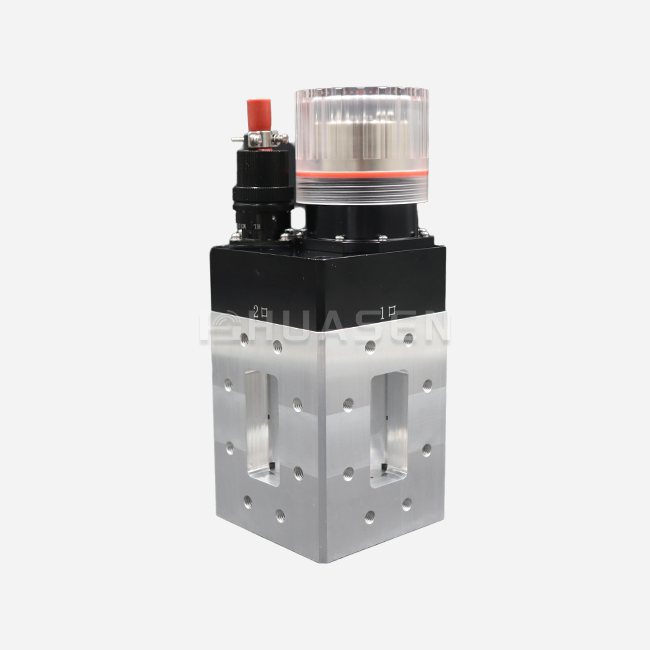
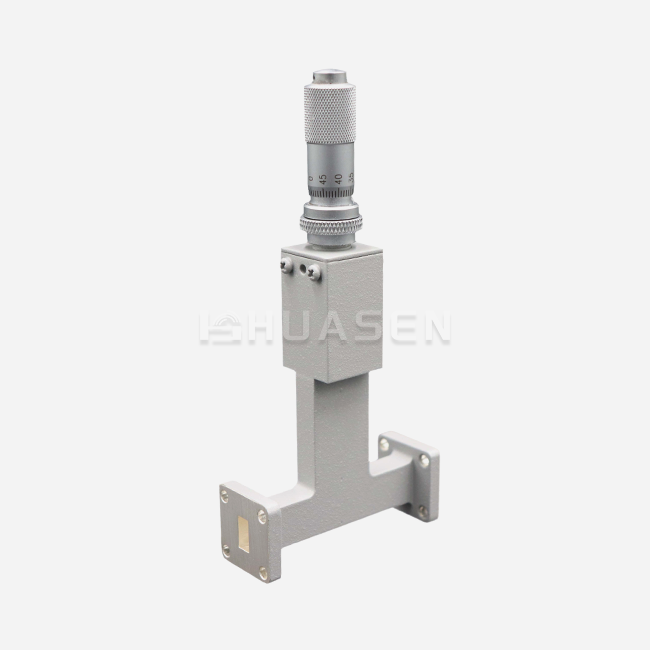
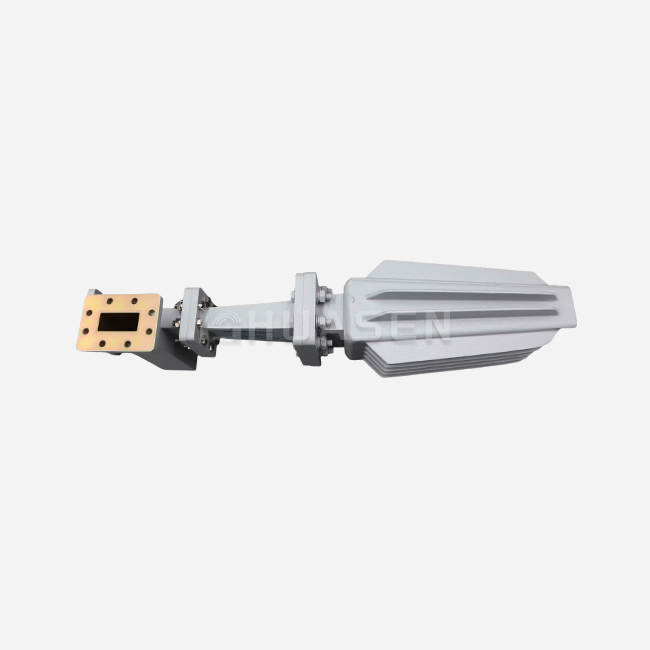
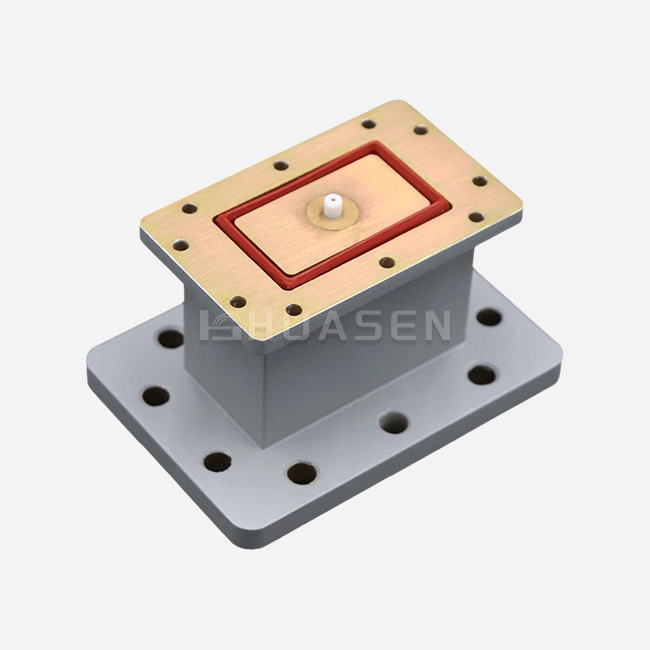
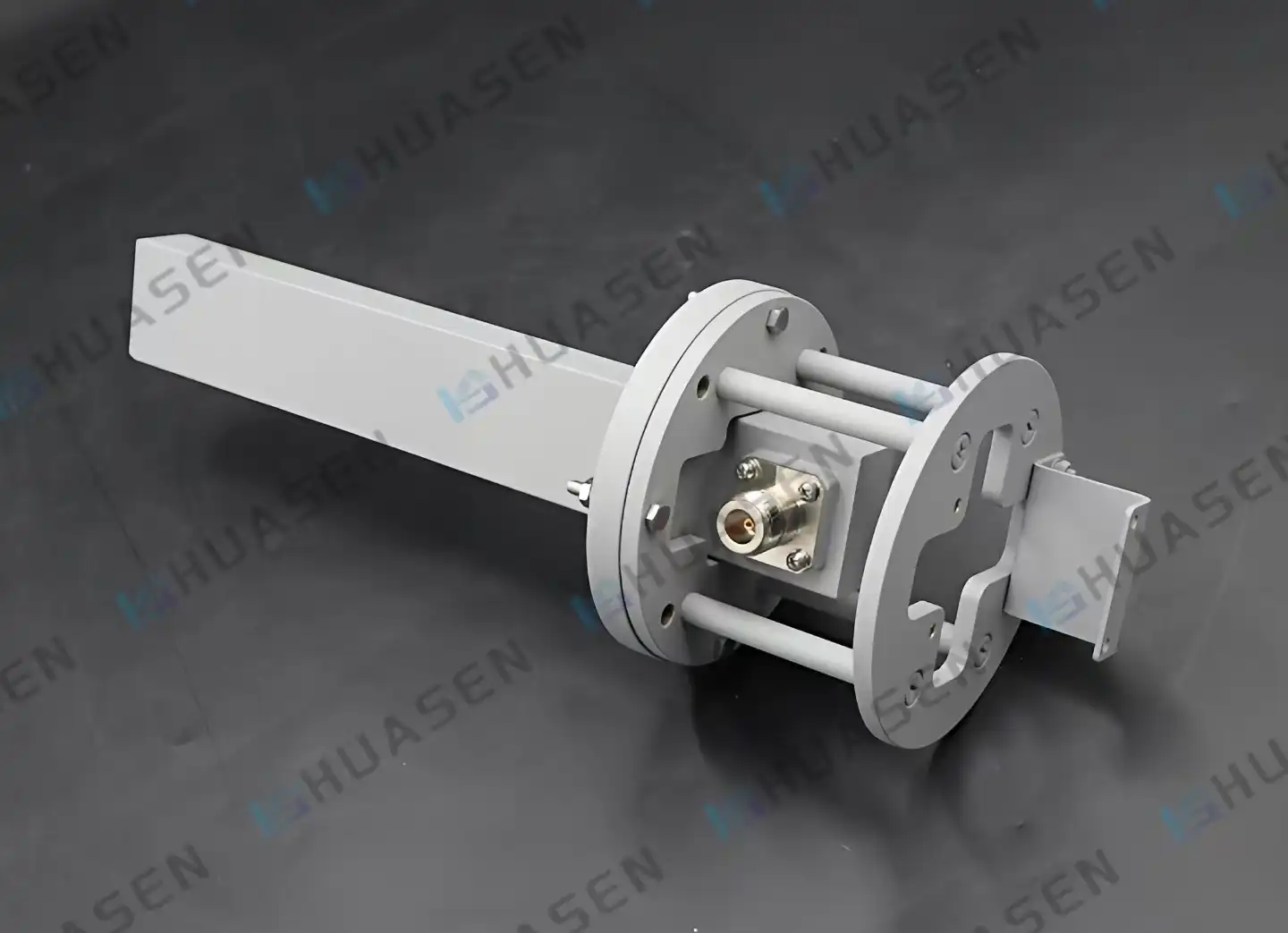
Different antenna measurement scenarios demand specific probe designs optimized for particular frequency bands and polarization requirements. Open-ended waveguide probes deliver exceptional cross-polarization purity and phase stability, making them reference standards for precision measurements. Their rigid construction maintains aperture geometry even under mechanical stress, though each waveguide size covers a limited bandwidth dictated by cutoff frequency physics.
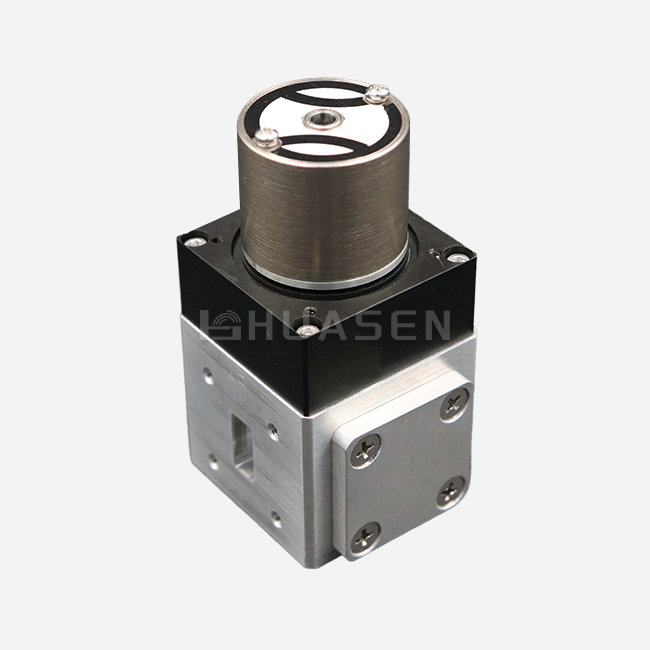
Dual-polarized antenna near-field measurement probe designs integrate orthogonal sensing elements that simultaneously capture horizontal and vertical field components, cutting scan duration by half compared to single-polarization alternatives. This efficiency proves valuable in production testing environments where throughput directly impacts manufacturing costs. Broadband designs employing ridged waveguide or tapered transitions extend operational bandwidth, reducing the number of probe swaps needed during multi-band antenna validation.
Critical Performance Parameters
Frequency coverage spans the fundamental selection criterion, with modern probes addressing bands from sub-GHz through millimeter-wave W-band. Our product line covers 0.49 to 112 GHz across multiple models, supporting everything from maritime communications systems through 5G/6G research applications. Cross-polarization isolation quantifies a probe's ability to reject orthogonal field components; specifications exceeding 25 dB prevent measurement contamination when characterizing high-purity linearly polarized antennas.
Return loss indicates how efficiently the probe absorbs incident energy without reflection—poor values corrupt phase measurements through standing wave effects. Sensitivity defines minimum detectable signal levels, directly affecting noise floor and dynamic range capabilities. Temperature stability becomes critical during extended scan sessions, where thermal drift can introduce phase errors accumulating over multi-hour measurement cycles.
Table 1: Huasen Microwave Near-Field Probe Product Line
| Model Designation | Probe Type | Frequency Range | Cross-Pol Isolation | Connector Type | Typical Application |
|---|---|---|---|---|---|
| WOEWP Series | Orthogonal Feed Waveguide | 0.49–40 GHz | >30 dB | WR-type flanges | Reference-grade measurements |
| WOEWPI Series | Waveguide Orthogonal Type I | 18–110 GHz | >28 dB | UG-387 flanges | Millimeter-wave arrays |
| WOEWPE Series | Waveguide Termination Feed | 26.5–112 GHz | >25 dB | WR-10/WR-8 | W-band systems |
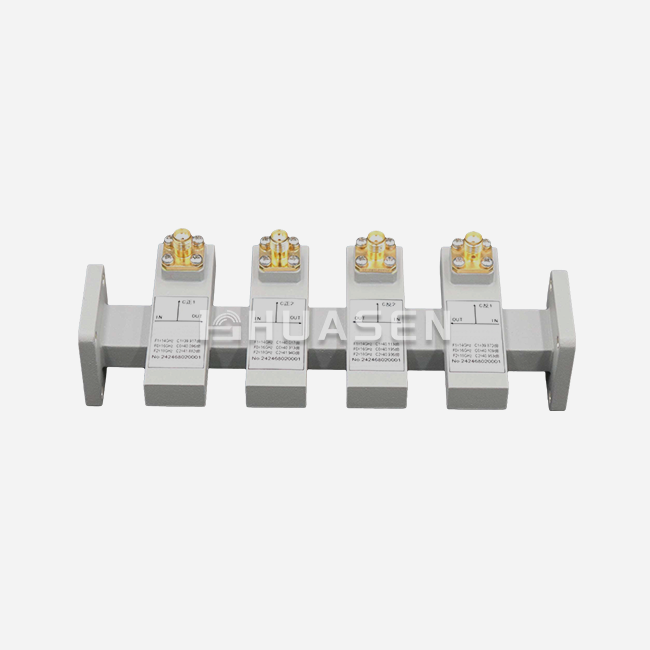
| COECP Series | Coaxial Symmetric Dipole | 0.7–18 GHz | >20 dB | SMA-K, 2.92-K | Wideband rapid scans |
| WOEWDP Series | Dual-Polarization Probe | 1–40 GHz | >25 dB | Dual K-connector | Production testing |
| WBOEWP Series | Broadband Measurement Probe | 2–18 GHz | >22 dB | SMA-K | Multi-band validation |
Calibration and Traceability Requirements
Probe calibration establishes the reference data, enabling accurate probe correction during NF-FF transformation. Traceable calibration involves measuring the probe itself as a device under test at certified facilities, mapping its full-sphere radiation pattern, and determining electrical boresight alignment relative to mechanical mounting surfaces. Orthogonality verification confirms the probe's physical interface aligns with its electrical axis within 0.05 degrees—critical for maintaining scan plane accuracy.
Calibration certificates should trace to national metrology institutes, providing documented uncertainty budgets that feed into overall measurement error analysis. Industry best practice recommends recertification every two to three years for passive waveguide probes, with immediate recalibration after any mechanical shock that might deform the aperture. Active probes incorporating amplifiers require more frequent validation due to component aging effects on phase and amplitude stability.
Applications and Benefits for B2B Procurement and Engineering
Industry-Specific Deployment Scenarios
Mobile communications infrastructure relies on near-field measurement probe measurements for validating massive MIMO antenna arrays, where element-level amplitude and phase relationships determine beamforming performance. Base station manufacturers utilize near-field ranges to verify 5G active antenna systems before deployment, catching design flaws during development rather than after field installation. The ability to test these electrically large arrays in controlled indoor environments significantly reduces validation costs compared to outdoor far-field alternatives.
Satellite communications demands near-field measurement for reflector antenna verification, where surface accuracy directly translates to gain performance. Maritime communications systems operating in harsh salt-spray environments benefit from near-field testing's ability to repeatedly measure antennas during environmental qualification without requiring access to remote outdoor ranges. Defense applications involving radar systems and electronic countermeasure antennas leverage near-field diagnostics to troubleshoot pattern anomalies and verify polarization purity under security-controlled conditions.
Operational Advantages Over Traditional Methods
Near-field measurement compresses required facility dimensions by orders of magnitude—a 2-meter antenna requiring a 1-kilometer far-field distance becomes testable in a 5-meter chamber. This spatial efficiency translates to cost savings through reduced real estate requirements and elimination of weather-dependent outdoor scheduling. Scan automation enables unattended overnight operation, multiplying throughput compared to manual far-field positioning.
Diagnostic resolution surpasses far-field capabilities because near-field data retains spatial information lost during wave propagation to distant measurement points. Engineers can identify specific array elements malfunctioning in phased antenna systems or locate reflector surface deformations causing pattern distortion. Early-stage design validation catches issues during prototyping when corrections cost substantially less than post-production retrofits.
Table 2: Near-Field vs. Far-Field Measurement Comparison
| Evaluation Criterion | Near-Field Method | Far-Field Method |
|---|---|---|
| Required Range Distance | 3–10 wavelengths | 2D²/λ (often >100m) |
| Test Duration (Typical) | 30–180 minutes | 4–12 hours |
| Weather Dependency | Indoor, climate-controlled | Outdoor, weather-limited |
| Diagnostic Resolution | Element-level spatial data | Integrated pattern only |
| Equipment Investment | $150K–$800K complete system | $50K–$300K (plus facility) |
| Probe Correction Required | Mandatory | Not applicable |
Manufacturing Quality Assurance Integration
Production testing environments integrate near-field measurement for go/no-go verification of antenna assemblies, catching manufacturing defects like solder joint failures or mechanical misalignments. Automated scan systems interface with manufacturing execution systems to log measurement data for traceability and statistical process control. The combination of speed and diagnostic capability makes near-field testing economically viable for volume production where far-field methods prove too slow.
Quality assurance teams value measurement Probe near-field measurement's repeatability—environmental isolation in anechoic chambers eliminates external interference variables that plague outdoor ranges. This stability enables the detection of subtle performance drifts, indicating tooling wear or component supplier changes. When production yields decline, near-field diagnostics quickly isolate root causes by comparing spatial field distributions against golden reference units.
Conclusion
Antenna near-field measurement probes serve as indispensable instruments enabling modern wireless infrastructure development, from 5G massive MIMO base stations through satellite communications and defense radar systems. Their ability to compress measurement timelines while enhancing diagnostic resolution directly addresses procurement and engineering pain points around cost control, development velocity, and manufacturing quality assurance. Selecting appropriate probes demands careful evaluation of frequency coverage, cross-polarization performance, calibration infrastructure, and supplier technical support capabilities aligned with specific application requirements. The transformation from near-field spatial data to actionable far-field patterns requires an understanding of scanning strategies, algorithm limitations, and diagnostic interpretation techniques that convert raw measurements into design optimization insights and production acceptance criteria.
FAQ
1. What differentiates near-field from far-field antenna measurement approaches?
Near-field methods sample electromagnetic fields within wavelengths of the antenna surface, capturing complete amplitude and phase spatial distributions that mathematical transforms convert into far-field patterns. This approach eliminates kilometer-scale outdoor ranges required for electrically large antennas, enabling indoor testing within compact anechoic chambers. Far-field measurements directly observe radiation patterns at distances where wavefronts achieve plane-wave characteristics, requiring extensive facilities but avoiding transformation mathematics and probe correction complexities.
2. How often should measurement probes undergo recalibration?
Passive waveguide probes maintain stability for two to three years under normal handling conditions, though immediate recalibration becomes necessary after mechanical shocks that might deform apertures or misalign connector interfaces. Active probes containing amplification circuits require annual verification due to component aging effects on gain and phase stability. Visual inspection for connector wear and waveguide flange damage should occur before critical measurement campaigns, with return loss verification via vector network analyzer sweeps confirming electrical integrity.
3. Can single probes cover the entire 5G frequency allocations?
Broadband ridged waveguide designs extend octave bandwidths suitable for covering multiple 5G bands within a single scan, trading slight cross-polarization degradation for operational convenience. Precision applications demanding maximum polarization purity typically employ band-specific open-ended waveguide probes optimized for narrow frequency ranges. Our WBOEWP broadband series addresses 2–18 GHz with >22 dB isolation, supporting Sub-6 GHz 5G bands, while millimeter-wave probes target specific allocations like 26 GHz or 39 GHz with superior performance specifications.
Partner with Huasen Microwave for Precision Antenna Measurement Solutions
Huasen Microwave Technology brings over 30 years of waveguide and millimeter-wave component expertise to every antenna near-field measurement probe and near-field measurement probe we manufacture. Our comprehensive product portfolio covers 0.49 to 112 GHz with cross-polarization isolation exceeding 25 dB, supporting applications from maritime communications through aerospace radar validation. As a vertically integrated antenna near-field measurement probe supplier, we control every production stage—from waveguide machining through final calibration—ensuring consistent quality and traceable performance documentation meeting MIL-STD and ISO requirements.
Our engineering team provides application-specific guidance during probe selection, helping you balance performance requirements against project budgets and delivery schedules. We offer customization services for specialized frequency bands, connector interfaces, and mechanical mounting configurations that standard catalog items don't address. Reach out to our technical sales team at sales@huasenmicrowave.com to discuss your measurement challenges and receive detailed specifications, calibration data samples, and delivery timelines tailored to your antenna validation requirements.
References
1. Balanis, Constantine A. Antenna Theory: Analysis and Design, 4th Edition. Wiley, 2016.
2. Hansen, Jesper E., ed. Spherical Near-Field Antenna Measurements. IET Electromagnetic Waves Series, 1988.
3. Yaghjian, Arthur D. "An Overview of Near-Field Antenna Measurements." IEEE Transactions on Antennas and Propagation, Vol. 34, No. 1, January 1986.
4. Joy, Edward B. and Paris, David T. "Spatial Sampling and Filtering in Near-Field Measurements." IEEE Transactions on Antennas and Propagation, Vol. 20, No. 3, May 1972.
5. Gillespie, E.S., ed. Special Issue on Near-Field Scanning Techniques. IEEE Transactions on Antennas and Propagation, Vol. 36, No. 6, June 1988.
6. Newell, Allen C. Near-Field Antenna Measurements: Phased Array Antenna Testing. Microwave Network Measurements and Advanced Antenna System Design, Artech House, 1985.
Send Inquiry