What Is a Dual Channel Rotary Joint and Why It Matters in Radar?






2026-06-03 21:37:05
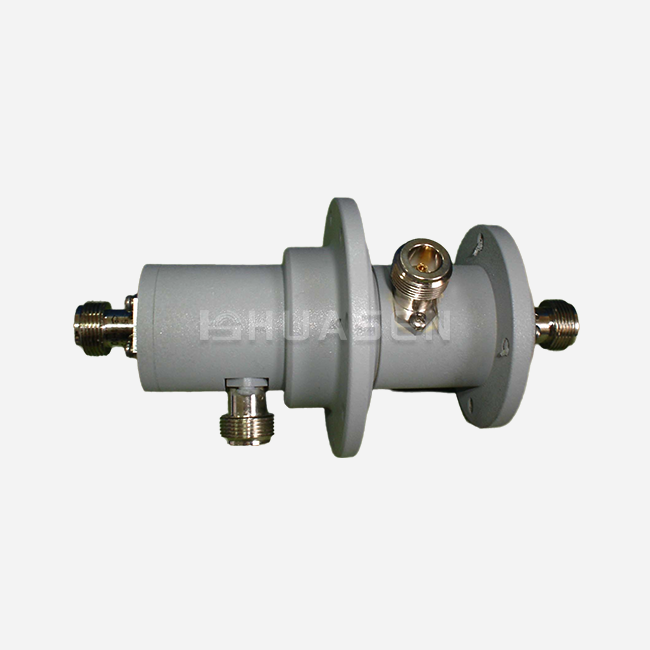
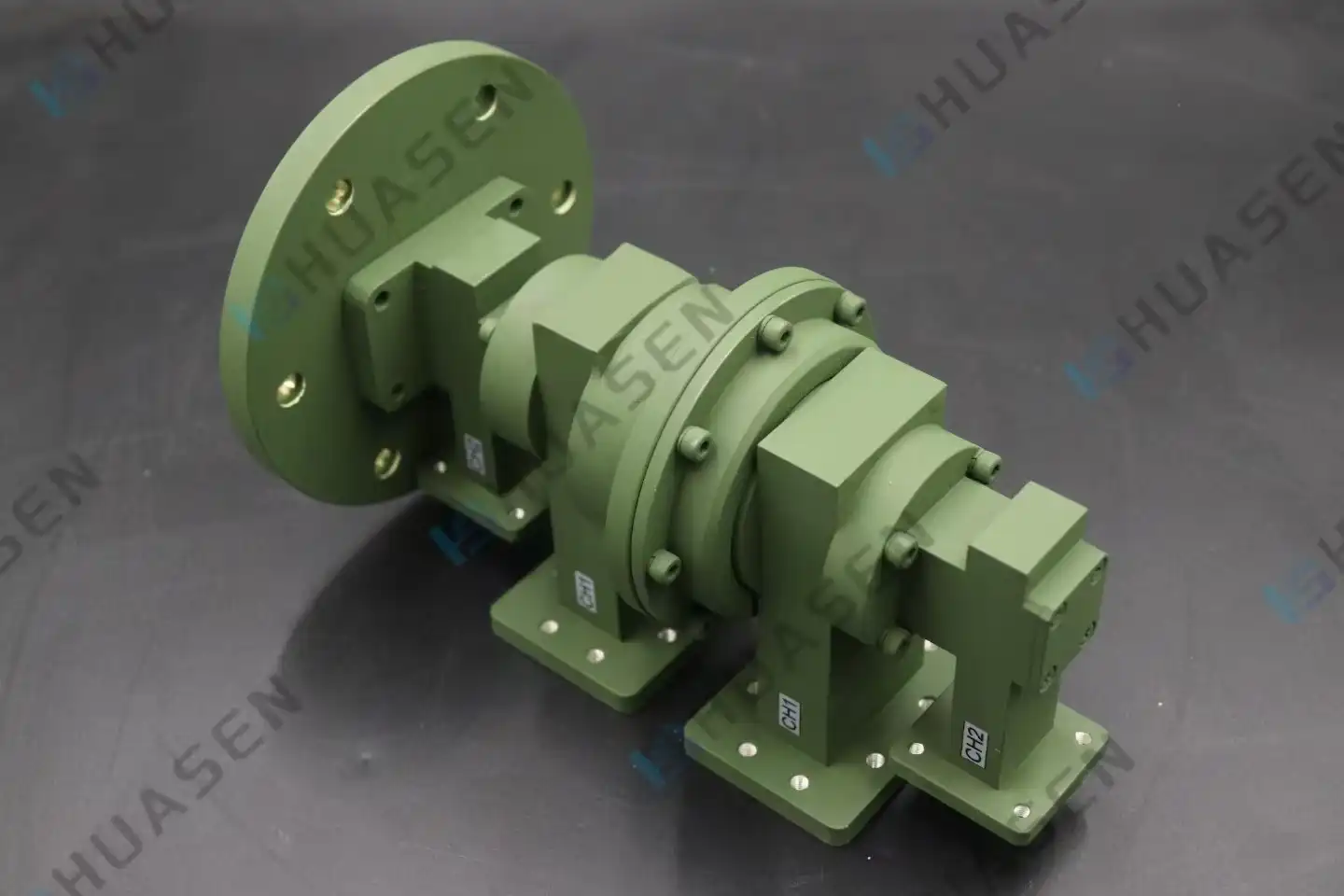
A dual-channel rotary joint is a radio part that is carefully designed to be able to rotate 360 degrees while sending RF data through two separate channels. This device is different from single-channel designs because it lets radar systems handle multiple frequency bands or separate transmit-receive lines at the same time, without signal degradation or wire twisting. The concentric design, which often combines waveguide and coaxial transmission lines, keeps channels very isolated and has very little insertion loss during rotation. This makes it essential for high-performance radar systems, where signal integrity directly affects how well targets are found.
Understanding Dual-Channel Rotary Joints: Definition and Core Principles
The Engineering Foundation of Rotary Transmission
Modern radar devices need to be able to send signals continuously between fixed control systems and rotating antenna units. This basic problem is solved by dual-channel rotary joints, which use advanced electromagnetic design. The device has two completely different RF paths inside a single rotating structure. This lets both of them work at the same time without interfering with each other. This design works really well when radar systems need to handle both S-band spy data and X-band tracking information at the same time.
Rotational symmetry of electromagnetic forces is at the heart of engineering. This is done by engineers carefully controlling mode transitions, which change normal rectangular waveguide modes to circularly symmetric modes like TE11 or TM01 that stay stable when turned. Ohmic losses that would normally lower signal quality are kept to a minimum by using high-grade aluminum or copper metal construction that is often improved with silver plating.
Key Performance Parameters That Define Quality
When buying teams, look at these parts; they should pay attention to a few important specs. A voltage standing wave ratio (VSWR) of less than 1.25:1 ensures the best power transfer, and an insertion loss of less than 0.3 dB per channel keeps the signal strong. When inter-channel separation is higher than 50 dB, crosstalk that could lead to false target returns in radar screens is stopped.
During rotation, the WOW standard (short for "Insertion Loss Variation") checks how regularly the joint works. Premium units keep WOW below 0.05 dB, which means that the signal intensity stays the same no matter where the antenna is placed. During constant scanning operations, where changes in the signal could be mistaken for target movement, this uniformity is very important.
Power handling ability is what sets industrial-grade parts apart from market ones. For military radar uses, joints that can handle high powers of megawatts and average powers of kilowatts are often needed. Manufacturers solve this problem by including pressurization ports that can be filled with insulating gases like SF₆ or dry nitrogen. This keeps the voltage from dropping at high elevations where the air density drops.
Material Selection and Environmental Resilience
Radar systems on ships and in the air have to work in tough conditions that require materials to last a very long time. To protect metals from rust caused by salt spray and temperature changes between -40°C and +85°C, manufacturers use chemical conversion coats like Alodine or specialized electroplating. Non-contacting choke designs get rid of physical wear points, so they can be used for more than 10 million turns without making electrical noise like contact-based slip rings do.
Why Are Dual-Channel Rotary Joints Critical in Radar Applications?
Enabling Multi-Function Radar Capabilities
These days, radar devices don't usually work on just one frequency band. Air traffic control stations use main surveillance radar at S-band frequencies and secondary surveillance radar at different frequencies to identify airplanes at the same time. A dual-channel rotary joint lets both systems share a single rotating base. This makes the mechanical parts simpler and easier to maintain than if they were different antenna assemblies.
Isolation between channels keeps one powerful emitter from overpowering the sensitive receiver circuits in the channel next to it. When a search radar pulse is a megawatt, even 50 dB separation makes sure that less than a millionth of that energy pairs into the tracking channel. This keeps the signal-to-noise ratio needed to find small targets at long ranges.
Operational Reliability Under Stress
Ship-based radar stations are always moving in pitch and roll, which puts extra stress on parts that are already rotating quickly. High-quality dual-channel rotary joints have precise bearings and balanced rotor designs that keep the line even when these forces are applied. Because the joint has to rotate continuously, there are no planned repair windows like there are with stationary waveguide runs. It has to work perfectly 24 hours a day, for months at a time, without any port visits.
The problems with maritime satellite communication stations are the same. These "Satcom-on-the-Move" systems keep an eye on geostationary satellites while the ship moves. They need uninterrupted signal lines for both sending and receiving high-power signals. One way is set aside for each direction in the dual-channel design, which makes impedance matching and power handling better for the needs of transmitting and receiving.
Defense and Aerospace Applications
Targets must be tracked by mobile air defense radar even as the whole system moves. On military trucks, fire control radar sorts through results from different polarizations to tell the difference between real threats and other things that could be threats, like rain or chaff. By keeping different signal paths for horizontal and vertical polarization components, dual-channel rotary joints allow these polarization-diverse systems. MIL-STD-810 outdoor testing proves that military-grade joints can handle shaking and thermal shock. This makes sure that they work reliably, which can mean the difference between mission success and failure.
How to Choose the Right Dual-Channel Rotary Joint for Your Radar Needs?
Matching Specifications to System Requirements
The first step in the decision process is to carefully look at what your radar system needs in terms of electricity. Write down the frequency bands that each channel works in. They don't have to be the same; for example, Channel 1 could use the L-band (1-2 GHz) and Channel 2 could use the X-band (8-12 GHz). For each frequency range, each channel needs its own impedance matching and loss improvement.
Power needs to be handled with care. Peak power, normal power, and duty cycle are all things that affect how heat control is done. A continuous-wave device at 10 kW and a radar that sends 1 MW bursts at a 0.1% duty cycle have different problems to solve. Talk to possible suppliers about these factors in detail, because joints that aren't defined properly can fail severely through dielectric breakdown or thermal runaway.
The environment affects the choices of material and seal. Temperature changes, UV light, and water can get into outdoor structures. For airborne uses, reducing weight is more important than keeping the structure's stability during shock and vibration loads. If you ask for parts that have been tested according to the appropriate MIL-DTL-3928 procedures, you can be sure that they will work in your specific operating circumstances.
Evaluating Supplier Capabilities
In addition to part specs, supplier knowledge has a big effect on the success of a project. Manufacturers with a lot of experience can help with design and can spot possible merging problems early on. They know how the small differences in rotary joint features and radio feed networks affect each other, which is why they help improve the overall performance of the system instead of just sending a catalog part.
When business off-the-shelf options don't exactly meet needs, the ability to customize is important. System integration can be made easier by changing the types of flanges, channel spacing, or adding extra features like fiber-optic channels for digital data. Sample test programs let you make sure they work in your setting before committing to large-scale production.
Support after the sale and guarantee terms keep your investment safe. Components that are mission-critical need expert help that can be quickly provided when needed. Traceability is possible because manufacturers keep calibration and test data for each series number. This meets the needs of ISO and AS9100 standards for quality management systems.
Maintaining and Troubleshooting Dual-Channel Rotary Joints
Preventive Maintenance Practices
Scheduling regular inspections keeps small problems from getting worse and causing system breakdowns. Every six months, a visual check is done to see if the connectors are damaged, the outside surfaces are corroded, and the mounting hardware is properly aligned. When you physically turn the waveguide rotary joint through its full range while it's not attached to the system, you can see roughness or binding in the bearings, which means the lubrication is wearing out.
Every year, key RF factors are checked for performance. When you compare the current readings of VSWR and insertion loss to the standard data from commissioning, you can see that the performance is slowly getting worse before it becomes unusable. By keeping an eye on these trends, replacements can be planned for times when maintenance is due, rather than having to be done quickly when operations are important.
For pressurized joints, leak tests and gas makeup analyses need to be done on a regular basis. Even small leaks lower the internal pressure over time, which lowers the power handling level and raises the risk of an arc. Keeping the right fill pressure with dry gases stops moisture from condensing inside the joint, which can lead to rust or changes in the dielectric properties that affect how well the electrical system works.
Addressing Common Operational Issues
When insertion loss goes above and beyond what is expected, there are several root causes that should be looked into. When dust or rust products get into a connector, they cause shadows that look like more loss. Cleaning the connection contacts with the right chemicals and checking for broken plating often makes them work again. When seals wear down, moisture can get in and change the dielectric properties. This type of failure can be avoided by changing O-rings and gaskets at regular maintenance times.
Rotational noise that shows up as changes in signal intensity means that sliding contact joints are wearing out their contacts. This problem isn't a problem with high-quality units that have choke designs that don't touch, but old systems may need to be cleaned or replaced if they touch. By looking at the noise frequency in relation to the spinning speed, you can tell the difference between mechanical problems and electrical interference.
Performance changes that are caused by temperature are a sign of problems with thermal management. If there isn't enough heat loss, temperatures inside can rise during high-duty cycle operation, possibly getting close to the limits of the material. Making sure that the mounting surfaces allow for proper thermal transfer and that airflow isn't blocked around the joint stops these problems before they become permanent.
Procurement Insights: Buying Dual-Channel Rotary Joints for Radar Systems
Identifying Qualified Suppliers
There are many companies that make rotary joints on the global market, but radar needs makers who have experience making high-reliability RF parts. Look for companies that have current ISO 9001 quality management system certifications. Aerospace suppliers should ideally have AS9100 certification, which shows that they understand the strict requirements of the business.
The best technical name is more important than the lowest price at first. When suppliers put out thorough specification sheets with tested performance data across all frequency and temperature ranges, it shows that they are honest, which is linked to high-quality products. Companies that back up their goods with application notes that talk about design trade-offs and problems with integration add value to the parts themselves.
Lead times and after-sales help are both affected by where the goods are sold. International shipping makes arrival times longer and makes guaranteeing service more difficult. To find the right balance between these factors and cost benefits, you need to be honest about project timelines and the total cost of ownership, which should include possible rush fees and the cost of keeping goods.
Understanding Cost Drivers and Value
Prices for dual-channel rotary joints, including those with waveguide rotary joints, vary a lot depending on how well they work. Standard market designs that work in the L to X bands usually cost less than specialty units that work in the Ka-band or with very high power levels. Customization adds technical costs that don't matter when spread out over large volumes of production, but they have a big effect on the prices of prototypes or small batches.
Choices of materials have a direct effect on how much things cost. Precision bearings that can handle millions of turns, military-grade sealing agents, and silver plating all cost more than other materials, but they last longer and break down less often, so the extra cost is worth it. Total cost of ownership analysis, which includes installation work, possible downtime costs, and replacement frequency, often shows that higher-quality parts offer better economic value, even though they cost more to buy.
Negotiating bulk purchases can save you a lot of money on orders for multiple units, but you need to be very good at predicting demand to avoid having too much inventory. Setting up blanket purchase agreements with planned delivery releases can help you save money on prices while still letting you change the numbers as project schedules change. Talking about lead time needs early on helps sellers make the best use of their production schedules, which could cut down on shipping times compared to buying on the spot.
Conclusion
Dual-channel rotary joints are an important piece of technology for modern radar systems because they connect fixed processing equipment to moving antennas using electromagnetic waves. Their ability to keep two separate, highly separated signal channels by rotating continuously supports the need for modern defense and civilian radar systems to be able to do more than one thing. When buying teams know about the specs that determine performance, like VSWR, insertion loss, separation, and power handling, they can match components perfectly to system needs. These parts provide the dependability that mission-critical radar operations need when used with good repair habits and source relationships that focus on technical know-how and quick support.
FAQ
1. What differentiates dual-channel from single-channel rotary joints?
RF signals are sent through a single line by single-channel rotating joints, which work well when radar only uses one frequency band or polarization. Dual-channel designs have two completely separate transmission lines inside the same mechanical assembly. This lets different frequency bands work at the same time, as well as separate send and receive functions or dual polarization processing. Isolation between channels, which is usually greater than 50 dB, stops interference that would hurt performance if you tried to use two different single-channel joints on the same rotating base.
2. Can dual-channel rotary joints handle different power levels on each channel?
Of course. Each channel has its own impedance matching and cooling design, which lets it be optimized for different power needs. One channel could carry bursts of radar power up to megawatts, while the other would handle receiver data up to milliwatts. Manufacturers list the power levels for each channel. Making the right choice makes sure that each way works within its temperature and dielectric limits, so it doesn't affect the performance of the other channel.
3. How do environmental factors affect rotary joint reliability?
Extreme temperatures change the qualities of dielectric materials, bearing lubrication, and seal flexibility. Quality units are made with materials and designs that have been proven to work in certain temperature ranges through outdoor testing. Moisture getting in can hurt both rust and dielectric performance, so it's important for outdoor sites to be properly sealed. When used in mobile applications, vibration and shock loads need strong bearing systems and mechanical designs that keep things from getting out of line, which would hurt the electrical performance. Choosing parts with the right environmental grades will make sure that your system works well for as long as it lasts.
Partner with Huasen Microwave for Precision Rotary Joint Solutions
The performance of your radar system will be affected for years to come by the dual-channel rotary joint maker you choose. Since our company was founded in 1993, Huasen Microwave Technology has over 30 years of expertise in high-frequency microwave and millimeter-wave parts. Our engineering team knows how to handle the complex needs of radar applications, such as keeping insertion loss variations below 0.05 dB during constant spinning and handling high peak powers without dielectric breakdown.
We offer full customization for frequency bands, power handling, and connector setups, along with thorough testing that meets MIL-STD and ISO standards. Our Dual Channel Rotary Joint product line is used in defense, military, and telecommunications applications all over the world, and has been proven to be reliable for more than 10 million rotation cycles. Technical support doesn't end when the product is delivered; our engineers help with integration, provide testing data, and provide quick service that makes your project a success. Get in touch with us at sales@huasenmicrowave.com to talk about your radar system needs and find out why top system designers choose Huasen Microwave as their Dual Channel Rotary Joint provider.
References
1. Johnson, R.C. (2019). Antenna Engineering Handbook, Fifth Edition. McGraw-Hill Education, Chapter 47: Rotary Joints and Coupling Devices.
2. Skolnik, M.I. (2008). Radar Handbook, Third Edition. McGraw-Hill Professional, Section 6.8: Antenna Rotation Systems and RF Transmission.
3. Miller, J.L., ed. (2016). Principles of Naval Weapons Systems, Second Edition. Naval Institute Press, Chapter 12: Radar Antenna Mechanisms.
4. Montgomery, C.G., Dicke, R.H., and Purcell, E.M. (1948). Principles of Microwave Circuits. Dover Publications, Chapter 9: Rotating Joints in Waveguide Systems.
5. Balanis, C.A. (2016). Antenna Theory: Analysis and Design, Fourth Edition. John Wiley & Sons, Section 20.4: Rotary Coupling Devices for Phased Arrays.
6. IEEE Standard 149-2021. IEEE Recommended Practice for Antenna Measurements. Institute of Electrical and Electronics Engineers, Annex C: Rotating Platform Measurement Systems.
Send Inquiry