What Are the Construction Features of Standard Gain Horn Antenna?






2026-01-20 22:49:31
When precision measurement and calibration tasks demand unwavering accuracy in microwave testing environments, engineers face a critical challenge: finding antenna solutions that deliver consistent, repeatable performance across demanding frequency ranges. The Standard Gain Horn Antenna emerges as the industry's answer to this challenge, offering a meticulously engineered construction that transforms theoretical design parameters into measurable, predictable radiation patterns essential for high-stakes applications in telecommunications, radar systems, and aerospace testing facilities.
Understanding the Fundamental Design Architecture of Standard Gain Horn Antenna
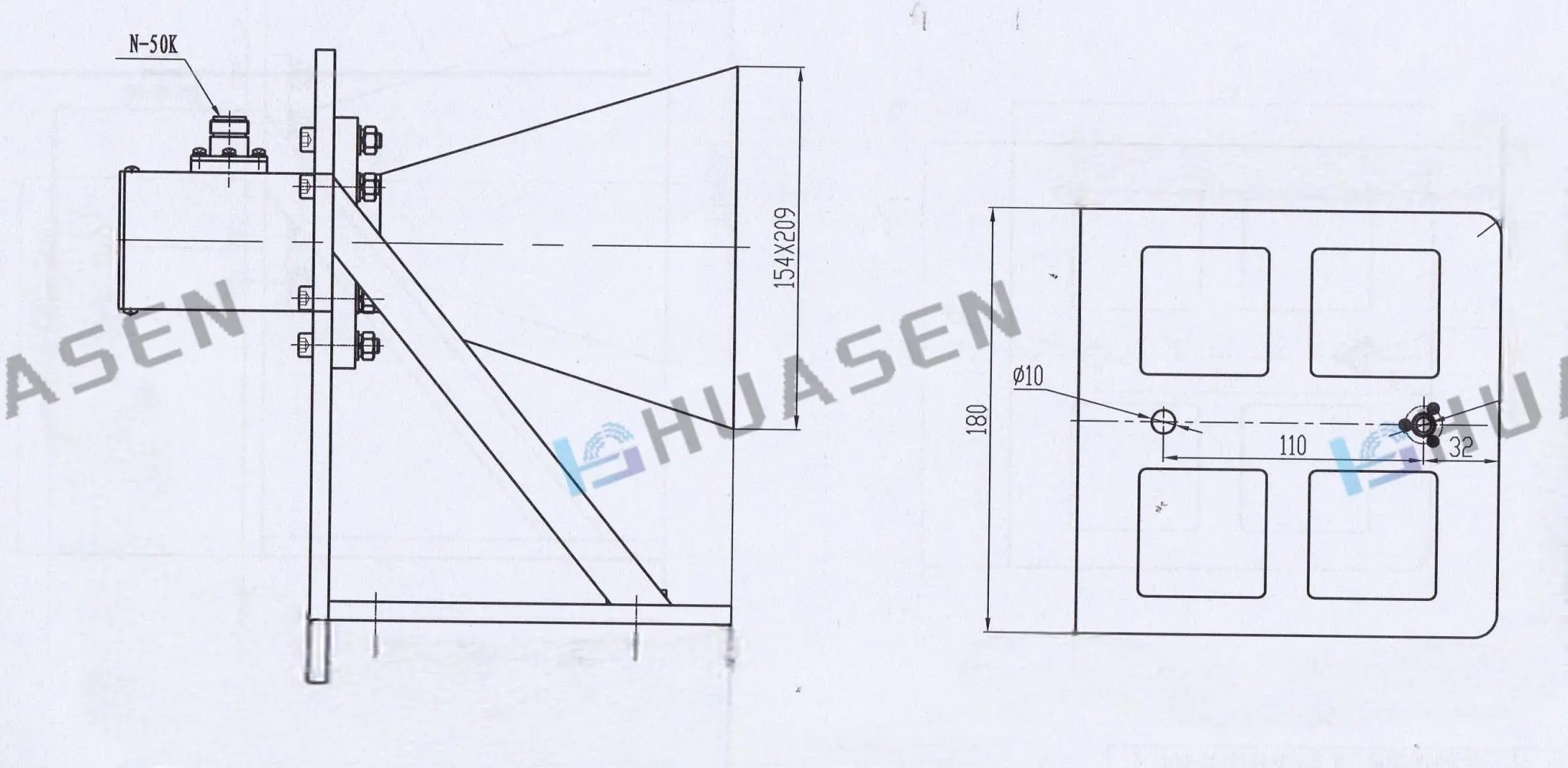
The construction excellence of a Standard Gain Horn Antenna begins with its fundamental geometric configuration, which represents decades of refinement in microwave engineering principles. At its core, this antenna type features a pyramidal or conical structure that transitions from a standard rectangular or circular waveguide input to a flared aperture opening. This flaring geometry serves a critical purpose: it creates an impedance transformation that efficiently couples electromagnetic energy from the confined waveguide mode into free space propagation. The flare angle is precisely calculated to minimize phase errors across the aperture plane while maintaining optimal gain characteristics throughout the operating frequency band. Engineers designing these antennas must balance multiple parameters including the horn length, aperture dimensions, and flare rates in both E-plane and H-plane directions to achieve the desired radiation properties. The pyramidal horn configuration, most commonly employed in Standard Gain Horn Antenna designs, features four distinct flaring surfaces that expand outward from the waveguide throat, creating a rectangular aperture that naturally supports linear polarization. This geometric precision directly influences the antenna's ability to maintain constant gain values and predictable beam patterns, making it indispensable for calibration and reference measurement applications where uncertainty margins must remain within ±0.5 dB across the operational bandwidth.
Waveguide Interface Integration and Mechanical Assembly
The waveguide interface represents one of the most critical construction features of any Standard Gain Horn Antenna, as it establishes the fundamental coupling mechanism between signal sources and the radiating structure. Standard gain horns are designed to mate directly with industry-standard WR (Waveguide Rectangular) flanges, ensuring compatibility with existing test equipment and measurement systems across various frequency bands. The throat section, where the waveguide connects to the horn structure, maintains precise dimensional tolerances to preserve the electromagnetic field distribution and minimize discontinuities that could generate unwanted reflections or mode conversions. High-quality Standard Gain Horn Antenna construction incorporates CNC-machined waveguide sections that maintain flatness specifications within micrometers to ensure proper flange contact and RF sealing. Many designs include provisions for coaxial-to-waveguide adapter attachment, allowing flexible interfacing with coaxial test equipment while maintaining the horn's inherent advantages. The mechanical assembly typically features a robust mounting structure, often including a tripod adapter or boom mount configuration that facilitates precise positioning during measurement campaigns. Materials selection plays a vital role in construction quality, with aerospace-grade aluminum alloys being preferred for their excellent conductivity, lightweight properties, and machinability. Precision brazing or welding techniques join the various sections, creating seamless electrical continuity throughout the structure. Surface treatments such as gold plating or specialized coatings may be applied to critical areas to enhance conductivity, prevent corrosion, and ensure long-term performance stability in demanding environmental conditions.
Aperture Geometry and Phase Error Control Mechanisms
The aperture design of a Standard Gain Horn Antenna embodies sophisticated electromagnetic engineering that directly determines radiation pattern quality and gain stability. The aperture dimensions are carefully selected based on the operating wavelength to establish the desired directivity while controlling sidelobe levels and beamwidth characteristics. In a properly constructed pyramidal horn, the E-plane and H-plane aperture dimensions can be independently optimized to achieve specific pattern shaping objectives or to maintain circular symmetry in the radiated beam. Phase error, which arises from the spherical wavefront curvature at the aperture plane, represents one of the fundamental limiting factors in horn antenna performance. Engineers minimize this effect through careful selection of the horn length and flare angle, ensuring that the path length difference between the center and edges of the aperture remains within acceptable limits. Advanced Standard Gain Horn Antenna designs may incorporate subtle aperture plane modifications such as edge tapering or corrugations that further refine the field distribution and reduce diffraction effects. The aperture edges are typically precision-machined with sharp, clean terminations that establish well-defined boundary conditions for the electromagnetic fields. Some high-performance constructions include dielectric loading or impedance-matching structures near the aperture to enhance bandwidth characteristics or improve pattern symmetry. Manufacturing tolerances at the aperture are particularly stringent, as surface irregularities or dimensional deviations can significantly impact high-frequency performance. Quality control procedures for Standard Gain Horn Antenna production include coordinate measuring machine verification of aperture dimensions and surface profile analysis to ensure conformance with design specifications, guaranteeing that each unit delivers the predictable performance characteristics essential for reference antenna applications.
Material Selection and Manufacturing Processes for Optimal Performance
Material science and manufacturing methodology fundamentally shape the performance characteristics and long-term reliability of Standard Gain Horn Antenna construction. The selection of base materials must address multiple competing requirements including electrical conductivity, mechanical strength, dimensional stability, weight considerations, and environmental durability. High-conductivity aluminum alloys, particularly 6061-T6 and 7075-T7, dominate the industry due to their excellent RF properties, superior machinability, and favorable strength-to-weight ratios. These materials enable the creation of complex three-dimensional geometries with the tight tolerances necessary for microwave performance. The manufacturing process typically begins with precision CNC machining operations that create the pyramidal horn structure from solid billet material, ensuring monolithic construction without joints or discontinuities in critical RF paths. Multi-axis milling capabilities allow manufacturers to produce the compound flare angles and smooth surface transitions that characterize high-quality Standard Gain Horn Antenna designs. Advanced machining centers equipped with precision tooling can maintain dimensional tolerances within ±0.025mm across the entire structure, which is essential for maintaining phase coherence and pattern stability at millimeter-wave frequencies. Surface finish quality directly impacts RF performance, particularly at higher frequencies where skin depth becomes increasingly shallow. Standard Gain Horn Antenna manufacturers employ specialized cutting techniques and finishing operations to achieve surface roughness values below 1.6 micrometers Ra, minimizing ohmic losses and ensuring uniform current distribution across the conducting surfaces.
Heat Treatment and Surface Enhancement Techniques
Post-machining thermal and surface treatments significantly enhance the long-term performance stability and environmental resilience of Standard Gain Horn Antenna constructions. Stress-relief annealing processes remove residual machining stresses that could otherwise lead to dimensional creep or warping under temperature cycling conditions. For applications demanding maximum conductivity and corrosion resistance, electroplating processes apply gold or silver coatings to the horn's interior surfaces, reducing insertion loss and ensuring stable electrical properties over extended operational lifetimes. The plating thickness, typically ranging from 2.5 to 7.5 micrometers, must be carefully controlled to provide adequate coverage without introducing dimensional changes that could affect RF performance. Chemical conversion coatings such as chromate treatments offer an alternative approach for Standard Gain Horn Antenna applications where moderate environmental protection is sufficient, providing a cost-effective solution while maintaining excellent electrical properties. Exterior surfaces may receive powder coating or anodizing treatments to protect against physical damage and environmental degradation while maintaining the structural integrity necessary for precision measurements. Quality assurance protocols include adhesion testing of plated layers, thickness verification using X-ray fluorescence spectroscopy, and accelerated aging studies to validate coating performance. These surface enhancement processes transform raw machined structures into professional-grade Standard Gain Horn Antenna assemblies capable of withstanding thousands of connection cycles, extreme temperature ranges, and challenging environmental conditions while maintaining the measurement accuracy and repeatability that define their role as reference standards in modern RF testing facilities.
Electrical Characteristics Determined by Construction Quality
The electrical performance characteristics that define a Standard Gain Horn Antenna's utility as a measurement reference flow directly from construction quality and dimensional accuracy. Gain stability represents the paramount specification, with properly designed and manufactured units delivering nominal gain values that remain constant within ±0.5 dB across their designated frequency bands. This remarkable consistency derives from the carefully controlled geometry that produces predictable aperture illumination and minimal phase error accumulation. The gain value itself results from the aperture size relative to wavelength and the efficiency with which the horn structure converts guided waves into radiated energy. Standard Gain Horn Antenna designs typically target gain values of 10 dB, 15 dB, or 20 dB at band center, with the specific value determined by the intended application and frequency range. Voltage Standing Wave Ratio (VSWR) performance, another critical parameter influenced by construction quality, quantifies the impedance match between the waveguide interface and free space. High-quality Standard Gain Horn Antenna assemblies achieve VSWR values below 1.5:1 across their operating bandwidth, indicating efficient power transfer with minimal reflection back toward the source. The smooth impedance transformation created by the gradual flare progression minimizes discontinuities that would otherwise generate standing waves and reduce measurement accuracy. Radiation pattern characteristics, including beamwidth, sidelobe levels, and pattern symmetry, all trace back to manufacturing precision and geometric accuracy. A well-constructed Standard Gain Horn Antenna produces clean, predictable patterns with main beam pointing accuracy within 0.5 degrees and sidelobe suppression exceeding 20 dB below the main lobe peak.
Frequency Range Capabilities and Bandwidth Performance
The operational bandwidth of a Standard Gain Horn Antenna represents a direct consequence of its physical construction and dimensional scaling relative to wavelength. Individual horn designs are typically optimized for specific waveguide bands, with each band corresponding to a standard WR size and associated frequency range. For example, X-band Standard Gain Horn Antenna units operating from 8.2 to 12.4 GHz utilize WR-90 waveguide interfaces and feature aperture dimensions scaled appropriately for this frequency range. The usable bandwidth within each design generally spans approximately 1.5:1 to 2:1 frequency ratios, with performance parameters remaining stable throughout this range. This bandwidth limitation arises from the wavelength-dependent behavior of the aperture and the increasing phase error that occurs as frequency deviates from the design center point. Advanced constructions may extend operational bandwidth through dual-mode designs or by incorporating compensating structures, though these typically introduce complexity that may compromise the predictable performance characteristics desired in reference Standard Gain Horn Antenna applications. Manufacturers offer comprehensive product families covering frequency ranges from below 1 GHz through millimeter-wave bands extending above 110 GHz, with each design representing an optimized construction tailored to its specific frequency range. The physical size scales inversely with frequency, with low-band horns measuring several hundred millimeters in length while millimeter-wave units may be compact enough to hold in one hand. Despite these size variations, construction principles remain consistent across the frequency spectrum, with dimensional tolerances becoming increasingly stringent as frequency increases to maintain the same relative accuracy.

Advanced Testing and Verification Procedures
The construction quality of any Standard Gain Horn Antenna must be validated through comprehensive testing protocols that verify performance against design specifications and industry standards. Near-field and far-field antenna measurement systems provide the primary means of characterizing radiation patterns, gain, polarization, and other critical parameters. Far-field testing, conducted in specialized microwave anechoic chambers or outdoor test ranges, positions the antenna under test at distances exceeding 2D²/λ (where D represents the largest antenna dimension and λ is the wavelength) to ensure plane wave illumination conditions. Professional testing facilities, such as those employed by Huasen Microwave Technology Co., Ltd., maintain multiple anechoic chambers with dimensions optimized for different frequency ranges and test scenarios. A 9-meter chamber, for instance, provides adequate far-field conditions for Standard Gain Horn Antenna characterization across 2 GHz to 220 GHz, while larger chambers accommodate lower frequencies or electrically larger devices. These measurement environments feature radar-absorbing materials lining all interior surfaces to eliminate reflections that would contaminate antenna pattern measurements. Precision positioning systems, typically incorporating azimuth and elevation turntables with sub-degree angular resolution, enable complete three-dimensional pattern mapping. The test system records received signal strength as the antenna rotates through its full pattern, capturing main beam characteristics, sidelobe structure, and cross-polarization behavior. Vector network analyzers with frequency ranges extending to 110 GHz or beyond measure complex scattering parameters, providing detailed impedance and reflection coefficient data that validate the antenna's electrical characteristics.
Quality Assurance and Calibration Traceability
Establishing measurement traceability and maintaining calibration standards represents an essential aspect of Standard Gain Horn Antenna verification procedures. Reference antennas used in testing facilities must themselves be periodically calibrated against primary standards maintained by national metrology institutes, creating an unbroken chain of traceability to fundamental electromagnetic units. The comparison method, where an antenna under test is measured against a calibrated reference Standard Gain Horn Antenna, provides the most accurate means of gain determination, with uncertainty budgets typically achieving ±0.5 dB or better when proper procedures are followed. Manufacturers of precision Standard Gain Horn Antenna assemblies implement comprehensive quality management systems certified to ISO 9001 and related standards, ensuring documented procedures govern every aspect of production from raw material receipt through final testing and shipment. Each antenna receives individual characterization with measured data recorded in accompanying calibration certificates that document gain, VSWR, and pattern characteristics across the operating frequency range. These certificates provide users with the confidence necessary to employ the Standard Gain Horn Antenna as a reference standard in their own measurement activities, supporting applications including antenna calibration, electromagnetic compatibility testing, and radar cross-section measurements. Advanced testing facilities employ environmental chambers that subject antennas to temperature cycling, humidity exposure, and vibration testing to validate mechanical robustness and long-term stability. Coordinate measuring machines verify dimensional accuracy of critical features, while surface profile measurements ensure that manufacturing processes achieve the required finish quality for optimal RF performance.
Conclusion
Standard Gain Horn Antenna construction represents a sophisticated integration of electromagnetic theory, precision manufacturing, and quality assurance that delivers the predictable, repeatable performance essential for modern microwave testing applications across telecommunications, aerospace, and defense industries worldwide.
Cooperate with Huasen Microwave Technology Co., Ltd.
As a leading China Standard Gain Horn Antenna manufacturer, China Standard Gain Horn Antenna factory, and China Standard Gain Horn Antenna supplier, Huasen Microwave Technology Co., Ltd. has served the global RF and microwave industry since 1993 with unmatched expertise in high-frequency component design and production. Our 3,000-square-meter advanced manufacturing facility employs over 200 skilled technicians utilizing CNC machining, precision brazing, and state-of-the-art testing equipment including multiple microwave anechoic chambers covering 0.5 GHz to 220 GHz. We offer High Quality Standard Gain Horn Antenna solutions with competitive Standard Gain Horn Antenna price points and flexible Standard Gain Horn Antenna for sale options including custom configurations, waveguide interfaces, and China Standard Gain Horn Antenna wholesale programs. Whether you need standard catalog products or custom-engineered antenna systems, our ISO-certified team delivers measurement-grade precision backed by comprehensive testing and calibration services. Contact us today at sales@huasenmicrowave.com to discuss your project requirements and discover how our 30 years of industry experience can support your most demanding microwave applications.
References
1. Balanis, Constantine A. (2016). *Antenna Theory: Analysis and Design, Fourth Edition*. John Wiley & Sons, Inc.
2. Kraus, John D. and Marhefka, Ronald J. (2002). *Antennas: For All Applications, Third Edition*. McGraw-Hill Education.
3. IEEE Standard 149-1979 (Reaff 2008). *IEEE Standard Test Procedures for Antennas*. Institute of Electrical and Electronics Engineers.
4. Love, A. W. (1976). *Electromagnetic Horn Antennas*. IEEE Press.
5. Stutzman, Warren L. and Thiele, Gary A. (2012). *Antenna Theory and Design, Third Edition*. John Wiley & Sons, Inc.
Send Inquiry