
Waveguide Wideband Circulator in EW Systems






2026-02-16 21:23:29
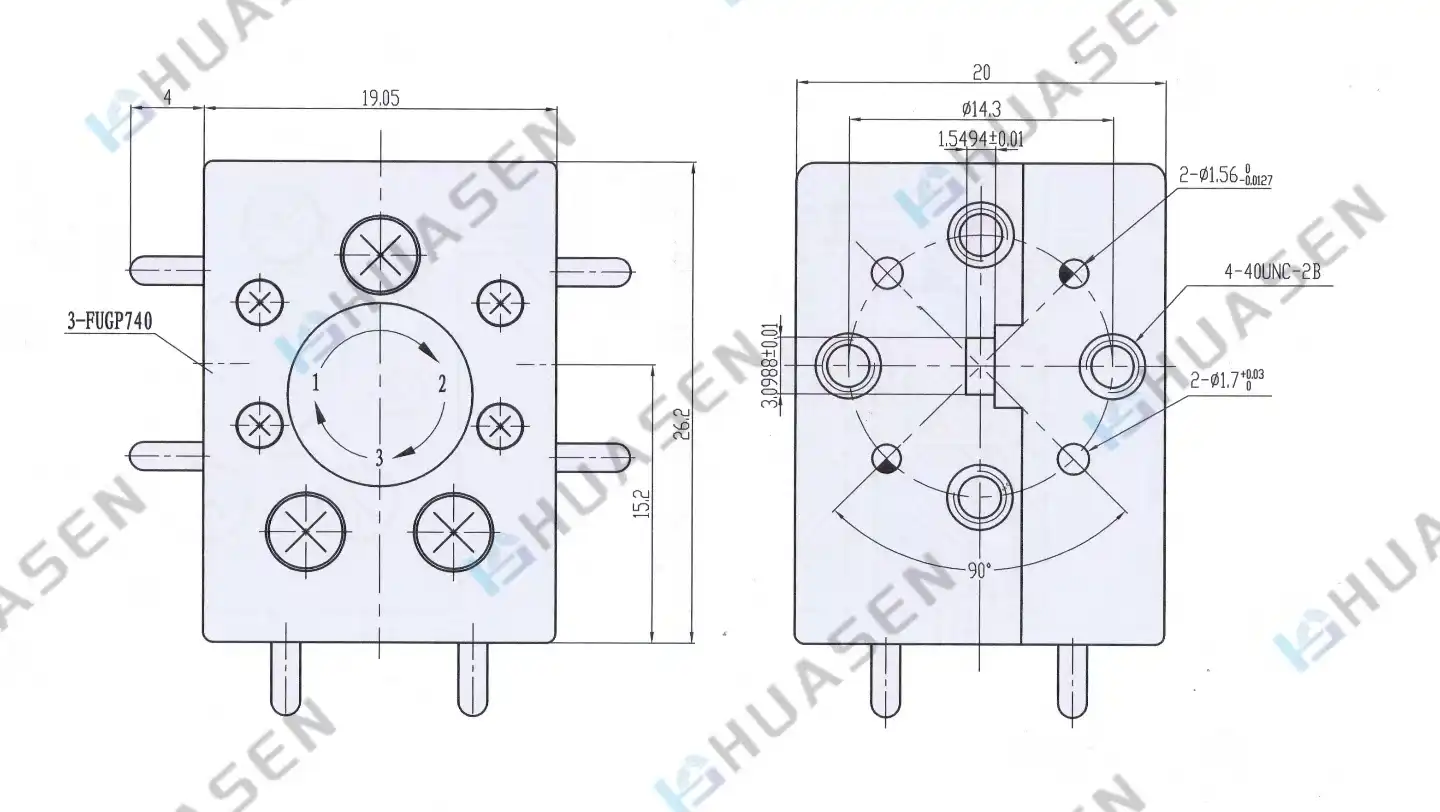
In EW systems, a waveguide wideband circulator is a complex three-port non-reciprocal device that is designed to send electromagnetic signals in a planned circle while keeping high performance over a wide frequency range. It is these important parts that let signals go from port one to port two, then to port three, and finally back to port one. This stops signals from going the other way. The waveguide wideband circulator is different from traditional narrowband options because it works the same way across multiple octaves. This makes it essential for modern electronic warfare applications, where being able to change frequencies and reliably route signals is key to mission success.
Understanding Waveguide Wideband Circulators in EW Systems
For electronic warfare uses, parts need to be able to work well in a wide range of frequency ranges and deal with complex signal conditions. This need is met by waveguide wideband circulators that use modern ferrite material engineering and precise mechanical design.
Operating Principles and Core Technology
These gadgets work because of the Faraday effect in certain ferrite materials that were carefully chosen. When ferrite elements are put in a magnetic bias field, they show non-reciprocal properties that let signals flow in only one way. The waveguide structure can handle more power than coaxial options, and the wideband design makes sure that the device works the same way across frequency bands that can reach several GHz.Some of the most important performance criteria for these parts are insertion loss between 0.2 and 0.5 dB, isolation above 20 dB, and VSWR values below 1.5:1 across the working bandwidth. These requirements have a direct effect on how well the system works and how well the signals stay intact in tough EW situations.
Environmental Resilience and Reliability
Extreme temperatures, vibration, and electromagnetic interference are just some of the problems that EW systems have to deal with. Modern waveguide circulators use temperature-adjustable ferrite materials and strong mechanical systems that keep working at temperatures ranging from -40°C to +85°C. The all-metal structure blocks electromagnetic waves very well and guarantees long-term dependability in field deployments.
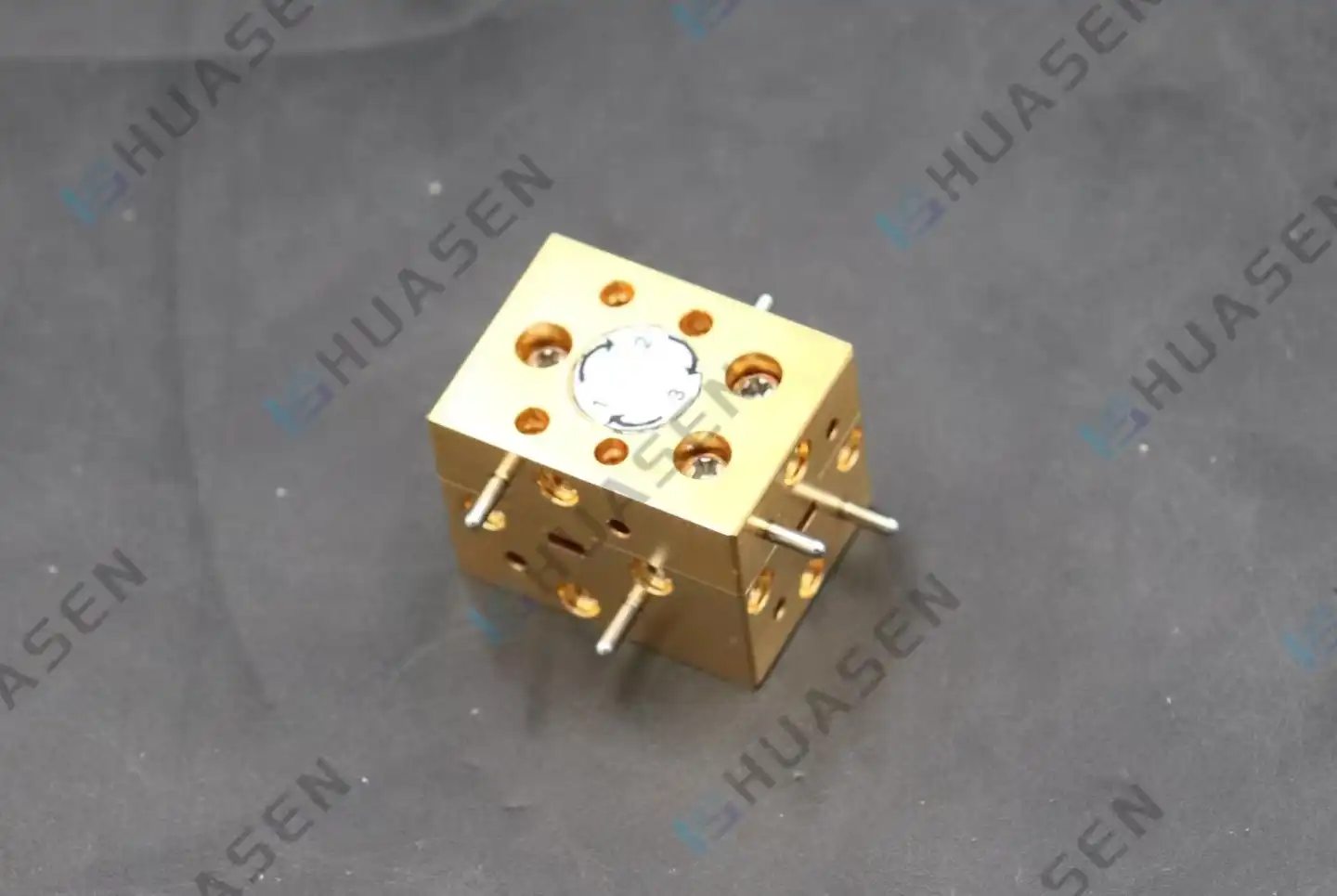
Waveguide Wideband Circulator Applications in Electronic Warfare
Because they are so flexible, wideband circulators are needed in a lot of EW situations where protecting signals and systems is very important.
Radar and Countermeasure Systems
In radar applications, these devices keep sensitive receiver parts from being damaged by high-power transmitter leakage while letting send and receive operations happen at the same time. The wideband feature lets a single system work across multiple frequency bands without having to swap out any parts. This makes the system much simpler and less maintenance-intensive. These circulators are used in electronic countermeasure systems to keep antenna reflections from jamming emitters that could change the output power or frequency accuracy. The high separation stops system oscillations that could hurt mission effectiveness, and the wide bandwidth makes sure that all threat frequency ranges are effectively covered.
Satellite Communication Infrastructure
Frequency-agile operations are used more and more in modern satellite communication systems to get the most out of their bandwidth and avoid interference. Wideband circulators make it easy to switch between frequency bands without any problems. They also protect expensive power amplifiers from antenna mismatch situations that can happen during beam steering or when there are problems with the way signals travel through the air. Waveguide design is especially good for ground station use because it is stable at high temperatures and can handle a lot of power. These features make sure that the performance stays the same even when gearbox times are long and environmental factors change.
Test and Measurement Applications
In both the lab and the field, waveguide circulator testing needs to be done with parts that can make readings accurately and consistently over a wide frequency range. Wideband circulators make it possible to fully characterise a system without using many narrowband parts. This lowers the error of measurements and the difficulty of setting up tests.
Comparing Waveguide Wideband Circulators to Other Solutions
Understanding the advantages and limitations of different circulator technologies helps procurement professionals make informed decisions based on specific application requirements.
Waveguide vs. Coaxial Implementations
Waveguide designs offer superior power handling capabilities, typically supporting kilowatt-level continuous operation compared to hundreds of watts for coaxial alternatives. The larger physical dimensions of waveguide structures also provide better thermal management and lower insertion loss at higher frequencies. However, coaxial versions offer size advantages for space-constrained applications and easier integration with standard RF assemblies.
Performance Comparison Across Technologies
When evaluating different technologies, several factors distinguish waveguide wideband circulators from alternatives:
- Power Handling: Waveguide designs support continuous power levels exceeding 1 kW, while coaxial versions typically limit to 200-500 watts
- Frequency Coverage: Modern wideband designs achieve 40-50% fractional bandwidth compared to 10-20% for standard narrowband units
- Environmental Stability: All-metal waveguide construction provides superior thermal management and EMI shielding
- Integration Flexibility: Standardized waveguide interfaces ensure compatibility across multiple manufacturers and applications
These performance advantages translate directly to improved system reliability and reduced maintenance requirements in demanding operational environments. The enhanced power handling prevents component failure due to reflected power surges, while the extended bandwidth reduces inventory requirements and simplifies system upgrades.
Cost-Performance Analysis
While waveguide wideband circulators typically require higher initial investment compared to narrowband alternatives, the total cost of ownership often favors wideband solutions. Single components replace multiple narrowband units, reducing procurement complexity, inventory costs, and system integration time. The enhanced reliability and extended operational lifetime further improve the economic value proposition.
Procuring Waveguide Wideband Circulators — Best Practices for B2B Buyers
Successful procurement of these critical components requires careful evaluation of supplier capabilities, technical specifications, and long-term support infrastructure.
Supplier Qualification and Assessment
When selecting suppliers, procurement professionals should prioritize companies with demonstrated expertise in wideband ferrite technology and waveguide manufacturing. Key evaluation criteria include ISO 9001 certification, AS9100 aerospace quality standards, and ITAR registration for defense applications. Supplier facilities should maintain cleanroom manufacturing environments and comprehensive test capabilities to ensure consistent product quality. Manufacturing capability assessment should include evaluation of ferrite material sourcing, magnetic bias system design, and mechanical precision machining capabilities. Suppliers with in-house ferrite material development can provide better customization options and faster response to unique application requirements.
Technical Specification Validation
Comprehensive technical documentation should accompany every procurement decision. Critical specifications include full-band S-parameter data, power handling curves across temperature ranges, waveguide circulator,and environmental qualification test results. Suppliers should provide statistical process control data demonstrating manufacturing consistency and long-term performance trends. Sample evaluation programs allow verification of supplier claims and compatibility with existing system architectures. Well-established manufacturers offer comprehensive sample programs with detailed test reports and application engineering support to ensure optimal component selection.
Supply Chain and Support Considerations
Long-term supply chain reliability becomes increasingly important as system operational lifetimes extend beyond traditional component availability windows. Suppliers with established material sourcing relationships and component obsolescence management programs provide greater assurance of continued availability throughout system lifecycles. Technical support capabilities should include application engineering assistance, custom design services, and responsive customer service. These services prove invaluable during initial system integration and ongoing operational support phases.
Future Trends and Innovations in Waveguide Wideband Circulators for EW
Advancing technology requirements continue to drive innovation in circulator design and manufacturing techniques, creating new capabilities for next-generation EW systems.
Materials Science Advancement
New research into ferrite compositions offers better stability at higher temperatures and wider bandwidth capabilities. Modern garnet materials with specially designed magnetic properties allow them to work in a wider range of temperatures while still keeping the same level of electrical performance. These changes make deployment easier in operational settings that are getting harder to work in.The use of additive manufacturing is starting to change the way parts are designed by making it possible to have complicated internal geometries that improve the distribution of magnetic fields and reduce the size of parts. Even though they are still being worked on, these technologies look like they will make a big difference in performance density and manufacturing freedom.
Integration with Semiconductor Technologies
Combining standard ferrite-based circulators with semiconductor switching elements makes it possible for frequency allocation to change on the fly, which makes the system more flexible. By analysing the signal environment in real time, these smart parts can change working parameters automatically, improving performance without any help from a person. Adding digital control interfaces lets you check on and change the settings of the circulator from afar, which supports predictive maintenance programs and real-time system optimisation. The more complicated a system gets, the more useful these features become.
Conclusion
In current EW systems, waveguide wideband circulators are very important parts because they protect the source and route signals so that the system can work reliably across wide frequency ranges. Because they can handle more power, work better in harsh environments, and cover a wide range of frequencies, they are the best choice for situations where system performance and stability must not be compromised. As EW systems keep getting more complicated and their operating bandwidths get wider, these parts will continue to be very important for making advanced capabilities possible. To be successful at procurement, you need to carefully evaluate suppliers, do a full technical assessment, and build long-term partnerships with well-known manufacturers who know how to meet the specific needs of defence and aerospace uses.
FAQ
1. What key performance metrics should buyers evaluate when selecting a waveguide wideband circulator?
Critical performance parameters include insertion loss across the full frequency range (typically 0.2-0.5 dB), isolation between ports (minimum 20 dB), VSWR specifications (typically <1.5:1), power handling capability, and temperature stability. Buyers should also evaluate mechanical specifications, including waveguide flange compatibility and mounting requirements.
2. How do waveguide wideband circulators enhance EW system reliability?
These devices protect expensive power amplifiers from reflected power damage while enabling simultaneous transmit and receive operations. The high isolation prevents oscillations and instability issues that could compromise system performance. Their robust construction and wide operating temperature ranges ensure consistent operation in demanding field environments.
3. What customization options are available for specific frequency and power requirements?
Manufacturers can customize ferrite material selection, magnetic bias field strength, and waveguide dimensions to optimize performance for specific frequency bands and power levels. Custom flange configurations and mounting arrangements accommodate unique mechanical requirements. Lead times for custom designs typically range from 8 to 12 weeks, depending on complexity.
4. What environmental qualifications should these components meet for military applications?
Military-grade units should comply with MIL-STD-810 environmental testing standards, including temperature cycling, vibration, shock, and humidity exposure tests. Many applications also require EMI/EMC compliance per MIL-STD-461 and altitude testing per MIL-STD-810. Proper environmental qualification ensures reliable operation across the full range of deployment conditions.
Partner with Huasen Microwave for Premium Waveguide Circulator Solutions
Huasen Microwave Technology brings three decades of specialized expertise in developing and manufacturing high-performance waveguide wideband circulator solutions for critical EW applications. Our engineering team combines advanced ferrite material science with precision manufacturing capabilities to deliver components that exceed demanding military and aerospace specifications. We maintain comprehensive quality certifications and offer extensive customization services to meet unique application requirements. Our technical support team provides application engineering assistance, sample evaluation programs, waveguide wideband circulators, and responsive customer service throughout the product lifecycle. Contact our waveguide wideband circulator manufacturer specialists at sales@huasenmicrowave.com to discuss your specific requirements and discover how our proven solutions can enhance your system performance and reliability.
References
1. Linkhart, Douglas K. "Microwave Circulator Design, Second Edition." Artech House Microwave Library, 2014.
2. Baden Fuller, A.J. "Ferrites at Microwave Frequencies." Institution of Electrical Engineers Electromagnetic Waves Series, 1993.
3. Pozar, David M. "Microwave Engineering, Fourth Edition." John Wiley & Sons, Chapter 9: Theory and Design of Ferrimagnetic Components, 2012.
4. elszajn, Joseph. "The Stripline Circulator: Theory and Practice." IEEE Press Series on Electromagnetic Wave Theory, 2008.
5. Adam, J.D. "Ferrite Devices and Materials." IEEE Transactions on Microwave Theory and Techniques, Vol. 50, No. 3, March 2002.
6. Schloemann, Ernst. "Advances in Ferrite Microwave Materials and Devices." Journal of Magnetism and Magnetic Materials, Vol. 209, Issues 1-3, February 2000.
Send Inquiry

Related Industry Knowledge
- 5 Key Parameters for Choosing Dual Polarized Parabolic Antennas
- Fixed vs. Variable Coaxial Loads: Which One Fits Your Test Scenarios Better?
- What key performance indicators should be prioritized when selecting a Dual Channel Waveguide Rotary Joint?
- What Factors Affect the Phase Shift Accuracy of Waveguide Phase Shifters? How to Minimize Errors?
- What are the common causes of flange gasket leakage? How to quickly identify the root cause when leakage occurs?
